
COMMENT | DNB’s window dressing continues
Government officials are still ardently trying to convince us that our telecommunication’s industry descent continues according to the plan.
However, red flags suggest the public must ramp up its vigilance over the Digital National Berhad (DNB)-led 5G rollout.
Sadly enough, this issue is no longer about protecting our national competitiveness on the pathway to the fourth industrial revolution (4IR), which has already been severely hampered.
Instead, there is a more mundane task now in front of the public watchdogs - at least save the taxpayers money.
More so in line with the statement by Minister in the Prime Minister’s Department (Economy) Mustapa Mohamed to postpone or discontinue any mega project that has yet to commence to save public expenditure and focus on what is important for the people, the DNB certainly sounds as a good candidate.
Malaysia’s biggest telcos were ready for 5G implementation as early as...
COMMENT | After already losing three years for credible 5G rollout, Malaysia’s sad 5G rollout through the Single Wholesale Network (SWN) model saga continues.
Government officials are still ardently trying to convince us that our telecommunication’s industry descent continues according to the plan.
However, red flags suggest the public must ramp up its vigilance over the Digital National Berhad (DNB)-led 5G rollout.
Sadly enough, this issue is no longer about protecting our national competitiveness on the pathway to the fourth industrial revolution (4IR), which has already been severely hampered.
Instead, there is a more mundane task now in front of the public watchdogs - at least save the taxpayers money.
More so in line with the statement by Minister in the Prime Minister’s Department (Economy) Mustapa Mohamed to postpone or discontinue any mega project that has yet to commence to save public expenditure and focus on what is important for the people, the DNB certainly sounds as a good candidate.
Malaysia’s biggest telcos were ready for 5G implementation as early as 2019, which at that time could have been crucial to onboard our industry on 4IR.
The journey has been unusual in that Malaysia is using a globally unpopular and problematic model for 5G rollout - SWN.
With about 70 other countries already rolling out 5G, and none of them adopting the SWN model, Malaysia indeed cuts a lonely figure in its approach.
Notably, the Malaysian government has decided to stick with this very unusual path to 5G even after continuous persuasion by industry experts, local and international, backed by data, science, economics, and plain logic pointing towards the damaging impact of the SWN approach on the telecommunication industry, especially for 5G, while also not solving the digital divide problem in any manner under the currently proposed DNB structure.
Fibre backhaul
The veteran of Malaysia’s telecommunication industry, Mohamed Awang Lah, wrote countless articles published in the media on the DNB-led rollout from various angles and levels of technicality, appealing to the wisdom of policymakers.
According to the expert, there is a need to restructure DNB to focus solely on owning, expanding, and sharing the fibre backhaul among all the industry players, thus reducing the backhaul cost for the benefit of end-users while maintaining competition in the last mile, which is crucial to improve quality of service.
Lack of fibre backhaul is also at the heart of Malaysia’s digital divide problem.
The years of experience in the industry also prompted Mohamed Awang to underscore the importance of separation between wholesalers (lessors) and retailers (lessees).
The violation of this fundamental principle is always detrimental to the industry and the end-users. However, a DNB-led, telco consortium-led, or even a recently proposed jointly-owned SWN grossly violates this principle.
Universal Service Provision fund
Furthermore, the Universal Service Provision (USP) fund, which is under the stewardship of the Malaysian Communications and Multimedia Commission (MCMC), is more than apt to serve the purpose of fibre backhaul expansion.
It is a big question, though. Why has it not been done until now if the earnest desire to bridge the digital divide keeps our policymakers awake at night?
Why has the fund been sitting there merely accumulating interest while having no impact on the rural areas for a decade?
Nevertheless, in complete disregard of this wise and powerful solution to the benefit of many, Malaysia’s policymakers insist on introducing DNB as one of the most expensive project management or middleman type of companies that subcontracts everything to third parties.
Note that even Telekom Malaysia does not provide “fibre leasing” - a misleading term used by DNB - to DNB. Instead, it will provide bandwidth leasing based on Gbps (not km of fibre) for existing fibre.
Now the question is, who would lay the fibre and backhaul to go to the rural areas and how it will be reflected in the costs and prices of DNB and the telcos?
This is not clear and never was answered by DNB! It is also not clear how they are going to solve the digital divide without this clarity.
Non-binding agreement
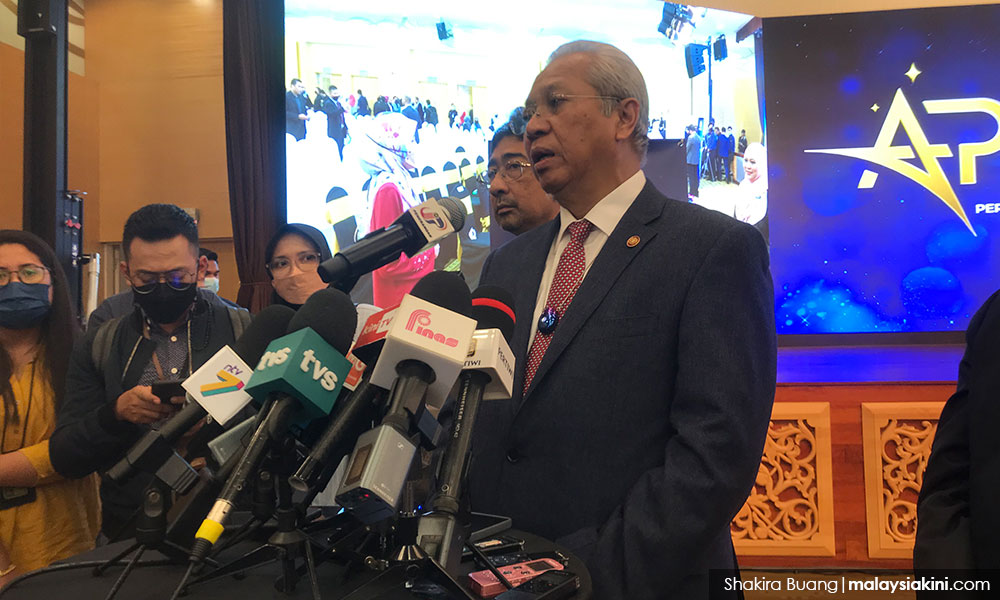
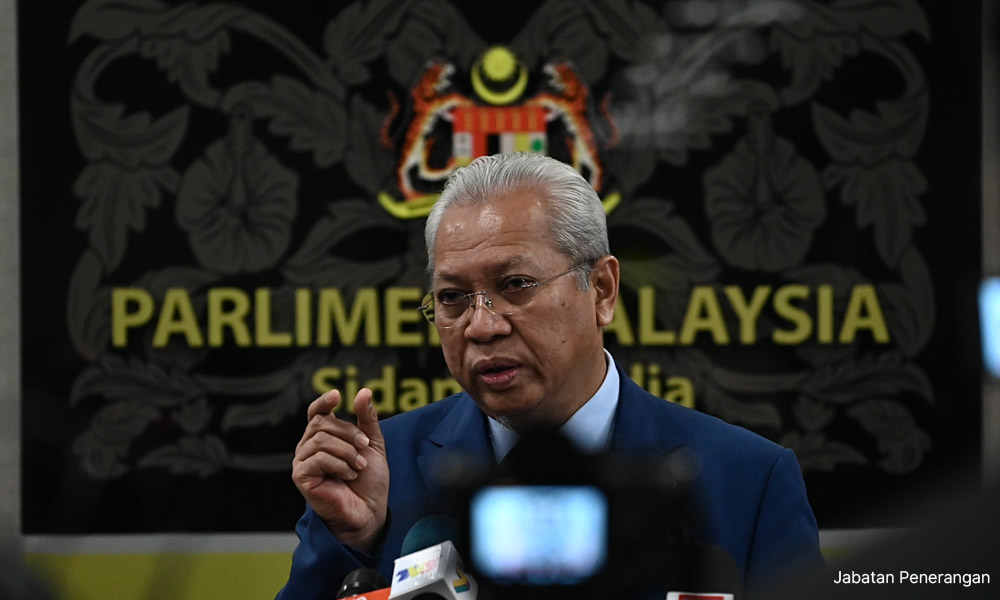
Recently, Communications and Multimedia Minister Annuar Musa reportedly announced six telcos agreed to take up stakes in DNB while also assuring everything is going according to plan and this is just a matter of another week for the equity uptake deal by the major telcos to be finalised and signed.
However, according to industry sources, what telcos have signed is just the Access Request Application Form (Araf) which is non-binding and merely the permission to continue technical testing.
Furthermore, this non-binding agreement is only the first small step in the standard overall transaction process which is more rigorous and, importantly, includes the due diligence procedure that must be completed before public listed companies such as Celcom, Digi, and Maxis can sign a shareholders agreement for a stake in DNB.
On top of that, the outcomes of such a due diligence exercise shall become part of public knowledge since the public’s money is involved, which is good as the public has been anxious for a long time to open DNB’s books for proper due diligence.
This statement by the minister implying that CDMU (Celcom, Digi, Maxis, U Mobile) telcos have agreed to take up stakes in DNB is even more interesting when we remember that on May 9, these same telcos reportedly sent a letter to the Ministry of Finance.
In this letter, the CDMU used powerful words, basically seriously questioning the fundamentals and viability of the current DNB-proposed business model and making it clear that only the controlling 51 percent joint stake for their group is the “most viable to reach an agreement” to be able “exercise influence and control to safeguard [their] investments”.
They also expressed concern over the proposed Reference Access Offer being “not commercially viable” and likely to lead to higher customer costs and slower adoption rates.
Has DNB addressed these points of contention to claim that CDMU agreed or will agree to the DNB terms? Or is this only a desperate “narrative management” attempt to convince the public and banks that everything is going as planned and there is cash flow in sight for DNB?
Where’s the money?
To recap, for DNB to finance its “cost-recovery” model, it is planning to issue sukuk.
The sukuk will be raised as it would be given a high rating not because of its business model but because of the guarantee by the government.
After all, Malaysia still has oil and gas, which are actually the people’s resources. Therefore, should the DNB’s cash flows falter, covering the DNB’s debt will quickly become the taxpayers’ responsibility.
However, how does all of this go with the new statement by the Minister of Finance made on July 19 that Malaysia can’t take on any more debt?
Meanwhile, the telecommunication industry in Malaysia appears to have caught a high fever as the government's seriousness in proceeding with the problematic SWN model becomes clear.
Previously blue-chip stocks of Axiata, Digi, and Maxis are now in permanent decline, and, as brought to attention by The Edge Malaysia analysts, all three are paying their earnings in full as dividends lately.
The corporates know that companies would do this only under circumstances where they see no prospects for industry growth and investment opportunities.
All of this is not because of, as some quarters claim, “uncertainty” associated with the 5G rollout but rather due to the certainty of the 5G rollout using a globally unpopular and problematic model - the SWN.
This model already has rolled us back a few years in terms of our 4IR industry development, continues destroying our telecommunications industry which is at the core of the digital economy, compromises our credibility in the eyes of global investors, and places taxpayers’ money at risk.
RAIS HUSSIN is the CEO of Emir Research, a think tank focused on strategic policy recommendations. He is also a Bersatu supreme council member.
The views expressed here are those of the author/contributor and do not necessarily represent the views of Malaysiakini.