
Pilot turned farmer finds 'corny' niche
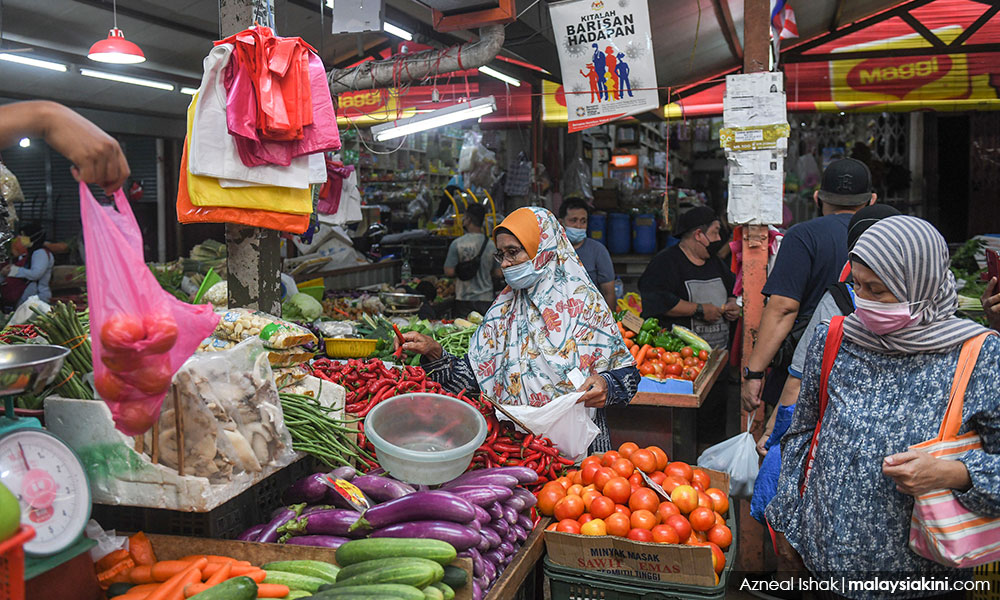
Recently, Ramana has been increasingly sought after for his expert views on the relationship between grain corn and the price of chicken – which has sometimes disappeared from supermarket shelves and wet markets.
Speaking to Malaysiakini at a time when feed prices had already skyrocketed by 117 percent, from RM900 per tonne this time last year to the RM1,950 per tonne, he urged private and government-linked companies to venture into cultivating the lucrative crop which makes up the bulk of animal feed.
Hailing from the small town of Bedong in Kedah, Ramana is fast becoming a familiar face on local television and live online forums where he explains to viewers why the price of the cheapest form of protein in our markets is now skyrocketing.
It could all have been very different, as he explained his roundabout journey.
The corn farmer from Kedah left his flying career in Thailand when...
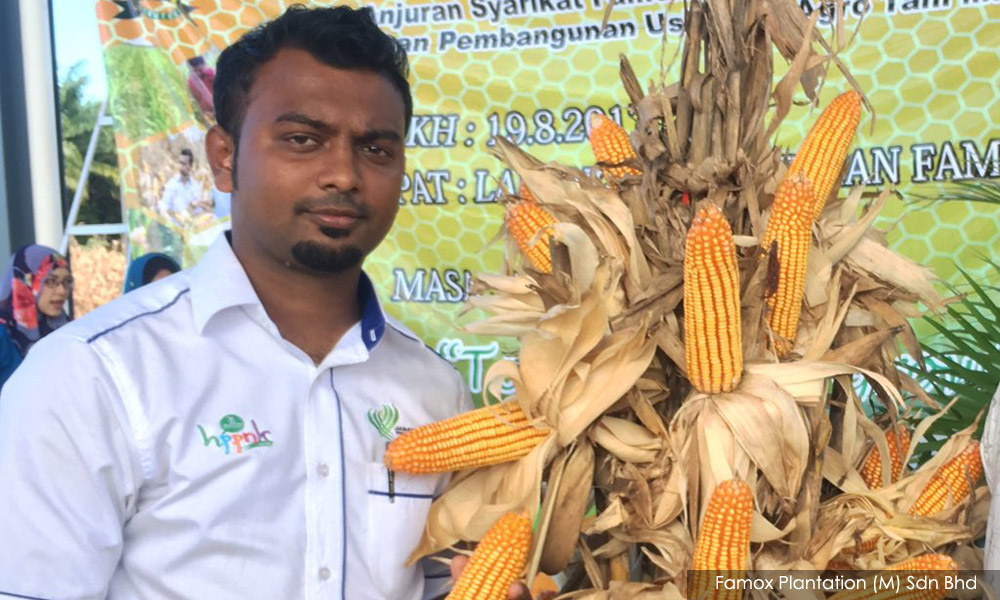
MALAYSIANSKINI | Self-made agro-entrepreneur Ramana K Naidu trained for a profession that would allow him to soar into the clouds – but he ended up reaching greater heights when he ditched his crisp pilot suit for muddy days in the sun.
Recently, Ramana has been increasingly sought after for his expert views on the relationship between grain corn and the price of chicken – which has sometimes disappeared from supermarket shelves and wet markets.
Speaking to Malaysiakini at a time when feed prices had already skyrocketed by 117 percent, from RM900 per tonne of chicken meat this time last year to RM1,950 per tonne, he urged private and government-linked companies to venture into cultivating the lucrative crop which makes up the bulk of animal feed.
Hailing from the small town of Bedong in Kedah, Ramana is fast becoming a familiar face on local television and live online forums where he explains to viewers why the price of the cheapest form of protein in our markets is now skyrocketing.
It could all have been very different, as he explained his roundabout journey.
The corn farmer from Kedah left his flying career in Thailand when the Red Shirt protests grounded his flights in 2011 but as a young pilot with little experience, he struggled to find employment in Malaysia.
“A very good friend from school was farming jasmine at the time and was doing well enough to support his parents and siblings.
“And that was my main motivation. I wanted to do something to support my parents, older sister, and younger brother.
“My friend inspired me to try my hand at farming and I started with long beans,” said Ramana, recalling how he persevered despite objections from his parents.
At the age of 21, he started intercropping long beans with chilli and cucumber on a 0.404-hectare (one-acre) plot of land he had leased.
Middlemen stifling growth
In 2014, the Ministry of Agriculture and Food Industries recognised his efforts with the “Successful Farmer Entrepreneur Award”.
After a few years, however, Ramana found that he was not doing as well as he should as he struggled to work around the “middlemen” who he said wielded a lot of control over the industry.
Reminiscing, he said it was the hardest time in his life as he had lost more than RM40,000, “so I decided to stop the business”.
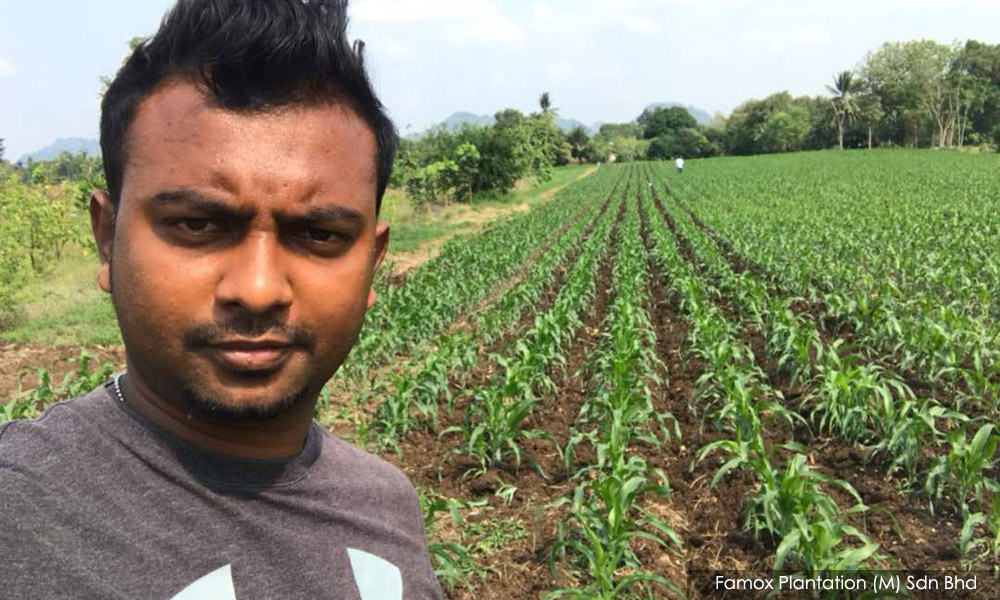
He prides himself as someone who is self-motivated but in his darkest moments, with no funds remaining to plant the next season of vegetables, Ramana said he felt hopeless and broken.
During this most trying time, he said his childhood sweetheart, Dr Jayashri Nair, whom he married last year, was his pillar of strength.
“I won’t be who I am today, if not for her.
“She has always encouraged me to follow my dream, whether it was to be a pilot or to turn to farming,” he said fondly of her, adding that they welcomed their firstborn just four months ago.
However, Ramana’s personal “pin-up” personality etched in the back of his mind is none other than Robert Kuok, who proved one could become a billionaire in the agriculture industry.
“He turned the sugarcane business into his gold mine.
“So, in my darkest hours, with the support of my wife, my instinct told me that the food industry would go far and I was willing to gamble my life on it.
“Everyone has to eat. Even pilots and doctors have to eat,” he quipped.
Unable to push aside the nagging feeling that he had an innate ability to thrive in the agriculture industry, Ramana decided to travel and expand his knowledge of farming.
Keeping his travels close to the equator, he went to Indonesia, India and Thailand.
It was at his last port of call where he met his mentor, Pachok – an old man who, to Ramana, was like a grandmaster of traditional farming.
“He was farming grain corn and he was very generous with his knowledge.
“Today, he holds a high post in a large corn seed company and I keep in touch with him for guidance.
“I am lucky to have him as a mentor because I learned so much from him,” he said.
Young millionaire farmer
Ramana is also grateful to his friend Kumaresan Govindasamy, who helped crowdfund to get him back into the business when he returned from his travels.
“I was feeling excited and challenged that if those farmers could drive tractors and operate drones, then so could I.
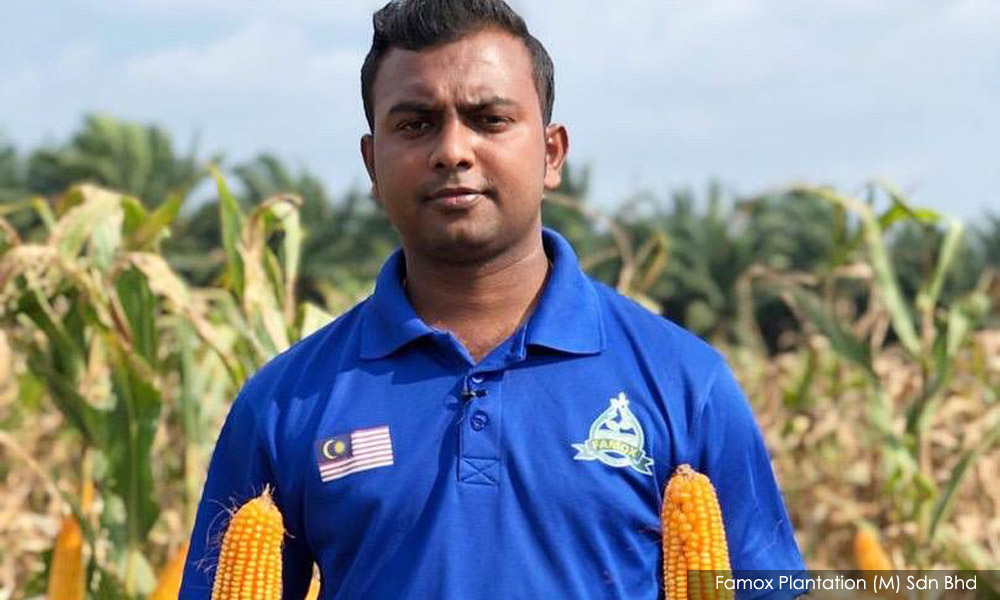
“That was when I sowed the seed of farming grain corn in my heart,” he said.
In 2016, filled with renewed vigour, Ramana put all his effort into studying the grain corn industry in Malaysia.
He found that the country’s poultry industry was almost completely reliant on imported chicken feed from Brazil, Argentina, and Mexico.
“Malaysia doesn’t even produce 0.001 percent of corn feed that is needed for the domestic poultry industry.
“But what tipped the scale for me was that the price of grain corn could not be manipulated by anyone.
“The price of corn all over the world traditionally adopts the current trading price at the Chicago Board of Trade,” he said, explaining how that factor alone allowed him to reap what he sowed.
Feeling grateful that he followed his instincts, Ramana said the pandemic confirmed that he had invested in the right sector.
However, Ramana only sells 40 percent of the 3,000 tonnes of annual yield and uses 60 percent on his poultry farm.
“We supply 70,000 chickens every 35 days to the Lotus’s (formerly Tesco) retail chain and hope to produce 500,000 chickens per year by 2023,” he said.
He has also diversified into dairy, Napier grass, and fish farming.
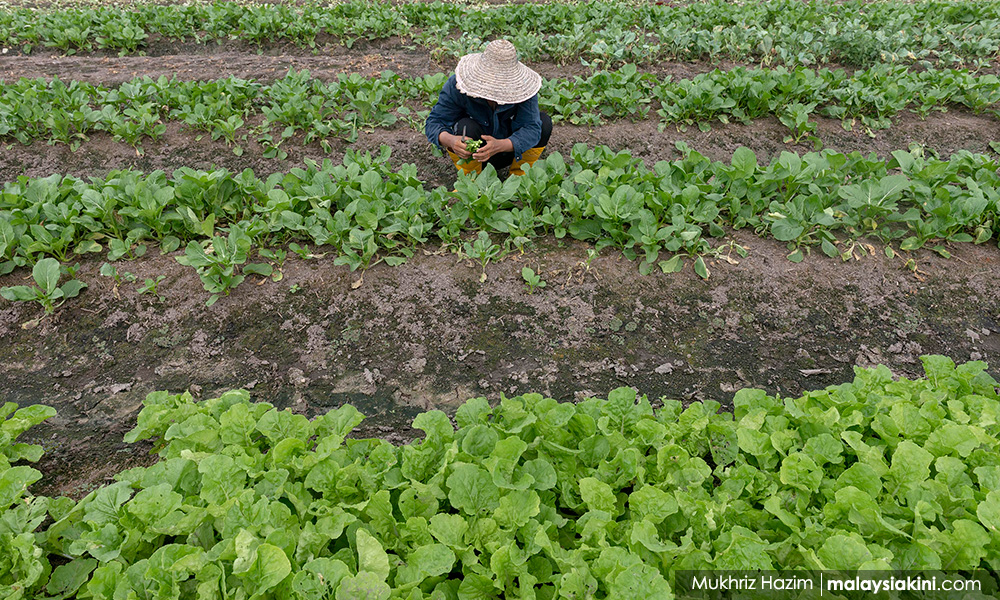
Today, raking in two harvest cycles every year on his 323.7ha (800-acre) land in Merbuk, Kedah, Ramana is touted as the country’s largest grain corn producer.
“I won’t lie, it is not easy. It is very hard work and I work very hard,” said the founder and Group CEO of Famox Group of Companies.
He plans to expand the area of farmland managed by his subsidiary, Famox Plantation (M) Sdn Bhd, to 5ha (12.5 acres) through a partnership with a government-linked company or private investor.
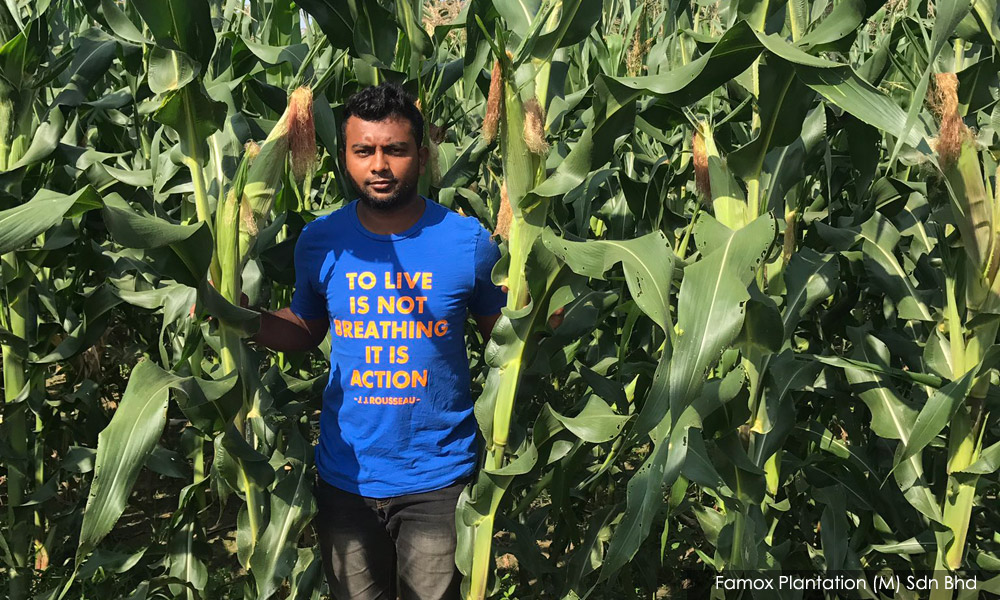
Growing in popularity in the industry with ground-breaking farming methods, Ramana said he took advantage of all the technological advancements available to him and uses data-driven technology to reduce wastage and improve yield.
He was the recipient of a string of awards which include the 2016 Master Agro Award from the Agarwood Producers & Distributors Association of Malaysia and the Young Achiever Agropreneur Award at the 2016 National Farmers, Breeders and Fishermen Day (State Level).
In 2019, the ministry recognised him again but this time as the Young Entrepreneur Icon of 2018/2019 and by this time, Ramana was the first millionaire in his family.
Having recently signed up for helicopter pilot training, the new father said his childhood dream has always been to be a pilot and although his life journey has steered him in a different direction, it has not kept his dream out of reach.
“And I will be flying again, only this time, at a lower altitude, across my grain corn field,” he said.
Student becomes a teacher
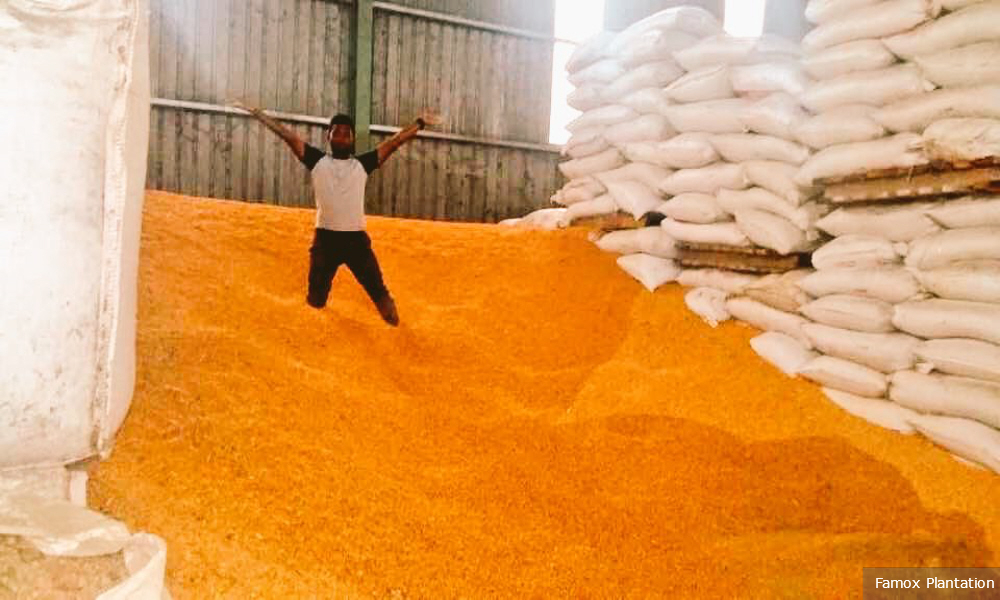
Photographed standing on top of a mountain of grain corn heaped in a mill, the golden-hued crop depicting a mountain of gold dust, Ramana said the photo was symbolic as many people viewed the business as a gold mine.
But he warned that “many jumped in without knowing what depth to expect”.
He added: “Even with gold, you need the right equipment to mine it.
“The same thing applies to agriculture. You need to know what you are going to apply and with whom you are going to apply it.”
Having started with just one farm worker, who is still in his employ, Ramana now has 20 workers and the rest of the work is technologically driven.
Just like his mentor, he welcomes anyone who wants to give agriculture a try and advises them to first learn the business.
Offering hands-on training with wages, he said anyone keen is welcome to apply to join him.
“I want to encourage youths to enter this industry.
“It’s best to get real-life training instead of learning on Google,” he said.
He explained that with corn, larger parcels of land were needed to see good returns and while net profits can go up as high as 20 percent, the current burgeoning global prices are promising to improve these estimates.
“There is no harm in being kind to mother earth. It will work for us if we work on it,” he narrated the adage he lived by.
Malaysianskini is a series on Malaysians you should know.
Previously featured:
Pulitzer winner Marcus Yam risks life for shots on the ground
Harpsichordist to the stars Ng Kah Ming strikes right chord
It's about creativity, not glamour, for screenwriter Yasmin Yaacob
Halal Hemp: Tengku Chanela leads the way for marijuana reforms
Rashid Salleh comes full circle with Iban sitcom Tembawai Kanyuk
Given a year to live, Swathi has just turned five
Underwater meadows: Jillian Ooi merges science and art to save seagrass
No job too small or big for writer, baker, undertaker Hasrul Rizwan