




Rethinking needed for emergency services
I refer to the article " A True Blue Malaysia Boleh story " (Dec 15th) and sympathise deeply with Ms Zara Davies Abdul Rahman in her unfortunate experience with our emergency services in her exemplary but valiant attempts to save accident victim Mohd Yusry.
 The circumstances are quite similar to the unfortunate death of TAR college student, Lee Kean Yip, 18, who was robbed and stabbed in Wangsa Maju on July 29, 2006. Statements made at that time included a call by the victim's father to take action against nearby GPs who were made convenient scapegoats alleging that these doctors refused to aid Lee.
The Health Minister compounded matters by stating that these clinics did not even have drip sets implying that the general practitioners practicing close to where Lee was brutally murdered should have been there to render first aid.
I am afraid the Health Minister has had the advice of poor counsel. Whoever propagated emergency health care as a key reason to go after private hospitals and clinics for the implementation of the Private Healthcare Facilities and Services Regulations 2006 Act are clearly barking up the wrong tree. Ms Zara's bitter experience serves as a clear example.
I refer to the article " A True Blue Malaysia Boleh story " (Dec 15th) and sympathise deeply with Ms Zara Davies Abdul Rahman in her unfortunate experience with our emergency services in her exemplary but valiant attempts to save accident victim Mohd Yusry.
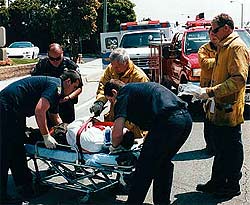 The circumstances are quite similar to the unfortunate death of TAR college student, Lee Kean Yip, 18, who was robbed and stabbed in Wangsa Maju on July 29, 2006. Statements made at that time included a call by the victim's father to take action against nearby GPs who were made convenient scapegoats alleging that these doctors refused to aid Lee.
The Health Minister compounded matters by stating that these clinics did not even have drip sets implying that the general practitioners practicing close to where Lee was brutally murdered should have been there to render first aid.
I am afraid the Health Minister has had the advice of poor counsel. Whoever propagated emergency health care as a key reason to go after private hospitals and clinics for the implementation of the Private Healthcare Facilities and Services Regulations 2006 Act are clearly barking up the wrong tree. Ms Zara's bitter experience serves as a clear example.
Emergency care is based on simple tenets of ATLS (Advance Trauma and Life Support), the basis for all emergency treatment. By ATLS principles, emergency care delivery is categorized into:
1. Preparation
2. Primary survey, where injuries are quickly identified
3. Resuscitation, where vital signs are secured and established
4. Secondary survey, where a more detailed examination is carried out to identify or reconfirm injuries and finally;
5. Definitive care, where a decision is made whether surgery, etc needs to be rendered.
The Diana analogy
The minister's concerns in this, and possibly many other cases are clearly focused on Preparation which is categorized into pre-hospital phase and in-hospital phase.
Many of the problems related to quick care for injuries or emergencies such as drowning incidents, heart attacks, strokes, trauma etc are clearly a result of delays in the pre-hospital phase.
Why did Mohd Yusry or Lee Kean Yip die - could they have been saved? The answer lies in two critical points of the pre-hospital phase - scene time and appropriate hospital.
Let me give your readers an analogy.
When Princess Diana stepped out of the Ritz and into the Mercedes S280 which raced through the streets of Paris at 180mph in the early hours of Aug 31, 1997 chased by paparazzi, the car came to grief when the driver lost control and crashed at the Pont d'Alma tunnel in Paris's 8th arrondissement (division).
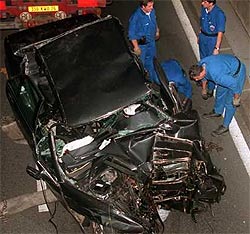 The vehicle was badly damaged and had come to rest against the outer wall of the tunnel. Henri Paul, the driver and Dodi Fayed lost their lives immediately as a result of aortic transection and injuries to the cervical medulla, injuries which are known to kill instantly.
Her body guard Trevor Rees survived. The first notification of the accident to emergency services was at 0.26hrs and the first Paris ambulance crew arrived at the scene at 0.32 hrs, six minutes later.
The first doctor who arrived at the scene was a French physician, Frederic Maillez, who was quoted by the Telegraph as saying that Diana had '... looked pretty fine. I thought this woman had a chance'.
Meaning she was well oxygenated and by implication had a good chance of survival. Just as Ms Zara thought Yusry had a chance.
Lady Diana Spencer received pre-hospital intensive care treatment, both while she was trapped in the wreckage, from which she was finally released at 1am, and during her transfer by ambulance, until her arrival at Pitie Salpetriere hospital at 2.06hrs, approximately one and a half hours after the arrival of the first ambulance crew.
However for reasons still unclear till this day, 'scene time' - for whatever reason - had been inexplicably prolonged. However she was correctly brought to the appropriate hospital where cardiothoracic surgical services were available as her injuries involved a tear of a large lung vein which even at that time with the facilities available she could have been saved if she had arrived early.
However, despite intensive surgical intervention, doctors had no option but to declare her dead at 4am.
The report submitted by Professors Dominique Lecomte and Andre Lienhart concluded that the cause of death was a wound to the upper left pulmonary vein. Princess Diana basically died as a result of exsanguination - loss of just too much blood which will lead to the vicious triad every trauma surgeon fears acidosis, coagulation problems and hypothermia.
Princess Diana, notwithstanding various conspiracy theories now hopefully proven to be untrue by Lord Steven's recent report published on Dec 14th , died ultimately because one of the most basic tenets of ATLS principles was not adhered to reduction of scene time.
Much of the British Media in the beginning commended and praised the French ambulance crew until the public prosecutor headed by Magistrates Mr Herv Stephan and Ms Christine Devidal pointed this out during an inquiry against the paparazzi on Sept 2 1997.
In emergencies of this nature as in probably any emergency, time is of essence. The point is, if 'scene time' had been shortened, Princess Diana may have been alive today as she had reached the appropriate hospital which had the necessary expertise for her injuries.
This opinion was shared by the prominent heart surgeon Christian Barnard who in his book, Princess Diana (1961-1997) , wrote that Princess Diana could have been saved if she had reached hospital on time.
Leonardo Esteves Lima, a Brazilian surgeon, who was studying at the Pitie Salpetriere Hospital in Paris in August 1997, was called in to help the operating team. Lima commented that the medical team made a desperate attempt to save Diana's life, but also said that she could have survived if rescue teams had reacted more quickly, rather than taking almost two hours to bring her in.
He said the ambulance paramedics might have been too cautious because of Diana's celebrity status.
An issue of funding
Similarly Yusry and Lee could have been saved if passers by or first responders had known how to render first aid or if emergency ambulance crews had arrived within six minutes with adequate knowledge of BCLS (Basic Cardiac Life Support) or ACLS (Advanced Cardiac Life Support).
Yusry and Lee should have been covered, kept warm, preferably not moved and pressure applied to bleeding points. This knowledge everyone should know and not just health professionals.
Carrying for instance, Lee from clinic to clinic wasting precious time expecting GPs to treat major trauma wounds is just not on. It is response time and effectiveness of the emergency services crew that matters.
Can we sincerely say that our emergency crews can respond within six minutes? Yusry and Lee, who were 18 and 20 respectively, and presumably fit, had surgical wounds which would require emergency surgery and may have still been alive today if they had been brought to hospital within 15 minutes and a trauma surgical team had operated on them immediately.
One of the key proponents for the Private Healthcare Facilities and Services Regulations 2006 Act were NGOs and the mainstream media who complained that private hospitals or clinics do not treat patients because of finance.
There was an incident in Shah Alam where there was a delay in treating a patient for a heart attack and another patient in Pandan Indah who died as a result of trauma. Both cases were during the in-hospital phase.
Many NGO's had a field day running these hospitals down and worse still portrayed themselves as the voice of the rakyat that something drastic must be done.
The minister of health reacted by pushing through the Private Healthcare Facilities and Services Regulations 2006 Act ( thinking that this would be the remedy to the constant media reports) without clearly thinking through the consequences and purpose.
Asking clinics to equip themselves to the equivalent of the in-hospital phase of ATLS principles is not the right thing to do. Patients not being treated at private hospitals when they are already in the in-hospital phase is clearly an issue of funding - not absence of emergency treatment.
Who funds the treatment? That is a question everyone has conveniently avoided. All emergency care treatment - as in primary health care - must be funded by the state irrespective of whether the patient is treated in a private hospital or not.
The MOH must find a way of paying for this treatment. Emergency treatment constitutes basic health care and that it is the duty of the government under our current health care system unless we decide to switch to an insurance- backed system which is unlikely in the foreseeable future because of the country's varied demographics.
In fact, Mohd Yusry's appropriate hospital is the Selangor Medical Centre hardly 10 minutes from the site of the accident.
Under-utilised facilities
Can our emergency services safely say that we can respond to a major injury within minutes for the majority of cases? Plus reports an average of 16 deaths a day as a result of road traffic accidents.
Surprisingly, only one out of the sixteen is recorded as death at the accident site. The rest actually die either on the way to hospital or in the in-hospital phase. Can we reduce these mortality figures by improving our emergency service response times, by having well-trained paramedics and established trauma or emergency units?
The race to have new specialties and sub-specialties in every major hospital is a flawed strategy as there will always be continual attrition of specialists to the private sector as a result of pay differences.
Furthermore, our health care system is littered with hospitals with state-of-the-art facilities which are underutilised. This wastefulness must stop and new strategies must be found for us to be more cost-effective yet efficient.
A more plausible strategy is to pool our resources to major designated hospitals, improve our infrastructure and improve the response times and effectiveness of our emergency services and paramedics.
Our focus and funding for acute care medicine must make a paradigm shift to this specialty of Emergency Medicine and Trauma surgery if we are serious in saving people like the unfortunate Yusry or Lee.
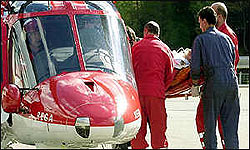 Our current system comprises of only emergency physicians who coordinate and render definitive care on an ad hoc basis. Care, training and almost the total absence of paramedics for the pre-hospital phase is glaring in the Malaysian setting. For a country that is racing towards developed status even air ambulances are conspicuously absent.
Emergency medicine has seen great advances in North America and Australia. Many airports and public places are equipped with automatic external defibrillators to save heart attack patients.
Many emergency units have their own trauma surgeons to deal quickly with serious life- threatening injuries.
Many ER units in North America even have their own angiogram facilities operated by emergency physicians where door to balloon times are less than 90 minutes, meaning patients with heart attacks have their blocked arteries cleared within 90 minutes from the time they hit the emergency room door, the standard set by the American College of Cardiologists and American Heart association.
In the end we may not be able to avoid patients having heart attacks or injuries, but we can certainly improve our emergency services and response times so that they reach hospital on time.
In emergencies, as in the case of Princess Diana, Lee Kean Yip or Mohd Yusry, time is always of the essence. And this can only come with a clear focus of healthcare strategies and commitment.
I hope Ms Zara's traumatic and frustrating experience will not diminish the Good Samaritan in her and it is further commendable that she has taken efforts to ensure that this may not happen again.
'Our lives begin to end the day we become silent about the things that matter'. Martin Luther King would have been proud of her.


