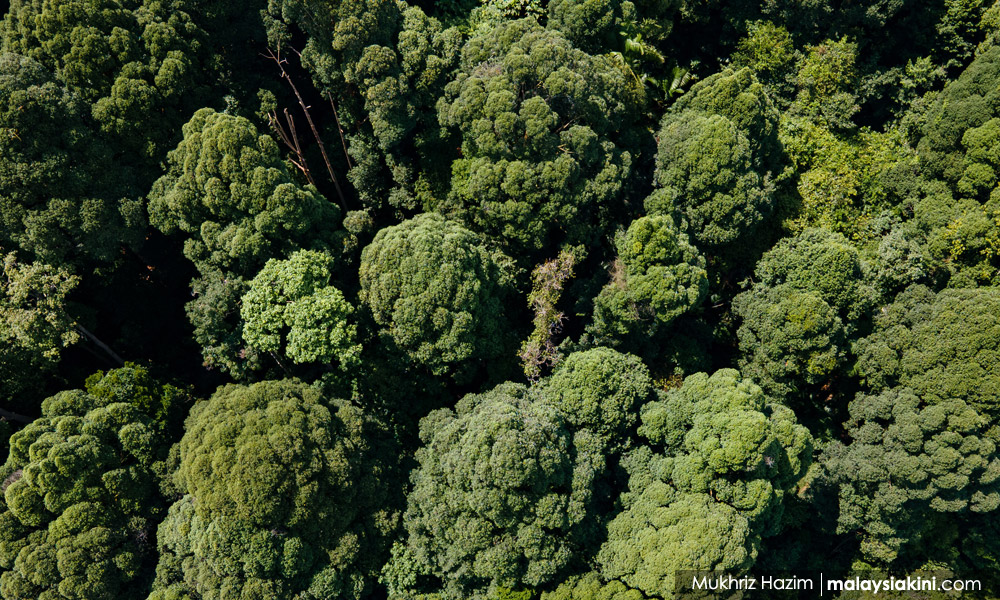

KINIGUIDE | Carbon trading and fight against climate change
KINIGUIDE | The controversial Nature Conservation Agreement (NCA) between the Sabah government and a little-known Singaporean firm has raised a lot of concerns over the secrecy surrounding the deal as well as the legitimacy of the firm.
The deal involves the Sabah government engaging the services of Singaporean firm Hoch Standard to come up with nature conservation management plans and giving the firm the exclusive rights to trade carbon credits and other natural capital in designated areas.
This has inadvertently brought scrutiny upon the carbon emissions trading scheme, a market that has been gaining traction in Malaysia recently.
In Budget 2022, the federal government had pledged to achieve carbon neutrality by 2050.
Environment and Water Minister Tuan Ibrahim Tuan Man had later said domestic carbon trading will be implemented in three phases by the end of 2022 in order to execute carbon credit transactions at the domestic level.
He had also said the federal government is looking into market design frameworks, registration and cooperation with developing international standards.
But what exactly is the carbon trading market, how does it work and what are its benefits and flaws?
In this KiniGuide, we take a closer look at carbon emissions trading as well as the recent deal that has fired up interest in this issue.
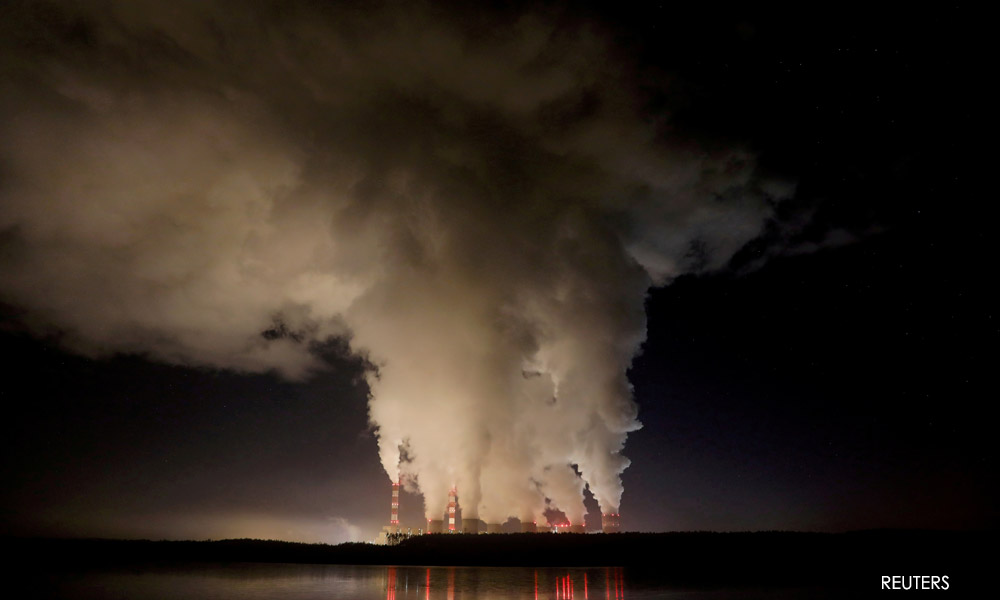
What is carbon emissions trading?
Carbon trading, born following the Kyoto Protocol of 1997 calling for countries to reduce their carbon dioxide emissions, is basically aimed at reducing those emissions worldwide through the sale of carbon credits, in which carbon is given an economic value.
The trading of carbon credits allows countries or companies to buy carbon credits to offset their own carbon emissions from another country or company that is able to sequester carbon.
Basically, they are paying someone else to reduce greenhouse gas emissions on their behalf through capturing or sequestering carbon.
Carbon sequestration refers to the process of capturing and storing atmospheric carbon dioxide and it is a method to reduce the amount of carbon dioxide in the atmosphere.
As such, carbon trading is essentially very similar to the trading of securities or commodities in a marketplace, except what is being traded is the ability to release carbon emissions or sequester carbon.
After the United Nation’s Climate Change Conference of the Parties (COP26) in Glasgow last year, global carbon trading now has a more structured framework and guidelines for countries to follow.
Proponents of carbon trading have said it promotes efficiency as it allows buyers to purchase their carbon reductions from whoever can do it most cheaply and easily.
How does carbon sequestration work?
There are two types of carbon sequestration, that is biological and geological.
Biological carbon sequestration is the storage of carbon dioxide in vegetation such as grasslands, forests, soils and oceans.
Forests are the primary carbon sinks in the context of Malaysia, which is rich in tropical rainforests, mangroves and peat swamps.
About 25 percent of the world’s carbon emissions have historically been captured by Earth’s forests, farms and grasslands.
The other one, geological carbon sequestration, is the process of storing carbon dioxide in underground geologic formations.
The carbon trading market sounds great, why is there opposition to carbon trading?
While carbon trading seems like a good way to profit from the fight against climate change by monetising carbon, critics have expressed concern about how carbon offset credits are used as well as the quality of the carbon offset, among others.
For example, studies have shown that a significant percentage of offset credits, between 60 to 70 percent, may not represent valid greenhouse gas reductions, which is due to the subjectivity in how carbon sequestration is quantified.
Other critiques include that carbon offsets are not a long-term solution as these allow polluters to go on polluting and create incentives to avoid regulations in certain sectors and industries.
There have also been instances where carbon offset projects have harmed local communities or resulted in broader environmental damage.
Previous research has also noted that carbon markets have been plagued by corruption and non-transparency, as there is very little independent or democratic oversight in the system.

What is the context of carbon trading in the Sabah NCA deal?
First of all, it is worth noting that Sabah Attorney-General Nor Asiah Mohd Yusof has said the controversial NCA, which was inked on Oct 30 last year, is non-binding in its current form and is subject to further due diligence.
However, Deputy Chief Minister Jeffrey Kitingan has described it as an agreement between the Sabah government and Hoch Standard involving carbon credit trading that would benefit forest conservation and provide revenue to the Sabah government to develop the state.
The NCA stipulates that Hoch Standard will be given the exclusive right to develop nature conservation management plans in the designated area, which is said to be an aggregate of two million hectares, with an initial pilot project of 600,000 hectares.
The agreement also states that the Sabah government will grant the firm exclusive rights to the natural capital benefits in the designated area, including the right to “sell, exchange, transfer” or otherwise dispose of the carbon credits.
As per the 100-year NCA, 30 percent of the carbon credit sales revenue will then go to Hoch Standard while the Sabah government keeps 70 percent.
Why are there so many concerns about carbon trading in the NCA deal?
Reports by international news organisation Al Jazeera and environmental news site Mongabay had highlighted issues with Hoch Standard’s credibility as well as the lack of engagement with affected native communities.
Al Jazeera noted that Hoch Standard was a “shell company” owned by a firm in the British Virgin Islands with a paid-up capital of US$1,000 (RM4,180).
It also pointed out the error made by Kitingan where he claimed that the firm was backed by Singapore government-owned Temasek Holdings Limited.
Kitingan has since acknowledged the mistake but maintained that it was backed by unnamed “big funding agencies”.
Meanwhile, Mongabay noted that native communities in the targeted areas who will be affected by this deal have little to no knowledge of the deal, which was negotiated and inked in secrecy.
There are now increasingly strict standards in the carbon market based upon principles of transparency, sound governance and additionality due to the urgency of climate change.
Experts and civil societies have since said this will result in Sabah not being able to market its carbon, especially in premium markets, unless these issues are seriously addressed.
Credible international buyers, who would undertake their own due diligence, would be alarmed by this lack of transparency with regard to the identity and competency of the firm, they warned.
The secrecy shrouding the deal, including the lack of clear commitments to adhere to the free prior and informed consent standards for all affected native communities, will be another red flag to potential buyers.
As pointed out by Glen Reynolds of the South East Asia Rainforest Research Partnership (SEARRP), carbon trading is also mired with technical problems, such as the issue of additionality.
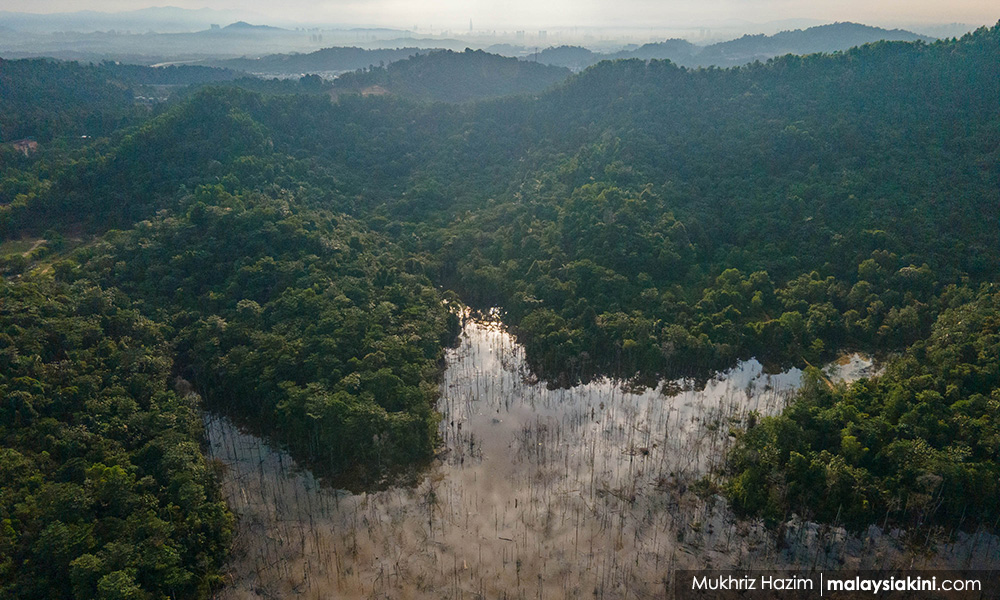
Additionality refers to the fact that carbon trading can only be implemented onto additional carbon which is stored or sequestered resulting from forest rehabilitation.
“Since Totally Protected Areas (TPAs) are already protected, you can only earn revenue by restoring those parts that are degraded, for example, by logging prior to gazettement.
“Currently, only about a third of Sabah’s TPAs are likely suitable for such restoration, and to undertake that work is extremely difficult as well as expensive.
“Sabah’s largest project of that kind, Infapro adjacent to Danum Valley, took 25 years to enrichment plant just 12,000 hectares and no place in the world has managed to restore tropical rainforest at the scale proposed under the NCA,” Reynolds said in a statement released by a group of civil societies recently.
The issue of additionality also means that it will take years of restoration efforts in Sabah’s forests before there are carbon credits available for sale.
There is also a 2020 research that shows that the real figure for marketable carbon in Sabah will be around 1.5 tonnes per hectare per year.
With the total costs of restoration, estimated at around RM6,000 to RM10,000 per hectare, it is not profitable to use a restoration to sell carbon from protected areas as it would “require carbon prices two to tenfold greater than those that currently exist in the voluntary carbon market”.
As such, experts and civil societies say the NCA debate involves unrealistic claims about the value of carbon trading, even if additionality is achieved.
They also pointed out that after decades of similar efforts around the world, “nowhere are billions being generated”.
While it has been claimed that carbon pricing is between US$20 to US$50 per tonne, it is worth noting that this price is only found in the compliance carbon market, whereas the voluntary carbon credits Sabah could sell - forest offset credits - will only be worth between US$4 and US$8 per tonne.
The compliance carbon market is also known as the regulatory market as the buyers are purchasing carbon offsets in order to comply with regulated caps on their emissions, whereas the voluntary carbon markets refer to those who voluntarily purchase carbon offsets.
Besides the pricing, it has been pointed out that the promoters of the NCA had touted a rate of sequestration of 20 tonnes of carbon per hectare per year, which is more than 10 times the realistic rate.
The total area touted is also more than 10 times what Sabah could ever hope to restore, because of the time needed to identify, study and replant sections of TPAs that need restoration.
Have there been any similar projects involving carbon trading in Malaysia?
Yes, the Kelantan state government had in 2017 inked a deal with a private company, Climate Protectors, to venture into the sale of carbon credits through a REDD+ initiative.
REDD+, which is stands for ‘reducing emissions from deforestation and forest degradation' is a United Nations (UN)-backed framework that aims to curb climate change by stopping the destruction of forests.
The deal involved a 30-year concession period in which the company is allocated 396,000 hectares of forest or 25 percent of the land area in the state to be protected, hence reducing carbon emissions.
However, the then natural resources and environment minister Wan Junaidi Tuanku Jaafar had said the agreement did not meet the conditions of the UN framework for the convention on climate change (UNFCCC) and instead contravened the conditions set by the UN.
The United Nations Development Programme (UNDP) in Malaysia also later denied it had any involvement with cryptocurrency firm EcoBit, which was linked to the REDD+ initiative between Kelantan state and Climate Protectors.
Both Climate Protectors and EcoBit were later red-flagged and placed under Bank Negara Malaysia’s financial consumer alert list, after collecting deposits in exchange for cryptocurrency without approval.
Kelantan Menteri Besar Ahmad Yakob had said the fund collection was unrelated to the state government and urged members of the public who have given their money to lodge police reports.