
KINIGUIDE | Where is Malaysia in the looming Omicron wave?
Malaysiakini examines the govt's response to the latest Covid-19 variant.
KINIGUIDE | In the month since it was first discovered, many governments have scrambled to tighten border controls and ramp up disease surveillance in a bid to slow or prevent the spread of the Omicron Covid-19 variant into their borders.
One by one, however, the virus managed to slip by each countries' defences to establish a foothold.
On Dec 24, the first known locally acquired Omicron case was detected in Bintulu, Sarawak. Then, Malaysians were greeted with the news on New Year's Day that there were already at least five clusters involving the Omicron variant.
If examples in the Americas and Europe could serve as precedent, Malaysia would face a wave of new Covid-19 infections in the coming weeks.
By keeping the virus at bay for this long, however, Malaysia can also benefit from these countries' hard-earned experiences.
In this first of a two-part KiniGuide, we examine how the government responded to the new threat. Tomorrow, we will revisit what has been learned about the Omicron variant and see how well tests and vaccines hold up against it.
Where are the Omicron cases?
As of Jan 14, there are 253 genomically confirmed Omicron variant cases in Malaysia so far – 236 imported and 17 locally transmitted. The only territory where Omicron's presence has yet to be confirmed is in Putrajaya.
The 17 local cases were detected in Sarawak (10), Kedah (4) and Selangor (3), according to a statement by Health Ministry director-general Dr Noor Hisham Abdullah on Jan 11.
There are also 13 Covid-19 clusters involving umrah pilgrims where the index case is either confirmed or suspected of contracting the Omicron variant.
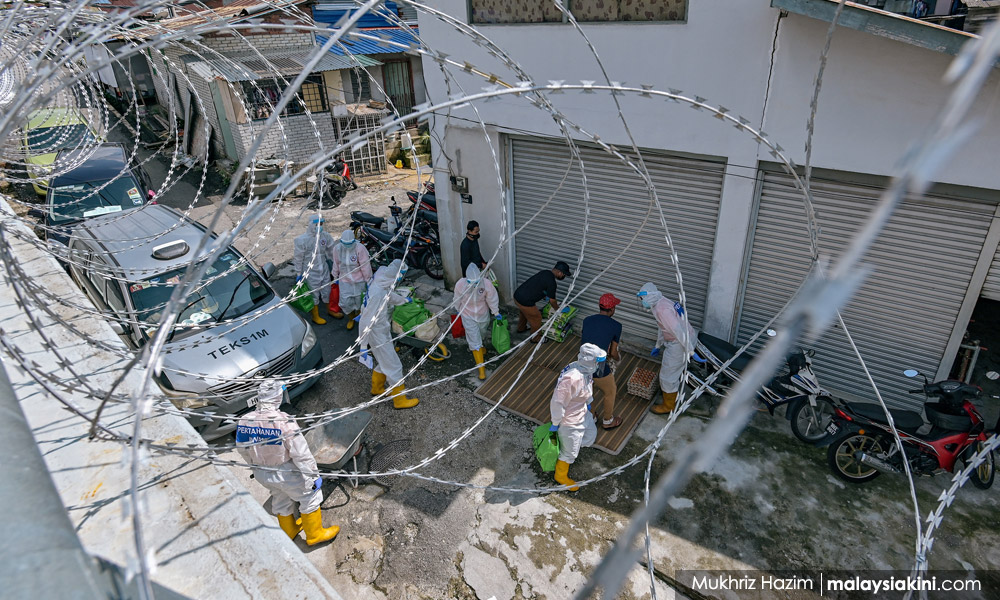
The largest of these is the Keratong 5 Saudi in Rompin, Pahang. From the initial two imported cases, the cluster has spread to 34 family members across Pahang and Johor.
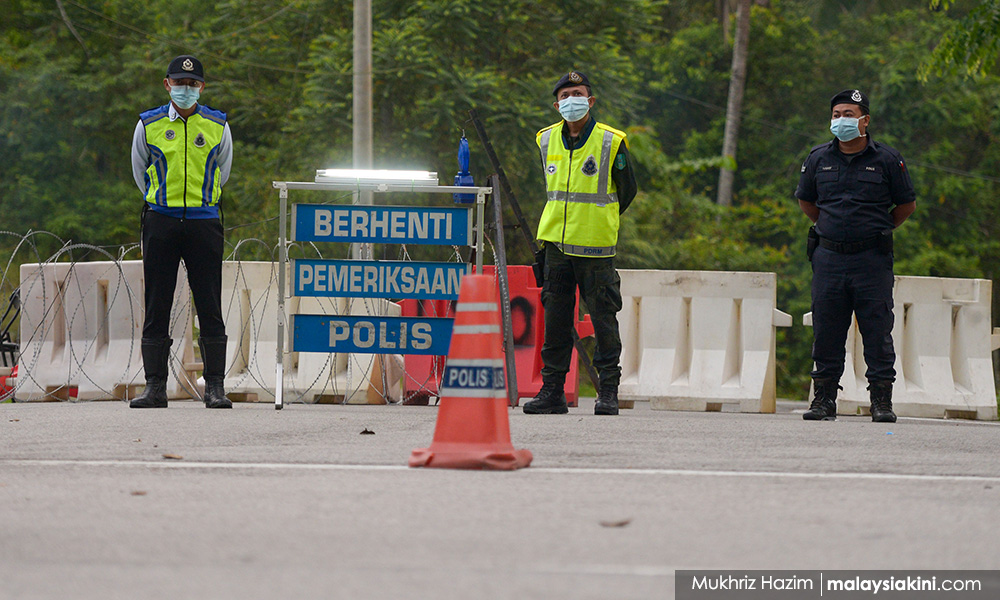
An enhanced movement control order at the epicentre of the outbreak was lifted early on Jan 15, after no more cases had been detected since Jan 6. It is still classified as an active cluster for the time being until no new cases are detected for 28 consecutive days.
Other confirmed or presumed Omicron clusters include the Chiku 01 Saudi cluster in Kelantan, Jalan OKK Awang Besar Saudi cluster in Labuan, and the Millenium Saudi cluster in Sabah.
For now, the Delta variant is still the dominant variant in Malaysia.
During genomic sequencing from Jan 3 to Jan 10, 91.9 percent of the 99 samples analysed were identified as the Delta variant, while the remaining 8.1 percent are Omicron.
Another 486 samples were sequenced between Jan 10 and Jan 14, and all of them turned out to be the Delta variant.
It should be noted that Malaysia sequences very few of its Covid-19 samples, which limits the country's ability to track the Covid-19 variants circulating in the country.
Data from the genetic database Gisaid shows that Malaysia only sequenced and shared samples from 0.49 percent of its Covid-19 cases in the last 90 days up to Jan 17. This is an improvement from 0.23 percent a month ago but is still a tiny portion of its cases.
Moreover, based on the experience of other countries where the Delta variant was prevalent, Omicron is capable of supplanting Delta as the dominant variant within weeks once the new variant establishes a foothold in the country.
Is there going to be another lockdown?
So far, there is no indication that a lockdown is on the cards, but a tightening of Covid-19 restrictions may be enforced.
When asked during a Jan 6 press conference on the possibility of a lockdown in response to the Omicron variant, Health Minister Khairy Jamaluddin replied: "No, no, no, no, don't mention the L-word. We don't mention the L-word anymore.
"We are not looking at lockdowns or border closures for now. If you lockdown, you get zero cases, but at what cost?"
Instead, he had told an earlier press conference that Malaysia would use a "heightened alert system" that was originally planned as part of Malaysia's transition into the endemic phase of the Covid-19 pandemic.
This entails monitoring a set of indicators. If breached, it would trigger restrictions on activities in certain sectors but would not escalate to a lockdown.
However, no details of the system are currently available even though it was reportedly being finalised in November last year and was supposed to be announced "in a week or two" from then.
Khairy told a press conference on Jan 1 that the planned measures were still being fine-tuned.
What is the government doing instead?
The government's response since the emergence of the Omicron variant can be broadly categorised into four pillars: Border controls, boosters, contact tracing, and genomic surveillance.
Predicting that cases numbers could reach 15,000 per day if nothing is done, the government has suspended umrah pilgrimages for one month beginning Jan 8.
It initially banned travel from eight South African countries where the first Omicron cases were identified but lifted the ban on Dec 28 last year once the variant became more widespread across the world.
However, travellers who recently visited any of the 18 "high risk" countries - including the eight previously subjected to a travel ban - will undergo stricter quarantine procedures.
This entails wearing a digital tracking device throughout the quarantine period, while those arriving from the UK are required to conduct a Covid-19 self-test daily and report the results via MySejahtera.
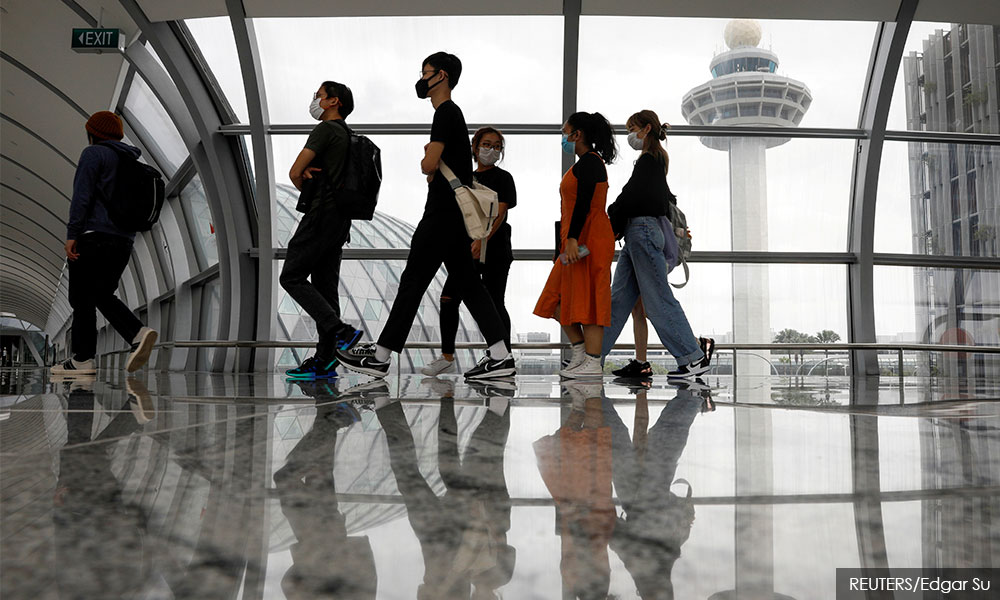
In addition, the Vaccinated Travel Lane arrangement with Singapore has been suspended.
One area where travel restrictions have relaxed, however, is for vaccinated travellers who had a Covid-19 infection in the last 60 days to be exempted from quarantine and only need to clear a rapid antigen test (RTK-Ag) upon arrival.
The rationale for this change is unclear, but Khairy assured it is "based on scientific data and evidence as well as the experience of other countries on managing the entry of travellers who had been infected with Covid-19 before".
While trying to limit Omicron's spread into Malaysia's borders, the government has shortened the wait for Covid-19 vaccine booster doses and is ramping up its rollout.
The goal is to deliver the extra dose to most eligible adults by the end of February; the earlier target of administering 200,000 booster shots per day has already been exceeded since early this month.
Vaccines have also been approved for children aged five and above, but the delivery schedule of these vaccines is still being negotiated.
For contact tracing, the government has renewed its effort to introduce Bluetooth proximity tracing, this time through the "MySJ Trace" module in the MySejahtera app. Its previous attempt through a separate app called "MyTrace" was not widely adopted.
For now, MySJ Trace is an optional feature that, when enabled, performs Bluetooth "handshakes" with nearby devices that also have the feature turned on up to 10 metres away. Anonymised data from these handshakes are stored on users' phones for up to 14 days.
If a user tests positive for Covid-19 and subsequently consents to his MySJ Trace data being used, other MySJ Trace users who had been around the Covid-19 case over the last 14 days will receive a notification and will be classified as "casual contacts". Casual contacts are not required to quarantine but will be asked to do a self-test and monitor their symptoms.
However, digital contact tracing systems do require widespread adoption to be effective. Khairy has not ruled out the possibility of making MySJ Trace mandatory if the situation becomes dire and the take-up rate remains low.
As for genomic surveillance, the government wants to increase the government's sequencing capacity to 3,000 samples per month this month and outsource another 2,000 samples to the private sector.
For comparison, the government had invested RM3 million in July last year to increase genomic sequencing to 3,000 samples over a three-month period from August to October.
Improved genomic surveillance would help track Covid-19 variants circulating in the country, including spotting the emergence of new ones.
Why worry? Aren't Omicron infections milder?
Compared to the earlier Delta variant, an infection with the Omicron variant is less likely to require hospitalisation. Estimates can vary widely between countries, but it is a reduction of roughly 50 percent after accounting for differences in factors such as age, vaccination status and sex.
In the highly vaccinated and boosted Denmark, the Statens Serum Institute reported that between Nov 21 and Dec 28 last year, only 0.8 percent of Omicron cases resulted in hospitalisation, compared to 1.1 percent for other variants.
However, it should be noted that the data came relatively early in the country's Omicron outbreak. Based on experience with previous Covid-19 variants, hospitalisation trends generally lag several weeks behind case trends.
In South Africa's Western Cape, its National Institute for Communicable Diseases (NICD) found that 8.0 percent of Covid-19 cases were hospitalised or died within 14 days of diagnosis during the country's Omicron-dominant fourth wave, compared to 16.5 percent during the Delta-dominant third wave.
South Africa had a relatively low vaccination rate of about 20 percent at the start of the Omicron wave, but many have acquired some immunity through Covid-19 infection during earlier waves at a tremendous human cost.
It is estimated that by the end of the Delta wave, about 70 percent of its population have Covid-19 antibodies through vaccination, infection, or both.
According to the NICD's analysis, although most of the reduction in severe Omicron infection outcomes can be attributed to prior immunity, there is a 25 percent reduction in cases requiring ICU admission or ventilation, or resulting in death, that can be attributed to the changes in the virus itself.
In the absence of prior immunity, Omicron is still as severe as the original Wuhan strain, it said.
However, this is not to suggest that the Omicron variant should be taken lightly, given that it makes up for its reduced virulence with the speed by which it spreads. The sheer number of cases could mean even the small percentage who require hospitalisation could push some healthcare systems to the brink.
In Australia, hospital admissions for Covid-19 have reportedly reached record-highs. In the US, where the Omicron wave closely followed a surge in Delta variant cases, Covid-19 tests are in short supply and about one-in-four hospitals reported that over 95 percent of their ICU beds are occupied.
The need for quarantine after infection or close contact amid record-high case numbers has also caused economic disruption and labour shortages, leading some countries to reduce the quarantine period at the risk of lending the virus more opportunities to spread.

For Malaysia, Khairy warned that an Omicron wave would catch the nation's hospitals still reeling from the effects of the Delta wave in July last year.
Many elective procedures had to be postponed to make way for the influx of Covid-19 hospitalisations at the time, and by Oct 30 last year, there was a backlog of 52,189 cases requiring elective treatment, including 47,828 that required surgery.
Elective procedures refer to medical procedures scheduled in advance because they are non-emergencies. This includes conditions that could worsen if left untreated for too long, such as certain cases of cancer and heart problems.
It should also be noted that "mild" in the context of a Covid-19 infection merely means an absence of pneumonia and related complications such as shortness of breath.
What about the risk of 'Long Covid'?
Long Covid refers to persistent Covid-19 symptoms that can last for weeks and months after the initial viral infection, even though the infection has long since been cleared. It can affect those who were asymptomatic during the initial infection as well as those who are severely ill.
Also known as "post-acute sequelae of Covid-19" (PASC), its prevalence is not precisely known because its symptoms are poorly defined and estimates vary widely.
Because it takes weeks, months, and potentially years to manifest, it is still unclear what the Omicron variant might have in store for those who survive its infection.
With previous variants, a UK study found that 11.7 percent of Covid-19 survivors reported having Long Covid three months after infection, including 7.5 percent who said it hindered their day-to-day activities.
A systematic review of studies published up to March 15 last year found 45.9 percent of survivors have at least one Long Covid symptom after three months – usually fatigue, shortness of breath, cough, loss of sense of smell or taste, and joint pains.
Other studies have linked Covid-19 infection with an increased risk of developing diabetes, neurological and mental disorders, and heart disease in the following months.
What's with the new quarantine rules for Covid-19 patients and close contacts?
The new quarantine rules came into effect yesterday. Fully vaccinated Covid-19 patients would only need to isolate for seven days instead of 10 days if they are asymptomatic.
For everyone else - the partly vaccinated, the unvaccinated, and those who have symptoms - they are still required to isolate for 10 days.
A health assessment will be conducted on both categories of Covid-19 patients before being released from isolation.
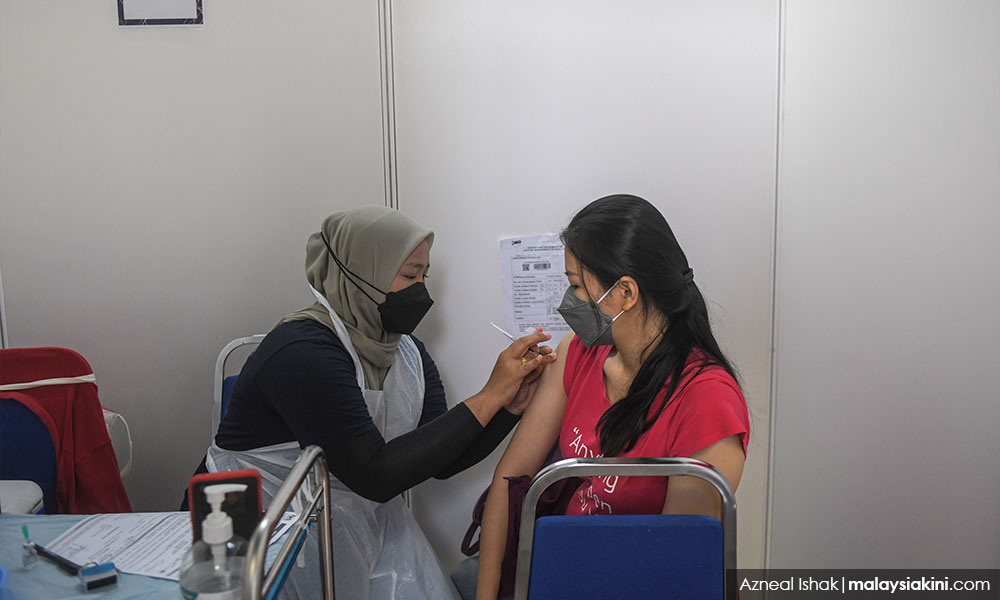
For their close contacts, those who have received booster shots of Covid-19 vaccines will only need to quarantine for five days, while those who didn't get a booster shot will need to quarantine for seven days. An RTK-Ag test will be conducted before being released from quarantine.
Once again, Khairy said this is based on "data, science, and experience of other countries" but did not explain what this meant.
Nevertheless, based on experience with earlier variants, vaccinated Covid-19 patients can clear the infection sooner than their unvaccinated counterparts.
Meanwhile, a small study by the National Institute of Infectious Diseases in Japan attempted to grow the virus from samples taken from 21 patients infected with the Omicron variant - most of them vaccinated - to assess how long these patients would shed the virus into their surroundings.
They found that they could not grow the virus on petri dishes if the sample was taken from these patients more than a few days after their infection was diagnosed, even though some continued to test positive for Covid-19.
This meant there were no 'live' (infectious) virus particles being shed after this point, but the PCR test was still picking up on its 'dead' (non-infectious) remnants.
For symptomatic cases, this started after 10 days from the onset of symptoms. For those who did not have symptoms, this started after six days since their positive test result.
Such findings would lend support for the Health Ministry's new policy if corroborated.
Tomorrow: Tests, vaccines, and what’s new with Omicron?
This KiniGuide is compiled by KOH JUN LIN.