
COMMENT | Custodial death unit or not, cops take instructions from above
COMMENT | Some years back, during a discussion organised by the Society for the Promotion of Human Rights (Proham), I had a tiff with some high-ranking police officers present there.
I was of the opinion that police investigations were instruction-oriented because in similar situations, the police can take two very different actions and it all boils down to what instruction they got from their superior.
The police officers at the meeting were trying to impress me by saying that they are investigation-oriented and do what the law allows them to do. But one can’t blame them because they are duty-bound to follow instructions from above as required from them.
Of course, retired police personnel may say a bit more about what actually goes on.
I was amused when...
COMMENT | Some years back, during a discussion organised by the Society for the Promotion of Human Rights (Proham), I had a tiff with some high-ranking police officers present there.
I was of the opinion that police investigations were instruction-oriented because in similar situations, the police can take two very different actions and it all boils down to what instruction they got from their superior.
The police officers at the meeting were trying to impress me by saying that they are investigation-oriented and do what the law allows them to do. But one can’t blame them because they are duty-bound to follow instructions from above as required from them.
Of course, retired police personnel may say a bit more about what actually goes on.
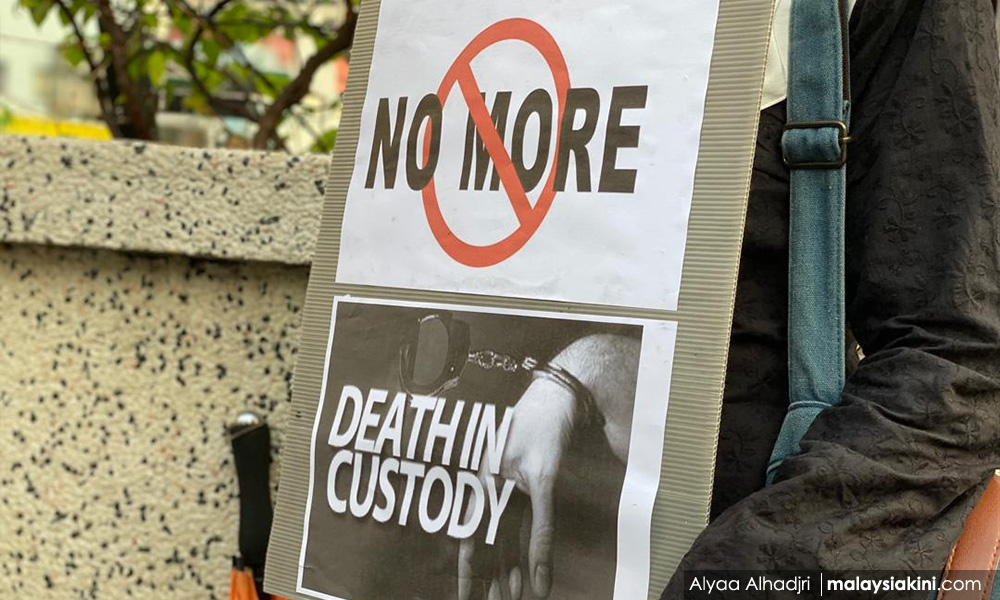
I was amused when a few people welcomed the setting up of the Criminal Investigation Unit (CIU) on Deaths in Custody as some light at the end of the tunnel or a good start. These people also ridiculed human rights activists who did not share their views on this subject.
Everyone familiar with activism work and the history of the Independent Police Complaints and Misconduct Commission (IPCMC) could definitely figure out what Home Minister Hamzah Zainudin was up to and what he is not really committed to.
Police investigating police
Hamzah’s suggestion was nothing earth-shattering. Police have previously set up similar units and have formed task forces before to deal with some cases.
It is also currently our normal practice to ask another police district to investigate or to seek Bukit Aman or the contingent headquarters to investigate a crime when certain police personnel are implicated or seen to be biased. This is not confined to custodial deaths alone.
READ MORE: Death behind bars
In all my police powers training workshops, I do emphasise that people should write this at the end of their police report, “Saya mahu siasatan dilakukan oleh pihak polis berkecuali dan bebas atau pihak polis dari IPD lain”. (I want the investigation to be conducted by impartial police officers and fairly or by another police district).
This is the least we can do until we really have alternatives or a more professional police force.
Anyway, there has never been a concerted effort by NGOs and activists calling for the setting up of this CIU. I am merely stating this here because no one should take credit for something when there was no real campaign work done on it.
This is in comparison with other reforms called by civil society like setting up the IPCMC, the Coroner court, improving lockup conditions, public assembly rights, SOPs, etc.
There are many examples of why the police cannot investigate themselves. The easiest example is when Anwar Ibrahim was punched in the face while he was tied and blindfolded at Bukit Aman.
Yet, the Attorney-General’s Chambers (AGC) has to keep asking the police to reinvestigate the black eye incident because no matter how many officers investigated, the truth never came out until the independent royal commission was set up.
Special in-house task force’s independence
Let me give two other examples which I am familiar with. When Francis Udayappan died in police custody in 2004, activists and lawyers then called for the investigation to be taken over by the contingent headquarters and Bukit Aman. They could not trust the Brickfields Police because of the trust deficit.
Subsequently, a team from the Kuala Lumpur police contingent headquarters took over the investigation. Nevertheless, the lawyers handling the case were not happy with the investigation and the same question of police being impartial kept being raised.
It is very unlikely that the family of custodial death victims will have confidence in police investigation even if it is now under a new in-house unit unless we have a credible and professional police force. Perhaps some people may believe that we do but we are very far from that.
Another incident was when lawyer G Balasunderam, a lawyer for the common folk, was murdered on Nov 16, 2010. It didn’t take long for it to dawn on us that someone had planned in detail and paid hitmen to execute the murder.
There was also a very strong rumour circulating about the people involved and their motive. It involved a family with close connections with the police’s top ranks.
Parti Sosialis Malaysia (PSM) pushed hard along with the Bar Council for a proper investigation. In fact, a special task force from Bukit Aman took over the murder probe.
They made some arrests and, in fact, cracked open the case. But suddenly, this Bukit Aman task force was abruptly told to stop their investigation when they were so close to completing it.
One of the officers was very frustrated and told us in anonymity that the case had been taken off their hands and passed to someone else. These good cops who did a lot of good work in investigating the case were so frustrated and told PSM to keep pursuing it.
However, we were faced with a blue wall and could not get anything else out of the probe.
This is an example that in high-profile cases, a police unit can be set up, but the question is can the unit really be independent, or do they still take orders from their superiors?
If you look at the police pledge taken by each officer – they are to be loyal to the country as well as to their superiors and rank and file.
Now, imagine, can a unit set up by Bukit Aman be able to investigate the disappearances of pastor Raymond Koh and activist Amri Che Mat independently?
Or perhaps the mismanagement of 1MDB, or even the allegations raised by former inspector-general of police Abdul Hamid Bador of a cartel in the force working with criminals?
Disabled man arrested for attempting suicide
In a recent case, let me highlight our experience in asking the Selangor Police Contingent to take over the investigation of a district under its jurisdiction.
Very recently, on Nov 5, 2021, Suaram and PSM wrote a letter to the Selangor CPO and forwarded a copy to Bukit Aman. We wanted them to take over an investigation by the Kuala Kubu Baru police district after a disabled assault victim alleged that his attackers had bribed the police to cover up the case.
The disabled person, who only had one leg, was allegedly attacked by two men in early October this year. He lodged a police report on the incident soon after.
However, the alleged perpetrator then confronted the victim again, stating that he paid RM5,000 to the investigating officer and nothing can be done against him. He also threatened to have the victim decapitated.
On the next day, around 3.30am, three people who introduced themselves as police knocked on his door.
Once he opened his door, they assaulted him, removed his artificial leg, and told him to withdraw his police report, failing which they will harm his family. There were around three of them and they were all wearing face masks.
That same morning, around 7.30am, he attempted suicide by taking some poison bought from a shop. He also recorded a voice note for his brother-in-law and a friend, asking them to take care of his family and that he cannot do much.
But he was very lucky, his friend managed to come and save him. He was sent to the Tanjung Malim hospital and was then later transferred to the Slim River Hospital.
He was discharged from the hospital on Oct 9 and later fled from his hometown, fearing that he would be attacked again.
After some time in hiding, he contacted us and I met him and his family at the PSM office on Oct 27, 2021. After listening to him, we thought the best way is to write a statutory declaration (SD) and have another police department take over the investigation.
After we sent a letter to the Selangor Contingent Headquarters and Bukit Aman on Nov 5, 2021, we thought it was safe for him to go back. We were wrong because, on Nov 11, nine police officers led by the implicated investigating officer came to arrest the disabled person.
Just imagine, nine police officers came to arrest him and wanted to break open his locked door.
His offence that warranted arrest was attempted suicide under Section 309 of the Penal Code. This was the same law that recently the attorney-general and the home minister wanted to decriminalise.
He was then put in police lockup overnight and taken to the Kuala Kubu Baru court the next day in a wheelchair.
After much pressure from us, the victim was released on police bail but was immediately rearrested under a different section of the Penal Code for committing affray, which is punishable with imprisonment of up to six months, a fine of up to RM1,000, or both.
Now, with actions like that, he has lost hope for an impartial investigation by the police at the district level. And yet, until today, the case has yet to be handed to another police district as requested by us. What does this say about building confidence in the police?
Conclusion
Let us not be naïve when we are dealing with these issues. The police are an instrument of the ruling state to remain in power. There is no way they will compromise their control of the police or allow the police to be independent.
On the other hand, the government of the day needs the police and that is why we get a watered-down IPCC – the police’s version. So there are orders always coming from above. From time to time, there will be some cosmetic changes to appease the public.
The fight for an IPCMC is one of those huge battles like the fight to abolish the Internal Security Act only for it to be replaced with the Security Offences (Special Measures) Act. It is only when the power of the people is overwhelming, we will be able to tip the scales over.
The fight goes on.
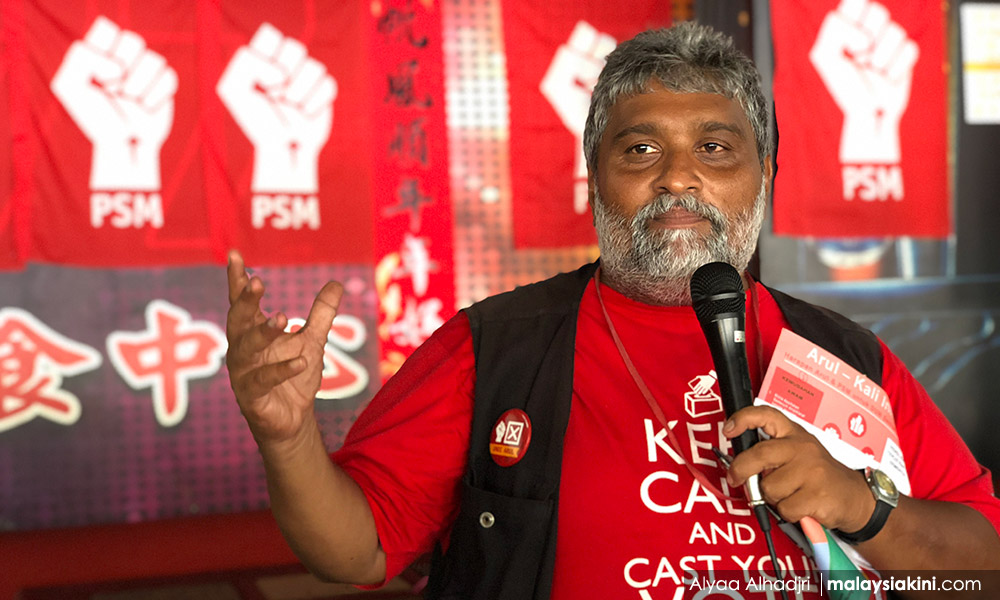
S ARUTCHELVAN is PSM deputy chairperson and a veteran activist.
The views expressed here are those of the author/contributor and do not necessarily represent the views of Malaysiakini.