
DAP’s ‘brave political experiment’ failed in Gopeng
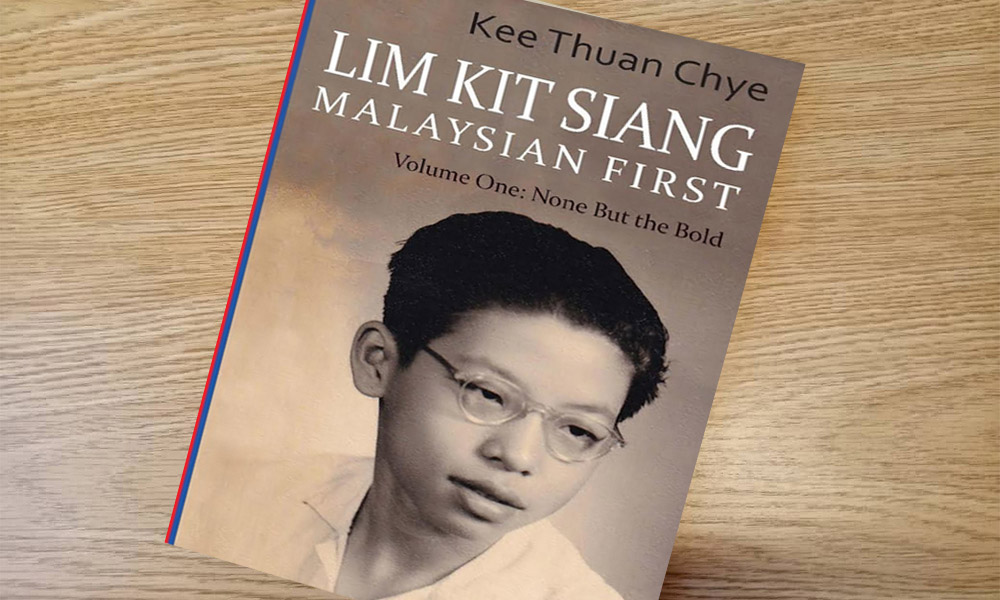
The following is an exclusive excerpt from Chapter 38 of ‘Lim Kit Siang: Malaysian First, Volume One: None But the Bold’, a new biography by Kee Thuan Chye.
Inevitably, the DTCs [Deposit-taking cooperatives] scandal became a focal issue when the by-election for the Gopeng parliamentary seat came up after [MCA leader] Tan Koon Swan resigned as its MP in April 1987. He was then serving his prison sentence in Singapore.
The DAP attacked MCA ministers for not daring to speak up in the cabinet for the 522,000 depositors affected by the DTCs fiasco. They had even sided with their cabinet colleagues in opposing the call for the government to bail out the depositors fully by giving them a dollar-for-dollar refund.
Lim Kit Siang was insistent on this bailout. He said, “If the Barisan Nasional government can allocate RM2.5 billion to bail out Bank Bumiputera over the BMF scandal, it will be guilty of the most unfair and discriminatory practice if it is unable to come out with RM600 million to bail out the 24 cooperatives.”
This point was hammered home throughout the Gopeng campaign. And, given the dreadful situation the MCA was in because of the DTCs, the DAP could have easily romped to victory with a Chinese candidate...
The following is an exclusive excerpt from Chapter 38 of ‘Lim Kit Siang: Malaysian First, Volume One: None But the Bold’, a new biography by Kee Thuan Chye.
Inevitably, the DTCs [Deposit-taking cooperatives] scandal became a focal issue when the by-election for the Gopeng parliamentary seat came up after [MCA leader] Tan Koon Swan resigned as its MP in April 1987. He was then serving his prison sentence in Singapore.
The DAP attacked MCA ministers for not daring to speak up in the cabinet for the 522,000 depositors affected by the DTCs fiasco. They had even sided with their cabinet colleagues in opposing the call for the government to bail out the depositors fully by giving them a dollar-for-dollar refund.
Lim Kit Siang was insistent on this bailout. He said, “If the Barisan Nasional government can allocate RM2.5 billion to bail out Bank Bumiputera over the BMF scandal, it will be guilty of the most unfair and discriminatory practice if it is unable to come out with RM600 million to bail out the 24 cooperatives.”
This point was hammered home throughout the Gopeng campaign. And, given the dreadful situation the MCA was in because of the DTCs, the DAP could have easily romped to victory with a Chinese candidate.
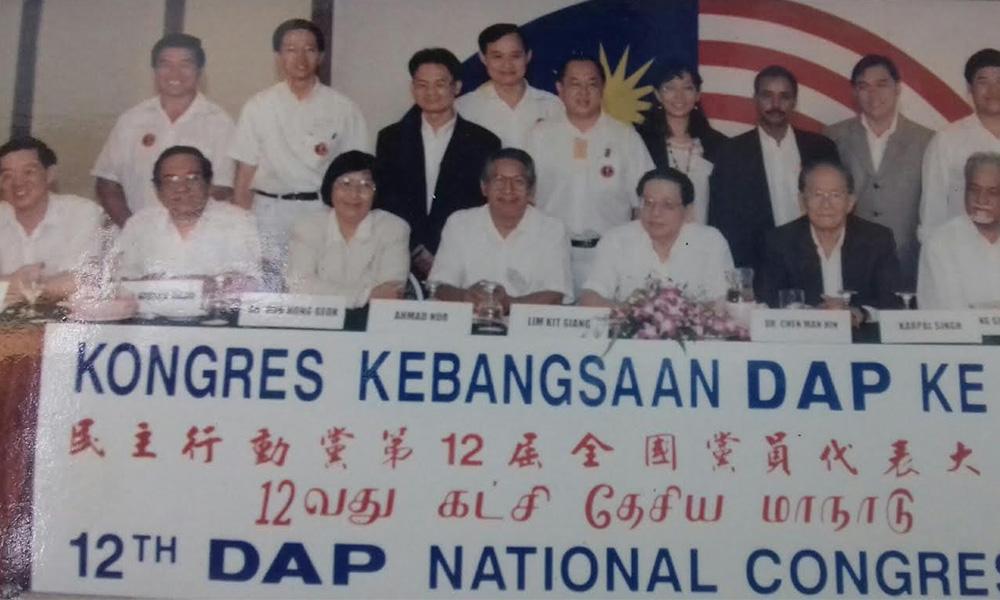
But it decided to field Ahmad Nor. He was a former trade unionist and president of Cuepacs (Congress of Unions of Employees in the Public and Civil Services) before he entered politics and became SDP’s [Socialist Democratic Party] chairman.
In October 1986, he accepted Kit’s invitation to join the DAP and was made one of the party’s deputy secretaries-general.
When Ahmad’s candidature for Gopeng was announced, local DAP members were up in arms against it. They protested strongly that the party should field a Chinese candidate.
Kit, however, stood his ground and was no doubt called a “dictator”, as usual. But his reasons for fielding Ahmad were not only compelling, they were forward-looking and even ahead of its time.
“The DAP is a multiracial Malaysian party dedicated to the building of a united Malaysian nation and society,” he reminded his detractors.
Seeking a breakthrough
As far back as 1969, the party had fielded Malays and they had been elected as state assemblymen. “But until now, we have not succeeded in getting a Malay MP elected on the DAP platform,” he said.
Thus, the choice of Ahmad was part of its attempt to make a “breakthrough to fuller multiracial politics”. This, he said, was “urgently needed not only for the DAP, but for the Malaysian people and nation” as they were facing “even greater division, national disaffection and a deep and abiding crisis of confidence”.
He urged the voters to reject the MCA’s campaign theme of “only a Chinese can serve the Chinese”. After all, he added, Chinese history had shown that “a Chinese could also betray the Chinese”.
Then he brought in the DTCs scandal by asking who had created it and caused over 50 percent of the Chinese community to suffer losses in the crisis. “None other than the MCA politicians,” he said. As such, the MCA must be adjudged the greatest enemy to ordinary Chinese Malaysians.
Getting back to the DAP’s “serious commitment” to uniting all Malaysians, regardless of race, he asked, “What would be the meaning of a victory for the DAP and Ahmad Nor in Gopeng?” His answer: “It would mean that Malaysians can begin to move away from the politics of race.”
It would represent hope for Malaysians, whereas an MCA victory would only mean “a return to scandals, corruption, abuses of power, and betrayal of the rights of the people”.
Despite Kit’s passionate plea, the voters voted on May 16, 1987, along racial lines and gave the seat to MCA’s Ting Chew Peh. He won with 60.62 percent of the total votes while Ahmad managed to get 38.89 percent.
The DAP’s “brave political experiment” failed. Gopeng was a constituency with a Chinese majority. Unlike Kit, the voters were not ahead of their time.
When Kit Siang had a run-in with the headmaster
How Kit Siang met his high-school sweetheart
Kit Siang - from journalist to MP’s aide
The time when Kit Siang stood up for PAS
DAP’s long march to Bukit China
Dr M unable to stop probe into BMF scandal
‘Lim Kit Siang: Malaysian First, Volume One: None But the Bold’ is available in all major bookstores. The book will be officially launched online on Nov 9. Click here for more information.