
When Kit Siang had a run-in with the headmaster
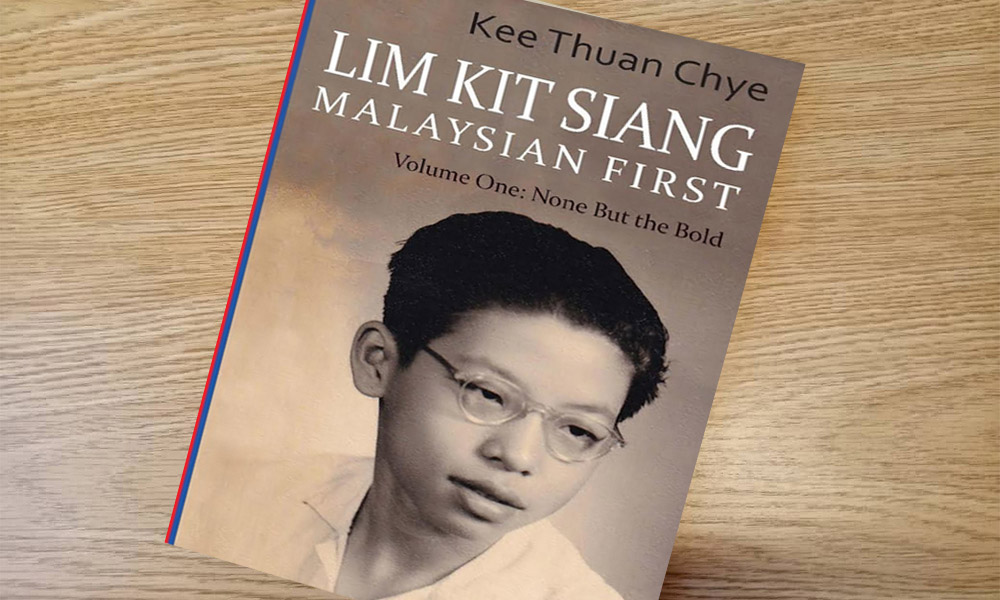
The following is an exclusive excerpt from Chapter 3 of ‘Lim Kit Siang: Malaysian First, Volume One: None But the Bold’, a new biography by Kee Thuan Chye.
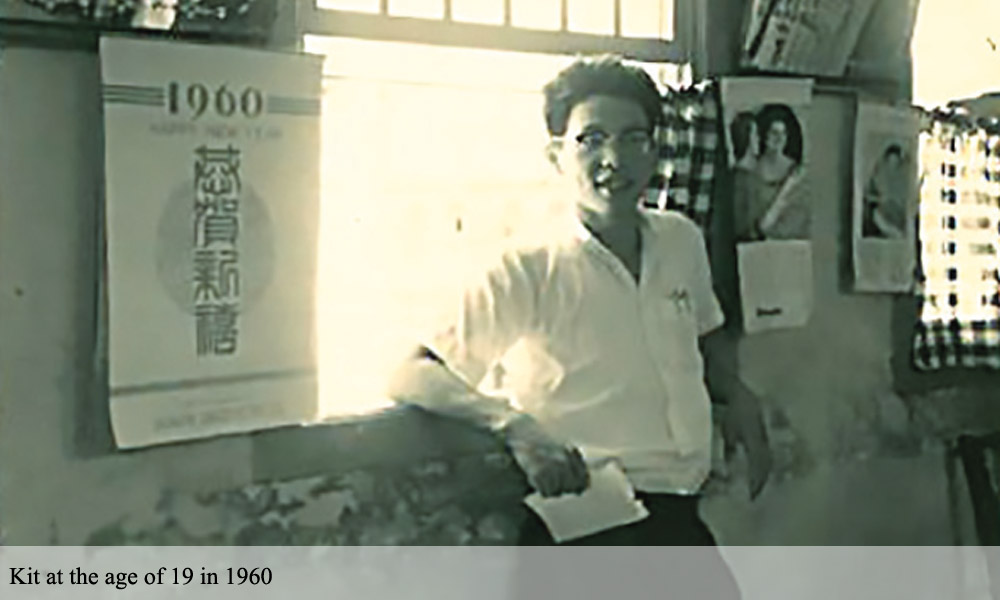
Apart from starting the book club [at the High School Batu Pahat], Kit came to be in charge of the school library. In fact, his involvement in extra-curricular activities was quite extensive. At school level, he became chairman of the Science Society and vice-chairman of the Debating and Literary Society, and he was appointed deputy head prefect.
In Form 5, he was also editor of the school magazine, The Pilot, a position and responsibility that became naturally his because as early as when he was in Form 3, he had already come up with the initiative to start a class magazine that featured original writing by him and his classmates. It was an unprecedented enterprise admirably undertaken entirely by the students without direct help from teachers. “It was the first of its kind,” Kit proudly says.
Michael [Ong, Kit’s fellow schoolmate] affirmed it in his reminiscences of those days: “This venture was unheard of in the school’s history.” And Kit’s purpose, he added, was to encourage students to express themselves and be heard “rather than merely be at the receiving end of everything dished out by the system”.
The class magazine was called The Light, and Kit was one of its four joint editors. It came out in that historic year of 1957, in November. The new Merdeka spirit was plainly reflected in an editorial, written by Kit, that exhorted youths to do their part for the newly independent Malaya, to be at once servants and leaders of the country, and to acknowledge that...
The following is an exclusive excerpt from Chapter 3 of ‘Lim Kit Siang: Malaysian First, Volume One: None But the Bold’, a new biography by Kee Thuan Chye.
Apart from starting the book club [at the High School Batu Pahat], Kit came to be in charge of the school library. In fact, his involvement in extra-curricular activities was quite extensive. At school level, he became chairman of the Science Society and vice-chairman of the Debating and Literary Society, and he was appointed deputy head prefect.
In Form 5, he was also editor of the school magazine, The Pilot, a position and responsibility that became naturally his because as early as when he was in Form 3, he had already come up with the initiative to start a class magazine that featured original writing by him and his classmates. It was an unprecedented enterprise admirably undertaken entirely by the students without direct help from teachers. “It was the first of its kind,” Kit proudly says.
Michael [Ong, Kit’s fellow schoolmate] affirmed it in his reminiscences of those days: “This venture was unheard of in the school’s history.” And Kit’s purpose, he added, was to encourage students to express themselves and be heard “rather than merely be at the receiving end of everything dished out by the system”.
The class magazine was called The Light, and Kit was one of its four joint editors. It came out in that historic year of 1957, in November. The new Merdeka spirit was plainly reflected in an editorial, written by Kit, that exhorted youths to do their part for the newly independent Malaya, to be at once servants and leaders of the country, and to acknowledge that “co-operation between the different races is of paramount importance”.
Fellow editor Lim Jin Siew says the editorial was really impressive. “It revealed to me that in thought and vision, Kit was way ahead of many, if not all, of us.”
It is also interesting to note that 54 years later, on the eve of his 70th birthday in 2011, Kit was to write in his blog that “looking back, I have largely lived by the spirit of this schoolboy editorial”.
The forward-looking attitude it expressed is also embedded in another piece he contributed to that same issue of The Light, an essay called ‘Student politics’ in which he argued that although students should not take part in political activism, they should be encouraged to take a deep interest in politics. He posited that “if we are going to be future leaders, capable, efficient, we must be observant. Can we be observant if we are oblivious of the current events happening in Malaya?”
He asked the question, “Will it do us harm if we know and understand the various political ideologies of other people, other nations, and other communities?”, and answered it with an emphatic “No!”
The following year, Kit and his Form 4 classmates kept up their class magazine enterprise by producing The Phoenix, this time at an enhanced frequency of one issue per term over the three terms of the academic year.
Banned from using school’s Gestetner
All in all, the students were a shining example to the school for their magazine-producing efforts. Each issue was at least 100 pages long, filled with articles on a variety of subjects contributed by at least half the class. It required teamwork and class support to produce – from writing the articles to editing them to typing the edited material onto stencils to printing the pages on a cyclostyle machine to arranging the cyclostyled pages in proper order and finally binding them together.
Allan [Goh] was one of the students who worked at the various stages of the production process and willingly sacrificed his time to do it. “What I can remember is Kit, myself and a few others working deep into the night typing, printing and binding those magazines. That is something all of us are immensely proud of, even to this day,” he says.
It was on one of those occasions when the boys were cyclostyling pages for their class magazine using the Gestetner machine in the school’s office that Kit got into an exchange of words with the school’s principal.
Jin Siew was there, too, and he recalls that it began on a weekend morning when he, Kit and a few others went to the school to print Volume II of The Phoenix but found the school office locked. So they headed to the headmaster’s official residence, which was located next to the main school building, to ask for the key.
The headmaster, P Gunaratnam, wasn’t in. His son told the boys that he had gone to Singapore and would return quite late in the evening. The boys asked if they could borrow the key to the school office as they absolutely needed to use the cyclostyle machine, and Gunaratnam’s son reluctantly handed it to them.
Kit and company then proceeded with their printing work, which went on from morning till night. “Printing in those days was messy business with stencils and oily ink. That was why we took such a long time to do it,” explains Jin Siew.
Then suddenly, the headmaster showed up. The boys had got boisterous and talked and laughed loudly. This got to the headmaster’s ears when he returned home, and he decided to find out what the seeming rowdiness was about. “He berated us at once and frightened us into silence. There was no doubt at all he was very furious,” says Jin Siew.
Allan, who was present, says Gunaratnam haughtily told the boys they would no longer be allowed to use the school’s printing machine because they were not actually working but having a party.
Kit’s sense of righteousness was piqued, he felt that he and his friends were being wrongly accused.
He told the headmaster in no uncertain terms that he and his classmates were not having a party but were actually working seriously, and that the printing they needed to do was for a good cause because it was part of their school life and personal development. The headmaster, however, remained unmoved, and ordered everyone to leave the premises.
“This incident caused a stir among teachers and students when it became known,” says Jin Siew. And because of the prohibition on the use of the school’s cyclostyle machine, the next volume of The Phoenix, of which he was the editor, had to be printed elsewhere.
How Kit Siang met his high-school sweetheart
Kit Siang - from journalist to MP’s aide
The time when Kit Siang stood up for PAS
DAP’s long march to Bukit China
‘Brave political experiment’ failed in Gopeng
Dr M unable to stop probe into BMF scandal
‘Lim Kit Siang: Malaysian First, Volume One: None But the Bold’ is available in all major bookstores. The book will be officially launched online on Nov 9. Click here for more information.