
MOH studying additional Covid-19 measures in Sarawak
The Health Ministry is looking into what is causing the rising number of Covid-19 cases and hospitalisations in Sarawak despite the high vaccine coverage there.
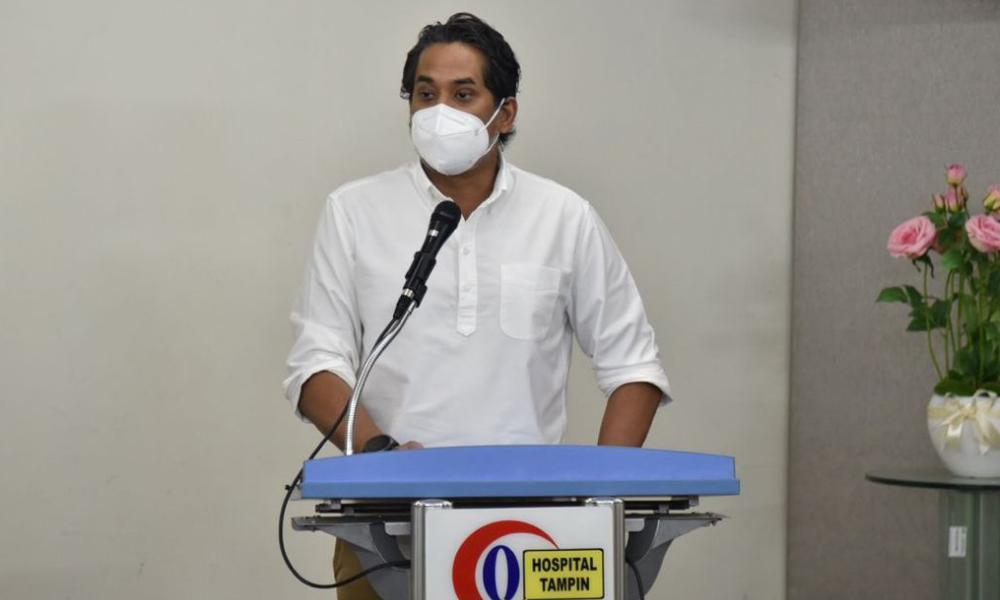
Health Minister Khairy Jamaluddin said they are unsure what the cause is but he has requested a more detailed analysis.
One possibility being considered is...
The Health Ministry is looking into what is causing the rising number of Covid-19 cases and hospitalisations in Sarawak despite the high vaccine coverage there.
Health Minister Khairy Jamaluddin said they are unsure what the cause is but he has requested a more detailed analysis.
One possibility being considered is that the effectiveness of the vaccines are starting to wane over time.
Khairy added that Sarawak is boosting its vaccine coverage by vaccinating adolescents starting yesterday.
In addition, a technical committee on vaccine selection has been asked to provide recommendations on booster shots for the Special Committee for Ensuring Access to Covid-19 Vaccine Supply’s (JKJAV) next meeting, which will be held next week.
After the JKJAV meeting, Khairy said he will travel to Sarawak to discuss additional measures to contain the outbreak with the state government.
“But of course, in terms of testing, tracing, and isolation, it will be very important in Sarawak right now because what is happening in Sarawak could possibly happen in other states in a few months time, if it is because of the waning effect of the vaccine.
“So, we have to see what are the immediate measures we can do to stop the increased rate of transmission in Sarawak, and use that as a playbook for other states which may encounter a similar situation,” he said.
Khairy was speaking during a press conference at his ministry’s headquarters in Putrajaya today.
Sarawak enjoyed a headstart in the Covid-19 vaccination program in anticipation of the upcoming state election.
It now enjoys a vaccination rate of 63.7 percent of its entire population, which is the third-highest in Malaysia after the Klang Valley (72.0 percent) and Labuan (65.8 percent).
Nevertheless, Covid-19 cases and subsequent hospitalisation in the state have been rising since mid-August, though Covid-19 deaths remained in the single-digits and comprised mainly of unvaccinated people.
As of yesterday, Sarawak was using 1,022 (88 percent) of its non-ICU beds allocated for Covid-19 care, and 120 (76 percent) of its Covid-19 ICU beds. Both numbers have been trending upwards since August.
In comparison, the national average is 77 percent non-ICU bed utilisation and 82 percent ICU utilisation.
Previously, other countries that achieved high vaccination rates, such as Israel, have reported resurgent Covid-19 cases.
It is less clear whether this was due to waning immunity, reopening of the economy, the arrival of the highly transmissible Delta variant, or some combination of these factors.
This is because studies to date are unable to tease apart these confounding factors that often coincide.
While antibody levels certainly do wane after six months or more, this does not necessarily mean a drop in vaccine protection especially against severe cases.
This is due to the presence of other vaccine-induced immune responses that are longer-lasting than antibodies but only kick-in during later phases of a person’s infection.
Meanwhile, Khairy said these factors that may be behind surges in other countries could now be playing out in Sarawak.
Those countries have started administering booster shots especially to the elderly, immunocompromised people, and healthcare workers. The minister said Malaysia has not ruled out the possibility of following suit.
“But again, I've asked for a more granular analysis on this. We will be able to announce something when I head over to Sarawak,” he added.