
COMMENT | Close chapter on 'Allah' saga, focus on policies
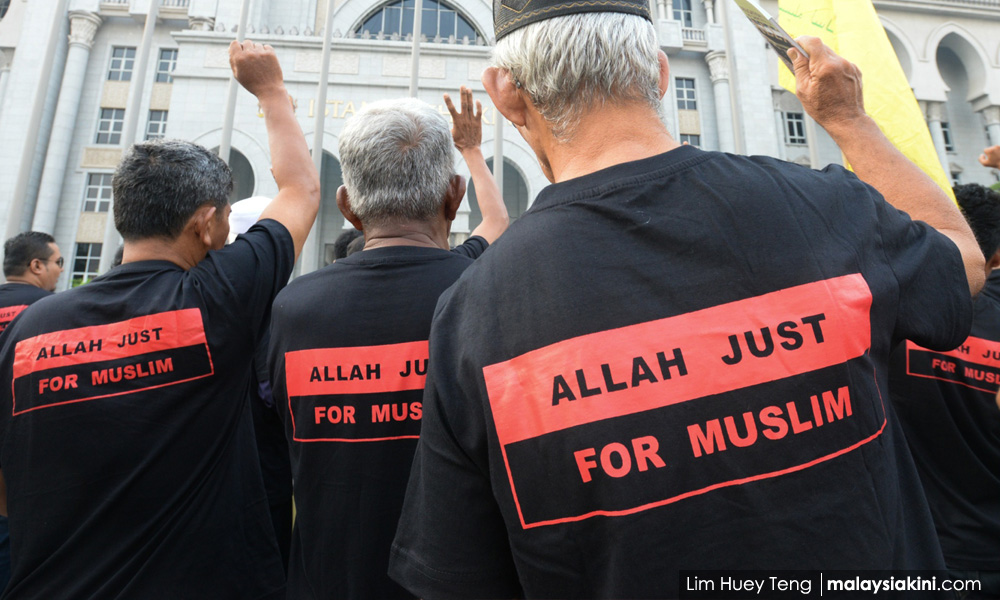
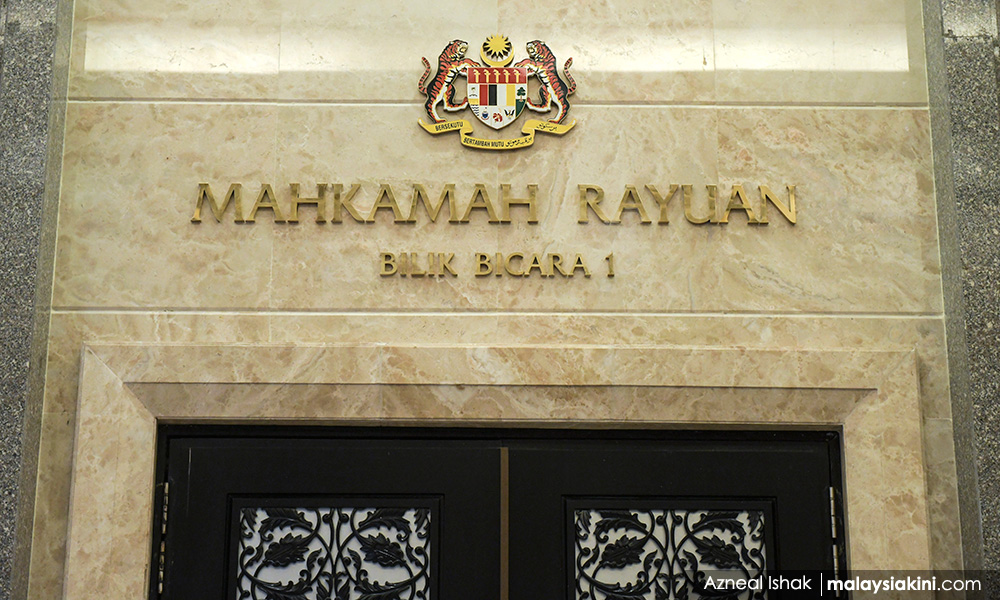
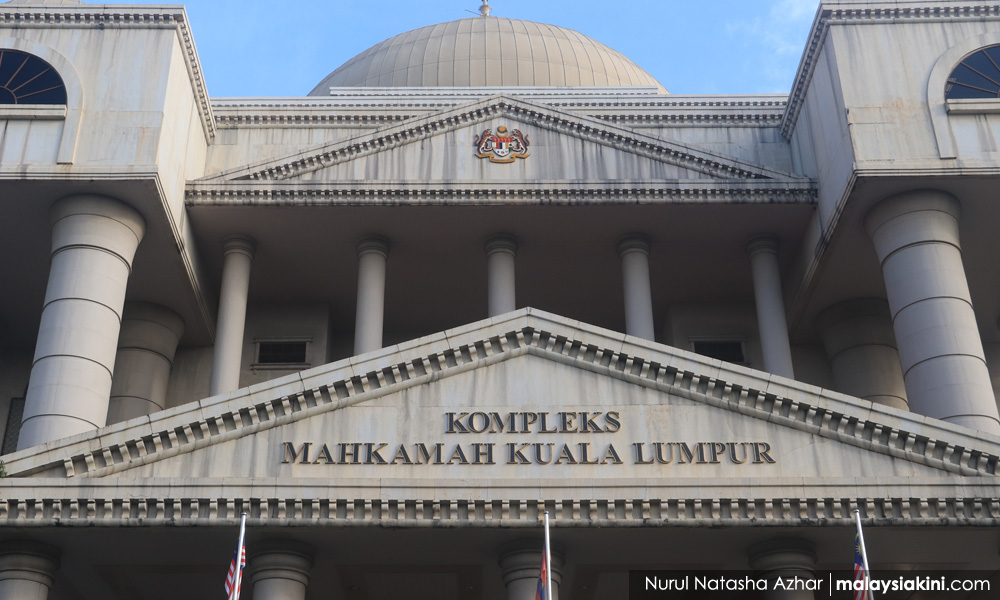
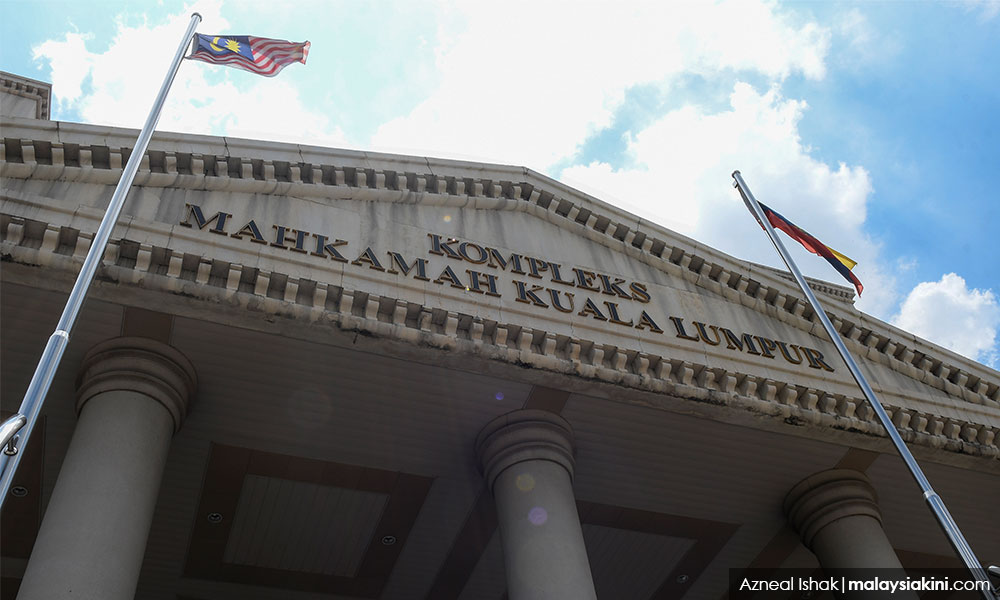
COMMENT | Upko urges the federal government not to appeal against the Kuala Lumpur High Court’s groundbreaking decision on March 10 that declared the 1986 federal ban preventing non-Muslim from using the word "Allah" as unlawful and unconstitutional.
The verdict is not an encroachment on Muslims, as some Malayan political entrepreneurs are attempting to frame.
It is a restoration of the pre-1986 status quo, part of the original Malaysia promised to Sabah and Sarawak in 1963.
All parties should come together and seize the golden opportunity given by the High Court’s decision to close an ugly chapter in the playbook of identity politics in Malaysia.
For decades, this polemic has hurt so many Bornean and Orang Asli Christians, and their Muslim families and friends who share the pain...
COMMENT | Upko urges the federal government not to appeal against the Kuala Lumpur High Court’s groundbreaking decision on March 10 that declared the 1986 federal ban preventing non-Muslim from using the word "Allah" as unlawful and unconstitutional.
The verdict is not an encroachment on Muslims, as some Malayan political entrepreneurs are attempting to frame.
It is a restoration of the pre-1986 status quo, part of the original Malaysia promised to Sabah and Sarawak in 1963.
All parties should come together and seize the golden opportunity given by the High Court’s decision to close an ugly chapter in the playbook of identity politics in Malaysia.
For decades, this polemic has hurt so many Bornean and Orang Asli Christians, and their Muslim families and friends who share the pain.
Upko appeals to all Muslim-led parties, Bersatu, Umno, PAS, PKR, Amanah, PBB, Warisan, Parti Pejuang Tanah Air (Pejuang) and Malaysian United Democratic Alliance's (Muda) to explain to their base that the High Court’s decision is not an encroachment on or threat to Muslims.
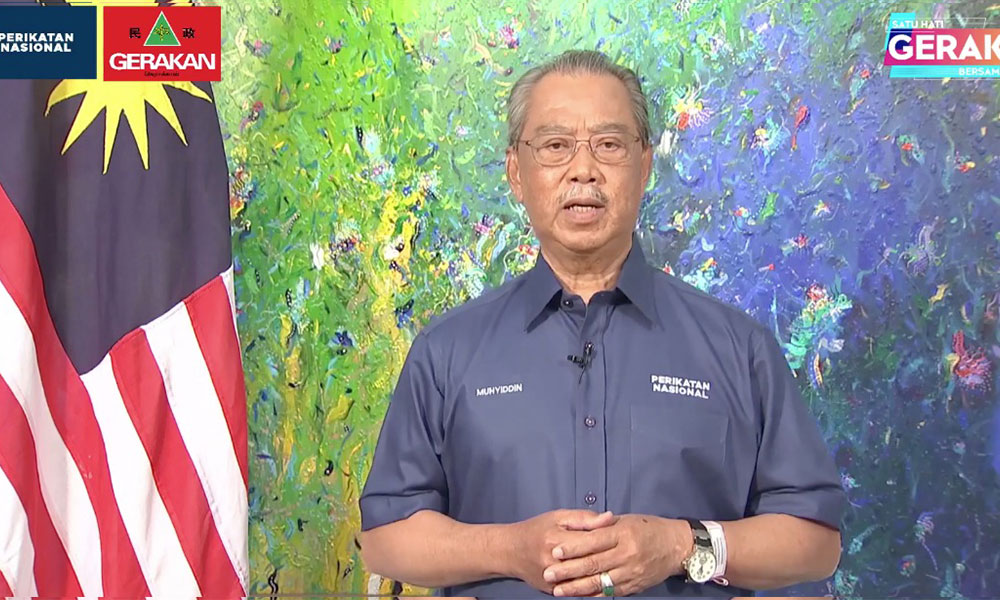
It is particularly important for Prime Minister Muhyiddin Yassin to show leadership.
Muslim-led parties, especially those that take a firm stand, may face wild accusations of political entrepreneurs from within their ranks or from the rival camps of being weak, but it is a national service we badly need from them.
Upko welcomes PAS president Abdul Hadi Awang’s reconciliatory statement that there is no prohibition but only limits to non-Muslims in using the word "Allah".
Upko urges fellow opposition parties to restrain their own grassroots from using the court ruling to attack government parties for being soft, even if they were previously subject to such unfair attacks.
Compete on policies
The opposition must compete with the government on issues related to health, economy, education, environment and others, but never one-upmanship in the zero-sum game of ethnicity and religion.
Upko calls upon all existing 56 MPs from Sabah (including Labuan) and Sarawak and their parties to unite in defending the partial restoration of original Malaysia.
More than any others, Borneans must use our political clout to make sure the High Court’s decision is not reversed.
Regardless of which side of the divide, Borneo-based parties must be prepared to cut ties, now and even after the next general election, with any parties that irresponsibly fanning public discontent against the High Court’s decision.
Borneo parties must not accept anti-Borneo Malayans as government partners.
Upko warns Malaysians against taking likely the consequence of fanatic agitation.
In January 2010, churches were set on fire, with two men eventually jailed for five years in one case, and mosques were desecrated following some Malayan groups’ agitation against the High Court’s first decision on Dec 31, 2009 to unban the use of "Allah" in a challenge filed by Catholic newsletter The Herald.
Upko urges Sabah chief minister Hajiji Noor, and Sarawak Chief Minister Abang Johari Abang Openg, to invite the top leaders of all Borneo-based parties to discuss forming a united front to defend the partial restoration of original Malaysia if the agitation by some extremist Malayans gains momentum.
Unbanning the word "Allah" undoes an encroachment on Borneans and restores the pre-1986 status quo.
The 1986 federal cabinet’s decision to ban non-Muslims from using the word "Allah" and the growing support in Malaya reflect a hegemony-insecurity complex and a siege mentality in some Malayans.
Innocent Borneans and Orang Asli became the casualties of their arrogance and ignorance.
Conspiracy theory
These Malayans are obsessed with converting others to their faith and develop a paranoia that others are doing the same.
They believe the reason that Christians always pray in the Malay language, as they also do in English, Chinese and Tamil, is a conspiracy to convert Malays into Christianity.
These “frogs under coconut shells” (katak di bawah tempurung) project the country, including Sabah and Sarawak, they imagine, oblivious that the Malay language was used for centuries in Nusantara by Christians, including Bornean natives and Orang Asli.
Words like "Allah" have been used by Muslims, Christians and others in Nusantara and Arabia without copyright disputes.
The proponents of the "Allah" word ban are competing with each other for one-upmanship in Muslim nationalism.
They frighten Malayan Muslims that Christians using words like" Allah" would confuse and convert Muslims, resulting in the demographic, political, economic and social decline of the Muslims.
They mistake Bornean Christians as preacher Zakir Naik who zealously puts down other faiths in his pseudo comparative religion analysis.
Bornean Christians are the antithesis of Zakir Naik. They have siblings, cousins and friends in Islam and other faiths, and they respect each other.
Celebrating diversity
Come to Sabah and Sarawak once interstate travel is permitted and see for yourself how interfaith families or clans celebrate each other’s festivals without fearing being converted.
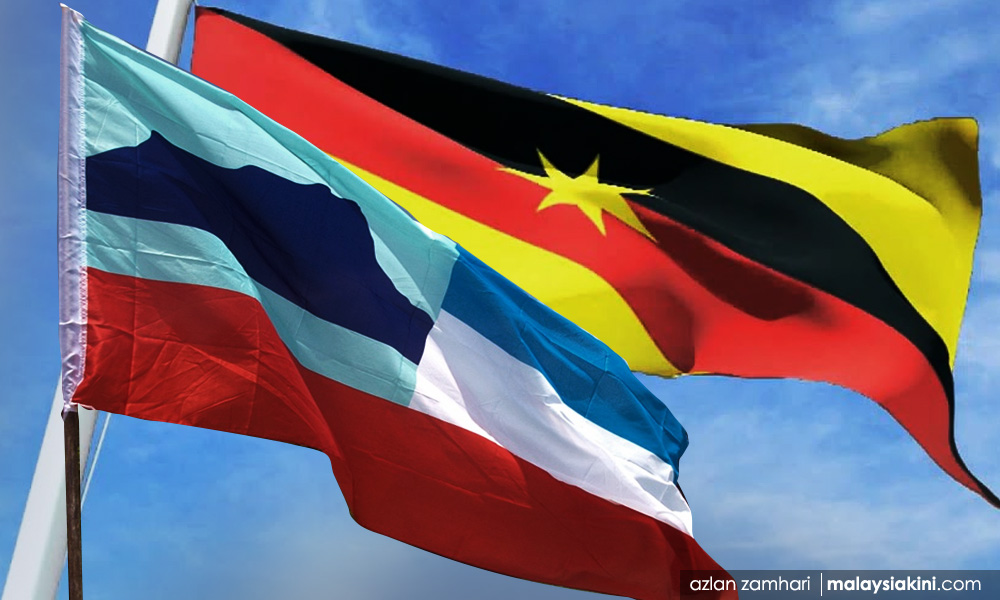
Borneans – be they Muslim, Christian, Buddhist, Taoist, Hindu, Sikh, Animist or Atheist – live to love each other, not to win the number game by zealously confusing, condemning and converting others.
God-loving Borneans understand that if God so wants, He would have made us in one faith.
They recognise that we humans are made differently so that we can know and respect each other.
They sincerely believe that it is God’s right, no one else’s, to decide who and when to see the light or guidance.
Stop the fear-mongering that the restoration of the pre-1986 status quo would see Malay-speaking Christians going on a proselytising spree to convert Muslims.
Stop making the victims - Borneo and Orang Asli Christians – the villains in your ugly Malayan game.
Unbanning the word "Allah" restores Malaysia’s commonality with 96 percent of Organisation of Islamic Coopearation (OIC) nations.
The pre-Islam Arabic word, "Allah" (God), has been used by both Muslims and Christians in the Arab world for 1,442 years and in Nusantara for 476 years.
The Iban word for God, "Allah Taala", has the same origin.
The Malayan paranoia of cross-faith use of the word "Allah" causing confusion is found nowhere else in the Muslim world.
Christians using the word "Allah" in both Arabia and Nusantara has not resulted in a fall of Muslim percentage in their populations.
No ban in other Muslims countries
Neither Saudi Arabia nor Indonesia has such a ban on the word "Allah". The Malayan paranoia is not found in Indonesia or Saudi Arabia.
The High Court decision will not make Malaysia less Islamic.
Unbanning Allah reaffirms Bahasa Malaysia as a national language.
There is no "Allah" ban in the Arab and Indonesian languages because they are the national language, not a Muslim-exclusive religious language, for all citizens in the Arab countries and Indonesia.
Christians and other non-Muslims don’t have to switch to another language when they pray.
The ban proponents must remember that Malay is a lingua franca, spoken as a common second language by many non-Malays in Nusantara, Borneo natives and Orang Asli included.
While the use of Malay in the Borneo states declined during the colonial time, the trend was successfully reversed with the implementation of the National Language Act 1967, the National Language Policy and the National Education Policy.
In this sense, the 1986 ban on the "Allah" word was a backhanded assault by Muslim religious nationalists on Malay linguistic nationalism, which aims to make Bahasa Malaysia popularly used by all Malaysians including non-Malays and non-Muslims.
The High Court’s decision must also be celebrated as a victory for Bahasa Malaysia.
The Malay language cannot effectively function as Bahasa Malaysia if Muslim and non-Muslim speakers are subject to a ‘vocabulary apartheid’ when they pray to and think about God.
Unbanning the word "Allah" reduces politicalisation of religion. Malaysians especially Borneoans must stand up for the original Malaysia.
Upko prays that Allah will bless all Malaysians who pray to him in mosques, churches and gurdwaras, as well as Buddhists, Taoists, Hindus, Bahais, animists and humanists.
Upko prays that Allah will bless all with humility to appreciate that our religious, ethnic, cultural and linguistic diversity is His grand plan for us to know, love and care for each other, and not despise, disrespect and discriminate against each other.
Upko prays that Allah will bless leaders of all parties with wisdom and courage to embrace the High Court’s decision on March 10 as a key step in restoring and building back a better original Malaysia.
Upko prays that Allah will bless the existing 56 MPs from Borneo Malaysia with a deep love for original Malaysia to do what is necessary to reduce the politicalisation of religion.
This statement was jointly issued by leaders of Upko, namely its president Madius Tangau, deputy president Donald Peter Mojuntin, vice-president Ewon Benedick, secretary-general Nelson Anggang, youth chief Felix J Saang, women's chief Juliana Jani, young generation movement chief Maxolvin Santore and council of elders chief Wences Anggang.
The views expressed here are those of the author/contributor and do not necessarily represent the views of Malaysiakini.