
Marrakesh Treaty will enhance access to info for the blind - activists
Malaysian disability rights activists have urged Malaysia to ratify the Marrakesh Treaty to empower and facilitate access to published works for persons who are blind or partially sighted.
While neighbouring nations such as Cambodia, Indonesia, Thailand, and Singapore are among the more than 67 countries that have ratified the treaty, Malaysia has not acceded to the agreement yet.
The Marrakesh Treaty was adopted by the World Blind Union (WBU) and World Intellectual Property Organisation (Wipo) on June 27, 2013, and it came into force on Sept 30, 2016. The treaty is in line with Articles 21 and 24 of the UN Convention on the Rights of Persons with Disabilities.
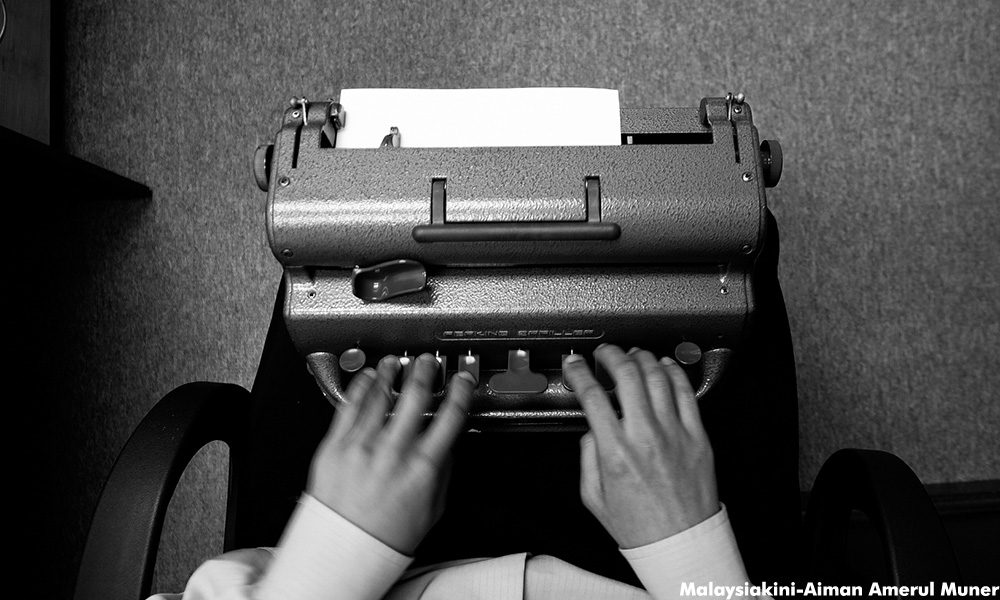
Signatories to the treaty will enjoy special access to publications in Braille and in large print, audio and digital formats, and other reading materials without the threat of copyright infringements, thus reducing the disparity in access to education for the blind...
Help needed for 50k blind population in Malaysia, especially during Covid-19 times.
Malaysian disability rights activists have urged Malaysia to ratify the Marrakesh Treaty to empower and facilitate access to published works for persons who are blind or partially sighted.
While neighbouring nations such as Cambodia, Indonesia, Thailand, and Singapore are among the more than 67 countries that have ratified the treaty, Malaysia has not acceded to the agreement yet.
The Marrakesh Treaty was adopted by the World Blind Union (WBU) and World Intellectual Property Organisation (Wipo) on June 27, 2013, and it came into force on Sept 30, 2016. The treaty is in line with Articles 21 and 24 of the UN Convention on the Rights of Persons with Disabilities.
Signatories to the treaty will enjoy special access to publications in Braille and in large print, audio and digital formats, and other reading materials without the threat of copyright infringements, thus reducing the disparity in access to education for the blind.
Cross-border sharing
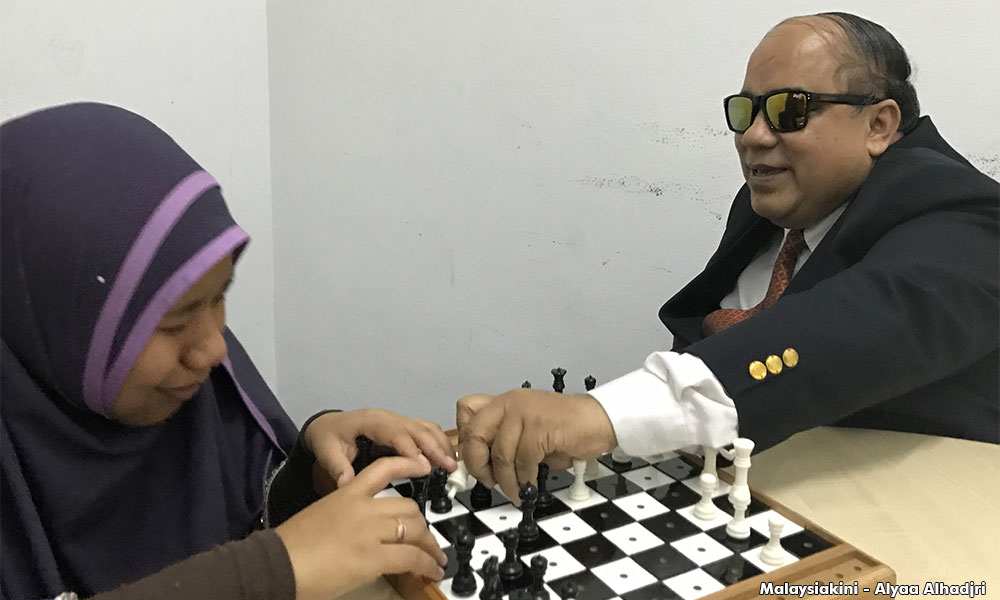
Ahmad Shamsuri Muhammad, who is the chairperson of the Human Capital Development committee of the Society of the Blind in Malaysia, said the time has come for the country to address the blind community’s thirst for knowledge.
The WBU said in 2013 that although millions of books are published throughout the world annually, only one to seven percent of them are accessible to the 285 million persons worldwide who are completely blind, partially sighted, and have difficulties reading printed text.
“The most relevant issue in conjunction with World Braille Day 2021 is the Marrakesh Treaty. In fact, the WBU has urged all nations to ratify and implement the treaty which allows the distribution of publications in Braille and other reading materials that can be accessed without the threat of copyright infringements.
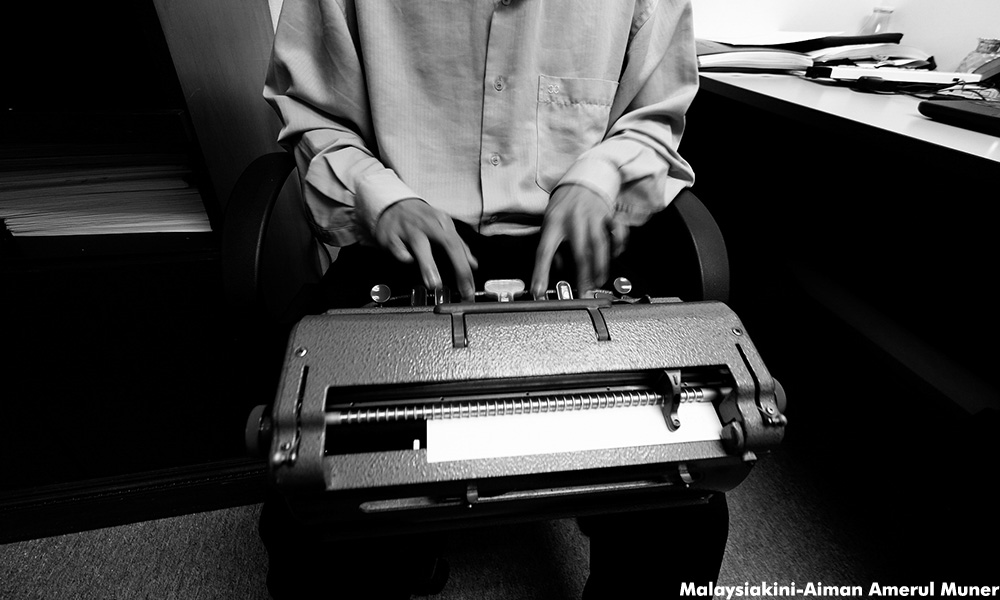
“This (implementation of the Marrakesh Treaty) is the best way to ensure that Braille publications remain relevant along with new technologies. It is also crucial for the less developed nations where the high cost of producing publications in Braille is limiting the availability of reading materials for the visually impaired,” said Shamsuri to Bernama.
Shamsuri, who is also a senior lecturer at the Department of Educational Psychology and Counselling at Universiti Malaya said local non-governmental organisations representing the blind had participated in a dialogue session on the issue in April 2018.
The dialogue, organised by the Intellectual Property Corporation of Malaysia (MyIPO) discussed Malaysia’s preparations to ratify the Marrakesh Treaty.
Following the dialogue, MyIPO, together with Wipo and the International Federation of Library Associations and Institutions, organised a national seminar in August 2018 to impart information to the stakeholders concerned to ensure Malaysia’s participation in the Marrakesh Treaty within the stipulated time.
“Although several measures were agreed upon at the seminar, however, there have been no positive developments to date,” he added.
Personal experience with Braille
Recounting his personal experience, Shamsuri, who is completely blind, said he owed his success to reading materials in Braille which he described as his most valuable assets.
“These materials in Braille format helped me a lot since the time I was very young up to the stage when I obtained my doctorate. But there were times when I faced constraints in securing reading materials, which hampered my access to information and knowledge that is readily available to others (able-bodied individuals),” he said.

As a university lecturer, he is still facing certain constraints in terms of the textbooks used by his students who have sight.
“Since they use textbooks in the normal print format, I have to get to know the contents of these books beforehand. For this purpose, I have to get the textbooks concerned in Braille format to ensure a smooth teaching and learning process.”
With respect to this, he added, it is crucial that Malaysia ratifies the Marrakesh Treaty to facilitate the sourcing of the relevant publications in Braille from other countries.
Shamsuri also pointed out that Malaysia has to amend its Copyright Act 1987 before ratifying the Marrakesh Treaty to allow imported and exported reading materials to be converted to Braille format.
Disabled-friendly websites
Malaysian Foundation for the Blind founder and CEO Silatul Rahim Dahman, meanwhile, said the existence of various reading materials in Braille is helpful to the blind community in terms of their educational and socioeconomic development, as well as their ability to secure employment.
Hoping that efforts will be stepped up to provide information in formats that can be accessed by the blind, he said it will facilitate Malaysia’s estimated 50,000 blind population’s access to information, especially during these Covid-19 times when a lot of information is being disseminated digitally or via online platforms.
“We hope the relevant agencies can develop websites that can be accessed by the visually disabled based on the guidelines determined by the World Web Consortium. For example, explanations in text and audio formats must be given for all images and infographics because the screen reader software cannot read images and infographics in full.
“Apart from that, online applications for aid and entrance into educational institutions, financial transactions, e-commerce activities, as well as all forms of applications and checks carried out online, must take into consideration the constraints faced by users who cannot see or hear,” he said.
Suggesting that an alternative support system be developed for online services that are not disabled-friendly, Silatul said a call centre, for example, can be set up for the blind to contact for assistance.
- Bernama