
Umany: Understanding its history, evolution and what makes it tick
KINIGUIDE | We look at the students' association making itself heard as it advocates freedom, democracy and justice.
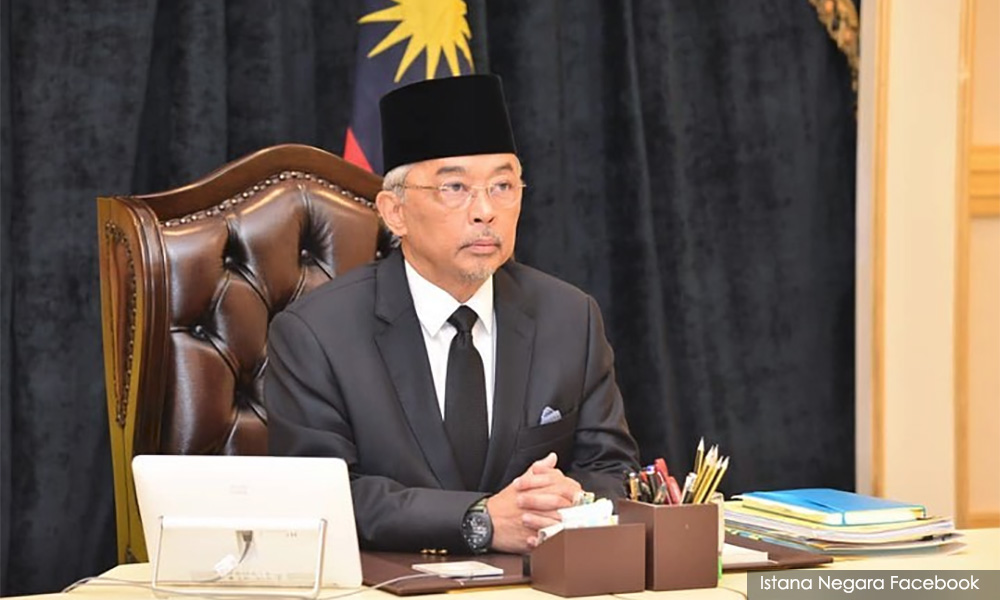
KINIGUIDE | The spotlight landed on Universiti Malaya Association of New Youth (Umany) when it published a statement that the Yang di-Pertuan Agong should not interfere in national affairs.
The association argued that the monarch should exercise his powers within the framework of the Federal Constitution.
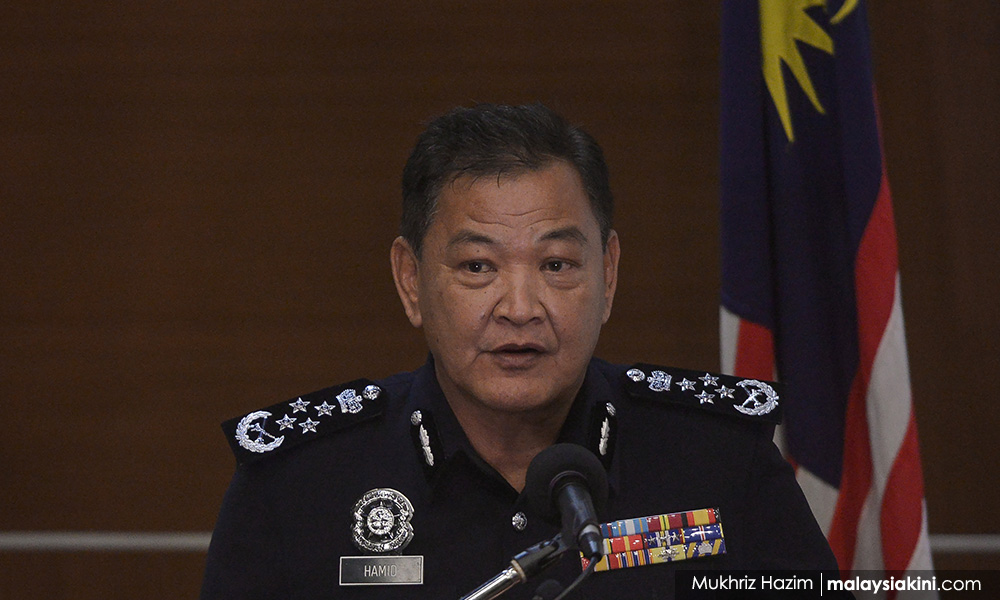
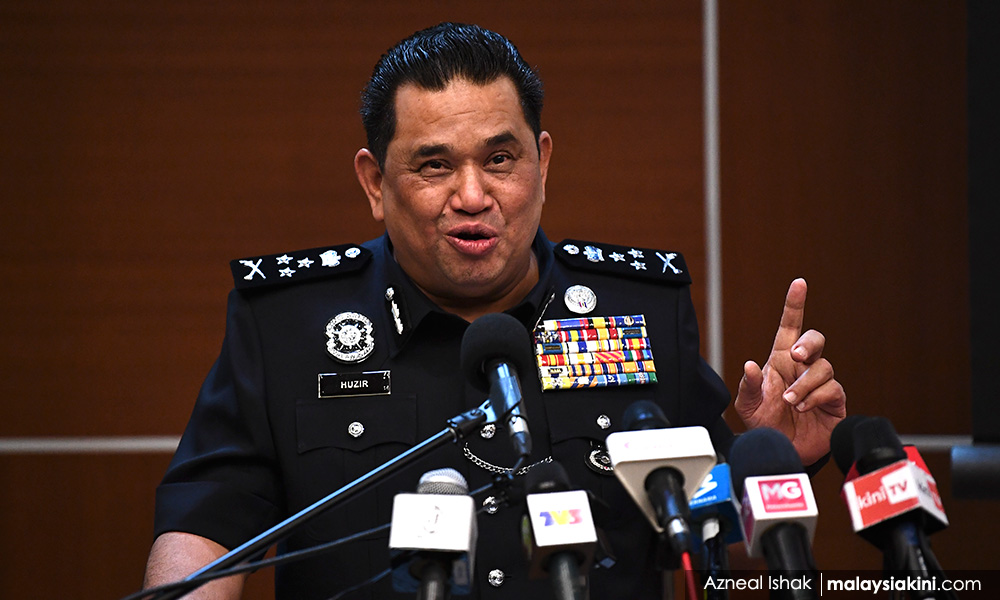
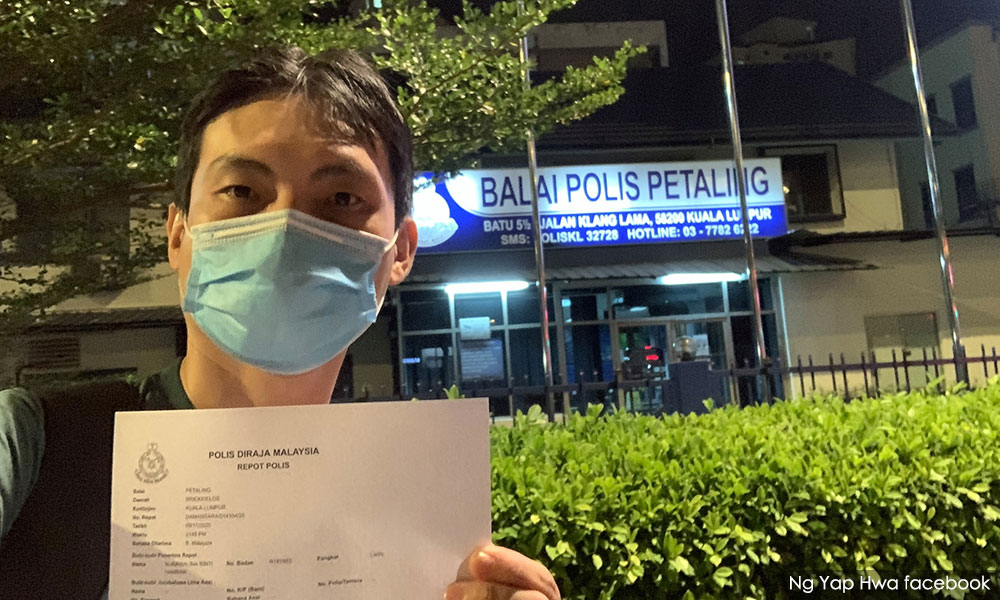
This led to a deluge of police reports against the students' group. It was accused, among others, of being “communist” and an “offshoot of DAP”.
Umany, which has since retracted the statement and apologised, is being probed under the Sedition Act as well as the Communications and Multimedia Act.
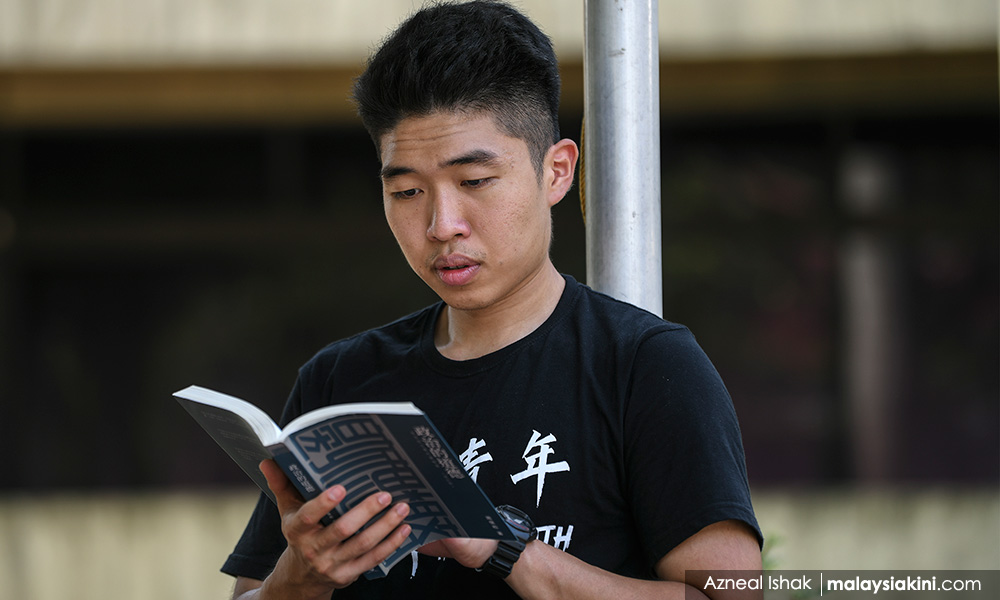
Its former president will be charged in court today under Section 188 of the Penal Code, which relates to "disobedience to an order duly promulgated by a public servant".
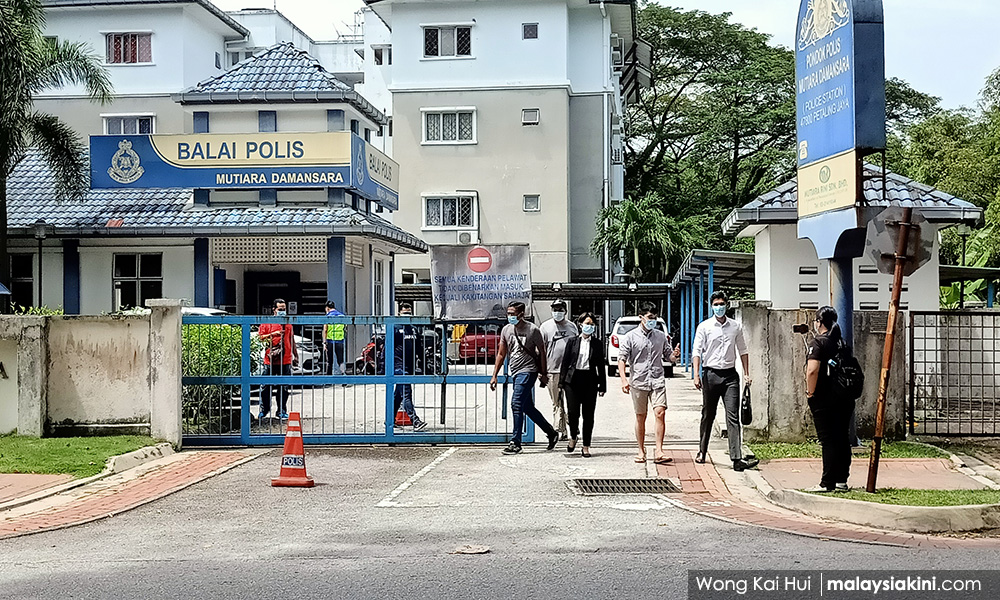
He was arrested on Nov 7 for using his mobile phone to record police officers raiding the home of his successor.
This instalment of KiniGuide looks into the birth and evolution of the association, which has grabbed headlines in recent weeks.
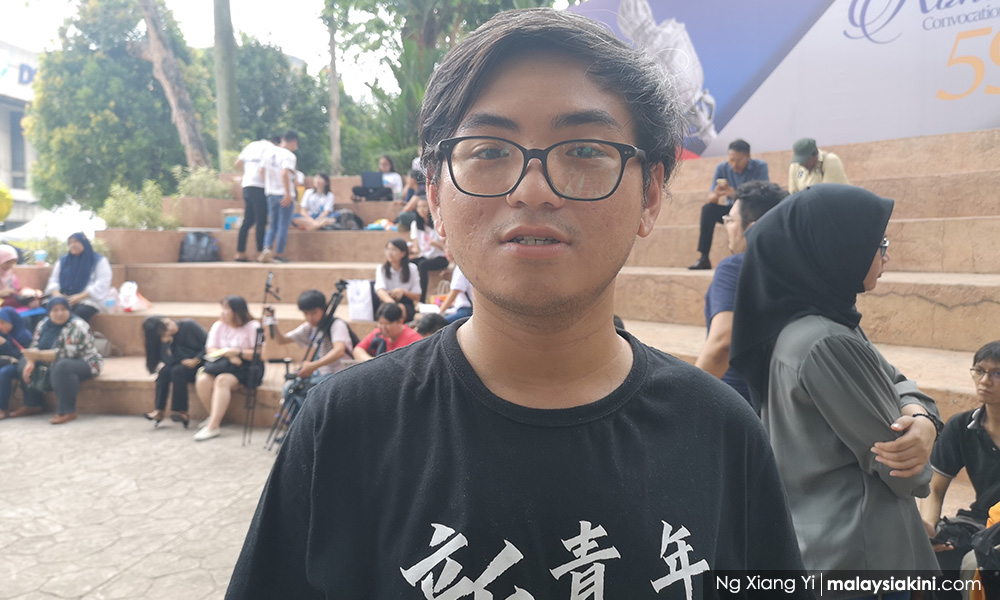
Malaysiakini conducted interviews with Umany's current president Robin Yap and his predecessor Wong Yan Ke to better understand the association and its objectives.
When and how was Umany established?
Umany is the successor to Gerakan Mahasiswa Universiti Malaya (Gema), which was founded in 1993.
Since the 1990s, Gema held regular discussions and expressed students' opinions on public issues inside and outside the campus. In every campus election in the 1990s, an independent Chinese Student Election Committee (EC) would be formed by Gema to be in charge of election affairs. It would be dissolved after the election.
After acknowledging the lack of long-term talent management, Gema and EC were integrated into Umany in 2001.
Umany was established with the aim of raising awareness on democracy and human rights in the campus. The association later participated in campus elections directly under its re-branded name.
The number of members had fluctuated over the years. At its peak, the association boasted of 100 members while at its lowest point, there were five.
According to Yap, it currently has around 20 members.
Why should a students' group be concerned about issues outside campus?
Ideally, in addition to the four main pillars of a democratic system - Legislature, Judiciary, Executive and the media, universities are considered to be the "fifth", providing a free space for discussions on public issues and even to promote social reforms.
"University students are the eyes of society, the conscience of the era." This is the message which often accompanies Umany's media statements, Yap said.
Apart from this, the association also advocates campus democracy and student autonomy.
Critics have often cried foul over the stifling of students' freedom with politically appointed vice-chancellors, deputy vice-chancellors controlling student affairs and approvals needed for student activities on campus.
Students' involvement in public issues can be traced back to the 1960s in Malaysia where forums on the Sedition Act, socialism and elections were held. Politicians from both sides of the divide were invited for debates on campus.
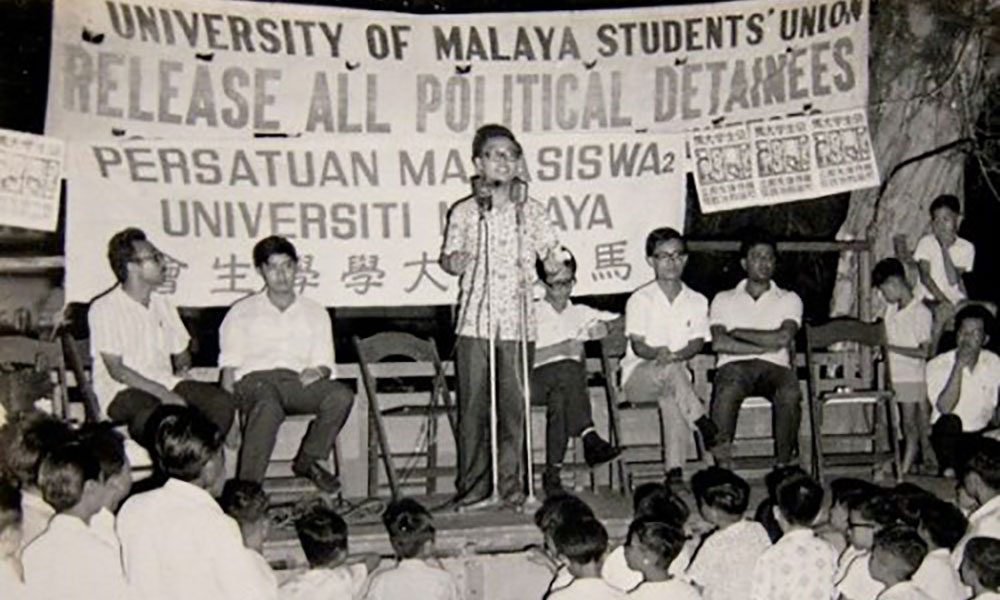
In 1969, on the eve of the third general election, the University of Malaya Students' Union (UMSU) had organised a nationwide roadshow and held numerous mammoth rallies appealing for democratic rights, the release of political detainees, an end to political persecution as well as advocating economic and land reform.
The watershed moment came in 1971 when the University and University Colleges Act (UUCA) was first implemented.
The Alliance government had suffered a severe setback in the 1969 election, the May 13 incident took place in the same year. The government responded by enacting the UUCA to curb the autonomy and political participation of students.
University students are also citizens, we have the right to participate in social and political affairs.
Since universities do not exist to serve any regime or corporation but to provide a space to pursue truth and knowledge, these institutions should also help create awareness in students.
Universities should be free space for students and scholars to explore and experiment.
What are the public issues Umany is concerned about?
Freedom, democracy and justice are the three core ideas stated in our constitution, Yap said.
Some background:
In 2008, Umany endorsed the Youth and Students Declaration, which advocates the restoration of local elections, establishment of the Independent Police Complaints and Misconduct Commission (IPCMC), freedom of information, rejection of racial politics, abolition of UUCA, Internal Security Act, Emergency Act, Police Act, Official Secrets Act and other laws deemed oppressive.
In 2016, four Umany leaders protested with placards against a town hall with then 1MDB president Arul Kanda Kandasamy, organised by the Department of Special Affairs (Jasa) and criticised Universiti Malaya (UM) for brainwashing students.
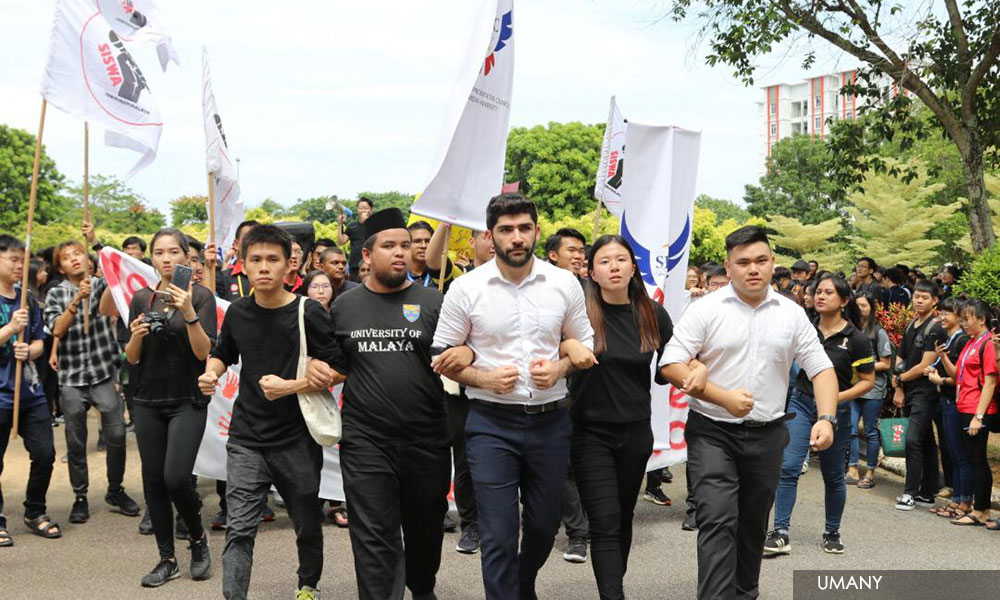
In recent years, besides standing up for UM students and law lecturer Azmi Sharom - who faced charges for introducing opposition voices and criticism - Umany also supported youth movements in both local and foreign universities.
For example, the UTM KL students' protest against the rise of tuition fees, and the MMU students' demonstrations against the increase of Student Activity Fee (SAF) as well as the Anti-Extradition Law Amendment Bill Movement in Hong Kong and pro-democracy protest in Thailand.
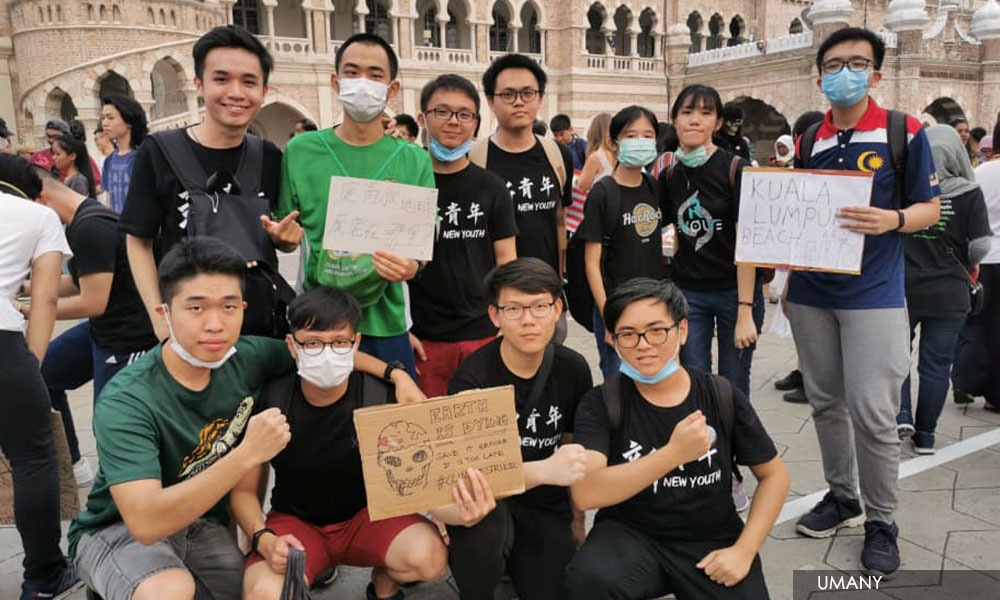
Is Umany Chinese-dominated or 'DAP's UM branch'?
It is undeniable that all its former presidents were Chinese and that many of its former leaders had joined DAP, such as Kota Kinabalu MP Chan Foong Hin, Tanah Rata assemblyperson Chiong Yoke Kong and Tras assemblyperson Chow Yu Hui.
Yap argued that Umany's main ideology is about campus and student autonomy. "Representing Chinese students", he added, is not their position.
Malay and Indian students have also been members of Umany. In the 2019 campus polls, the association had nominated a Malay candidate.
According to Yap, Umany’s funding is from membership fees and donations from its seniors. The leadership is decided via an internal election.
Therefore, he added, the association has no links with any political party.
"When Pakatan Harapan was in power, we openly criticised them for failing to establish IPCMC and to close down (rare earth plant) Lynas," he pointed out.
It is rarely known that several MCA leaders were also former leaders of Umany, such as MCA civil society movement bureau chief Ng Kian Nam and MCA Youth leader Saw Yee Fung.
Umany seems to be more radical now?
Apart from endorsing petitions and issuing statements, Umany held more physical protests in recent years, giving the impression that it has become more radicalised.
Its placards protest at the 1MDB forum in 2016 and brandishing a “clown-faced' cutout to mock former prime minister Najib Abdul Razak in 2019 are some examples.
In addition, Wong's solo protest against vice-chancellor Abdul Rahim Hashim's "racist remarks" at the Malay Dignity Congress in 2019 and its latest article on the monarch have created the perception that the association has no qualms treading on sensitive subjects.
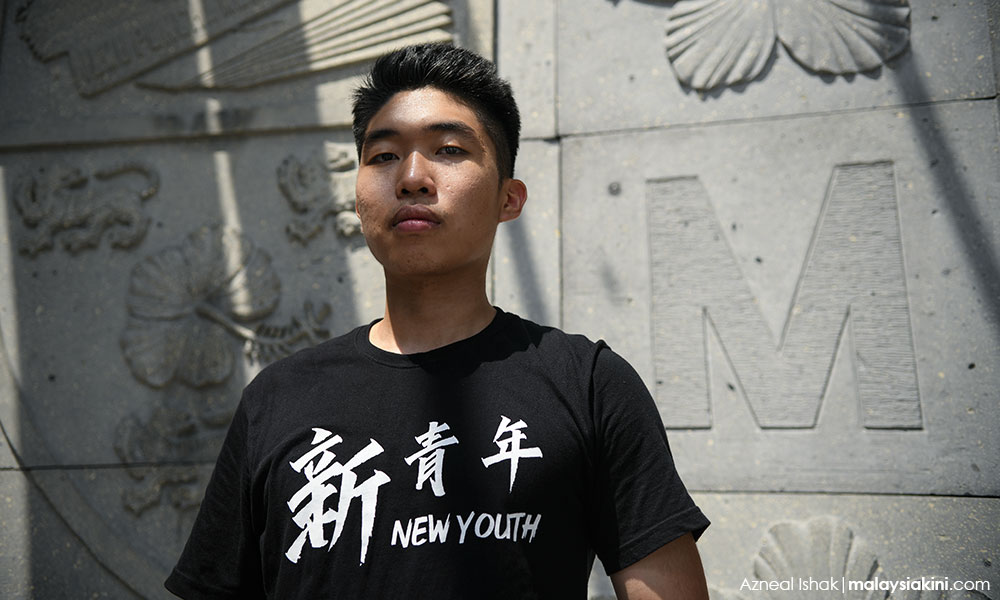
However, Yap disagreed.
"Actually we don't think we are radical. Compared to what is happening overseas (with regard to student protests), we are actually very gentle," he replied.
Echoing a similar stand, Wong said those from different generations have a different understanding of what the term “radical” means.
To illustrate his point, the former Umany president pointed out that the younger generation of Malaysians has witnessed massive rallies, such as the ones organised by Bersih, the fall of a six-decade-long BN government and experienced greater campus freedom under Harapan.
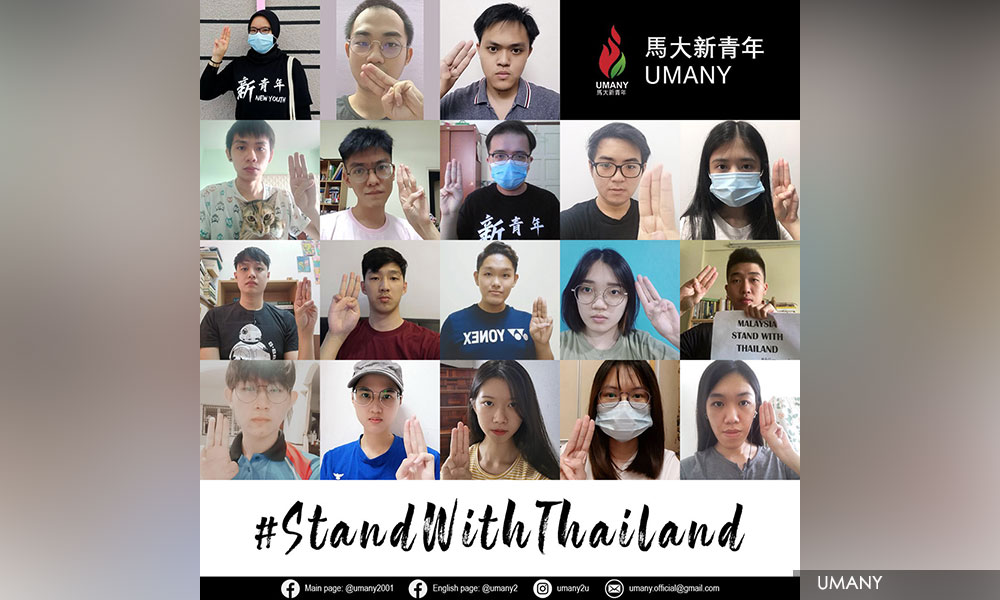
Noting how the youth in Taiwan, Hong Kong, Thailand, Indonesia and Cambodia have played an active role in promoting social democratic reforms, Wong hopes Malaysian students would also do the same.
On the same note, he emphasised that Umany had never resorted to violent protests.
"Holding up placards is actually a soft way to protest. Unfortunately, it can sometimes be considered to be a bold action in Malaysia,” he added.
As for the article on the king's role, which Umany said was meant for academic discussion, supporters of the association have questioned why others who raised a similar point, such as senior lawyer Syed Iskandar Syed Jaafar and Dewan Negara president Rais Yatim, are not being investigated.
This instalment of KiniGuide is compiled by Wong Kai Hui.
Reference sources:
Interview with Robin Yap ( Umany president);
Interview with Wong Yan Ke (Umany former president);
"Political Struggle by Contemporary Malaysian Chinese Student Movement Organisation: A Case Study of Umany" by Tan Zhi En (2019), originally written in Chinese;
"The Control and Management in National Universities" by Lee Jin Yang (2018), originally written in Chinese.