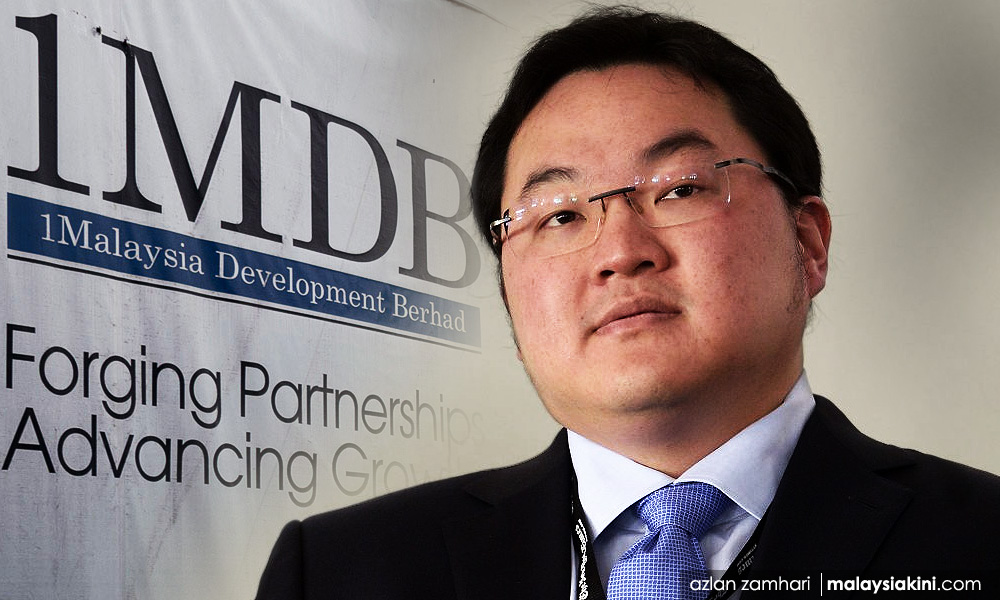

US banks didn’t act on ‘suspicious’ Jho Low, 1MDB-linked transfers until too late, leak shows
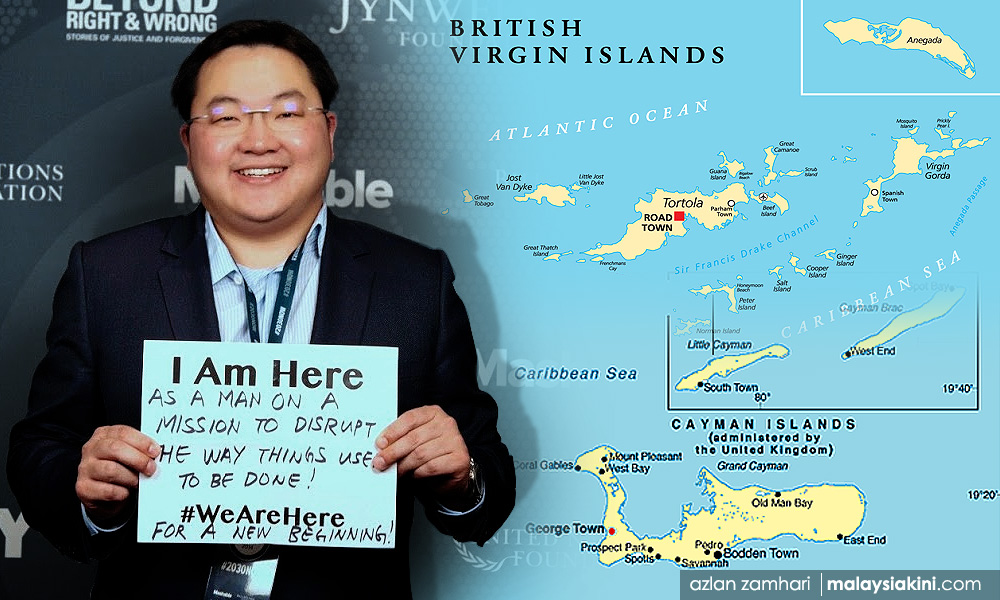
Billions of American dollars moved between fugitive Jho Low’s family and related businesses in multiple US banks without issue for several years despite red flags later acknowledged by the banks themselves.
Reports the banks filed with the US Treasury among others stated they could not locate the source of the funds and “could not rule out the possibility of illicit funds being used”.
However, several banks only filed the Suspicious Activity Reports (SARs) to flag these suspicious transfers years after the transactions, a leak revealed.
Several banks only filed from 2016 onwards - after the United States Department of Justice (DOJ) announced its kleptocracy action involving misappropriation of 1MDB funds that year.
This despite the “suspicious” transactions happening as early as 2010, in the case of Hong Kong Shanghai Banking Coporation (HSBC) United States, which only filed a SAR about that transaction in 2017.
US banks must file SARs with the Treasury’s Financial Crimes Enforcement Network (FinCEN) when the institution suspects potential offences, including money laundering, within 60 days of detected suspicious activity.
Leaked documents showed ...
Some of the banks involved only filed reports years after the transactions, documents say.
Reports the banks filed with the US Treasury among others stated they could not locate the source of the funds and “could not rule out the possibility of illicit funds being used”.
However, several banks only filed the Suspicious Activity Reports (SARs) to flag these suspicious transfers years after the transactions, a leak revealed.
Several banks only filed from 2016 onwards - after the United States Department of Justice (DOJ) announced its kleptocracy action involving misappropriation of 1MDB funds that year.
This despite the “suspicious” transactions happening as early as 2010, in the case of Hong Kong Shanghai Banking Corporation (HSBC) United States, which only filed a SAR about that transaction in 2017.
US banks must file SARs with the Treasury’s Financial Crimes Enforcement Network (FinCEN) when the institution suspects potential offences, including money laundering, within 60 days of detected suspicious activity.
Leaked documents showed US banks who filed SARs related to 1MDB and Jho Low were HSBC United States, Bank of New York Mellon, Deutsche Bank Trust Company Americas and JP Morgan Chase.
The filings were reviewed by Malaysiakini as part of the "FinCEN Files", a global investigative journalism project involving documents shared with the International Consortium of Investigative Journalists (ICIJ) and other news organisations by BuzzFeed News.
Unlike the other three banks which filed SARs years after transactions were made, JP Morgan Chase filed 24 SARs, some as early as 2013, on transfers related to 1MDB.
It flagged 33 transactions totalling US$1.25 billion (RM5.1 billion) conducted between June 2013 to July 2016.
It is unknown if any of these SARs triggered DOJ investigations as details of the transactions which went through JP Morgan Chase match some of the details of the DOJ lawsuit.
They include the purchase of the luxurious Park Lane Hotel in New York in 2013 and artworks including those by Vincent Van Gogh and Claude Monet.
To date, besides investment bank Goldman Sachs, no US bank has faced repercussions for facilitating the 1MDB transactions.
Red flags missed
Although the 1MDB case is deemed the biggest kleptocracy case brought by the US DOJ, less than 50 SARs were filed over its related transactions out of 2,100 unique SARs reviewed.
The belatedly filed SARs, however, indicate how banks may have disregarded traits indicated by FinCEN as signs of money laundering present in transactions related to Jho Low.
In one filing in 2016, the Bank of New York Mellon (BNYM) detailed 737 “suspicious wires” totalling US$1.27 billion (RM5.25 billion) linked to Jho Low, which happened between June 2012 to April 2015.
BNYM said the wires were suspicious among others because “many of the wires were sent in large, round dollar amounts” - a marker of potential money laundering, according to FinCEN.
The transfers that went through BNYM include those for the 2012 purchase of EMI Publishing by Jho Low-owned Jynwel Capital Bhd and other partners. The DOJ said Jho Low’s US$107 million (RM441.96 million) stake was purchased through funds siphoned from 1MDB.
When contacted, BYNM declined to comment on the SARs but assured it “takes its role in protecting the integrity of the global financial system seriously”.
The EMI deal also featured in a report by HSBC United States in 2017, relating to accounts held by Jho Low’s brother Low Taek Szen (Szen Low), who received US$20,378.20 (RM84,172.16) from EMI Music Publishing in March and April 2013.
This was part of US$29 million (RM119.78 million) of wire transfers involving Szen Low which passed through HSBC unceremoniously between 2010 and 2017, despite the bank’s “inability to identify a legitimate, economic purpose for large, round dollar transactions”.
One round dollar transaction happened in 2010 when Szen Low received US$650,000 (RM2.68 million) from his sister Low May Lin’s HSBC Hong Kong account - with the source of the funds also unknown, the bank said.
Lavish lifestyle
The bank said in the period of 2011 to 2015, Szen Low sent 54 wires totalling US$8.6 million (RM35.52 million) to 26 entities, including real estate firms, wine and spirit entities and auction companies “in line with media reports stating the misappropriated funds were used to support a lavish lifestyle”.
In another filing, HSBC said in that period, the total amount of transfers related to Jho Low detected through Szen Low’s accounts was US$44 million (RM181.74 million) - but they were not reported in a SAR until 2016 when the DOJ filed its case.
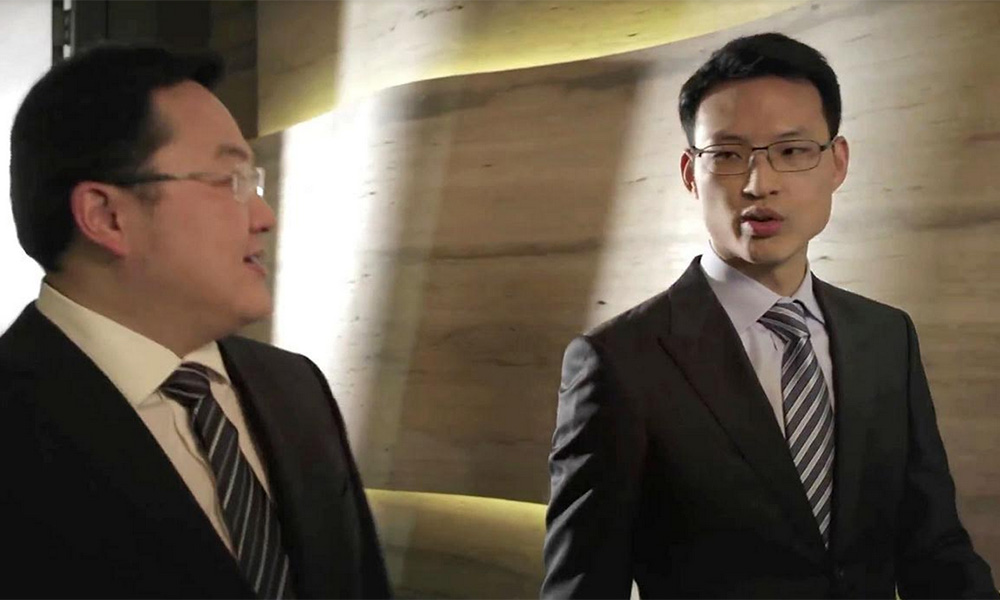
Last October, the US DOJ reached a deal with the Low siblings and their parents, Larry Low Hock Peng and May Goh Gaik Ewe, to resolve all forfeiture claims and civil action related to 1MDB.
However, the DOJ said the agreement "does not release any entity or individual from filed or potential criminal charges."
The deal reportedly covered over US$700 million (approximately RM3 billion) of funds purported to have been misappropriated from the Malaysian sovereign wealth fund.
Some US banks have fallen under regulator’s crosshairs following the DOJ filing, but to date, none have been taken to task for facilitating the transfers.
When contacted by ICIJ, the banks who facilitated the Jho Low-linked transactions said they are unable to comment on SARs but are committed to upholding the integrity of the global financial system.
Deutsche Bank said it has “learnt from past mistakes” and is a “different bank now” while HSBC said it has undergone an “overhaul” to ensure its system upholds financial integrity.
“HBSC is a much safer institution than it was in 2012,” the bank’s spokesperson said.
US banks escape, Swiss banks collapse
The only US bank which has faced some repercussion is investment bank Goldman Sachs which arranged for bond issuances for 1MDB in 2012 and 2013.
The bank may still face charges in the US for violation of the US Foreign Corrupt Practices Act but all criminal charges in Malaysia were dropped in July after it agreed to pay the Malaysian government US$2.5 billion (RM10.3 billion).
It also guaranteed to pay US$1.4 billion (RM5.78 billion) of proceeds from its dealings with 1MDB.
The DOJ reportedly sought information from Deutsche Bank JP Morgan Chase, but no action has been taken against them.
Swiss banks, however, have not escaped unscathed with two becoming casualties of the 1MDB saga.
Zurich-based Falcon Private Bank closed earlier this year following a string of consecutive annual losses since 2016 after the Swiss Financial Market Supervisory Authority (Finma) found it did not carry out adequate compliance checks regarding 1MDB-linked transactions.
In 2016, the Monetary Authority of Singapore shut down the Swiss private bank BSI’s operations in the city state over its role in the 1MDB scandal.
Finma also found that BSI routinely failed to conduct due checks on large transactions related to 1MDB.
BSI collapsed after that while several BSI Singapore former employees have been jailed for linked offences.
Tomorrow: ‘Everyone is doing badly’: A mighty flow of dirty money swamps bureaucrats
Related stories: Secret docs show banks defy US crackdowns to serve oligarchs, criminals and terrorists
(Editor's note: An earlier version of this story said the US DOJ reached a deal with the Low siblings and their parents to resolve all criminal action. This has been corrected.)
The Washington-based International Consortium of Investigative Journalists (ICIJ) is an independent international network of more than 200 investigative journalists and 100 media organizations in over 70 countries.