
Govt will make appropriate decision if Lynas' PDF pollutes water sources - Khairy
PARLIAMENT | Putrajaya has pledged to make an appropriate decision if it finds out that Lynas Malaysia's Bukit Ketam permanent disposal facility (PDF) will contaminate water sources for the people of Kuantan.
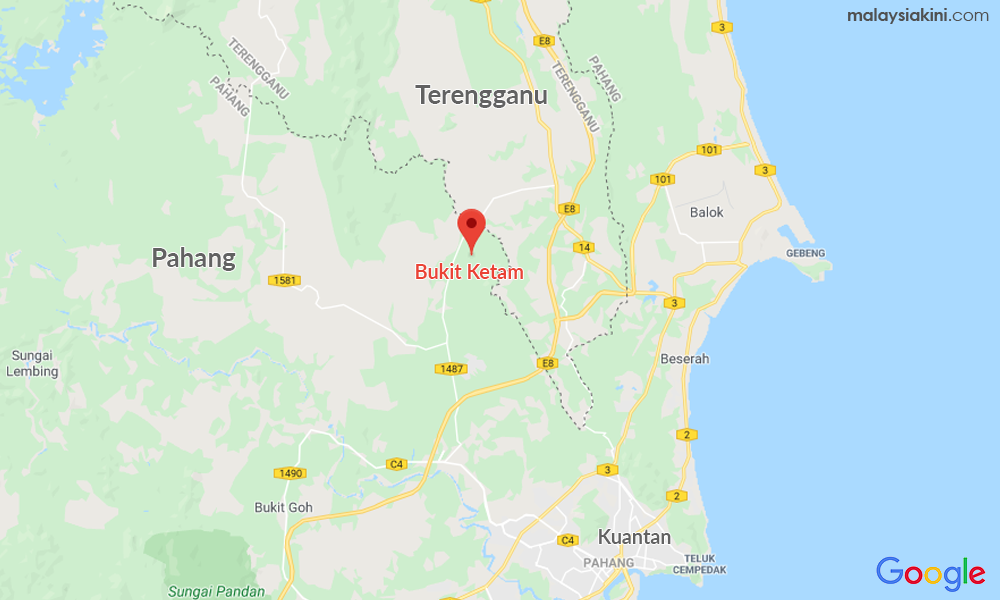
The assurance was given by the Science, Technology and Innovation Minister Khairy Jamaluddin after acknowledging that the drainage system at Bukit Ketam - the proposed site for the PDF near the Pahang-Terengganu border - is linked to Sungai Kuantan where the Kobat water treatment plant is located.
PARLIAMENT | Putrajaya has pledged to make an appropriate decision if it finds out that Lynas Malaysia's Bukit Ketam permanent disposal facility (PDF) will contaminate water sources for the people of Kuantan.
The assurance was given by the Science, Technology and Innovation Minister Khairy Jamaluddin after acknowledging that the drainage system at Bukit Ketam - the proposed site for the PDF near the Pahang-Terengganu border - was linked to Sungai Kuantan where the Kobat water treatment plant is located.
"There is research showing water from the river stream (at Bukit Ketam) will go into Sungai Ara and later end up in Sungai Kuantan where there is also water intake for the Kobat Dam," he told Dewan Rakyat today.
"That's why it is important for a thorough and transparent Environmental Impact Assessment (EIA) to be conducted," he told Fuziah Salleh (Harapan-Kuantan).
"This is important to determine if the water catchment area will be affected as it is the water source for the people in Kuantan," he added.
Fuziah had asked how the government was going to deal if water leach purification (WLP) residue leaked from the PDF site at Bukit Ketam which could, in turn, cause contamination at the water treatment plant at Kobat, Kuantan.
Khairy said the Pahang state government was in the process of gazetting the 202.35ha site at Bukit Ketam as an industrial disposal site.
"On July 28, the Atomic Energy Licensing Board (AELB) granted approval for the proposed site (to be used for the PDF) subject to the approval of a Radiological Impact Assessment (RIA), an EIA and other requirements set by the relevant local authorities," he said.
The government had previously instructed Lynas to build a PDF for WLP residue by March 2021. Failing so, the Australian mining company's licence could be revoked. The WLP is generated by the Lynas' rare earth mining facility at Gebeng, Kuantan.
On another development, Khairy proposed to allow Lynas to continue with its research and development on commercialising its soil conditioner called "CondiSoil". This had previously been banned in February.
He said this was because CondiSoil had been proven to increase the production of crops such as corn and paddy, adding a ground study found no radioactive pollution in the use of CondiSoil.
"Until the residue (can be) moved to the PDF in July 2021, maybe we could continue the R&D. If we find that the WLP residue can be used as CondiSoil, what is wrong (with continuing the R&D)?" said Khairy.
Fuziah, however, cautioned on the consequences given that WLP was a known carcinogen which could last up 14,000 years if it sneaked into the food system and into the soil.
She said the Harapan government had banned Lynas' R&D on commercialising CondiSoil based on this reason.
To this, Khairy said he was serious about the safety and health of the people and any decision made by the government would be based on scientific studies.