
A grave issue - preserving the early history of KL
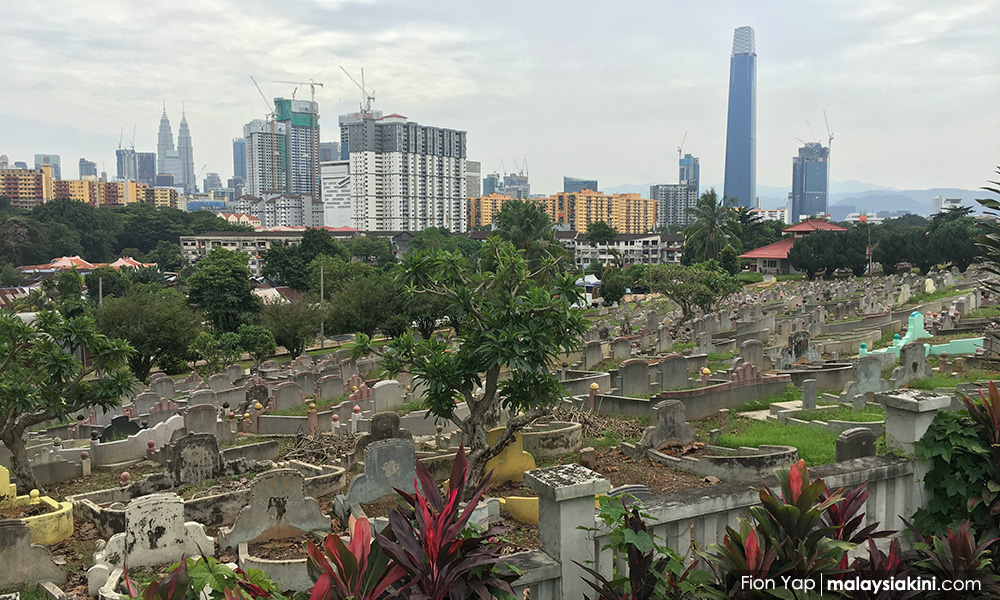
KINIGUIDE | The Bukit Seputeh cemeteries are the last resting place for several important figures of early Kuala Lumpur.
KINIGUIDE | In Bukit Seputeh, there is a vast cemetery area which stands in sharp contrast to the thriving business district around it.
This is the last resting place for several important figures of early Kuala Lumpur, which has been in existence for more than 100 years.
With the passage of time, the area which formerly located in the suburb has now become the city centre of the capital - next to the Bandar Malaysia, with KL Sentral only 5km away and the iconic KL tower within sight.
For the past 40 years, the cemeteries at the heart of KL have faced the crisis of being evicted or closed several times under the wheel of development.
In the ‘Draft Kuala Lumpur Structure Plan 2040’ that was launched in February by Kuala Lumpur City Hall (DBKL), another part of this area has been included in the new Central Business District, waking up the once silent land requisition issue.
Last week, Cheras MP Tan Kok Wai and 50 organisations went to the new city plan’s public hearing session in DBKL, urging the local council to preserve the cemetery's site.
They asked the government to promise that the area will never be affected or developed, except to beautify or improve its infrastructure.
“We hope the DBKL will state it in black-and-white, when it gazettes the 2040 Structure Plan on Jan 1 next year,” said Tan during a press conference after the public hearing at DBKL's headquarters.
In this instalment of KiniGuide, we’ll give readers an overview of the cemetery area that is the epitome of Malaysia’s multiracial society, reflecting the trace and history of immigrants in the last century.
How many cemeteries/crematoriums around this area?
These cemeteries were gradually formed in the early 19th century when the British colonial administration issued the lands to a number of ethnic groups and religious groups.
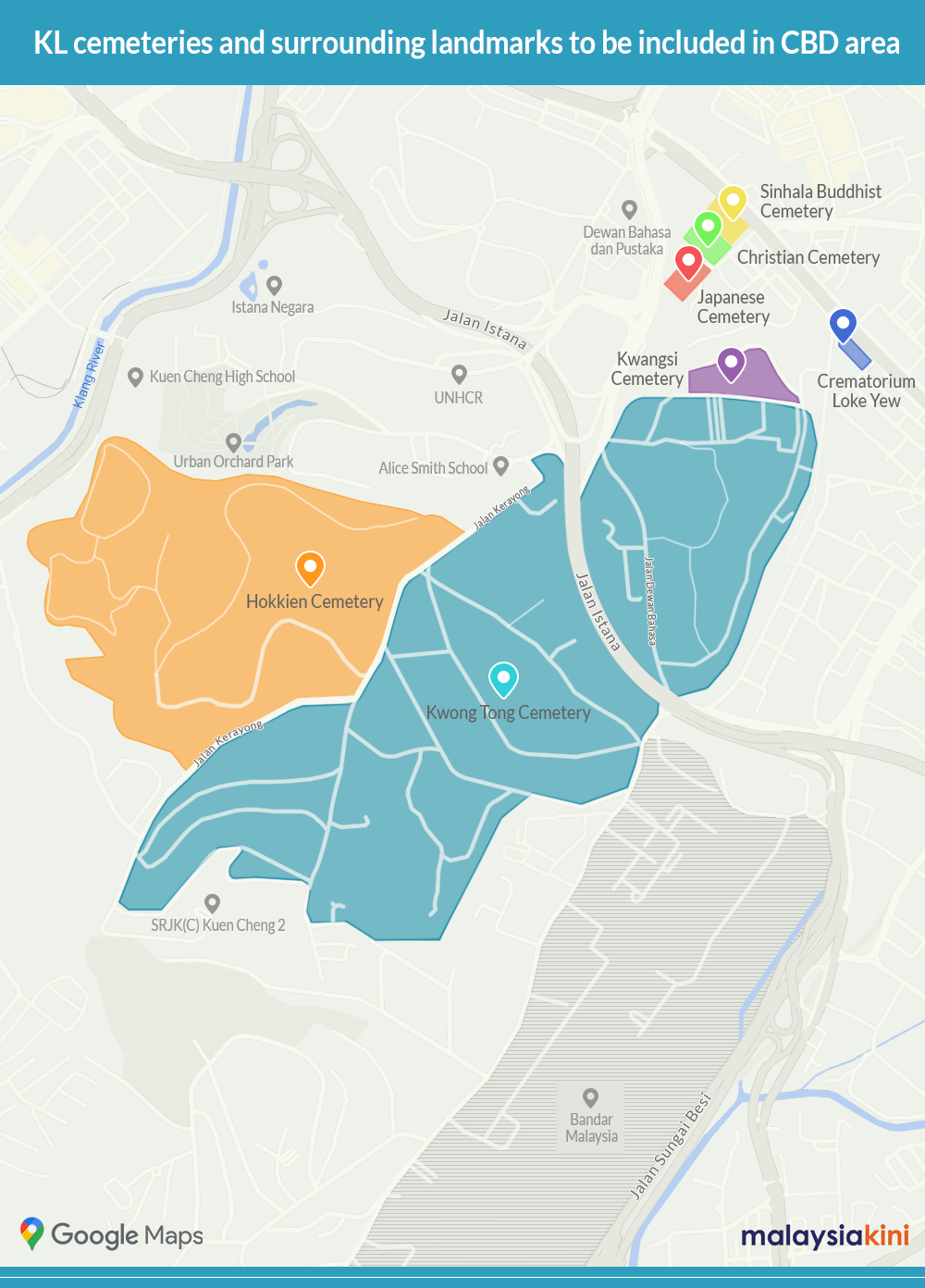
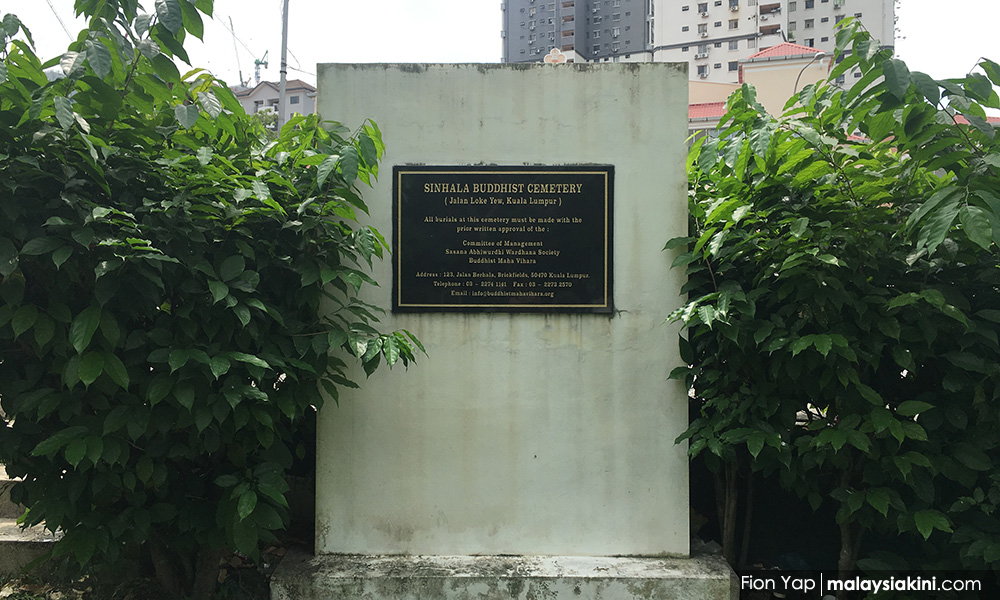
On the busy Jalan Loke Yew, there is a 0.4 hectare (ha) of Sinhala Buddhist Cemetery which was gazetted as a graveyard in 1903. The cemetery is now managed by the Buddhist Maha Vihara in Brickfields.
Originated from Ceylon (now Sri Lanka), the Sinhalese came to Malaysia under the recruitment by the British colonial administration to help in developing the Malay States, after the signing of the Pangkor Treaty in 1874. Among them were surveyors, contractors, railway staff and many others.
Behind the Sinhalese cemetery, there are some Christian tombs and plenty of unknown small headstones marked only with numbers which are believed to be the victims during World War II.
According to The Star, this area was gazetted as burial land in 1918 under the Roman Catholic Bishop of Malacca. Historically, British soldiers and the city’s early Christians were laid to rest at this cemetery.
Directly opposite the unknown war graves is the Japanese Cemetery. It is a gated and well-tended cemetery with a notice board, which mentioned the graveyard was built in 1899.
Next to it, a crematorium that serves the Sikh, Gujrati, Sindhi and other North Indian communities in Kuala Lumpur stands at the other side of Jalan Loke Yew.
According to Asia Samachar, a news portal for the Sikhs in Southeast Asia, the crematorium started operation around the 1890s and was gazetted in 1921. Shamshan Bhoomi Parbandak Society is currently its caretaker.
One of the biggest Chinese cemeteries fights for eviction over decades
The biggest cemetery around this area is undoubtedly the Kwong Tong Cemetery. Covering over 260 acres, equalling the size of 132 football fields, it is also one of the largest Chinese cemeteries in the country.
This was built up by the Kapitan China of Kuala Lumpur Yap Ah Loy in 1895, and it becomes the last resting place for many important figures, such as Yap Ah Loy, Yap Kwan Seng and Loke Yew.
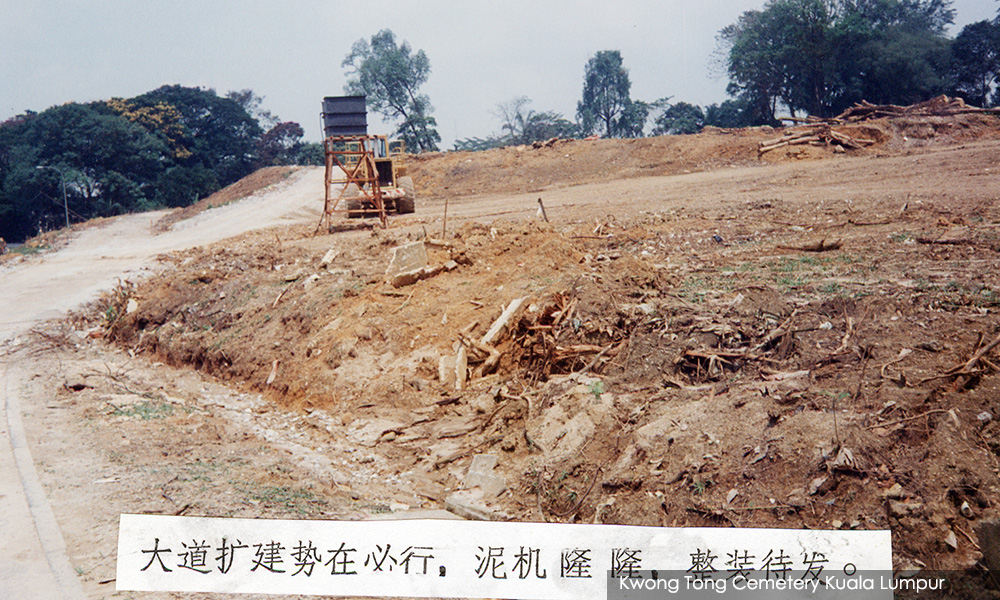
According to the official website of Kwong Tong Cemetery, the government has claimed back some of its lands four times since 1982 without any compensation or exchange of lots.
Circa 2000, the government intended to move the cemeteries away from the city centre, but it was eventually saved under pressure from civil societies and some political leaders.
However, the fight didn’t stop there. In the midst of 2018, the Malaysian Highway Authority (LLM) was planning to change the route of the SPE highway, which would involve part of the Kwong Tong Cemetery.
Finally, the land was saved after Cheras MP Tan Kok Wai and Bukit Bintang MP Fong Kui Lun negotiated with the authorities.
For the records, the land currently belongs to the government and managed by several Chinese guilds.
Why are the cemetery areas included in the CBD when it is zoned as a heritage site?
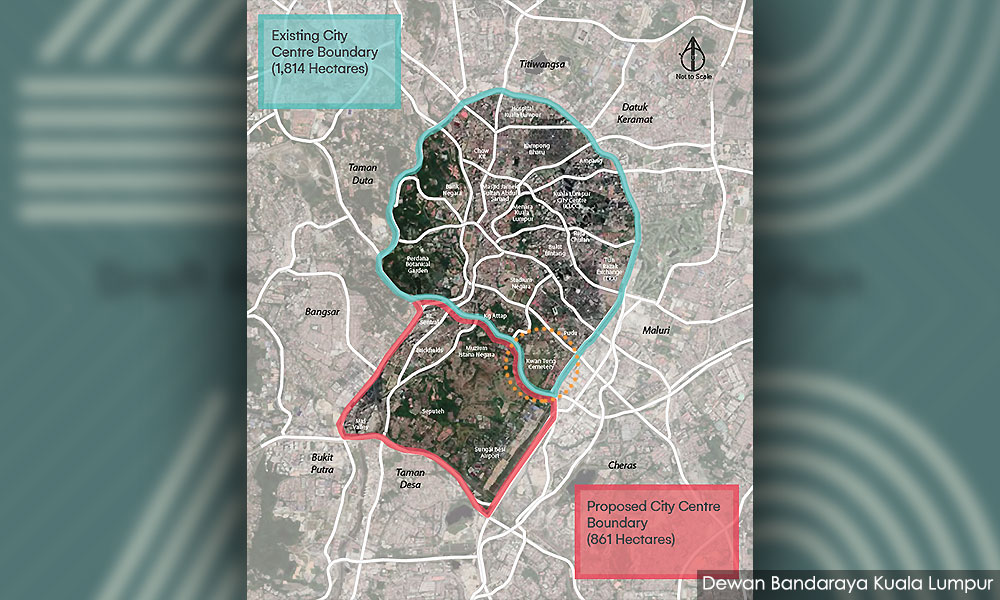
Under the ‘Draft Kuala Lumpur Structure Plan 2040’, the DBKL proposed to expand the 1,814ha Central Business District (CBD) by another 861ha, including KL Sentral, Midvalley and Bandar Malaysia.
In fact, most of the cemeteries are now covered under the present CBD boundary, but the expansion would see the entire Kwong Tong and Hokkien Cemetery come within city limits.
However, urban, land use and transportation planning consultant Goh Bok Yen told Malaysiakini that the draft structure plan didn’t mark out the cemeteries area at the new proposed city centre limits.
Goh is also a beautify consultant for Kwong Tong Cemetery. He drew a map to show how the cemeteries area is included in the newly-proposed CBD.
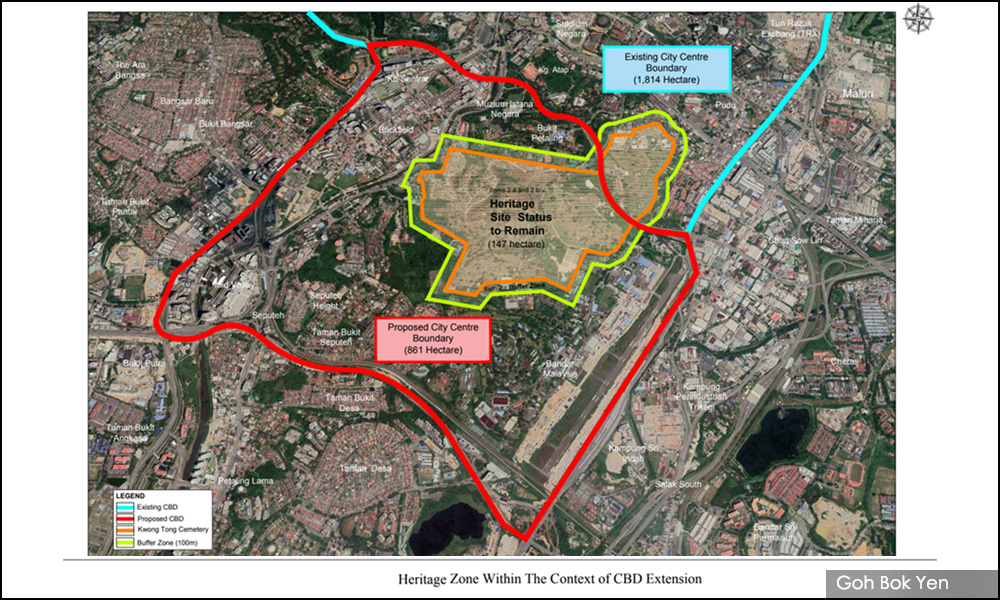
Thus, Goh worried that once the new Structure Plan for 2040 gazetted, the previous ‘Kuala Lumpur City Plan 2020’ which zone the cemetery area as heritage site would be replaced, causing the land use of the cemeteries to switch to a commercial area.
“If the new structure plan is gazetted, the cemeteries could lose their heritage status,” he said.
Noticeably, the cemetery area has not yet been included in the ‘National Heritage List’ under the National Heritage Act 2005.
Kwong Tong Cemetery president Lee Chun Kong revealed that they had written to the National Heritage Department to seek recognition, yet the authorities deemed the cemeteries have already been protected from development.
“The National Heritage Department has received a heritage nomination form for the Kwong Tong Chinese Cemetery to be nominated as a Heritage Site under the National Heritage Act 2005.
“[......] For your information, the department has referred to Kuala Lumpur City Plan 2020 (Volume 1) which was gazetted on 30 October 2018 by DBKL, the Kwong Tong Chinese Cemetery has been zoned as a Heritage Site.
“Therefore, the department is of the view that its status as a Heritage Site under KL City Plan 2020 has provided due protection from new developments and any development proposals that could have a direct impact,” read the letter which issued on June 14, 2019.
Why is the cemetery area worth preserving?
While the skyscrapers are springing up in the capital city under the name of development, the century-old cemeteries are keeping the trace of the city's past.
Goh reminded that these hundred-year-old tombs show the evolution of various industries and the burial culture in the past hundred years.
“Some of the guilds and industries had no longer existed. However, their tombs are still there. For example, there are tombs of the launderer associations.
“These cemeteries are the living museums for those researchers to understand the history of Kuala Lumpur, especially the history of Chinese,” said Goh, adding that the more cemeteries to be preserved, the more history the country could save.
Hence, Goh also encouraged the organisations that manage the cemeteries nearby to well-maintain the graveyard and try to pursue the National Heritage status as well as the Unesco World Heritage listing.
“If the people today do not well-keep these graveyards, we may lose them after a few decades since the younger generations do not feel the importance of it.
Can World Heritage status be the solution?
According to Lee Chun Kong, after the 2000s crisis, Kwong Tong Cemetery has set up a team to carry out landscaping and greening works, as well as documenting and promoting the history of those tombs.
After turning the cemetery area into a heritage park, they started to apply for the World Heritage status a few years ago, yet the process was stopped last year when they received a letter from the National Heritage Department stating that the cemeteries are protected under the 2020 KL City Plan.
However, they are planning to reactivate the process after the CBD area of the ‘Draft Kuala Lumpur Structure Plan 2040’ was revealed.
Lee estimated that the cost to be listed as World Heritage would be high, and the process could be lengthy.
“There are some upgrading work to be done such as cleaning and greening the cemetery, setting up street lights and redoing road signs...all of these would at least cost us RM5 million, excluding the annual maintenance costs.
Meanwhile, Goh explained that Kwong Tong Cemetery would only nominate the valuable elements such as the graveyards of Kapitans Yap Ah Loy and Yap Kwan Seng for Unesco instead of the whole cemetery area due to the high costs.
Meanwhile, Kwong Tong Cemetery administration manager Wey Jiun Horng acknowledged that the World Heritage status is not a guarantee.
He said it would be another layer of protection but if there is a need for development serving the public interest, the authorities could renounce Unesco's listing and claim back the land under the Land Acquisition Act 1960 and so on.
The general manager of George Town World Heritage Incorporated Ang Ming Chee, meanwhile, pointed out that Unesco's convention didn’t stop the government from claiming back the land.
“I assumed that you are referring to the World Heritage Site nomination under Unesco 1972 Convention.
“The convention aims at the identification, protection, conservation, presentation and transmission to future generations of the cultural and natural heritage of Outstanding Universal Value.
“There is no statement within this convention that ‘prevents the land from being taken back’," Ang said.
She said the Unesco’s listing might help in the publicity for cultural heritage, and get more opportunities to cooperate with both domestic and foreign organisations “but that doesn't mean there won't be other problems”.
Rather than the legal guarantee to protect the heritage site, Ang stressed that the awareness from the public is more important.
To build up the consensus, And suggested that education and outreach programmes should be carried out for the public regardless of race or religion to understand the history of the cemeteries.
“This is the history of Malaysia and the cultural heritage to be preserved by all Malaysians.”
Ang also mentioned that a place would be listed as a National Heritage Site, by default, before they were nominated by the authorities for World Heritage status under the Unesco 1972 Convention*.
“As observed from the recent nomination of FRIM Selangor Forest Park (2017) and Royal Belum State Park (2017), both sites were made a National Heritage before they were submitted as a Tentative List to Unesco.
(*Full name: The Convention Concerning the Protection of the World Cultural and Natural Heritage)
The fate of the cemetery area would be revealed next year?
During the public hearing on the draft structure plan on July 21, the panel appointed by DBKL to gather public feedback on the plan pointed out that the cemeteries would not be affected by commercial activities since it is already a heritage site.
But this failed to allay Tan and the civil society groups’ concerns. After all, the panel has no power to make decisions on the plan.
In short, any changes in the land use or heritage status of the cemeteries will only be revealed until the ‘Draft Kuala Lumpur Structural Plan 2040’ is gazetted on Jan 1 next year.
Therefore, Tan said the nine Pakatan Harapan MPs in the Federal Territory of Kuala Lumpur would ask DBKL to present the final draft of the structure plan before it is gazetted.
“We would like to understand what would be changed before the draft is gazetted. Otherwise, it would be too late to know.”
This instalment of KiniGuide is compiled by FION YAP.