
COMMENT| Good governments engage with journalists, not persecute them
COMMENT | I had workshopped with journalists in Papua New Guinea and parts of Asia over the years. I flew to each city, stayed for a week, then flew home to the sandstone walls of academia with new insights. Does that make me an expert on journalism in the region? Not really.
I am an "expert" only in as much as my collaboration with the local journalists is validated by how accurately I interpret the legal and ethical issues they grapple with daily, and the political maze they have to navigate to publish an investigative series.
Likewise with fly-in-fly-out journalism, such as Al Jazeera’s "Locked Up in Malaysia’s Down". The documentary shows how the final product is shaped by the constraints of reporting in a foreign environment.
When journalists are assigned overseas with little time to adjust to a new environment, notwithstanding their training as impartial observers, the accuracy, balance and fairness of their stories can, sometimes, be unjustifiably questioned by insecure governments.
Not all "parachute journalists" are completely familiar with local politics, language and cultures. Not unless they have lived in the place for several years and see things the way locals do. Hence, the required collaboration with local fixers.
Foreign journalists working with tight production deadlines to keep their stories current for a global audience can only be as fair and accurate as their persistence in fact-checking their prior research and preconceived notions, their tenacity to reach out to diverse sources for contrasting views, and capacity to contextualise their stories to realities on the ground...
COMMENT | I had workshopped with journalists in Papua New Guinea and parts of Asia over the years. I flew to each city, stayed for a week, then flew home to the sandstone walls of academia with new insights. Does that make me an expert on journalism in the region? Not really.
I am an "expert" only in as much as my collaboration with the local journalists is validated by how accurately I interpret the legal and ethical issues they grapple with daily, and the political maze they have to navigate to publish an investigative series.
Likewise with fly-in-fly-out journalism, such as Al Jazeera’s "Locked Up in Malaysia’s Down". The documentary shows how the final product is shaped by the constraints of reporting in a foreign environment.
When journalists are assigned overseas with little time to adjust to a new environment, notwithstanding their training as impartial observers, the accuracy, balance and fairness of their stories can, sometimes, be unjustifiably questioned by insecure governments.
Not all "parachute journalists" are completely familiar with local politics, language and cultures. Not unless they have lived in the place for several years and see things the way locals do. Hence, the required collaboration with local fixers.
Foreign journalists working with tight production deadlines to keep their stories current for a global audience can only be as fair and accurate as their persistence in fact-checking their prior research and preconceived notions, their tenacity to reach out to diverse sources for contrasting views and capacity to contextualise their stories to realities on the ground.
Circumspection, giving some hard thought to the story’s consequence on the primary source is compromised – such as the arrest of migrant worker Mohamad Rayhan Kabir from Bangladesh, the main interviewee in the documentary, whose work permit had been revoked for criticising the Malaysian government, and is now being detained an the immigration depot.
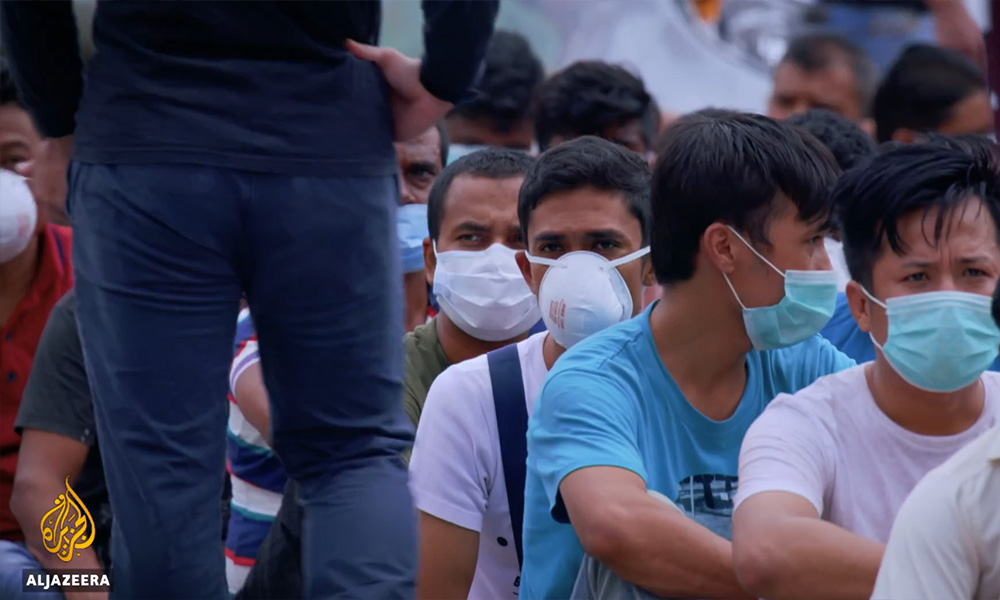
Al Jazeera led the documentary with dramatic imageries of "military-style" raids on migrant workers living in low-cost flats in Kuala Lumpur. The reporter posed a rhetorical question: “Is this a practical reality of dealing with the pandemic or is it racism?”
The either-or framing of the mistreatment of migrant workers during the Covid-19 lockdown sets the overall tone of the report. “Racism” was mentioned six times, “xenophobia” twice, “discrimination” once and “race relations” once.
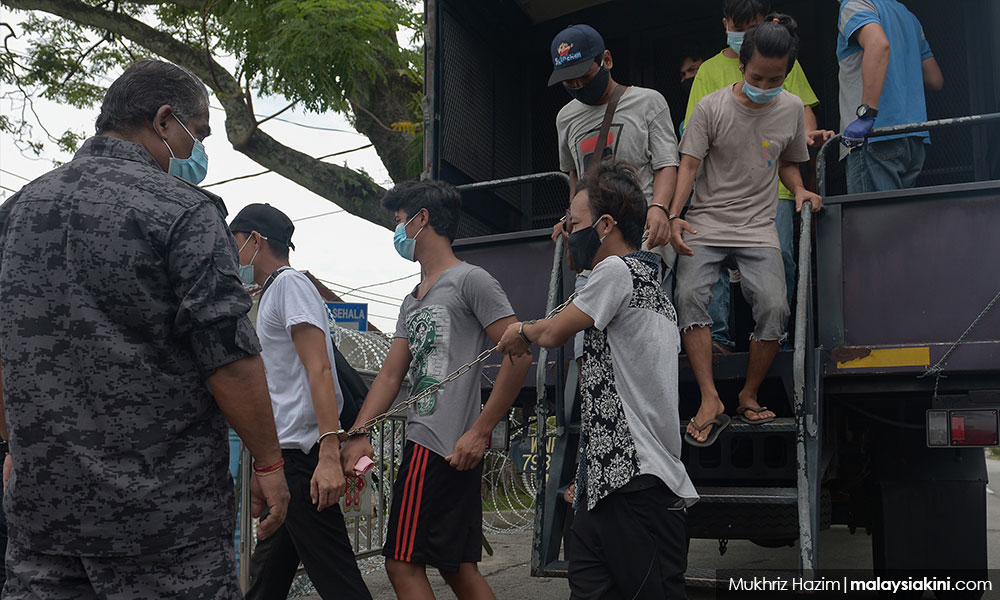
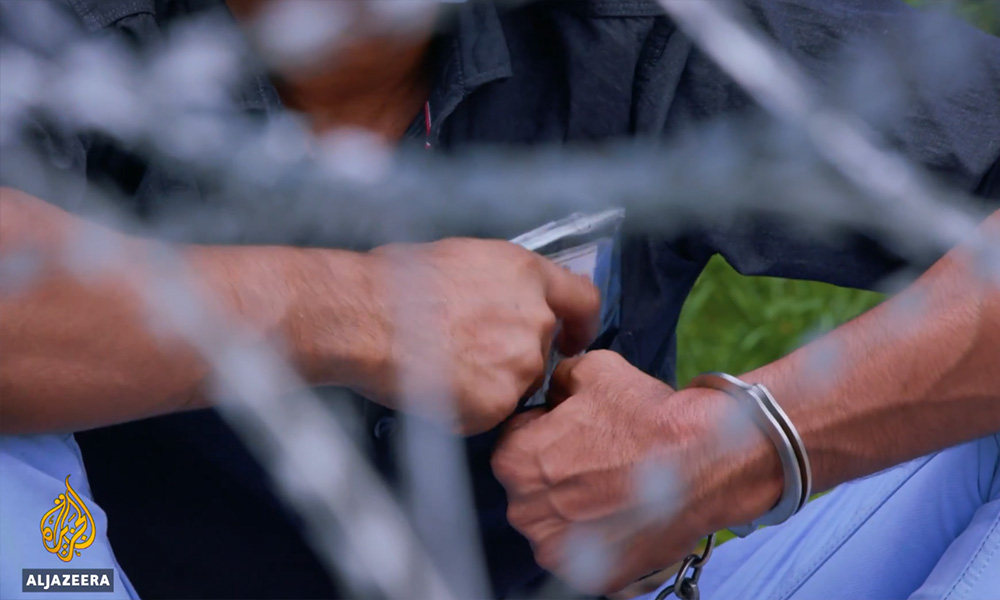
Migrant workers were framed as hapless victims corralled by callous immigration officers, handcuffed by police in shades and attended to by sympathetic testers in hazmat suits.
The undocumented migrants were the army ants - overworked and underpaid - in the booming construction sites, restaurants and makeshift eateries. They were the modern-day serfs and slaves, exploited but willing to take up dirty labouring work that Malaysians see as below their social standing.
Missing from the documentary were personal reactions from the authorities – except for three 20-second subtitled press conference clips of Defence Minister Ismail Sabri Yaakob explaining the health conditions of undocumented migrant workers.
The reporter, however, erred in claiming that “only state media were allowed into government press conferences”, adding that “several requests to interview the senior minister, home minister and his deputies were declined”, which left the government standing as the bad guy.
The 25-minute documentary was understandably limited in what it could have achieved if it had dug deeper into the minefield of complex labour and immigration laws, the alleged corruption that led to the influx of undocumented workers to what it is today with its hazardous public health implications, and the economic significance of migrant labour to the construction and service sectors.
While the documentary is overtly sympathetic to the plights of migrant workers, which is a common media narrative, the Perikatan Nasional (PN) government’s prosecution of Al Jazeera overlooks the fact that investigative journalism always thrives with each state clampdown and prosecution of journalists.

By prosecuting Al Jazeera on the grounds that it did not apply for a screening licence under the Finas Act 1981, the Ministry of Communications and Multimedia is mindlessly treading a similar path as China’s Ministry of Industry and Information Technology that bans foreign media from publishing content online without its approval.
The Sarawak Report (1MDB scandals), Rappler (drug war under Philippines President Rodrigo Duterte), Tehelka in New Delhi (arms dealing scam) and Radio Free Asia (human rights abuses in Xinjiang) – these outlets are testaments to global journalists’ conviction in speaking truth to power, which usually leads to international recognition and awards. And, sadly for some, posthumously.
A series of interviews I conducted with award-winning journalists in Asia for a book, Best Practices of Journalism in Asia, underscores the oppressive environment that Asian journalists work under, their commitment to serve their readers rather than those in power and their tenacity in reporting on the systemic injustices in their respective countries.
That is what we need more of from Malaysian journalists even as the PN government is evidently returning to the suppression tactics of the BN-Umno era, the latest being the invocation of the Finas Act, which Communications and Multimedia Minister Saifuddin Abdullah declared would be amended to exclude short videos uploaded to social media platforms.
Good governments often engage with journalists. They hesitate to prosecute. Politicians should know that engaging with journalists and answering their queries trump cover-ups and “no comment”.
Like water, truth inevitably seeps through the cracks. And, by the nature of their investigative work, journalists will uncover and publish their stories one way or another, such as Al Jazeera’s 101 East.
ERIC LOO is the founding editor of the academic journal Asia Pacific Media Educator.
The views expressed here are those of the author/contributor and do not necessarily represent the views of Malaysiakini.