




Long journey for gender equality law
It is time Malaysia had a gender equality law to guard the rights of Malaysians in specific areas pertaining to gender discrimination left out by existing laws, said a women's right activist.
It is time Malaysia had a gender equality law to guard the rights of Malaysians in specific areas pertaining to gender discrimination left out by existing laws, said a women's right activist.
Citing the case of air hostess Beatrice Fernandez as one example, Women's Centre for Change vice-president Zarizana Abdul Aziz said discriminatory practices based on gender remain unprotected under prevailing laws.
Speaking on the need for a gender equality law, she said the federal court, labour laws and class arguments based on collective agreements offer no protection for victims of gender discrimination.
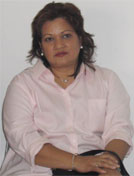 Fernandez was sacked in 1991 for refusing to resign after breaching her contract by getting pregnant. She lost a 14-year battle against Malaysia Airlines in March last year when the country's highest court rejected a petition to review the employment terms deemed restrictive towards female employees.
"Does a gender equality law cover the private or public sphere? What about religious and inheritance rights, and cultural norms?" asked Zarizana, noting that pukul sayang (beating a wife because of love) is an excuse commonly used by abusive husbands of her clients.
"In our negotiation for rights, where are we heading? Justice should be the objective and worldview of any person regardless of religion or cultural background, which are arguable."
She was speaking at a one-day 'Gender Equality Seminar: Swedish Experiences' jointly organised by the Women, Family and Community Development Ministry and the Swedish Embassy in Kuala Lumpur yesterday.
Zarizana, a Penang-based lawyer, said Malaysia has not met its international obligations under the Convention on the Elimination of All Forms of Discrimination against Women (Cedaw) to streamline national laws.
"Cedaw calls for the repeal of all discriminatory laws but we see that the debate is still going on (as to) whether house-husbands are unIslamic and the issue of misyar marriages which were not well-received by Sunni scholars previously.
"It is a big deal when women are asked to surrender their rights (as proposed in misyar marriages)."
Exploratory journey
At a press conference after opening the seminar, minister Shahrizat Abdul Jalil said the government will start exploring the timeliness of formulating a gender equality law.
"We will hold dialogues on whether the time has come to have such a law. There will be open discussions on this and once that is decided, the matter will be referred to the cabinet."
But the minister remained non-committal on the government's seriousness about legislating gender-based rights.
"Yes, the time is now but this (consultation) is only the second step after the amendment to Article 8(2) of the Federal Constitution (to include gender as a prohibited ground for discrimination)," she replied to a question on a time-frame for drafting the bill.
"It's still a very long journey. What's important is to formulate a law based on our own mould. And please remember that gender equality is not only for women, it is for both women and men."
Asked if she anticipated any resistance to the idea particularly from Islamic authorities, Shahrizat said "no, so long as it is fair and just".
"Yes, there is a need to engage the Syariah authorities. We will set up a committee for the purpose of exploring the suitability of such a law."
She said it will be chaired by ministry secretary-general Faizah Mohd Tahir and comprise religious groups, non-governmental organisations and political parties.
At one point, the minister took great pains to caution the media against quoting her as announcing a new draft law, but instead to report that the ministry was just "embarking on a journey to see if Malaysia is ready for it or not".
"If what we present at the end of the day is fair and just, I don't see why there should be any resistance."
Swedish history
The morning session had two Swedish speakers sharing their country's experiences in becoming the world's first gender-balanced society which currently has 50 percent women in Parliament.
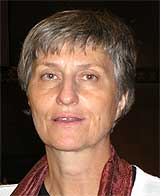 Inquiry on Gender Equality Policy chairperson Gertrud Astrom explained the concept of gender mainstreaming and how national policies had been reorganised.
"It is not easy to formulate and more so to implement. The problem is over-planning where a lot of time is spent on too many plans until there is no energy left for implementation."
She said gender issue is a political issue and must remain so if any changes are to take place in policy-making.
"The question to ask is, how do different policies meet the needs of men and women equally? In Sweden, gender equality means giving women and men equal power to shape society and their own lives."
Gender equality has been a political norm in Sweden since 1972, she said, adding that there were no quotas in the Swedish Parliament.
 On the issue of cultural and religious barriers raised during the question-and-answer session, Astrom, a gender equality expert with 25 years experience, said that some traditions have to be discarded if they prove to be oppressive.
Stockholm County Administrative Board special advisor on gender equality Dennis Kullman said men would have to get involved in these issues in order to become a more equal society.
"Equal rights is also a question of human rights and the equality between women and men are one of our national goals."
PM as catalyst
Universiti Malaya Vice-Chancellor Rafiah Salim proposed an alternative approach with a comprehensive structure putting the prime minister as the agent for change.
"Gender mainstreaming must be on the prime minister's agenda, not under other ministries because all strategies and efforts will not happen if there is no top ownership of the idea."
Disagreeing with the top-down approach, All Women's Action Society executive director Honey Tan said it was vital to ensure that the grassroots understand the implications of gender issues.
"The PM himself has acknowledged that some quarters are unhappy with women's advancement in society and are using culture and religion to stop that," she said, quoting from Abdullah Ahmad Badawi's statement in a news report.
One participant suggested that more men are targeted for sensitisation programmes on the actual meaning of gender equality to prevent women empowerment from being a pointless pursuit in this area.
About 300 people attended the seminar including government officials, ministry staff, diplomats, women's activists, social workers and academics. Also present were Swedish Ambassador to Malaysia Helena Sangeland and Chief Judge of Malaya Siti Norma Yaakob.


