
Missteps ahead of partial shutdown risk Covid-19 spiraling
CORONAVIRUS | Last Sunday, news of overwhelmed hospitals and dozens of daily Covid-19 deaths in distant lands became more real for Malaysians as the country, for the first time, reported a triple-digit rise of Covid-19 cases in a day.
That night, calls to lock down the country trended on social media, particularly Twitter. Prior to that, the highest daily case was 41. It was a turning point for the country's battle against Covid-19.
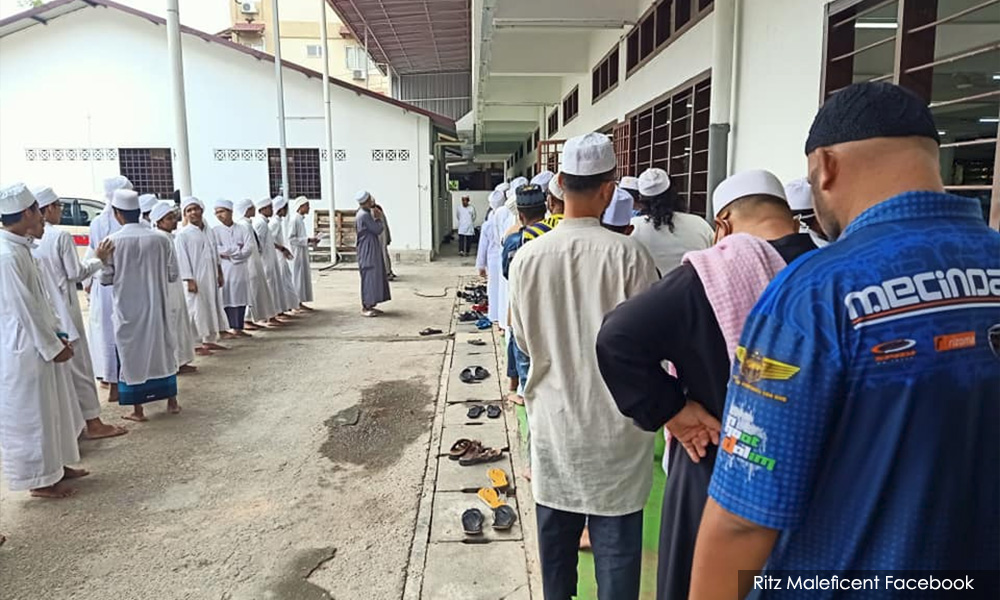
The escalation was due to the 16,000-strong religious gathering in Sri Petaling mosque, where people from across the country and around the world, gathered for four days before returning to their hometowns, allowing the virus to spread in and outside of Malaysia.
In announcing 190 new Covid-19 cases - the highest yet - last Sunday, Health Minister Adham Baba said the government would meet the next day on introducing further measures to contain the Covid-19 outbreak.
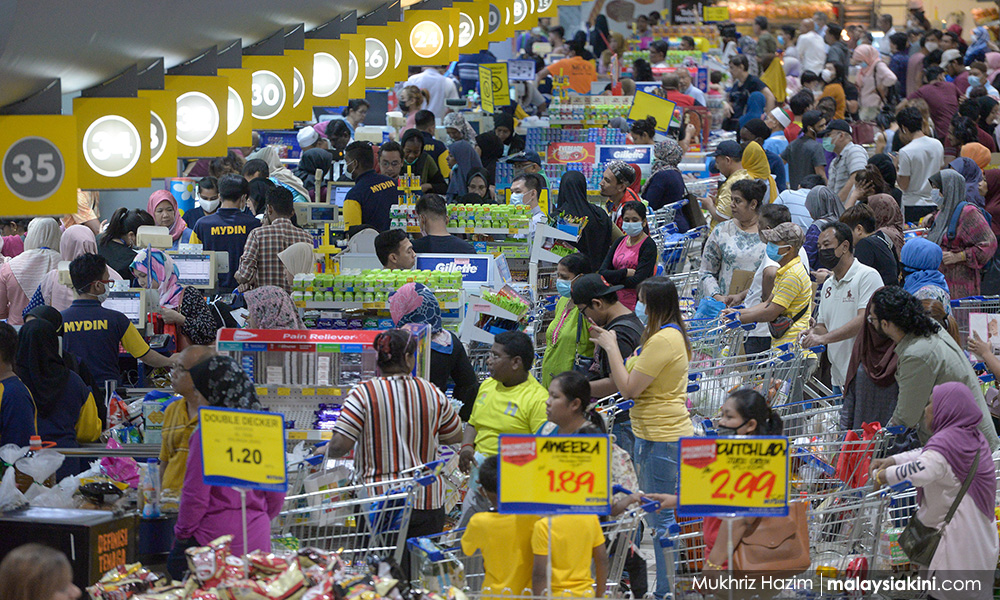
Anticipating curbs, some people began panic buying on Monday morning.
But this quickly escalated in the evening when Prime Minister Muhyiddin Yassin, after chairing the Economic Action Council meeting and unveiling economic measures to help Malaysians cope with Covid-19, said there would be a "big announcement" at night after he meets the National Security Council (NSC), but did not provide details.
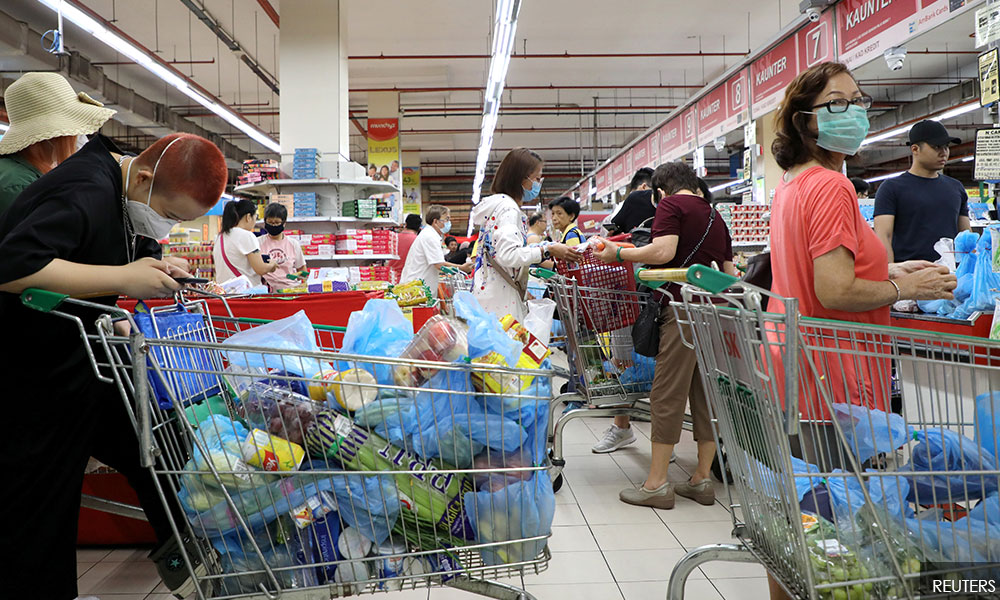
Social media was abuzz about a potential shutdown and fresh foods flew off the shelves at hypermarkets and supermarkets, and long queues were seen at checkout counters.
Finally, on Monday at 10pm, Muhyiddin announced there would be a movement control order - Malaysians won't be allowed to leave the country nor foreigners be allowed in, non-essential businesses and services must close and most importantly, a ban on public gatherings - beginning March 18 until March 31.
Despite Muhyiddin assuring that supermarkets and convenience stores will remain open, the panic buying did not stop.
On Tuesday, Domestic Trade and Consumer Affairs Minister Alexander Nanta Linggi urged people against panic buying, assuring that there was sufficient food supply.
The message about risks associated with large gatherings at hundreds of supermarkets across the country - the very thing the order intends to stop to minimise the Covid-19 spread - appeared lost.
But that lack of clear communication would appear mild as the events of Tuesday unfolded, culminating in more and even larger unintended gatherings - conditions that...
CORONAVIRUS | Poor implementation of the movement control order results in many unintended mass gatherings in a day.
CORONAVIRUS | Last Sunday, news of overwhelmed hospitals and dozens of daily Covid-19 deaths in distant lands became more real for Malaysians as the country, for the first time, reported a triple-digit rise of Covid-19 cases in a day.
That night, calls to lock down the country trended on social media, particularly Twitter. Prior to that, the highest daily case was 41. It was a turning point for the country's battle against Covid-19.
The escalation was due to the 16,000-strong religious gathering in Sri Petaling mosque, where people from across the country and around the world, gathered for four days before returning to their hometowns, allowing the virus to spread in and outside of Malaysia.
In announcing 190 new Covid-19 cases - the highest yet - last Sunday, Health Minister Adham Baba said the government would meet the next day on introducing further measures to contain the Covid-19 outbreak.
Anticipating curbs, some people began panic buying on Monday morning.
But this quickly escalated in the evening when Prime Minister Muhyiddin Yassin, after chairing the Economic Action Council meeting and unveiling economic measures to help Malaysians cope with Covid-19, said there would be a "big announcement" at night after he meets the National Security Council (NSC), but did not provide details.
Social media was abuzz about a potential shutdown and fresh foods flew off the shelves at hypermarkets and supermarkets, and long queues were seen at checkout counters.
Finally, on Monday at 10pm, Muhyiddin announced there would be a movement control order - Malaysians won't be allowed to leave the country nor foreigners be allowed in, non-essential businesses and services must close and most importantly, a ban on public gatherings - beginning March 18 until March 31.
Despite Muhyiddin assuring that supermarkets and convenience stores will remain open, the panic buying did not stop.
On Tuesday, Domestic Trade and Consumer Affairs Minister Alexander Nanta Linggi urged people against panic buying, assuring that there was sufficient food supply.
The message about risks associated with large gatherings at hundreds of supermarkets across the country - the very thing the order intends to stop to minimise the Covid-19 spread - appeared lost.
But that lack of clear communication would appear mild as the events of Tuesday unfolded, culminating in more and even larger unintended gatherings - conditions that are suitable for the potential spread of Covid-19.
Order fuels unintended mass gatherings
While Muhyiddin's order was well-received and hailed as decisive action on social media, it lacked details and its implementation quickly unravelled in the 24 hours after the announcement.
In retrospect, it now appeared that the government itself wasn't clear on the details of what it wanted to implement with the order.
The NSC only issued a "Frequently Asked Question (FAQ)" to clarify Muhyiddin's speech 14 hours later, on Tuesday at 2.10pm. And that was the first of three different versions of FAQ issued throughout the day.
An update was issued at 4.10pm and another at 7.30pm. While some updates were understandably to provide clarification, others were complete reversal or change of positions from earlier versions.
For example, the first version said wedding solemnisation ceremonies (pernikahan) are allowed if it did not involve a large crowd and other ceremonies are "advised" to be postponed, but the second version two hours later imposed an outright ban on all such events.
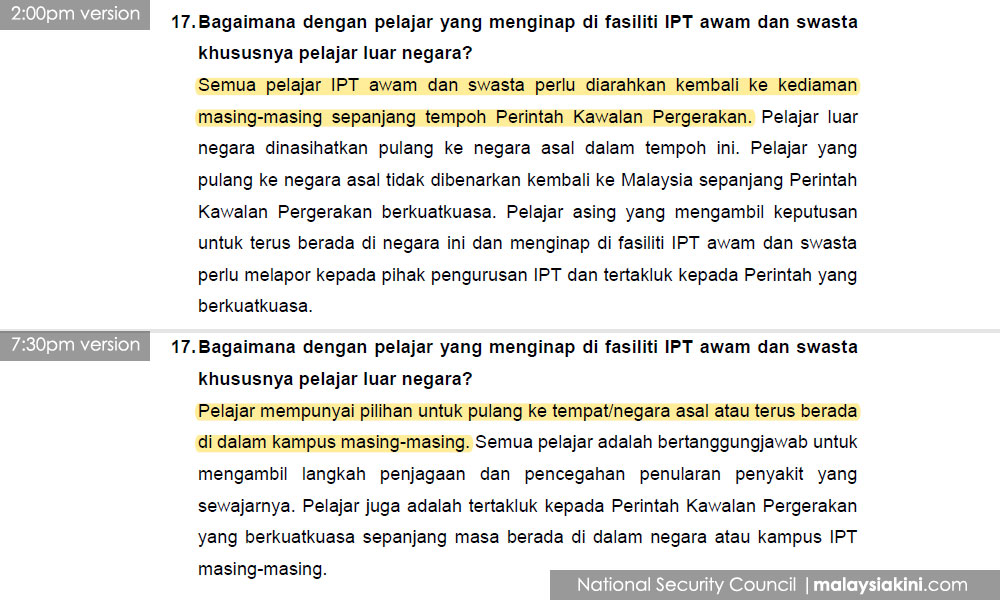
But the most controversial part of the NSC FAQ was the 17th question, where it asked all public and private university students to return home in the first version, only to say they have an option to stay on campus in the third version.
That had serious implications, as students had vacated their dormitories and headed to bus stations to return to their hometowns. By the time NSC changed its instruction at 7.30pm, it was too late.
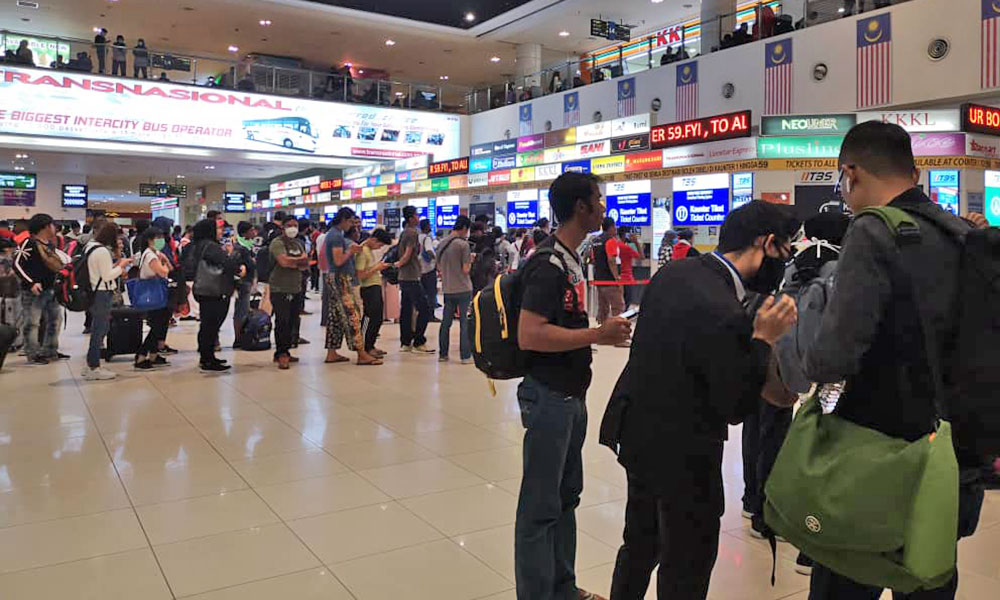
Crowded scenes were seen at bus stations, particularly at Terminal Bersepadu Selatan (TBS) in Bandar Tasik Selatan, Kuala Lumpur.
The TBS management clarified that pictures of people shoulder-to-shoulder on its premise circulated on social media were old photographs from 2017 and shared real ones from Tuesday night, but the queues were still long.
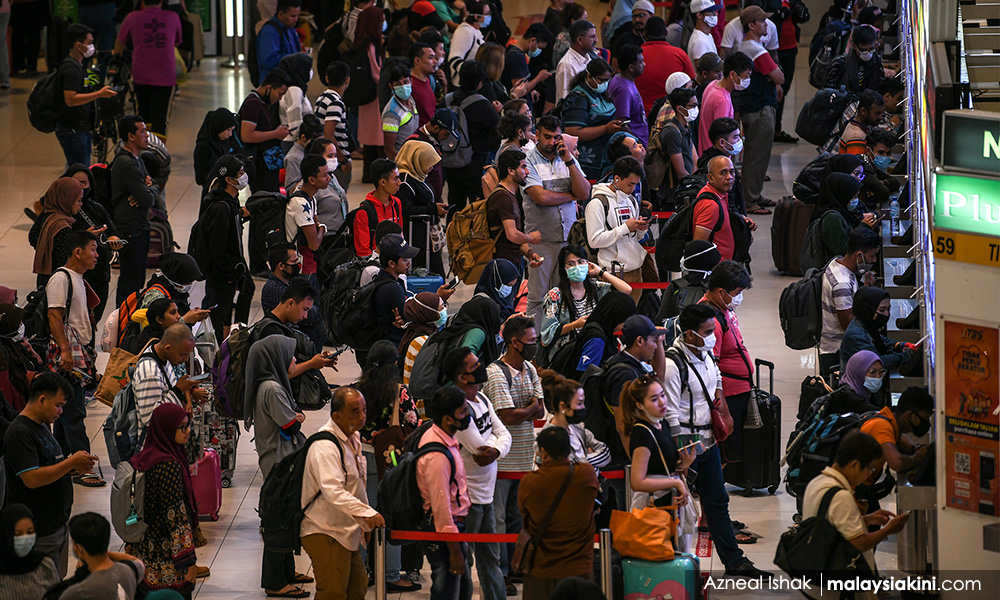
Medical and infectious disease experts observed the exodus from Klang Valley unfold with alarm.
"What apparently happened in TBS today (yesterday) is exactly what we didn't want to happen.
"Mass gatherings at bus terminals and then folks going all over the country from the active Covid-19 area in the country. Are we potentially spreading it nationwide?" former Health Ministry deputy director-general Dr Christopher Lee said on Twitter.
Higher education minister passes ball to NSC
Dr Helmy Haja Mydin, a respiratory physician, was also alarmed by the scenes.
"How in God's name is this curbing Covid-19? I'm sure my friends in the Health Ministry are knocking their heads on the wall. Numbers will escalate, exponentially," he said on the micro-blogging site.
Higher Education Minister Noraini Ahmad immediately came under fire on social media. Under pressure, she pointed to a gag order that had been imposed on other ministers and only authorised ministers can communicate with the public on Covid-19.
"Many have tweeted to me asking why the instruction (to stay on campus) came late.
"In such situations, all instructions come from the NSC. Ministers other than the Health Ministry need to avoid issuing statements so that the people are not confused by various statements," she said.
In a separate tweet, Noraini said she had spoken to all public universities to allow students to remain on campus and for canteens to remain open.
Unfortunately, the scenes at the bus station were only one of many public health hazards that took place last night.
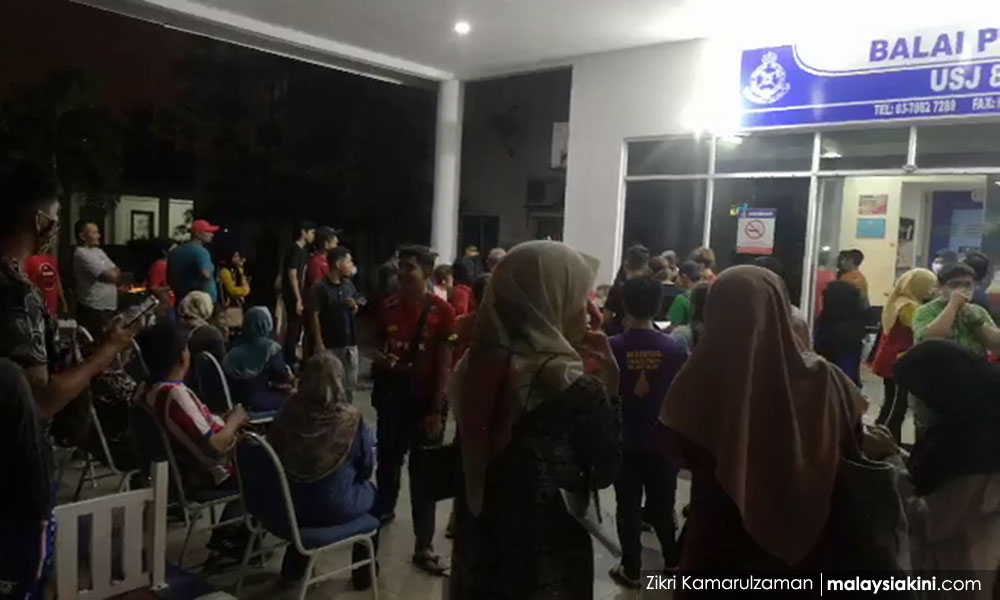
At police stations across the Klang Valley and other states, long queues extending to outside the compound assembled, putting both visitors and police personnel, who are instrumental to assist in contact tracing and maintaining order, at risk of infection.
This was after inspector-general of police Abdul Hamid Bador announced in the evening that people travelling interstate will need to seek permission at their nearest police station and fill in a form.
Police stations swarmed
Up until then, interstate travel had been a grey area as neither Muhyiddin's speech nor NSC's FAQ had elaborated on any restrictions, nor was there public guidance from Home Minister Hamzah Zainuddin, who has not made any media statement since March 12.
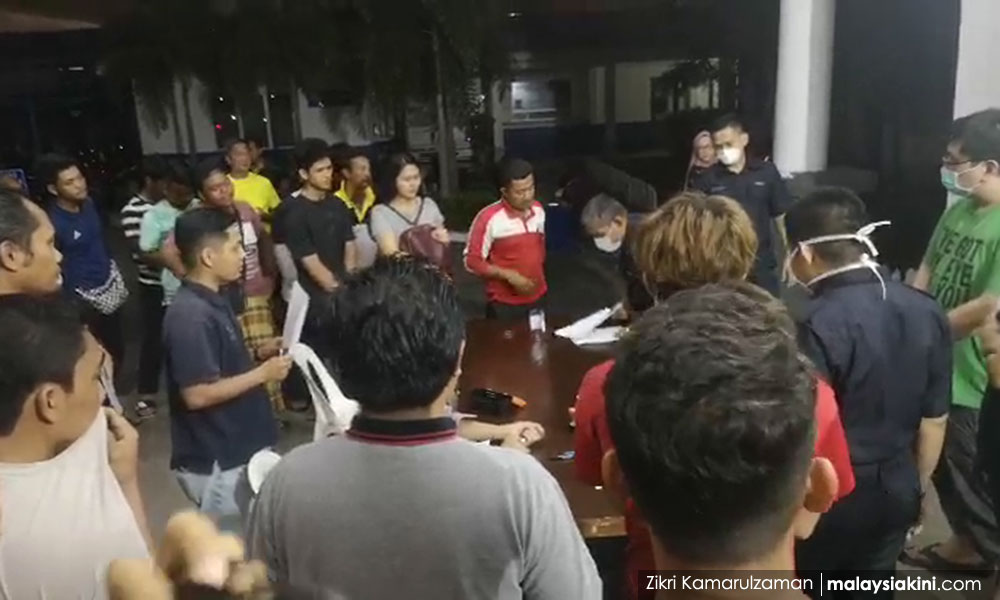
Around six hours after announcing the measure, police rescinded the interstate notice rule as police stations were overwhelmed. The health risk they had experienced, though, was a fait accompli.
People wanting to travel interstate ahead of the order have been criticised for taking the partial shutdown lightly but some point out that not everyone thinks of it as a 'holiday'.
"I saw many posts saying those who lined up at the police station are 'stupid' and 'selfish'. I'm angry because amongst those lining up are my family members.
"Why? My father went outstation to Kelantan three days ago and expected to come back home (Pahang) tomorrow. According to the rules, he needs to fill up the travel form at a police station.
"He is 68-year-old with heart problem Why burden him? He just wants to return home," said Facebook user Zulkarnaen.
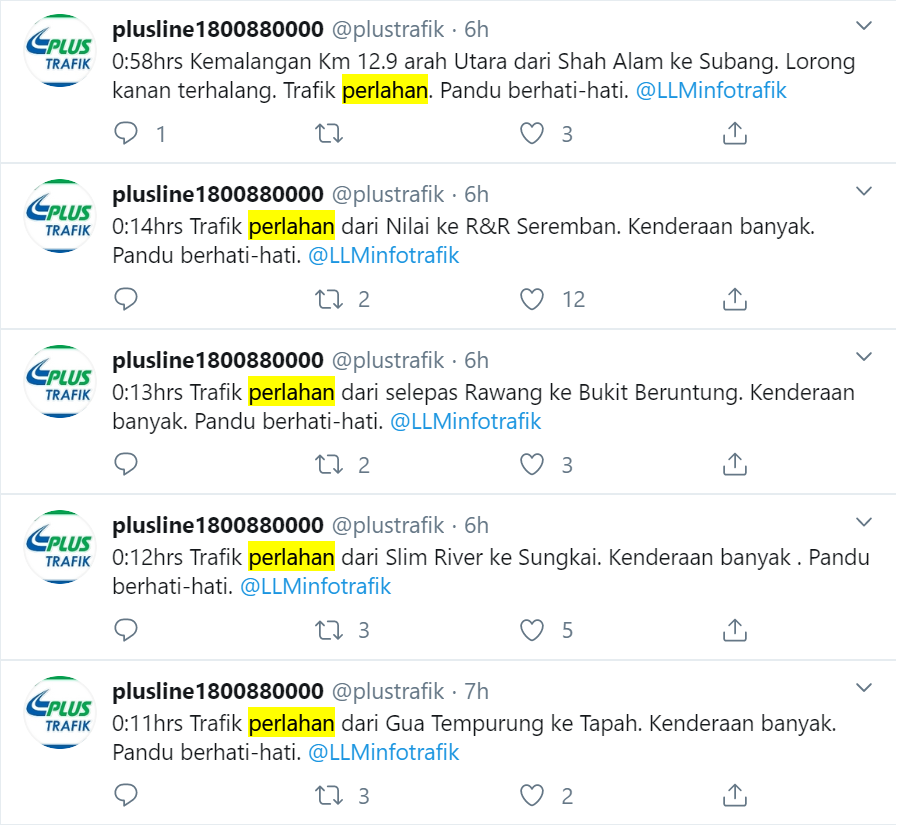
Up to midnight today, Plus Expressway reported heavy traffic at various stretches of the highway heading northwards. These people may or may not have good reasons to travel, but they could potentially bring with them any illness they may have contracted - Covid-19 or not.
Southwards, another quagmire developed as tens of thousands of Malaysians working in Singapore rushed to cross into the city-state before the partial shutdown began, after which they would not be allowed to leave.
Singapore too had tightened its travel restrictions to fight the Covid-19 pandemic but it made an exception for Malaysians and Singaporeans crossing the border between Malaysia and Singapore via land and water due to the "inter-reliability" of the two countries. Malaysia, however, did not reciprocate.
Malaysians who commute daily to work in Singapore were left guessing about their fate as Muhyiddin's announcement on Monday night did not provide details until the next morning when Immigration director-general Khairul Dzaimee Daud confirmed there would be no exemption to the travel ban.
Race against time into Singapore
This left Malaysians scrambling to find temporary accommodation in Singapore and even the Singapore government had to get involved.
This culminated with chaotic scenes at the Johor-Singapore Causeway as people walked into Singapore to beat the congestion and deadline.
The order, intended to curb mass gatherings and promote social distancing to combat Covid-19, had inadvertently caused many more mass gatherings in a single day.
Yesterday's manic Tuesday is reminiscent of the lockdown of Lombardy, Italy and Wuhan, China, where people trying to beat the quarantine sparked an exodus, helping to spread Covid-19 to other parts of their countries.
"As a doctor, I am resigned to the fact that Covid-19 cases will go up in the next weeks. We'll run out of bed and equipment including basic stuff like masks.
"Finance Ministry, please take note and help the Health Ministry. Hope I'm wrong if not, I hope heads roll. The rakyat deserves better," said Hilmy.
Whether Malaysia will be spared the same fate as Italy and China will be known in the next two weeks and the Sri Petaling religious gathering, which took place from Feb 27 to March 1, could serve as an indicator.
The first detection of Covid-19 infection from the Sri Petaling gathering was by Bruneian authorities, 11 days after the patient first attended the event. He developed symptoms on March 7 and was admitted to hospital on March 8 before being tested positive the following day.
The cluster of infections from the event was also concurrently picked up by Malaysian health authorities through sporadic testing when a separate patient from the event sought medical attention on March 8 an was eventually confirmed positive with Covid-19 on March 10.
The fact that Malaysian health authorities were able to concurrently detect an infected patient from the new cluster of infections with Bruneian authorities suggests it has a respectable sporadic testing regime and this will be put to test in the coming weeks.
In the meantime, health authorities will need to contain the Sri Petaling cluster. As of yesterday, 673 cases were reported in Malaysia, including the country's first two deaths. 428 of those cases are from the Sri Petaling cluster.
Globally, the virus has infected 187,665 people and killed 7,790 people to date. China, where the virus originated, has 80,881 cases with 3,226 deaths.
While China has brought Covid-19 under control, for now, the virus has spread to other parts of the world including Italy (31,506 cases), Iran (16,169 cases), Spain (11,178 cases), South Korea (8,320 cases), France (7,730 cases), Germany (6,012 cases), US (4,379 cases) and the UK (1,950 cases).