
On social media, youths are the target market for new smoking device
SPECIAL REPORT | The April 2019 launch of Philip Morris International’s (PMI) flagship product, the Iqos in Tirana, Albania, drew a fashionable crowd.
Guests walked down a white carpet flanked by palm trees and lit by spotlights until inside an Iqos-branded tunnel they were met by hostesses in futuristic dresses. Hands emerged from velvet curtains to hand them champagne.
TV screens on the wall played videos of erupting flames. “Stop burning, start heating,” the text read as a gold Heatstick slipped smoothly into the Iqos device.
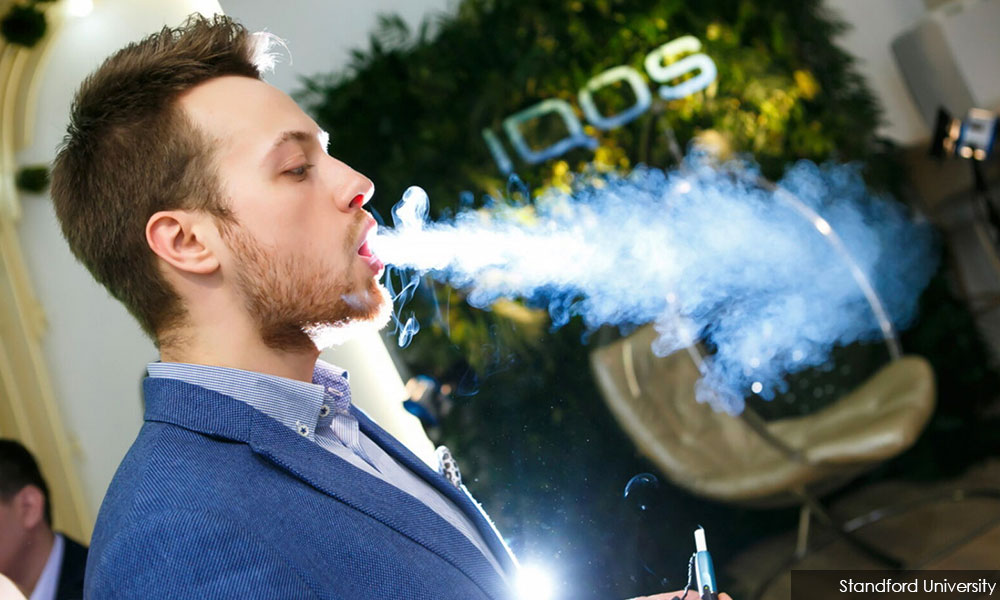
A Heatstick is a tobacco stick specially designed by PMI for the Iqos. The Iqos heats up the tobacco to produce nicotine that is inhaled by the user. The lower temperature makes it a less harmful alternative to conventional cigarettes, PMI said.
There have been similarly glamorous launches for Iqos products all around the world, some headlined by pop stars Jason Derulo or Jamiroquai. PMI has also sponsored Iqos-branded parties for Playboy magazine in Germany and Cosmopolitan magazine in Russia...
SPECIAL REPORT | M'sian celebs promote Philip Morris International’s tobacco smoking Iqos, reaching young audiences.
SPECIAL REPORT | The April 2019 launch of Philip Morris International’s (PMI) flagship product, the Iqos in Tirana, Albania, drew a fashionable crowd.
Guests walked down a white carpet flanked by palm trees and lit by spotlights until inside an Iqos-branded tunnel they were met by hostesses in futuristic dresses. Hands emerged from velvet curtains to hand them champagne.
TV screens on the wall played videos of erupting flames. “Stop burning, start heating,” the text read as a gold Heatstick slipped smoothly into the Iqos device.
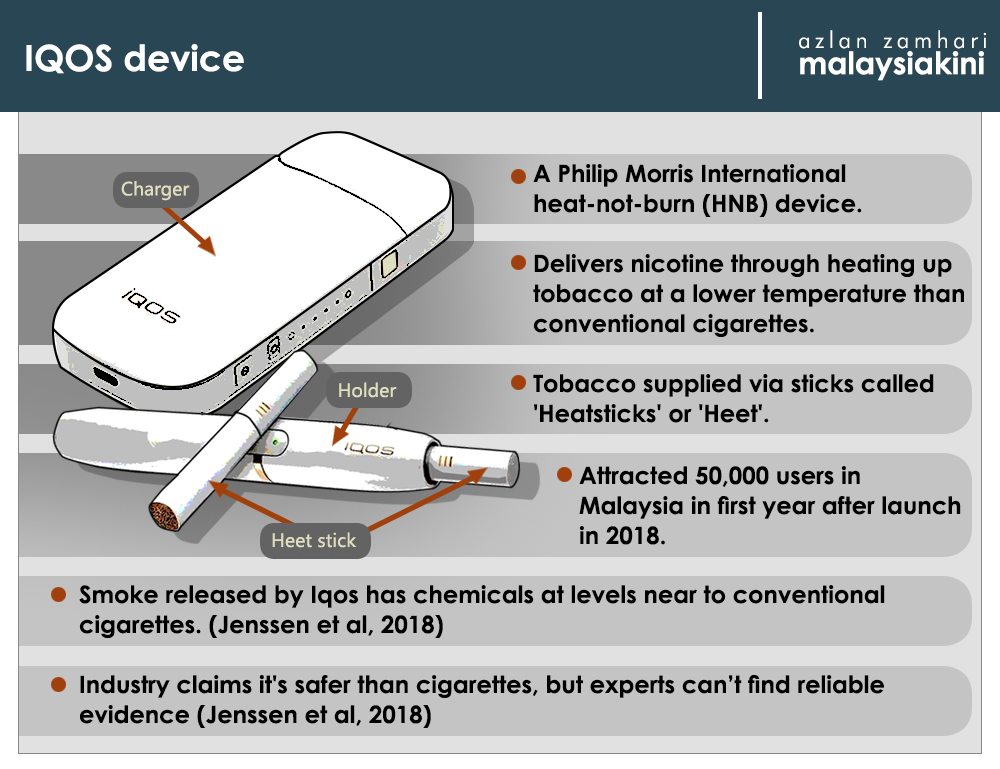
A Heatstick is a tobacco stick specially designed by PMI for the Iqos. The Iqos heats up the tobacco to produce nicotine that is inhaled by the user. The lower temperature makes it a less harmful alternative to conventional cigarettes, PMI said.
There have been similarly glamorous launches for Iqos products all around the world, some headlined by pop stars Jason Derulo or Jamiroquai. PMI has also sponsored Iqos-branded parties for Playboy magazine in Germany and Cosmopolitan magazine in Russia.

In the UK and Malaysia, where advertising of both the device and Heatsticks is banned, marketing is limited to PMI’s website, Iqos shops and displays in vape shops. But social media is a grey area.

Model, drift racer among M’sia celebs posting about Iqos
In Malaysia, model and former Miss Malaysia Amber Chia shared a photo of her holding an Iqos device with her 261,000 Instagram followers. The photo sits among her other posts exercising, praying at a temple or spending time with her son.
Not long after, Malaysian drift racer Tengku Djan Ley Tengku Mahaleel takes a break from posting photos of racing cars and skateboarding to post a picture of an Iqos device. “It’s the perfect heated tobacco system for smokers who are looking for a cigarette alternative. Give it a try!” he told his 40,700 Instagram followers.
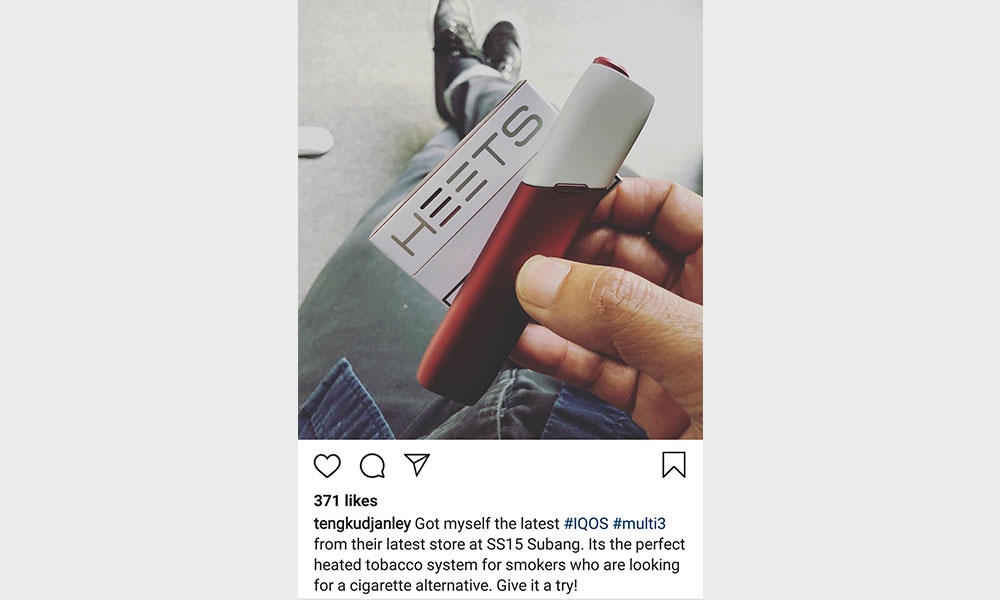
Other celebrities spotted posting about their Iqos experience told Malaysiakini that they were not paid to endorse Iqos. Chia and Tengku Djan Ley, who frequently post brand and product endorsements, did not reply.
Their photos are collected and reposted by an Iqos fan Instagram account, with the hashtag #gengiqos. The account frequently promotes the official stores and products, but its administrators insist it is not paid for by PMI.
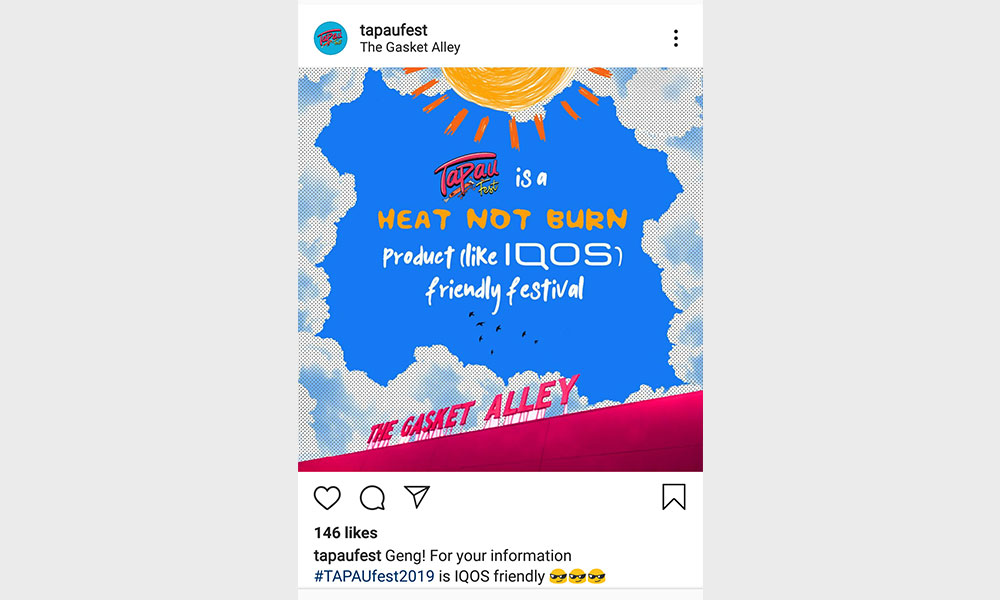
Last year, an independent music festival Tapau in the Klang Valley was branded as an Iqos-friendly event, where the device could be used anywhere, including indoors.
‘Some ads imply Iqos can improve romance’
Its campaign features social media influencers, events, collaborations, glass-fronted shops and an army of brand ambassadors, according to a report compiled by Stanford University.
“The advertising tries to portray Iqos as aspirational, high tech, healthy, fashion-conscious, clean, fun and link it with fashion, travel, leisure and relaxation.
“Some adverts imply Iqos helps make people more successful in romance by improving their kisses and their teeth, as well as being a good way to show love to family and friends,” Professor Robert Jackler, who led the research, said.
Instagram posts show Iqos with coffee, alcohol and food. Young, attractive, professional people are shown laughing, socialising or looking happy with their devices. Some ads show Iqos with surfers and runners, implying it is a product to suit healthy, outdoorsy lifestyles.
Elsewhere, Stanford researchers uncovered examples of explicit health claims, including a post from Iqos’ Instagram page in Japan that promoted it as a way to avoid lung cancer, emphysema and heart attacks when compared with smoking, which an expert said is not backed up by evidence. PMI disputes some of Stanford’s findings.
Replying to his followers, the Malaysian drift racer Tengku Djan Ley said he trusted the Iqos device because it is “scientifically proven”.
PMI forced to suspend social media influencer campaign
In the US and the UK, PMI cannot legally claim Iqos can help quit smoking or lower the risk of disease. The UK Department of Health wrote to PMI in 2018 to tell the company to stop sending posters advertising the device to convenience stores.
PMI was forced to suspend its own social media influencer campaign when it emerged in May last year that the company had hired models who were under 25, against its own internal guidelines.
But the Stanford researchers have uncovered an Armenian account that featured attractive young influencers posting about Iqos.
The researchers also found Instagram posts that seemed to target even younger teenagers.

Instagram posts from Ukraine and Armenia showed young-looking girls posing with pastel-coloured Iqos devices. Others posed the devices against a backdrop of ice creams, palm trees and seashells.
“It has used the exact same strategy and the exact same images it used to make Marlboro, the most popular cigarettes for kids worldwide,” Matt Myers, president of the Campaign for Tobacco-Free Kids, said.
“If governments don’t respond strongly and directly, Philip Morris International will use Iqos to renormalise tobacco use and reach a whole generation of young people who otherwise never would have smoked.”
‘Not exactly smoke-free’
Dr Reto Auer, a doctor and researcher at the universities of Bern and Lausanne, bought an Iqos after seeing adverts that said it did not produce smoke.
He smoked it in the office as his colleagues watched, noticing black charring on the Heatstick and that it smelt like burnt tobacco.
Suspicious that the charring suggested incomplete burning, called pyrolysis, his team set up a study to determine whether Iqos produced smoke or not. Their conclusion? It did.
“Basically what the Iqos is is a portable toaster,” he said. “If you leave your bread long enough, it will become black. At what point do you say your toast is burnt? Is that bread vapour that comes out of your toaster? No, we call it smoke.”
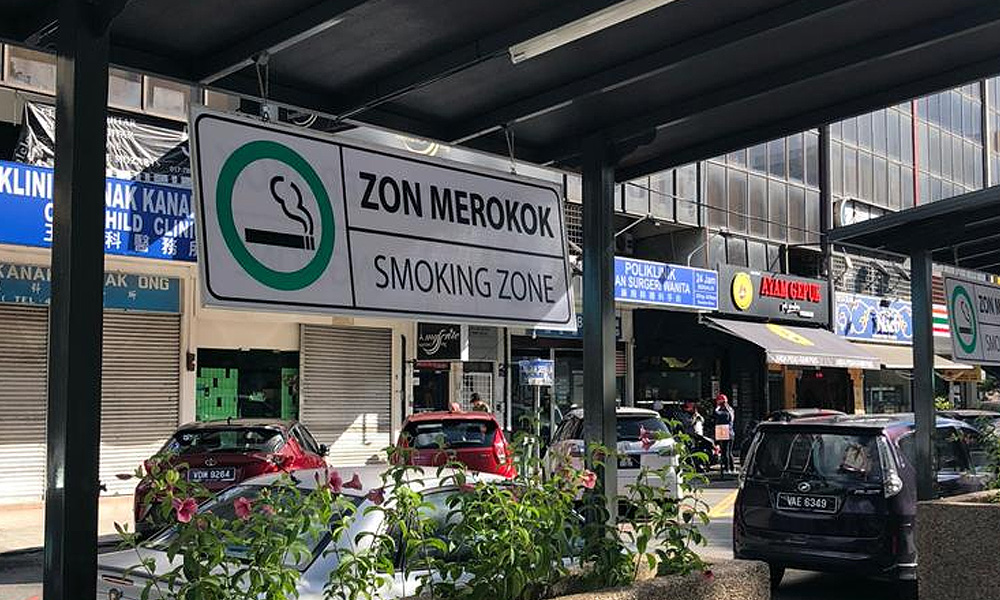
Auer and his team believe PMI is “dancing around” the definition of smoke to avoid indoor smoking bans. In Japan, while smoking is banned indoors, Iqos is not; there are “no smoking, Iqos only” signs.
“If you have only the Iqos indoors, and all other cigarettes outside, then you have no competitors,” Auer said.
Pushing indoor Iqos use in Malaysia
The idea to use Iqos indoor was also floated by the Iqos fan Instagram account which is dedicated to promoting Iqos and its official stores. It insisted on not being funded by PMI.
In one post, it asked followers if they feel discriminated against by laws which ban indoor smoking.
“Isn’t it unfair that we, the people who want to go smoke-free, are forced to stand with the smokers and inhale second-hand smoke?”
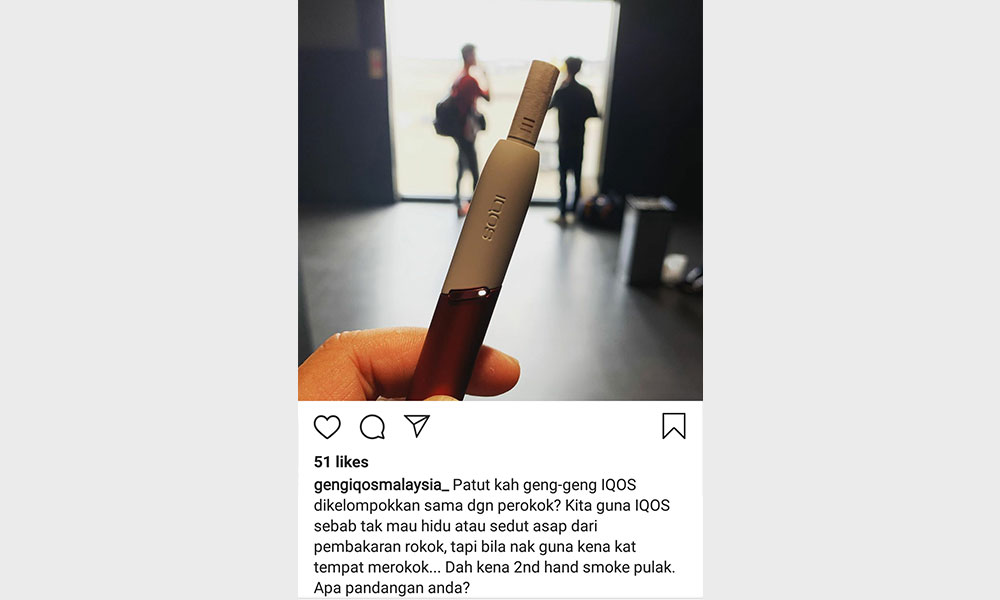
A Malaysian Iqos “fan account” floats the idea of indoor smoking.
Experts believe this an attempt to normalise the act of smoking.
“Such arguments are absurd and illogical,” said Malaysian Public Health Specialist Association president Dr Zainal Arrifin Omar. “It should never be allowed indoors now or in the future.”
He said heat-not-burn devices like the Iqos still have emissions which are harmful to passive smokers, even if less than conventional cigarettes. But beyond that, allowing them indoors normalises the act of smoking, he added.
Cafes and flavour pairings
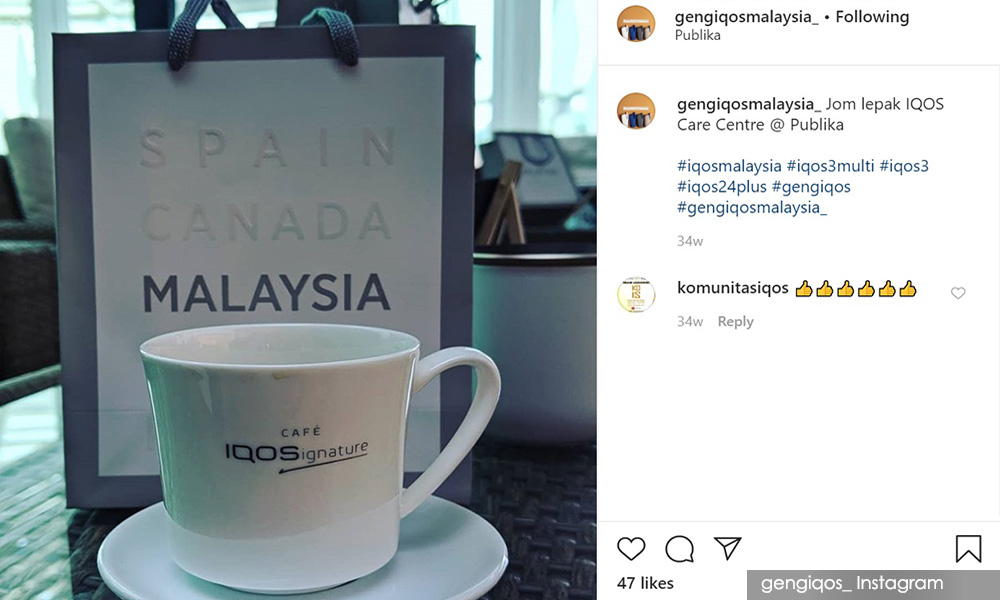
In countries including Japan, Romania, Ukraine, Vietnam, Russia, Czechia, and Spain, PMI has created its own cafés and lounges, where menus pair coffees with particular flavours of Heatstick.
It has launched a global network of “Iqos-friendly spaces”; bars, hotels, restaurants or public areas like beaches where people can freely puff on their Iqos.

Mapping Iqos’ launches reveal a pattern. Iqos has mainly been promoted in countries that have introduced smoking or tobacco advertising bans and where cigarette sales were falling, according to Bath’s analysis.
“They needed something else to make a profit in the future in those countries because people were stopping smoking,” said Karen Evans-Reeves, co-author of the report.
Within the UK there are Iqos shops in London, Manchester, Bristol and Cardiff, but none in Hull, Burnley or Mansfield where PMI’s research shows smoking rates are highest.
PMI: Groups robbing adults of freedom to choose
Dr Moira Gilchrist, a vice-president of PMI, said: “For PMI, the long-term business opportunity is to convert adult smokers who would otherwise continue to smoke cigarettes to better alternatives.
“A campaign coordinated by American special interest groups, all of whom are seemingly funded by the same source - Bloomberg Philanthropies - are dedicated to just one mission.
“Under the guise of promoting public health, they are working to rob adults who smoke of their right to choose scientifically substantiated better alternatives to continued smoking.”
The Bureau of Investigative Journalism’s Smoke Screen project, scrutinising the tobacco industry which kills millions a year, is funded by an NGO, Vital Strategies, which is in turn funded by Bloomberg Philanthropies.
The Bureau is a not-for-profit predominantly funded by grants from dozens of foundations and fully discloses all of its funders. Neither Vital Strategies nor Bloomberg Philanthropies have any say over the Bureau’s journalism.
A version of this article was first published by the Bureau of Investigative Journalism. Additional reporting for the Malaysiakini version by AIDILA RAZAK.
Part 1: Experts: Tobacco firm’s ‘smoke-free’ promise a smokescreen
Part 2: Behind the ‘smokescreen’ of Philip Morris International’s anti-smoking campaign