
RSPO: Satellite data shows few members' plantations affected by fire
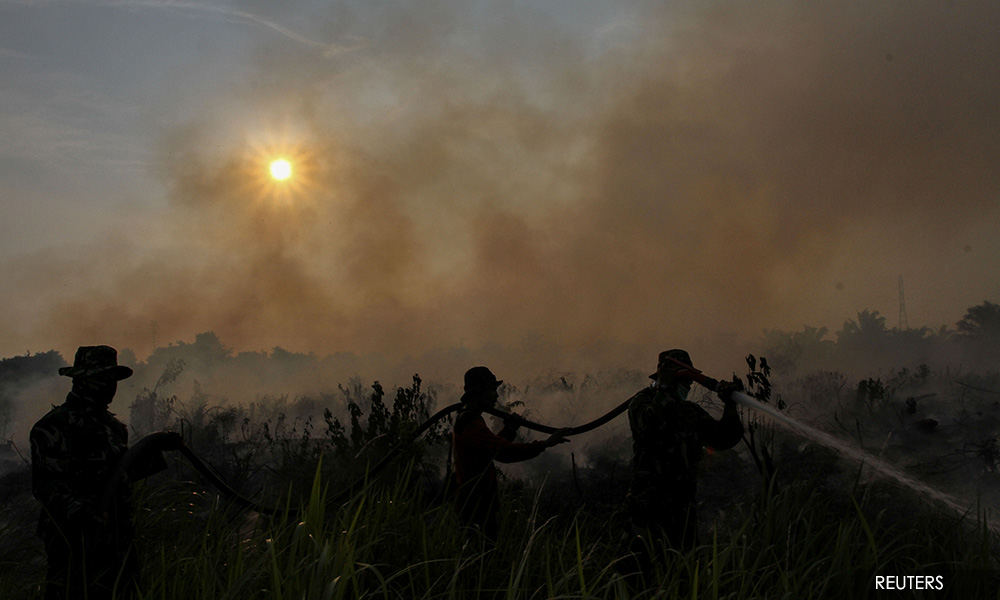
Only a small proportion of hot spots detected throughout Malaysia and Indonesia are located on plantations certified by the Roundtable on Sustainable Palm Oil (RSPO).
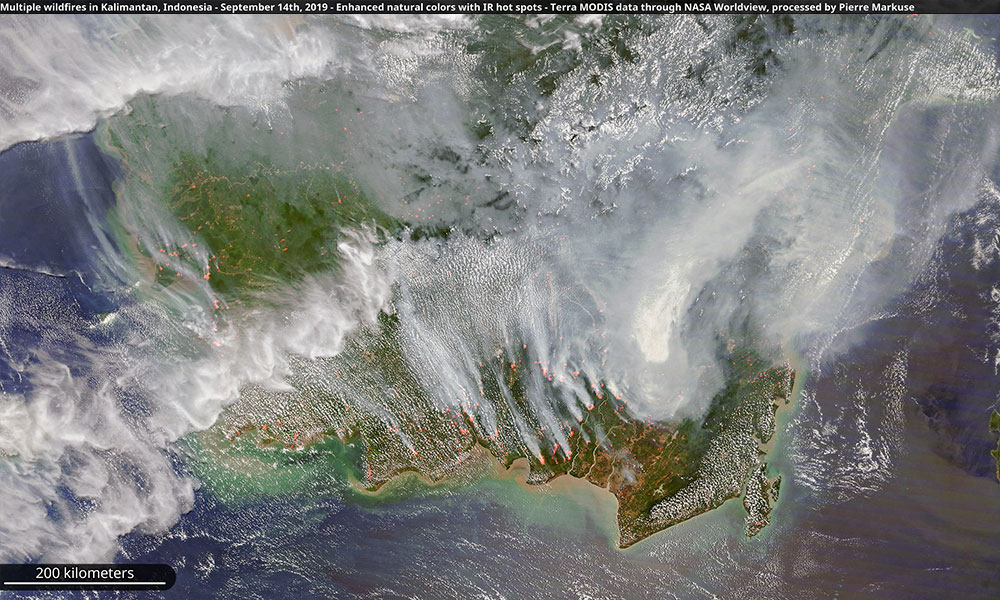
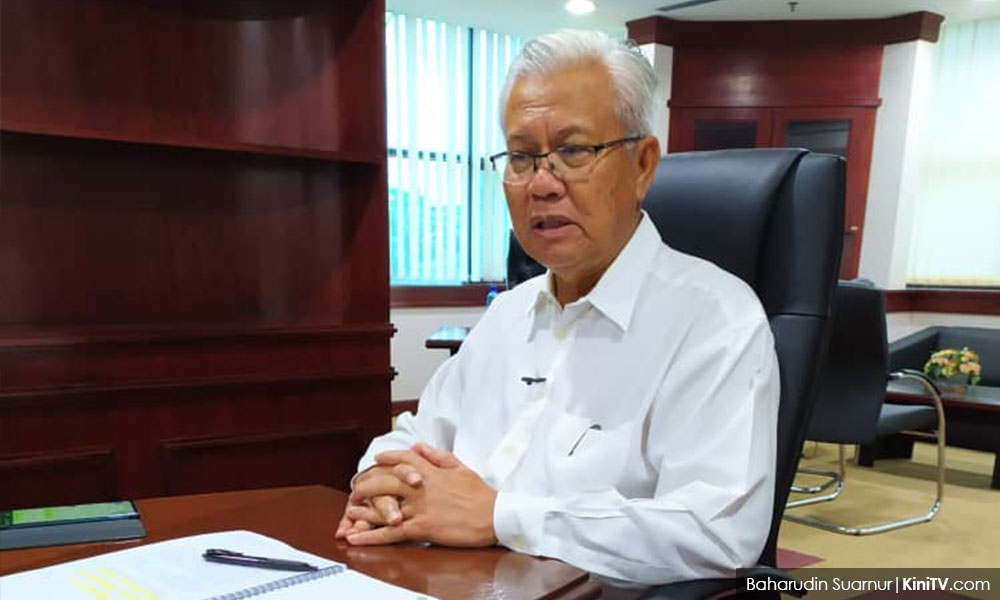
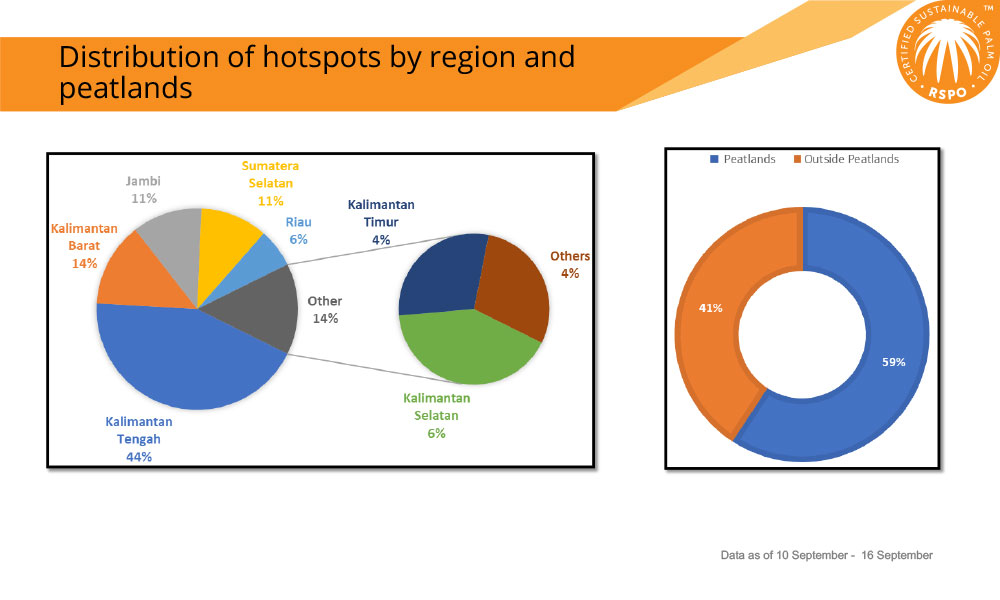
RSPO chief executive officer Darrel Webber said the group has been monitoring rainforest fires using publicly available satellite data and had detected 73,508 hot spots throughout Malaysia and Indonesia from Sept 10 to 16.
Only a small proportion of hot spots detected throughout Malaysia and Indonesia are located on its oil palm plantations, it says.
Only a small proportion of hot spots detected throughout Malaysia and Indonesia are located on plantations certified by the Roundtable on Sustainable Palm Oil (RSPO).
RSPO chief executive officer Darrel Webber said the group has been monitoring rainforest fires using publicly available satellite data and had detected 73,508 hot spots throughout Malaysia and Indonesia from Sept 10 to 16.
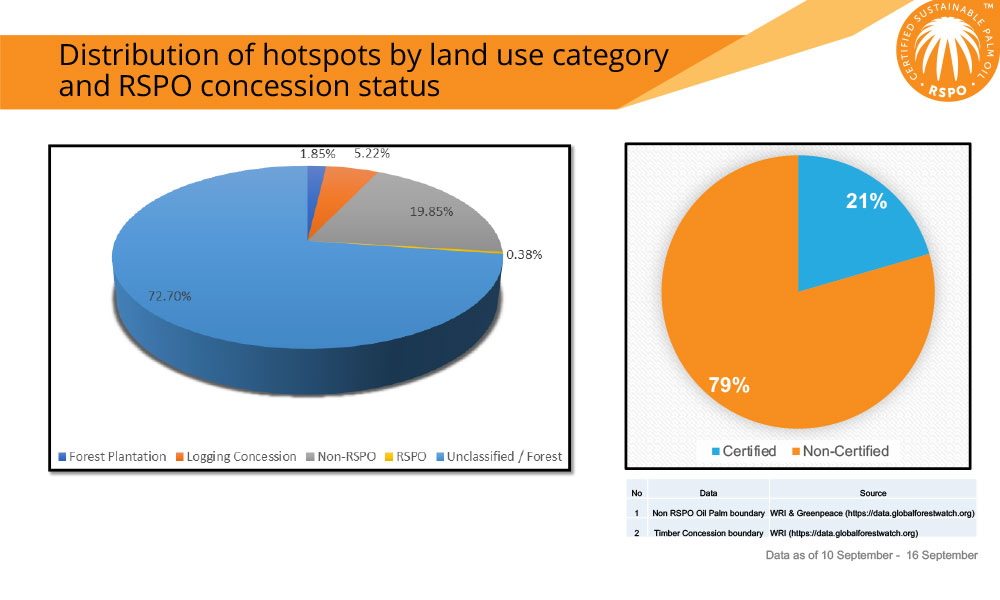
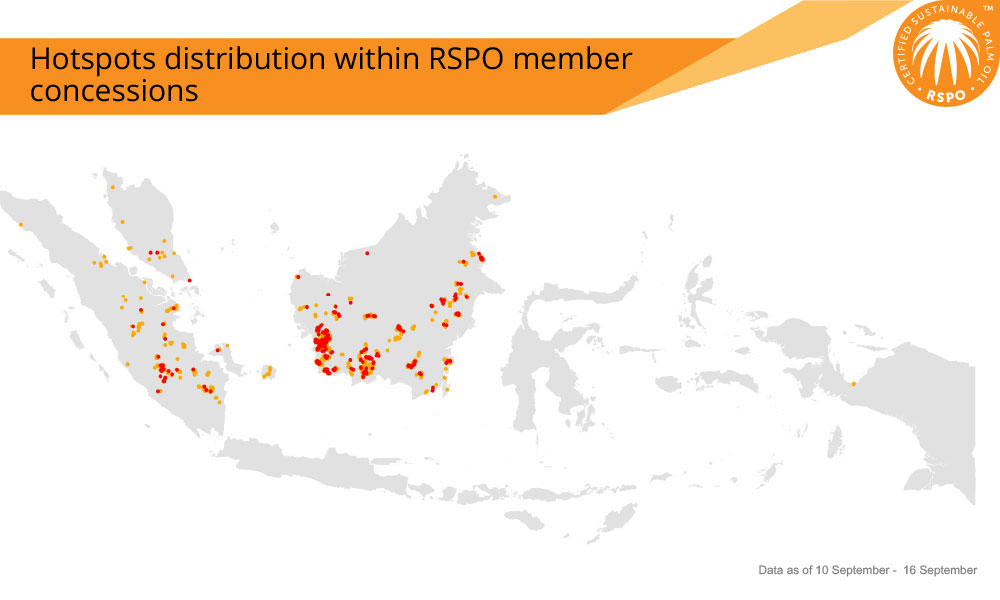
Of these, only 0.38 percent were found on RSPO-certified concessions while another 19.85 percent were on non-RSPO oil palm plantations.
The bulk of the hotspots (72.7 percent) were on land occupied by rainforests or were otherwise unclassified, while 5.22 percent were on logging concessions and 1.85 percent are on plantations.
“The reality of today is that the fires are mostly outside of oil palm plantations, contrary to what people think.
“Usually the fires, in the past, were used to open up new lands. At this point, I want to point out that for RSPO, since 2014, we have seen a great reduction in members opening up new lands.
“According to our records in 2014, our members in Indonesia cleared 464,000ha of land. Last year, it was down to 18,000ha. There was a huge reduction by […] meaning the likelihood of RSPO members being negligent in opening up land with fire is extremely low,” he said.
Webber told reporters during a virtual press conference today that studies had also shown RSPO-certified plantations to be significantly less susceptible to fire.
“Any instance of fire, we take it seriously whether it is intentional or accidental. But at this point in time, it is very difficult to know whether it is intentional or accidental,” he added.
Previously, Reuters reported that Indonesia had sealed the plantations of 30 companies over the ongoing forest fires, including the Indonesian subsidiaries of four Malaysian companies.
The four are Sukses Karya Sawit, which is a unit of IOI Corporation (IOI) and Sime Indo Agro, which is a unit of Sime Darby Plantation (Sime Darby), Rafi Kamajaya Abadi which is a unit of Terengganu-owned TDM Berhad and Adei Plantation and Industry which is a unit of Kuala Lumpur Kepong Berhad.
Sime Darby is the world’s largest oil palm plantation company by area and also the largest producer of sustainable palm oil.
Sime Darby and IOI both denied their plantations had been sealed, while KLK admitted that a fire had broken out at its plantations, but it had since been put out.
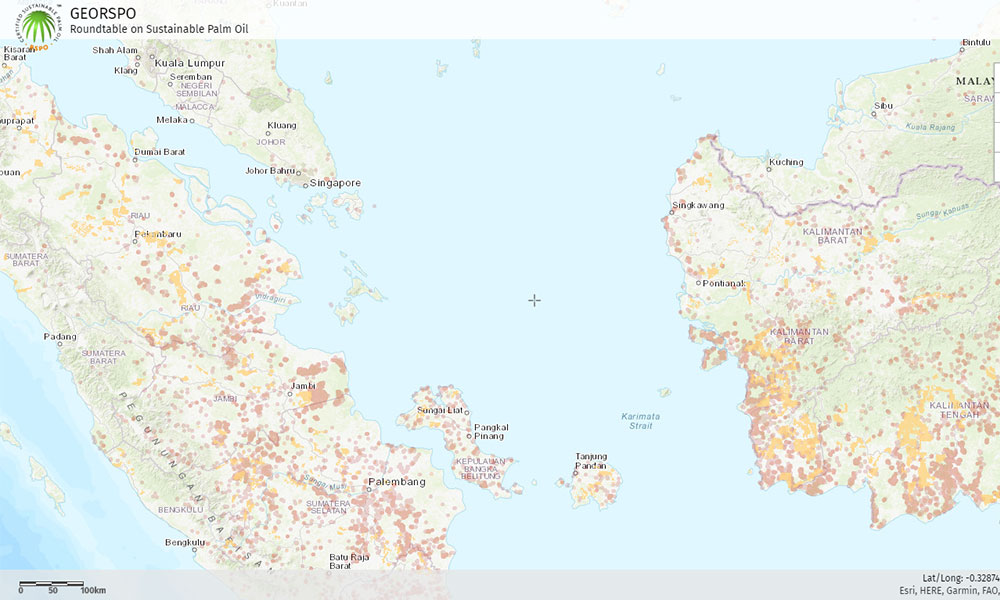
Webber said that since 2017, the RSPO has published maps showing its members’ plantations worldwide on its GeoRSPO website, except those of plantations in Malaysia due to “legal constraints”.
Malaysiakini has contacted the RSPO for more information on these supposed legal constraints.
Members of the public can use the website to visualise satellite data such as imagery and hot spots and see where they are located in relation to RSPO members’ plantations.
Webber reiterated that the RSPO actively monitors satellite data to spot potential fires on its members’ plantations and it and its certification bodies would investigate them.
Those found to be negligent will be dealt with through RSPO’s complaints process which may lead to suspension or termination of their membership.
“What this means is that those found to be negligent will find themselves cut off from very important and very lucrative markets,” Webber said.
During audits, the certifying bodies also check whether new plantations had been cleared using fire, and plantation companies are required to submit reports on how the new land was previously used.
Moving forward, Webber said the RSPO was beginning to monitor the persistence of fires after finding that it was technically feasible to do so and will be reporting its findings in the near future.
He said it is nearly impossible for its members' plantations to avoid catching fire when surrounding areas were also on fire, especially since peat fires could burn underground.
“What we are looking is not whether our members' plantations are on fire but how well they manage to put it out. So we are now instead of just looking at the occurrence of fires, we are looking at the persistence of fires and try to understand how long it takes members to put out those fires […]
“These are still early days. We don’t know what it (satellite data on hot spot persistence) means yet. We have to check and verify on the ground with our members. What does it mean for them? It hasn’t been ‘ground-truthed’ yet,” he said.