
Helping journalists do a better job
COMMENT | “… landslides happen because of some non-conformance of bye-laws by the developers, contractors or negligence of professional consultants … most Penangites feel the State Government should buck up or be responsible for the effects of landslides, which are emblematic of the slippage in standards of enforcement of rules governing property development and its related construction activities.” Anonymous, June 26
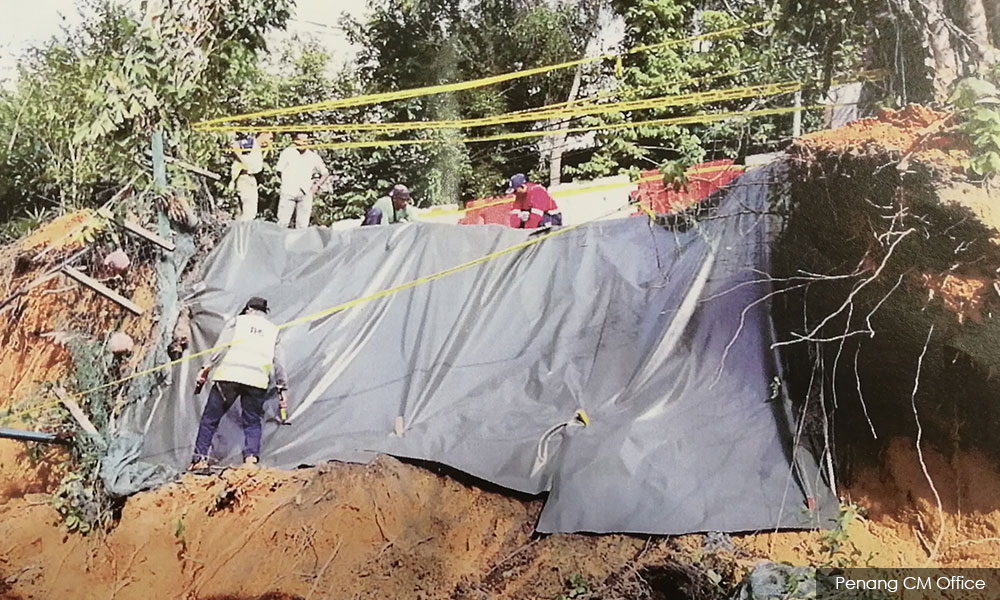
A reader’s comment on the collapse of a retaining wall of a hotel in Tanjung Bungah, Penang that killed four Myanmarese workers can be as probing as the stories are informative, yet incomplete in probing the frequency of landslides in the island state.
In reading the story, words like “corrupt developer, shoddy contractors, callous investors, deforestation, shocking occupational health safety standards, unprotected foreign workers, bad governance” raced through my mind.
According to a reader “SAC” (https://www.malaysiakini.com/news/481218 ) there have been 10 landslides, including flash floods, in Penang since 2016, which I find credible.
Each time I drive from Tanjung Tokong to Batu Ferringhi, I am amazed at the multi-storey structures perched on hill slopes, bungalows and malls built on reclaimed land, areas that were swept by the tsunami in December 2004.
Despite the vulnerabilities of these areas to the elements, these developments were approved. How come?
Readers expect journalists to ask why, to research and consult experts on ways to mitigate landslides, and query the state government on uncontrolled development of hills...
COMMENT | “… landslides happen because of some non-conformance of bye-laws by the developers, contractors or negligence of professional consultants … most Penangites feel the State Government should buck up or be responsible for the effects of landslides, which are emblematic of the slippage in standards of enforcement of rules governing property development and its related construction activities.” Anonymous, June 26
A reader’s comment on the collapse of a retaining wall of a hotel in Tanjung Bungah, Penang that killed four Myanmarese workers can be as probing as the stories are informative, yet incomplete in probing the frequency of landslides in the island state.
In reading the story, words like “corrupt developer, shoddy contractors, callous investors, deforestation, shocking occupational health safety standards, unprotected foreign workers, bad governance” raced through my mind.
According to a reader “SAC” (https://www.malaysiakini.com/news/481218 ) there have been 10 landslides, including flash floods, in Penang since 2016, which I find credible.
Each time I drive from Tanjung Tokong to Batu Ferringhi, I am amazed at the multi-storey structures perched on hill slopes, bungalows and malls built on reclaimed land, areas that were swept by the tsunami in December 2004.
Despite the vulnerabilities of these areas to the elements, these developments were approved. How come?
Readers expect journalists to ask why, to research and consult experts on ways to mitigate landslides, and query the state government on uncontrolled development of hills.
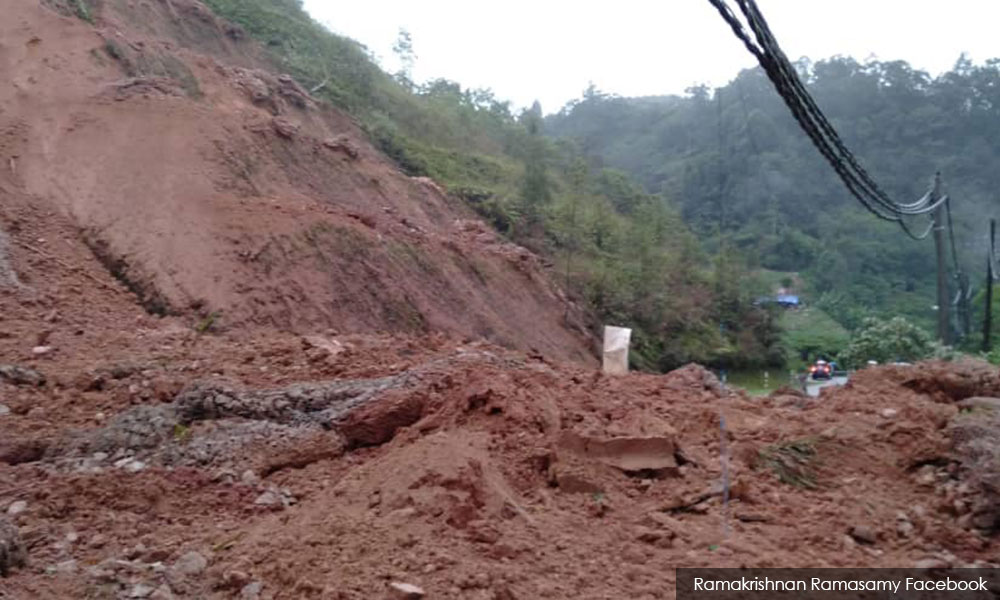
As early as 1998, Dr Ngai Weng Chan from Universiti Sains Malaysia had warned that over-development of hills in Penang had led to environmental hazards such as “deforestation, decimation of water catchments, and soil erosion”.
In a paper published in Disaster Prevention and Management (Vol. 7:4, 1998, pp. 305-318), Dr Ngai said the state government should adopt a policy of "no development in all ecologically and environmentally sensitive area."
He recommended “setting up a Hill Land Technical Committee (HLTC) to manage all developments pertaining to hill land and to gazette all hill land in the State,” as well as using “Geographic Information System (GIS) technology to monitor and control development activities on hill land in Penang.”
Readers, including experts, do raise critical questions for investigative journalists to follow through. Readers who live near where landslides had occurred, those working on the ground, those who had researched the perennial issue of landslides – they are a mother lode of information. A minority may, in the public interest, comment in the letters section.
During the days of Olivetti and hardcopy editing, my newsroom routine was to sieve through the letters section for fresh story ideas and follow-ups.

Today, journalists have an online treasure trove of realtime reactions to their stories to work with, despite the usually uninformed criticisms by ill-intentioned, militant trolls.
As far as I can tell, Malaysiakini and The Malaysian Insight are the only two news portals that offer an unmoderated space below the stories for readers to comment, with links to Facebook for longer discussions.
The comments section, however, is only as good as the veracity and intellectual quality of readers’ response. I would not be surprised if the key public space for civil discourse is taken off when the free soapbox becomes a cesspool for trolling racists, misogynists and all forms of muck.
How can readers, nearly all anonymous, help journalists do a better job in answering the why, how and what now of events and issues? How can you help journalists do a better job, especially on issues that need technical knowledge?
Your comments and questions can, in theory, fill the news gaps, although your anonymity compromises the reliability of your comments. And, understandably so, your comments do affect how journalists cope with their daily news routine.

In practice, reporting by the people for the people in our context has to go beyond just providing an online platform to let fly baseless accusations and outrageous claims. This applies especially to stories about race, religion and sexual orientation.
Readers should make it clear that their comments and questions are as reliable and evidence-based as the professional journalist’s. Public trust in comments is determined by the clarity of the context and fairness of what is posted online.
Always do basic research and check ‘facts’ before you click the submit button. Only then can journalists follow-up on suggestions. The quality of stories we get relies on the journalists’ capacity to approach sources on the ground. This is where you come in by emailing journalists critical information and questions that should be asked of local authorities.
Usage of documents, and analysis of documents in news reports on landslides are obviously minimal from what we have read. This is primarily due to the dearth of training in data analysis, or it could be a question of journalists’ access to expert sources.
Share your expert knowledge and use verified facts. In a way, you can do the homework for the journalists who are often expected to work on two or three stories a day.
Explain clearly what you think needs action, and how. Provide relevant sources, where possible, provide the hyperlinks in your comments, and critical questions that reporters should ask.
Stay on topic and have a considered opinion. Avoid abusive, blasphemous, sexist, threatening, defamatory words. Criticise the argument, not the person. Read what you are criticising before leaping into furious action after taking in the first paragraph.
Investigative reporting takes time and persistence. Journalists are often caught between reporting on the run and the time needed to organise, analyse and convert the data into compelling stories. Often, the wealth of data amassed is lost in the story, poorly constructed and data vaguely visualised.
As committed readers, you can help journalists do better in their work, not least in the investigative coverage of frequent landslides in the country with its human costs.
ERIC LOO is a senior fellow (journalism) at the School of the Arts, English & Media, Faculty of Law, Humanities & Arts, University of Wollongong. He is also the founding editor of Asia Pacific Media Educator.
The views expressed here are those of the author/contributor and do not necessarily represent the views of Malaysiakini.