
Minister: Kuala Koh villagers' immunity compromised
Health Minister Dzulkefly Ahmad said today that the Orang Asli in Kampung Kuala Koh – which has seen a disease outbreak afflict half its population – are immunocompromised as a result of malnourishment.
Dzulkefly said the matter was discussed in an emergency meeting chaired by Deputy Prime Minister Dr Wan Azizah Wan Ismail, and that the government would dispatch the necessary supplements and supplies to the area...
Health Minister Dzulkefly Ahmad said today that the Orang Asli in Kampung Kuala Koh – which has seen a disease outbreak afflict half its population – are immunocompromised as a result of malnourishment.
Dzulkefly said the matter was discussed in an emergency meeting chaired by Deputy Prime Minister Dr Wan Azizah Wan Ismail, and that the government would dispatch the necessary supplements and supplies to the area.
"We immediately called for supplements for the malnourished, and some you know, are unvaccinated.
"They are immunocompromised and must be given all (the necessary supplies) – vitamins and all that – to address the malnourishment," he said at a press conference after a town hall with private doctors in Putrajaya.
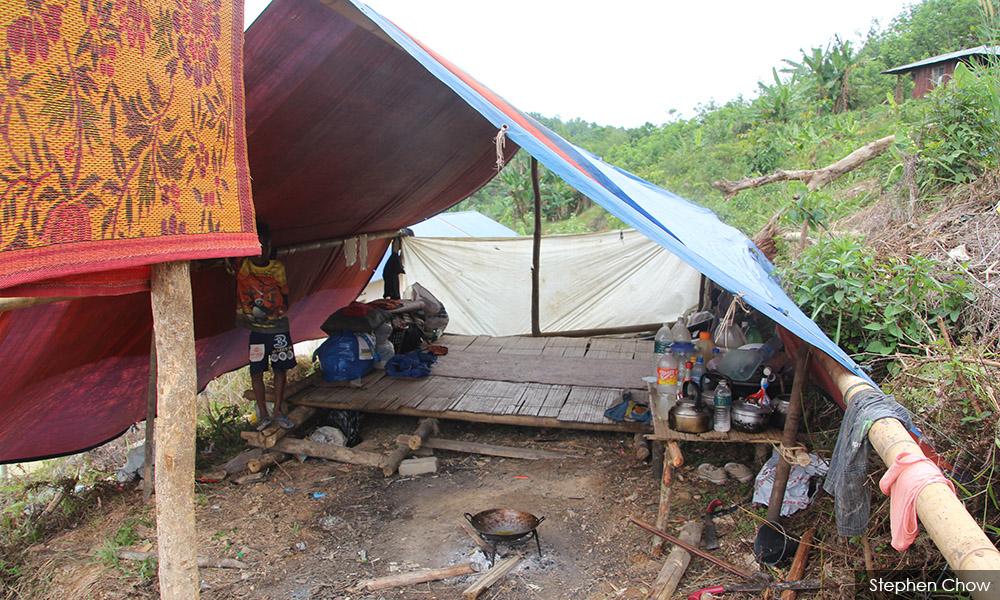
Environmental activists have claimed that logging and mining activities led to the deterioration of the quality of life at the Gua Musang village.
'Pathogens, not chemicals'
While Dzulkefly did not rule out heavy metal poisoning, he said evidence suggests that the acute stage of the as yet unidentified affliction was likely due to pathogens rather than chemicals.
"Essentially it is not chemical... They were talks about pollution and mines, but the acute stage is due to microorganisms.
"Based on just the X-ray, you see lobar pneumonia... (If it is) chemical, you will have interstitial patches on the X-ray, but here you see lobar pneumonia that is typical of pathogens," he said.
Dzulkefly added that this was based on the postmortems of the bodies of two Bateq villagers who succumbed to the unidentified disease.
Villagers claimed that 12 others also died from a similar cause in the last month, but authorities have yet to decide on whether to exhume these bodies for postmortems.
Dzulkefly said tests are still being conducted to determine if the affliction is viral or bacterial.
As for other symptoms afflicting the community, the minister said this could be due to malnourishment or heavy metal poisoning.
"It is very possible. We see children with skin diseases like hyperkeratosis and scaling; that could very well be due to malnutrition or some form of heavy metal (poisoning) like – I don't want to say, but it is possible.
"We are waiting for the findings of the chemical analysis of water," he said.
Dzulkefly said the unidentified disease had affected 99, or 53.5 percent, of the 185 villagers.
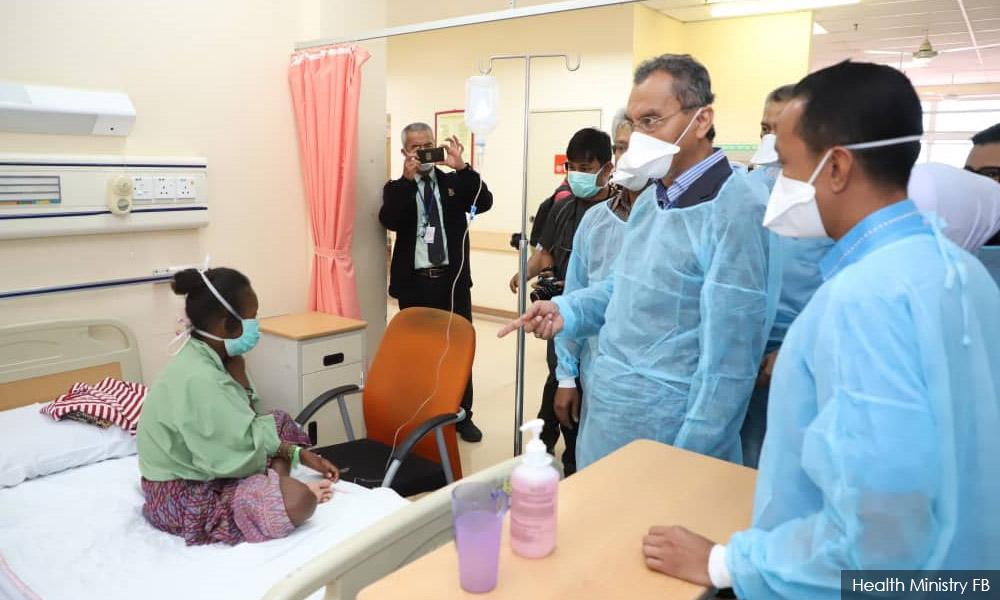
As of noon today, he said 40 had received outpatient treatment, while 41 are in normal wards and four in intensive care units at various medical facilities in Gua Musang and Kuala Krai.
Another 14, he said, have been isolated at an Orang Asli medical facility.
RELATED REPORTS
DOE: Kuala Koh water sample results in two days
DPM chairs emergency meeting on Kuala Koh Orang Asli
Ministry rules out leptospirosis, TB in hospitalised Orang Asli
Orang Asli community dying from neglect, appalling conditions, says doc