


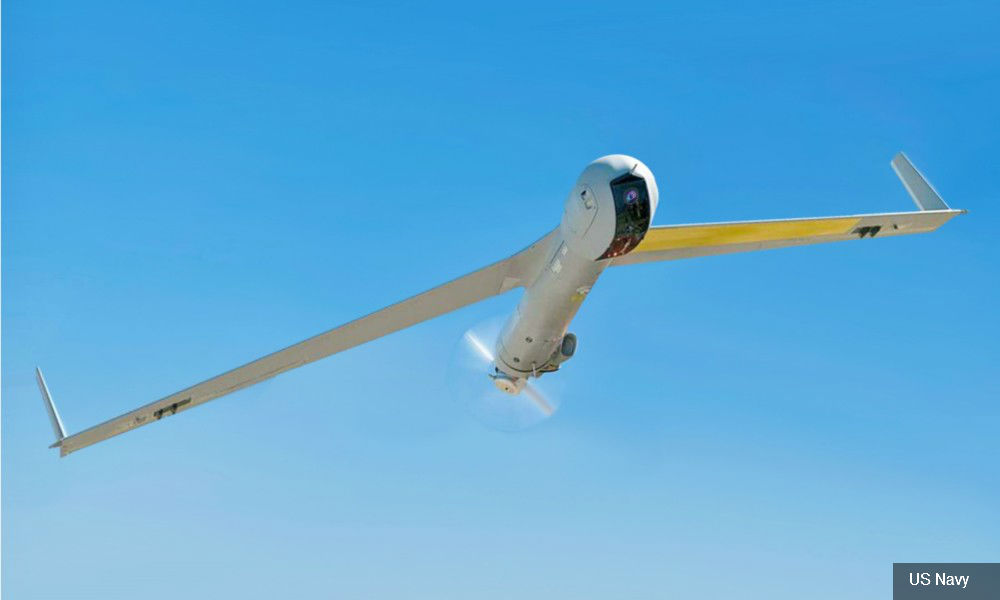

Malaysia to buy drones worth RM80m from US
The US government is poised to sell 12 military-grade surveillance drones worth almost RM80 million to Malaysia, international newswire Reuters reported.
“The Pentagon said Friday’s (May 31) sales included spare and repair parts, support equipment, tools, training and technical services and work on the equipment was expected to be completed by March 2022,” the report said.
The drone in question is the unarmed ScanEagle, which is manufactured by Boeing subsidiary Insitu Inc.
According to military news website The Defence Post, the ScanEagle has a flight endurance of more than 20 hours and can be used for battlefield intelligence, reconnaissance as well as surveillance missions.
Aside from Malaysia, which will buy 12 units for US$19 million (RM79.36 million), other countries in the South China Sea region are also included in the drone sale.
Indonesia and the Philippines will purchase eight units each while Vietnam is set to buy six drones.
This is amidst territorial disputes between the nations and Beijing, which has laid claim to the entire South China Sea and parked navy ships there.
Prime Minister Dr Mahathir Mohamad previously said that he was against the presence of Chinese warships in the area and preferred if Asean countries jointly patrolled the sea.
One day after the sale, CNN reported the US Acting Defence Secretary, Patrick Shanahan, as indirectly criticising Beijing’s activities in the South China Sea at a defence conference in Singapore.
This prompted a rebuke from China’s Defence Minister, Wei Fenghe, who told the same event that his country was simply trying to defend itself and rejected any attempts of “foreign interference”.





It's about time. These are surveillance drones and are equipped with intelligible sensitive camera lens that can also perhaps have feasible facial recognition capabilities. Malaysia need drones not only to police the waters of the South China and Sulu Seas but also the land borders with Thailand. The land borders with our Northern neighbours are so troubled that enforced disappearances and human trafficking become Malaysia's national dilemmas. I am glad that Mat Sabu and Muhyddin view aerial surveillance as an important concept in the enforcement of perpetrators. We shouldn't just hinge on these number of drones only. We should look at countries like China, that produces drones and we should obtain the technology from them and we ourselves to have these surveilling equipment built within our shores. Remember the other land border with Kalimantan is massive as well. Walls are hugely a waste of resources if the physical security of the wall goes on the cheap; maintenance of walls are intensively laborious and costly. Just factor the cost of building a physical barrier, you can easily multiply and double that exponentially with the number of drones. The next factor is the response to a breach and the attempted assault. Responding or patrolling parties can easily dial in the images and/or prompted with live feeds. The only caution on drones is its hackable and easily confiscated within radio frequency range. With the advent of militarised lasers, drones are also vulnerable to them as well. Drones are also susceptible to electromagnetic pulse (EMPs) as all electronic equipment are susceptible to them as well. Jamming communication signals (between the drone and its pilot) can also disrupt and render a drone ineffective. Despite all those cautions, the drone is still a reliable tool in surveillance and reconnaissance.