




Iranian president raps nuclear watchdog
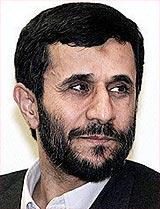
Iran's hardline President Mahmoud Ahmadinejad rapped the UN's nuclear watchdog, saying its decisions were politically motivated and made under the influence of world powers.
Iran's hardline President Mahmoud Ahmadinejad rapped the UN's nuclear watchdog, saying its decisions were politically motivated and made under the influence of world powers.
The International Atomic Energy Agency (IAEA) is meeting on Monday to make an assessment of Iran's controversial nuclear programme that will be sent to the UN Security Council, which could then take punitive action.
Ahmadinejad's visit to Malaysia, which ends Friday, is part of a campaign to avert sanctions and promote Iran's stance that it has a right to nuclear technology for peaceful purposes.
The outspoken president said in a speech that one of the major challenges facing the Muslim world was "the increasing loss of credibility by international organisations".
"Regrettably most international organisations have turned into political organisations and the influence of great powers prevents them from taking fair and legally sound decisions," he said.
"IAEA's treatment of the Islamic Republic of Iran, and the board of governors of the IAEA for that matter, their approach towards the Islamic Republic of Iran is a purely politically motivated action."
Planning positions
However, Iran's Foreign Minister Manouchehr Mottaki, who is on a worldwide tour to explain Tehran's position, said there was still room for compromise to resolve the stand-off.
Iran has requested last-ditch talks with Britain, France and Germany later Friday aimed at easing Western fears that the Islamic republic is secretly developing nuclear weapons.
 "We are planning our positions, also our readiness, to reach, to compromise, based on all parties' benefits," Mottaki said of the negotiations to be held in Vienna.
"It means achieving the essential rights of Iran, which is realising the right of nuclear technology for peaceful purposes, and from the other side, removing any concerns, if there (are any)," he told reporters.
"Any plan which takes us in that compromise, any proposal, from the very beginning we were saying that we were ready for compromise, but it must have the two elements as I explained."
Ahmadinejad said that the Nuclear Non-Proliferation Treaty recognised the right of member states to have access to nuclear technology for peaceful purposes but that "certain powers" believed this right could be withdrawn.
Awakening
He warned that such discrimination would galvanise Muslims worldwide to rise up against Western hegemony.
"Domination and bullying will not last much longer. Bullies and Zionists beware - you are going to fall," he said. "This awakening is on the increase and its signs can be seen all around the world."
The trio of European states that negotiate for the EU on Iran has warned Tehran in writing that progress Friday is totally dependent on Iran stopping uranium enrichment and cooperating with UN nuclear inspections.
The United States has given only halfhearted support to the latest diplomatic initiative, which follows talks in Moscow on a Russian compromise proposal that failed to make any breakthrough.
Unlike the IAEA, the Security Council has enforcement powers and it could impose sanctions. But it is expected first merely to urge Iran to cooperate with the nuclear agency.
The IAEA has urged Iran to suspend uranium enrichment as a confidence-building measure.
But the Islamic republic on February 15 fed a facility in Natanz with the uranium gas that is processed into enriched uranium, IAEA director general Mohamed ElBaradei said in a report earlier this week.


