
Forensic expert: Adib sustained injuries within 13-second window
INQUEST | National Forensic Medicine Institute director Dr Mohd Shah Mahmood said that Muhammad Adib Mohd Kassim could only have sustained his injuries within a narrow 13-second window on the night of the Seafield Sri Maha Mariamman Temple riot last year.
Testifying today at the inquest into the firefighter’s death, he said that this was based on the results of Adib's clinical examination and autopsy, and a 46-second video of the riot which took place on Nov 27...
INQUEST | National Forensic Medicine Institute director Dr Mohd Shah Mahmood said that Muhammad Adib Mohd Kassim could only have sustained his injuries within a narrow 13-second window on the night of the Seafield Sri Maha Mariamman Temple riot last year.
Testifying today at the inquest into the firefighter’s death, he said that this was based on the results of Adib's clinical examination and autopsy, and a 46-second video of the riot which took place on Nov 27.
The 59-year-old medical director, who is the 27th witness to testify at the inquest, was answering a question from inquest conducting officer Hamdan Hamzah.
Hamdan had asked Mohd Shah to pinpoint when Adib had most likely been injured in the video, which was shown in court today.
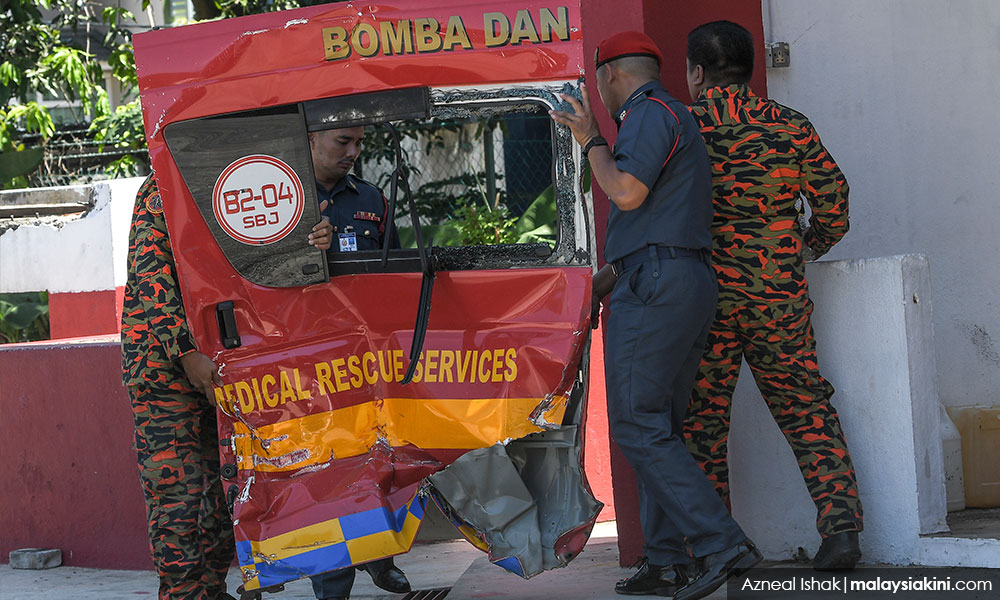
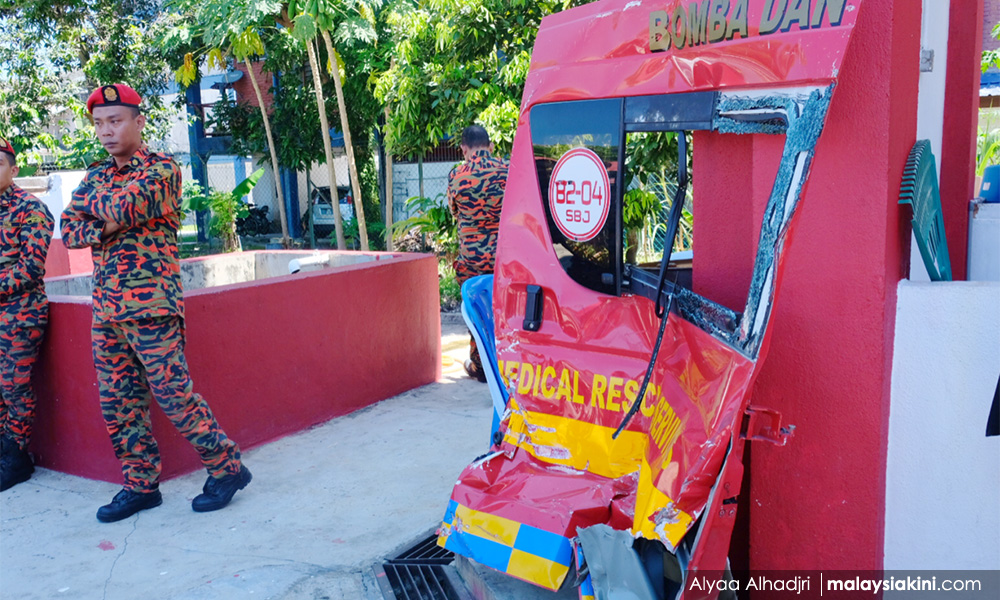
The video had shown the Fire Rescue Tender (FRT) lorry and Emergency Medical Rescue Services (EMRS) van reversing when approached by an angry mob, and ended with the van having turned around to drive away, with its rear end facing the lorry’s own rear.
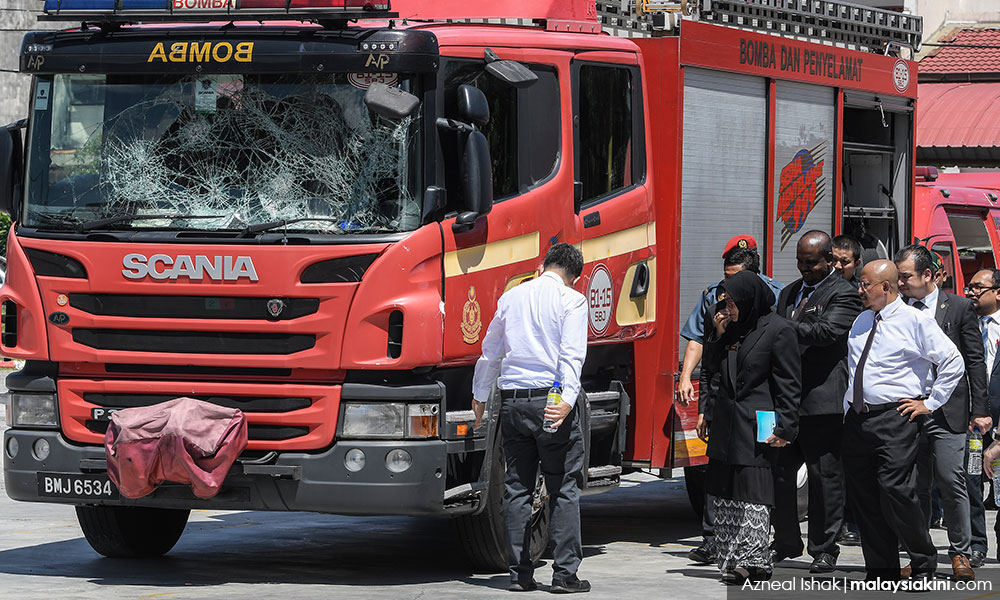
Hamdan: At which second is the incident (Adib being hit on his left backside by the EMRS van’s open front passenger side door) most likely to have happened?
Mohd Shah: The 26th second.
Hamdan: Do you think the incident happened to the victim before or after the (EMRS) van turned around?
Mohd Shah: Before the van turned around.
Hamdan: At which specific second?
Mohd Shah: Based on the seven (left rear) fractured ribs which were upright, the probability was that (Adib’s left backside) was hit by the edge of the (van’s) door.
Based on the video, he would have come down from the vehicle between the 26th second and 39th second, within a 13-second time frame.
This time frame is very narrow and it takes into account the pattern of injury on the left waist and the right chest. If taking into account the phase (of time), the fastest is a few seconds.
(When Adib) Came down (from the van’s passenger side) and sustained calar (abrasions from being hit in the left backside) and fell, it would be two seconds for every phase (of the three phases where Adib got hurt).
That 13-second (timeframe of events) is not visible in the video. It takes a maximum of 6 seconds (out of the 13-second time frame) for the victim to sustain the pattern (of injuries) on his body (from being specifically hit on the back by the van’s door).
The video supports the possibility of the injury being sustained by Adib within 13 seconds before the ambulance (EMRS van) turned around.
'Hard object'
In previous testimony, Hospital Kuala Lumpur (HKL) forensic medicine specialist Dr Ahmad Hafizam Hasmi testified before the Coroner’s Court that the results of the autopsy among others point to Adib, 24, more likely being hit by the van’s passenger door, which sent him hurling against a hard object.
Hafizam had said the evidence does not support the allegation that the firefighter had been dragged out of the EMRS van during the riot.
Today, Mohd Shah backed Hafizam’s previous testimony saying that it was unlikely that Adib was forcibly pulled out of the EMRS van based on the pattern of injury on the left side of his back.
Hamdan: Is there a possibility of the victim being pulled out and got stuck at the EMRS (van) door, which injured his back (among other body parts)?
Mohd Shah: If we take into account the narrow 13-second window for a third party to act in, in my view that this is unlikely as the one seeking to pull (Adib) out would need to run alongside the van which was reversing.
The injury (on Adib) that would arise from this scenario would be different but the pattern (of injury) seen on Adib (during his medical examination and autopsy among others) showed it was from a hard object.
Geseran (scraping) or being hit by an upright object would lead to (a different type of) abrasion or tear.
But the fracture of the front right ribs does not match (the attacker scenario) as the third and fourth ribs were fractured in several parts. It is hard to get that kind of fracture in that scenario.
Hamdan: So what did you conclude from the victim’s injuries?
Mohd Shah: Taking into account the type, location and position of the injury, pattern of injury and matching them to the objects that may have caused them, all said injuries match the objects (the EMRS van door and road curb, among others).
This is a unique injury as this is the first time I have seen a straight line injury on the back (of Adib). I have never seen it before
Mohd Shah further testified that the sequence of events on the night of the incident could be broken down into three phases based on the pattern of injuries on Adib’s body and testimony from the driver of the EMRS van.
The expert said the fractured left rear ribs and upright abrasion on Adib’s back matched the shape of the edge of the van’s front passenger door thus the probability the fireman exited the passenger side of the van in a hurry.
“(Adib) had alighted in a hurry as the van was moving (reversing) with momentum. When he came down from the van, Adib may have lost some balance.
“The open left (front passenger) door was narrow (at the edge). The increased momentum caused Adib to be thrown and he fell and hit his right chest) on the surface of a hard and protruding object.
“This impact affected his right chest this being the third phase. Based on the injury, we can arrange the sequence from the first to third (phase) as to how the vehicle would move in that very brief moment in time.
(The witness did not specify the first and second phases).
“Before this (prior to a clinical examination of Adib, inspection of the two vehicles and the autopsy), we did not hold any concrete view (on how Adib got injured) and we were open to (the notion of Adib having been) attacked physically or being hit by a part of a vehicle or being squeezed between two vehicles.
“But after the reconstruction (of the sequence of events), we found that two of the possibilities (Adib being pulled out or being sandwiched between two vehicles) could not have happened,” Mohd Shah told Coroner Rofiah Mohamad.
He noted that the fractures on Adib’s left rear ribs were only discovered after an autopsy being conducted on Dec 18 and they were not previously informed about it.
He said the injury, not detected by doctors when Adib was alive, showed that Adib’s first to seventh rear left ribs were fractured in a unique pattern being straight and upright.
He added this type of injury coincided with it being hit by a blunt, narrow and upright object such as the edge of the EMRS van front passenger door.
The inquest resumes on Monday next week with a police investigating officer expected to be one of two witnesses.
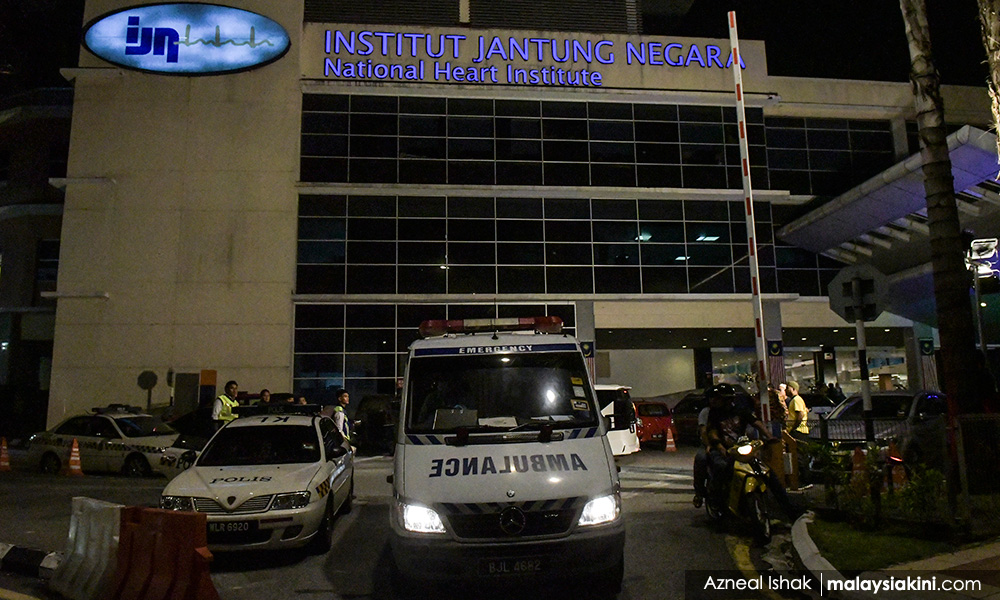
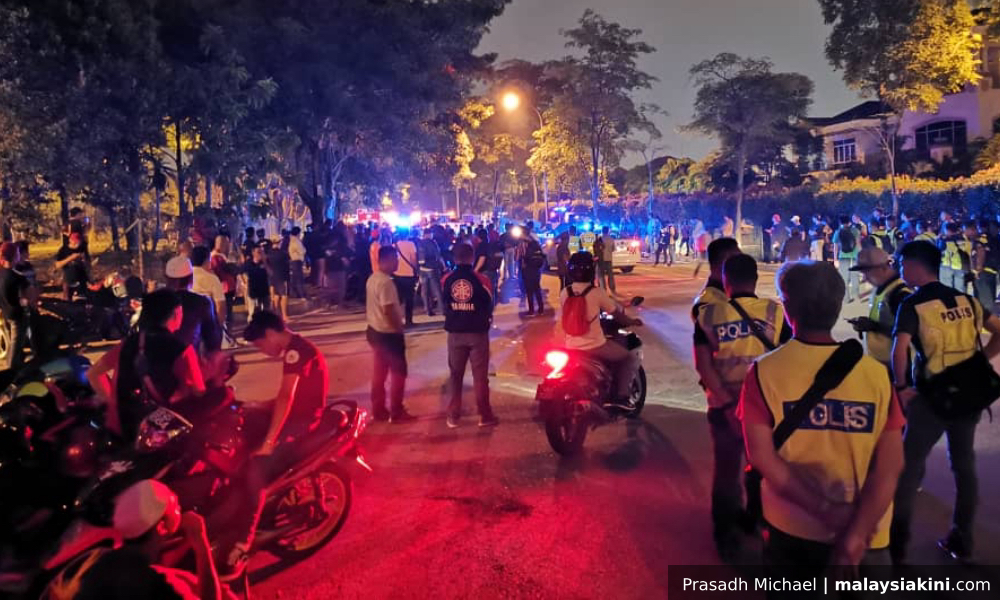
Adib passed away on Dec 17 at 9.41pm at the National Heart Institute after succumbing to injuries sustained on the night of the Seafield Sri Maha Mariamman temple riots in USJ25, Selangor on Nov 27 last year.
The inquest was ordered after two conflicting versions of his cause of death emerged. One version claimed he was hit by a Fire and Rescue Department vehicle while the other said he was beaten up by a mob.