

Meeting youth mental health needs
COMMENT | Over the past decade, the rising number of young Malaysians afflicted by mental health problems surfacing in the Health Ministry’s public health surveys has thrown a spotlight on an acute public health issue that we should rightly be concerned about.
While perhaps reflecting better mental health literacy, and a greater willingness to divulge their problems, the increasing prevalence of psychological distress among young people is indeed a worrying trend.
In light of this, it is only fair to question how local mental health services have responded to these needs, from a public healthcare provision standpoint.
In public healthcare, the core of youth-oriented mental health services (as part of the wider mental healthcare system) is primarily that of hospital-based treatment, concentrated mainly in outpatient adolescent psychiatric clinics and inpatient services.
These services have sizeable demand. For instance, high attendance rates were recorded in the Health Ministry’s 2016 mental healthcare performance report, with a total of 6,125 new cases and 32,831 follow-up cases recorded in adolescent mental health outpatient clinics in public hospitals nationwide.
Since public healthcare is heavily subsidised by the government, and patients need only pay nominal fees, accessing these services would be fairly affordable even for the poorest subset of youth.
Yet, in spite of this affordability, there are clear shortcomings to situating hospital-based services as the only treatment option for mentally troubled youth...
COMMENT | Over the past decade, the rising number of young Malaysians afflicted by mental health problems surfacing in the Health Ministry’s public health surveys has thrown a spotlight on an acute public health issue that we should rightly be concerned about.
While perhaps reflecting better mental health literacy, and a greater willingness to divulge their problems, the increasing prevalence of psychological distress among young people is indeed a worrying trend.
In light of this, it is only fair to question how local mental health services have responded to these needs, from a public healthcare provision standpoint.
In public healthcare, the core of youth-oriented mental health services (as part of the wider mental healthcare system) is primarily that of hospital-based treatment, concentrated mainly in outpatient adolescent psychiatric clinics and inpatient services.
These services have sizeable demand. For instance, high attendance rates were recorded in the Health Ministry’s 2016 mental healthcare performance report, with a total of 6,125 new cases and 32,831 follow-up cases recorded in adolescent mental health outpatient clinics in public hospitals nationwide.
Since public healthcare is heavily subsidised by the government, and patients need only pay nominal fees, accessing these services would be fairly affordable even for the poorest subset of youth.
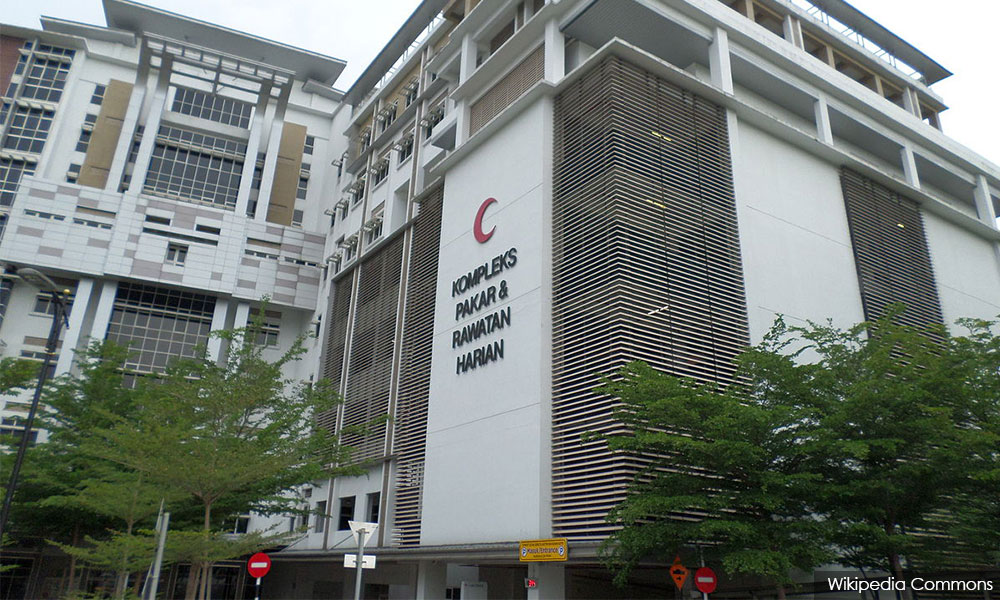
Yet, in spite of this affordability, there are clear shortcomings to situating hospital-based services as the only treatment option for mentally troubled youth.
Health professionals
At the tertiary level of the healthcare system, hospital-based mental health services are mainly staffed by specialists, who concentrate on treating the severely mentally ill.
These are patients with more debilitating or chronically disabling mental disorders, such as schizophrenia, bipolar disorder or major depression, who have complex needs and who may develop severe disabilities if not treated.
In line with this, despite the recommended model of having multidisciplinary teams in mental healthcare, a number of psychiatric departments in public hospitals still do not have a balanced mix of mental health professionals.
Most psychiatric departments in public hospitals are mainly led and staffed by psychiatrists – medical doctors specialising in psychiatry, who are trained to provide pharmacological or drug-based therapy for patients.
In contrast, clinical psychologists, who are mental health professionals trained to administer evidence-based psychosocial treatments – such as cognitive behavioural therapy – are largely outnumbered. The gap largely underscored by the fact that they are already a minority in the mental health workforce.
This creates a very limited provision of psychological services in hospital psychiatric departments. Pharmacological treatments, while important in mental health treatment, may be less helpful for patients with milder symptoms of mental illness, who may respond better to psychological therapy and counselling, since these are less intensive, more normative interventions.

Moreover (though not a guarantee), prescribing drugs to a young person who is already under mental strain may lead to a temptation to misuse these drugs, either by using larger amounts or taking them more often than the prescribed dosage.
Risk heightens especially if there is no proper care and supervision. In the long run, these harmful behaviours can lead to a condition of overdependence, or worse, addiction.
To sum up, while they do offer treatment options that are suitable for patients with chronic or severely disabling mental disorders, hospital-based youth mental health services are less effective in addressing the needs of youth at milder stages of psychological distress, such as those detected in the government’s public health surveys.
This is to be expected, to some extent. At the tertiary level of healthcare, the main purpose and function of hospital services are to treat and cure the most severely ill, i.e., those who have complex needs and may require specialist facilities and expertise.
Psychological distress
Yet, in order to be truly effective, mental health services for young people should not just be limited to addressing and treating a particular subset of youth suffering from severe mental disorders, but also be equally responsive to those who exhibit milder forms of psychological distress.
Such individuals are just as much in need of help, yet are often at a loss because the appropriate treatment services are not within reach in their communities.
In striving towards better outcomes for the youth, the Health Ministry must go beyond focusing on hospital-based treatment and expand its youth mental health services to include a mixed variety of interventions and supportive care in more low-key settings.
Ideally, a balance should be struck between service provision at a tertiary care level (i.e., hospitals) and lower-tier mental health interventions that are responsive to needs at the community level.

Moreover, there is a need to build capacity in human resources to support the particular mixture of treatment and care at each level.
At the community level, more allied mental health workers such as psychologists, counsellors, and social workers should be integrated into youth-concentrated settings, like schools and colleges, where they would serve as a first point of contact for youth seeking mental health support.
Finally, to create a more effective overall system of youth mental health services, the government should seriously assess the level of treatment and care that is required to respond to mental health problems among young people, at the national, regional and local levels, and study the pathways that young people would typically follow to seek care.
At the local level, strong coordination systems should be set in place, so that mental health workers working with youth in community settings are able to collaborate with other treatment providers at higher levels to provide continuous care.
For example, school and university counsellors should interface with psychologists and psychiatrists based in clinics and hospitals, so that, when care and support in community settings are not sufficient, the system may offer referral and redirection to more specialised treatment options.
Counselling services are already available in many schools and colleges in Malaysia, but these services are not too well connected to the larger mental healthcare system, and counsellors largely work within the ambit of their respective institutions.
A well-balanced mental health service model is one where different functions in the system are separated and decentralised to a range of levels to respond practically to different needs, yet maintains a high quality of communication between healthcare providers in all parts of the system.
In efforts to improve youth mental health, planners and providers of youth mental health services working with the Health Ministry should aim to develop a range of treatment services necessary to respond well to different needs of young people who are mentally unwell.
Such efforts will not be easy, but in the long run, the payoff will be in empowering more youth to access the most appropriate support they need to recover, and to attain a full and satisfying quality of life.
LIM SU LIN is a policy analyst with the Penang Institute. A History graduate from Cambridge University, her research interests lie primarily in promoting good mental health as a criterion for public policy, and to carry out research into the social, economic and cultural factors that help to enhance mental well-being and support recovery from mental distress.
The views expressed here are those of the author/contributor and do not necessarily represent the views of Malaysiakini.