
Avoiding future collapses of human civilisation
COMMENT | History is besieged with instances of the demise of complex human societies, alongside a host of theories hypothesising great and catastrophic collapses of civilisations on far larger scales.
That you and I still exist today is an indication that thus far, we, and our ancestors, have been beneficiaries of mixed quantities of luck, skill, intelligence, and technological development – amongst the other factors which contribute to our continuing existence as a species on Earth.
Yet within the storyline of the long-term, macrocosmic survival of our species, individual subsets of human civilisation have not been quite so fortunate.
Societies as geographically dispersed and culturally varied as the Angkor, Hittites, Mayans, Mycenaeans, and Norsemen rose to both prominence and dominance, and were then either wiped out completely or saw their numbers dwindle drastically – all within a geological instant, for reasons as varied as but not limited to ecological and environmental trauma, resource exhaustion and famine, or warfare.
A century or two from now, an updated list of defunct societies may very well incorporate some which still exist today. As history unfortunately shows, extinction (or the threat of extinction) is almost an inevitability – and not just for humans, but for every species that has ever existed.
What is less clear is precisely what the sources of future civilisational collapses will be. Despite such opacity, however, several potential threats stand out as being distinctly plausible in the contemporary era.
Is climate change the ultimate harbinger of destruction and the crippling of human progress, or will it be beaten to the punch by nuclear and biological warfare, an impact event with a near-Earth object, or a rampant artificial intelligence army?
The scientific consensus over climate change and its projected impacts, combined with our knowledge of the historical impacts of climate-related events on the planet and its inhabitants over the past 450 million years, indicate that it is this particular threat which requires significant present-day attention.
Importantly, we still have the ability to counteract climate change with strong and persistent action over the long term – provided we act quickly enough.
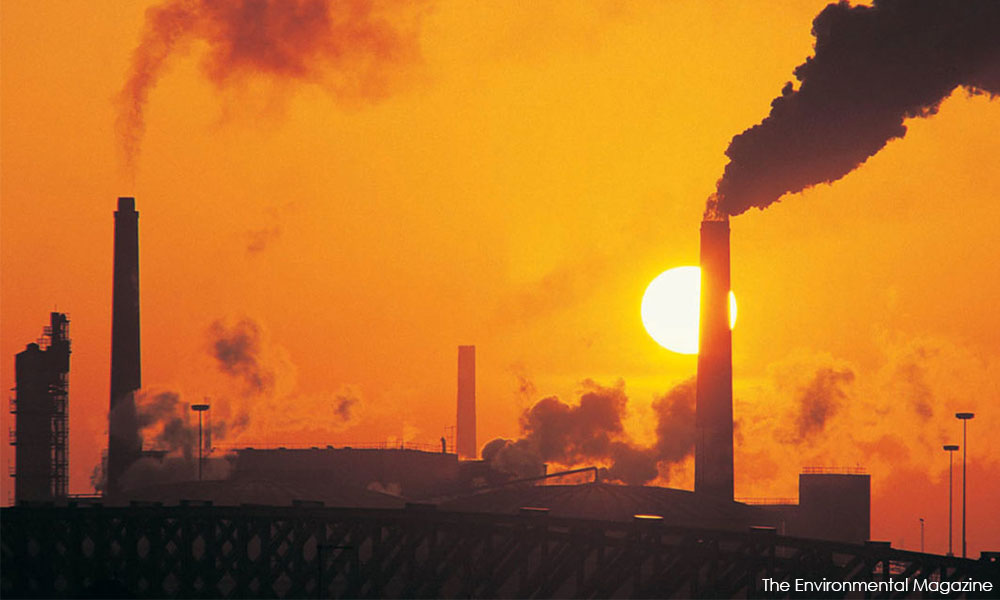
Figuring out just what needs to be done requires us to look at the prime cause of the issue: a dangerously high concentration of atmospheric carbon dioxide.
If there is one thing we can do to truncate the possibility of climate change driving future waves of extinction, it is putting an end to the emission of greenhouse gases into the Earth’s atmosphere. Doing so involves engaging in a deep and significant process of decarbonisation.
The Malthusian catastrophe
I recently re-acquainted myself with Thomas Malthus’ Essay on the Principle of Population, for the first time since I was introduced to the topic of population growth as a high-school student.
And for the first time, I approached this text with a strong degree of concern and interest in the issue of climate change and the scientific grounding underlying it. In a thought experiment, I tried to coalesce the two...