



Death penalty: Support systems and the survivors
SPECIAL REPORT | Justice for victims of the crimes and their families is one of the strong arguments for the death penalty proponents to retain capital punishment.
However, is an eye for an eye an adequate punishment or is it just an easier way to pursue justice, compared to rectifying the defects in our current justice system?
The previous articles in this series reflected the frontline voices of criminal system practitioners. Some remained in support of capital punishment because they believed the system provided sufficient safeguards to avoid a miscarriage of justice. However, others called the system into question.
Either way, how should we justify justice for the victims of crime and their families once the death penalty is removed? Can we provide sufficient support systems for them? What are the support systems needed? These are important questions that need to be dealt with, including by those who advocate the abolition of the death sentence.
Amnesty International-Malaysia (AI-M) has been actively involved in the death penalty abolition movement for a few decades. In 2010, along with other activists, it campaigned for a Malaysian drug trafficker placed on Singapore's death row, Yong Vui Keong, to be spared the gallows. After a four-year struggle, his sentence was commuted to life imprisonment...
SPECIAL REPORT | Justice for victims of the crimes and their families is one of the strong arguments for the death penalty proponents to retain capital punishment.
However, is an eye for an eye an adequate punishment or is it just an easier way to pursue justice, compared to rectifying the defects in our current justice system?
The previous articles in this series reflected the frontline voices of criminal system practitioners. Some remained in support of capital punishment because they believed the system provided sufficient safeguards to avoid a miscarriage of justice. However, others called the system into question.
Either way, how should we justify justice for the victims of crime and their families once the death penalty is removed? Can we provide sufficient support systems for them? What are the support systems needed? These are important questions that need to be dealt with, including by those who advocate the abolition of the death sentence.
Amnesty International-Malaysia (AI-M) has been actively involved in the death penalty abolition movement for a few decades. In 2010, along with other activists, it campaigned for a Malaysian drug trafficker placed on Singapore's death row, Yong Vui Keong, to be spared the gallows. After a four-year struggle, his sentence was commuted to life imprisonment.
In response to the recent debate, AI-M is well aware that there are quarters arguing for the death penalty to remain.
Its executive director Shamini Darshni Kaliemuthu told Malaysiakini that taking a stand against the death penalty did not mean being against the victims of crimes.
"Let me be very clear, anti-death penalty advocates in no way trivialise the loss and suffering of victims’ families," Shamini (photo) stressed.
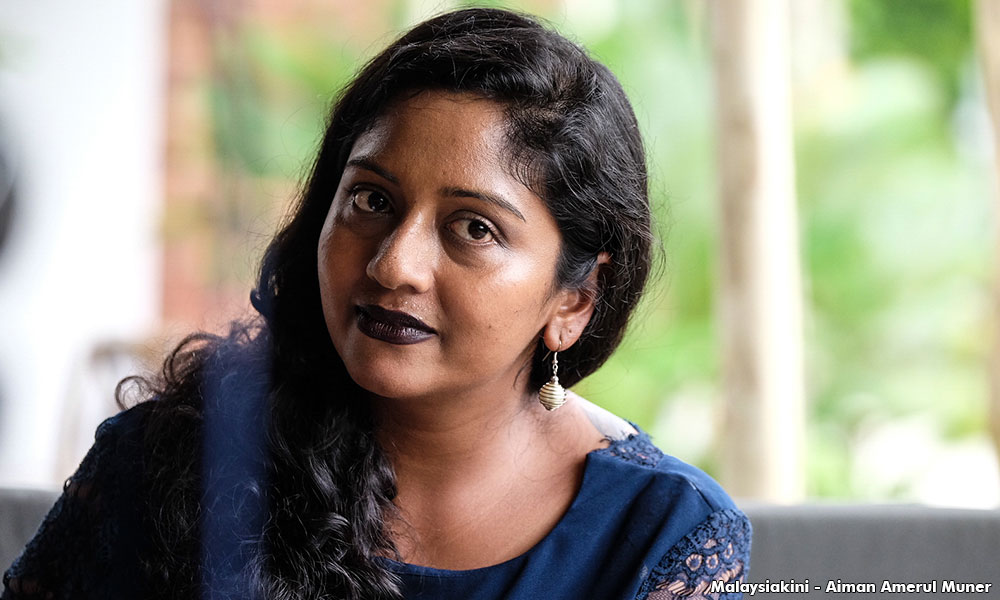
She pointed out that the death penalty was often used within a flawed justice system and that "no criminal justice system is perfect, which is why we do not hear the government claiming this".
For instance, the absence of good legal representation and the skills of lawyers could affect the quality of judgment while confessions extracted through torture are not something new in addition to the lack of independence involving forensic experts and other specialists.
These factors could lead to innocent people to be executed, such as the world's longest-serving condemned man, Iwao Hakamada from Japan, who spent 45 years on death row.
The former professional boxer was sentenced to death in 1968 for allegedly murdering a company executive and his family. He claimed his confession was a result of brutal police interrogation including beatings. Hakamada was freed in 2014 after a retrial found that police may have fabricated evidence. Seeking to clear his name further, Hakamada, now 82, has filed an appeal with the Tokyo High Court.
Compared with the United States, statistics on the death penalty in Malaysia are still being done in a piecemeal manner. In America, the public can easily search for data by state, gender and race. The full list of death row inmates who were executed or are awaiting execution is available as well.
Thus, Shamini questioned the reluctance of Malaysian authorities to reveal similar data here to the public.
"In Malaysia, the authorities lack transparency when divulging death penalty data, which means we will not know whether an innocent person had been executed in the past. The argument is this: if the death penalty is effective, then why do the Malaysian authorities hesitate to reveal more comprehensive data?"
Is compensation enough?
For Shamini, "the death penalty is nothing more than state-sanctioned murder", especially when capital punishment is irreversible. Therefore, the death penalty abolition is a critical approach to avoid miscarriages of justice.
She stressed that convicts still need to be punished but it was equally essential to review the meaning of "appropriate and proportionate punishment" so that victims are not let down by the justice system.
Recently, the government considered the introduction of a victim compensation fund in order to reduce the burden of victims of crime and their families. The proposal was attacked by those who said it would be an insult to victims and their families.
But for anti-death penalty advocates, they believe that such a fund is a good start for a paradigm shift from retribution to restorative justice.
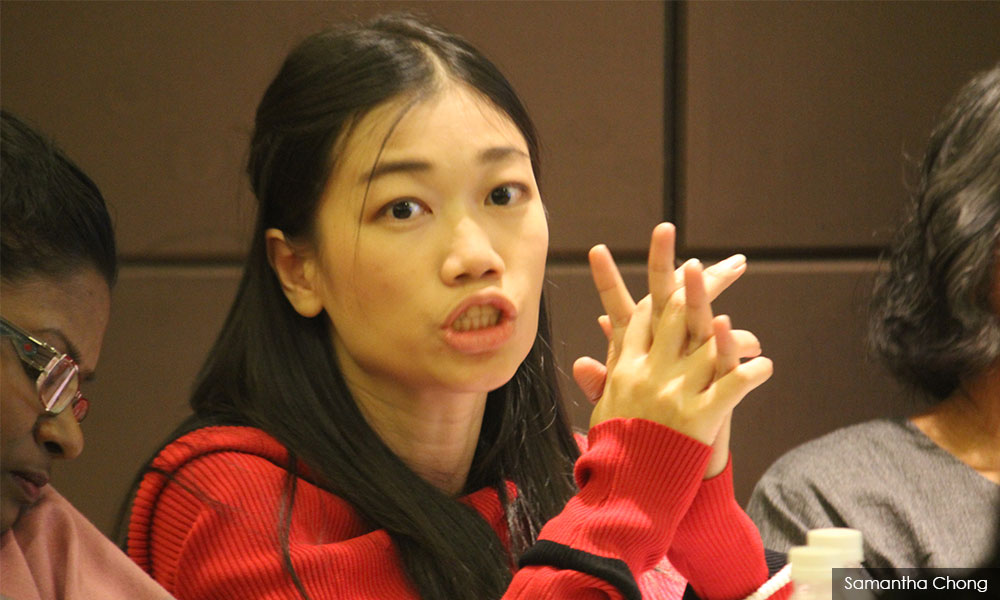
Samantha Chong (photo), lawyer and a former deputy public prosecutor who once supported the death penalty, told Malaysiakini that families of victims should receive reasonable compensation in monetary terms. This is to ensure that they would be able to carry on with their lives, particularly children who may not have sufficient financial support to complete their studies.
"I am not saying that money can compensate for everything. I need to emphasise that money can never heal the wounds or compensate for precious lives lost," Chong said.
"Unless we have lost somebody, we will not understand their feelings. Those who comment on Facebook are not in the position to speak on behalf of the victims. They are just saying whatever they think is right."
She insisted that capital punishment is not a protection for victims and their families, adding that "having the death penalty doesn’t equal to protection".
More importantly, she emphasised that monetary compensation should not be the only initiative. Adequate support and restorative systems were equally essential.
"We have to look at a bigger picture… the pain can only be relieved if emotional, psychological support, counselling and legal aid are provided to the families of the victims. This is what we need to support the victims' families."
The setting up of a support system for victims' families should not be a complementary measure after the abolition of the death penalty, but it should be implemented immediately, she noted.
However, some lawyers hold different standpoints.
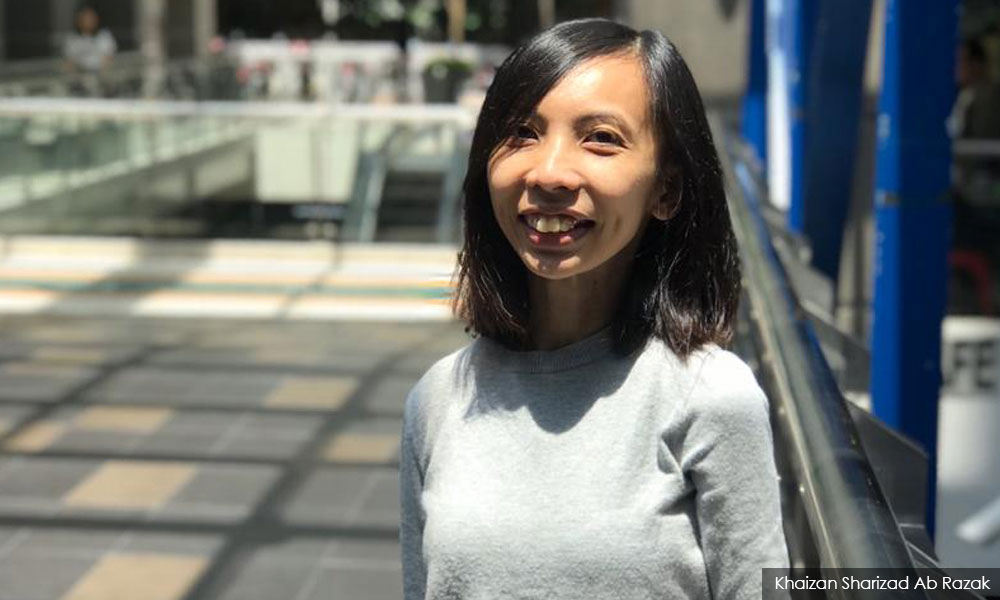
Khaizan Sharizad Abdul Razak (photo) said: "I don’t believe in monetary compensation. It looks like you value people’s lives with money." Khaizan went on to add that she backed the idea of rehabilitation and substitute punishment.
On the other hand, Abdul Rashid Ismail said the current system provided sufficient resources for victims' families to ask for compensation. "Basically, we don’t need to have a 'victim compensation fund' as the current system allows for the family to actually file a suit for wrongful death," he said.
He further said the problem with the current system was that it did not allow the victims' families to use the conviction of the criminal trial as the basis for a civil suit, as stipulated under the Section 43 of the Evidence Act.
The court requires a resubmission of the evidence and would call upon witnesses to prove if the victims' families are entitled to compensation.
Rashid stressed that the key is to amend the Evidence Act "to allow the court to take into account the evidence of the criminal trial that made the finding of guilt of the person who had committed the murder".
"This will make it easier for the family to prove the civil case against the perpetrators of the crime," he said.
However, Khaizan opposes amending the law as she said the civil and criminal justice systems played different roles. "We cannot just say that we want to make it easy (for the family to claim for compensation). We need to be careful when we look at this angle."
She added: "My worry is that people will abuse the law. As much as we are concerned, we are compassionate about the victims’ families but we also have to be careful that the law will not be abused."
Expanding the concept of victims
On another perspective, Shamini cited an NGO in the US - Murder Victims’ Family for Human Rights (MVFHR) - as an example. The NGO comprises both family members of death row prisoners and the families of murder victims who oppose the death penalty.
"The MVFHR draws attention to the ways in which the death penalty harms the families of those who have been executed while seeking recognition for victims. This is a testament that not all victims’ families want retribution," Shamini said.
MVFHR member Aba Gayle's daughter, Catherine Blount, was killed when she was only 19. Gayle realised that the death penalty did not heal her and when someone told the idea of restorative justice, she finally got relief.
Even though Amnesty International is not suggesting restorative justice, Shamini felt that it was an alternative to rethinking the meaning of conviction and punishment, which the Malaysian government should be aware of.
"Malaysia has always practised retributive justice, a punitive type of justice that focuses on punishment. However, restorative justice that focuses on rehabilitating the prisoner and which introduces perspectives such as reconciliation between the victims’ families and the perpetrator may provide a viable solution that will enshrine all lives," she said.
Under a flawed social and justice system, it is worth pondering who are the victims. Amnesty International Malaysia works closely with death row prisoners and their families to fight for appeal or clemency. To them, death row prisoners and their families are considered victims too. And it is sad to realise that the current debate on the abolition of the death penalty is dividing the two sides and preventing dialogue, much less reconciliation.
Two years ago, the office of the UN High Commissioner for Human Rights (UNHCHR) published a 400-page report titled "Death Penalty and the Victims". It proposed that the idea of victims' perspective should be placed at the centre of death penalty debates while broadening the concept of victims.
Ivan Šimonovic, the UNHCHR assistant secretary-general, admitted that expanding the concept of victims beyond the direct victims of crime may seem controversial to some, adding that human rights advocates also raise challenging questions, such as how the death penalty helps in the healing process. Is reconciliation with the perpetrator possible? Do contemporary justice systems prioritise the victims or have some other interests?

Šimonovic (photo) pointed out that the death penalty does not compensate for the pain and the loss of the victims' families, and also affects those who are involved in the legal proceedings leading to the execution.
For instance, "a judge from the only retentionist country in South America told me that after he had sentenced a man to death for the first time, he could not wait to run to his chambers to throw up".
He described them as “invisible victims” and they should include the convicts and their families as "when it comes to the death penalty, almost everyone loses".
Shamini agreed with the idea of hidden victims, "because their sufferings are often ignored although they are innocent of the crime that led to their loved ones being on death row."
Also, like the victims of a crime, she said, the children also lose a parent, and the families lose a breadwinner.
Shamini believes that if Malaysia would consider moving towards restorative justice, the families of death row prisoners "should also be part of the equation where they are cared for by the state".
RELATED REPORTS
Part 1: Death penalty: Six things you need to know
Part 2: From the judicial frontlines: An inside look at the death penalty
Part 3: Should the state be given the power to kill?
Part 4: The shadow of death: Living with a family member on death row


