




Should the state be given the power to kill?
SPECIAL REPORT | In the previous segment of this series, we examined the various factors that can compromise the investigation or prosecution of cases where the accused is faced with the death penalty.
Real-life cases, both at home and abroad, have shown that factors such as the work environment and performance pressure of the prosecutors, public pressure, dishonesty or abuse by enforcers, or poor legal representation may lead to a miscarriage of justice.
In some cases, the law does not favour the accused’s pursuit of justice.
Section 37(d) of the Dangerous Drugs Act 1952 states that “any person who is found to have had in his custody or under his control anything whatsoever containing any dangerous drug shall, until the contrary is proved, be deemed to have been in possession of such drug and shall, until the contrary is proved, be deemed to have known the nature of such drug”.
In other words, there is a “presumption of guilt” instead of “presumption of innocence” behind this provision.
In 2016, a Korean student studying in Malaysia, Kim Yun-soung, was charged after the police found 219g of cannabis during a raid on an apartment in Bandar Baru Nilai.
The inspector with the 10-member police team initially claimed that there was no one else there during the raid, so Kim was the only accused.
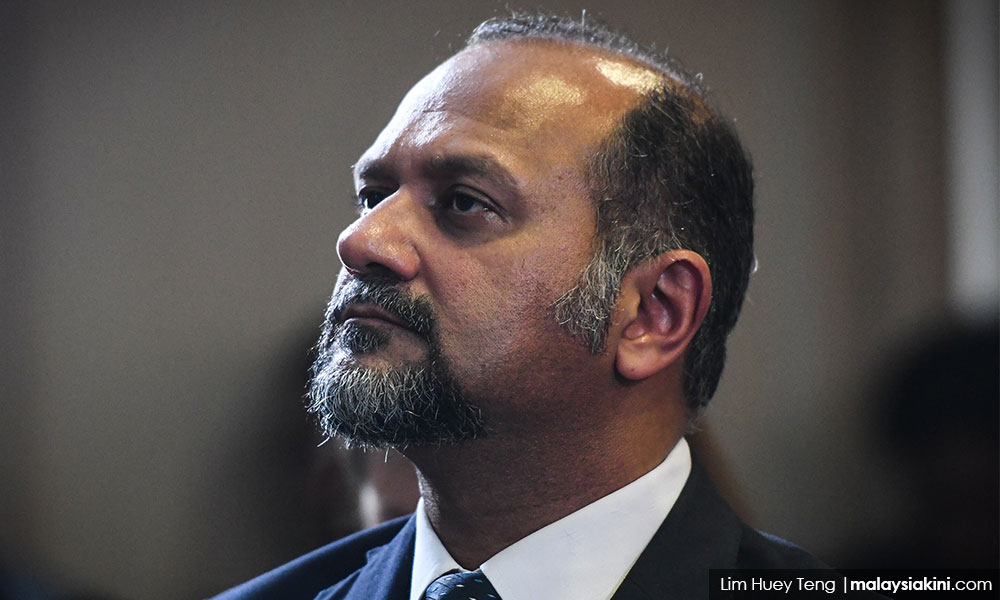
However, when defence lawyer Gobind Singh Deo (photo) said they had a CCTV recording to prove there was another individual in handcuffs present, the police officer admitted to the court that he had lied.
In the end, the 20-year-old South Korean student was acquitted...
SPECIAL REPORT | In the previous segment of this series, we examined the various factors that can compromise the investigation or prosecution of cases where the accused is faced with the death penalty.
Real-life cases, both at home and abroad, have shown that factors such as the work environment and performance pressure of the prosecutors, public pressure, dishonesty or abuse by enforcers, or poor legal representation may lead to a miscarriage of justice.
In some cases, the law does not favour the accused’s pursuit of justice.
Section 37(d) of the Dangerous Drugs Act 1952 states that “any person who is found to have had in his custody or under his control anything whatsoever containing any dangerous drug shall, until the contrary is proved, be deemed to have been in possession of such drug and shall, until the contrary is proved, be deemed to have known the nature of such drug”.
In other words, there is a “presumption of guilt” instead of “presumption of innocence” behind this provision.
In 2016, a Korean student studying in Malaysia, Kim Yun-soung, was charged after the police found 219g of cannabis during a raid on an apartment in Bandar Baru Nilai.
The inspector with the 10-member police team initially claimed that there was no one else there during the raid, so Kim was the only accused.
However, when defence lawyer Gobind Singh Deo (photo) said they had a CCTV recording to prove there was another individual in handcuffs present, the police officer admitted to the court that he had lied.
In the end, the 20-year-old South Korean student was acquitted.
Read more: Death penalty: Six things you need to know
Justice for those who can afford it
Errors by investigative or prosecution officers, poor legal representation due to the accused’s limited finances may ultimately lead to the miscarriage of justice as well.
Lawyer Khaizan Sharizad Ab Razak pointed out that an innocent person could miss out on the opportunity to overturn a conviction if he or she foregoes the appeal due to financial limitations.
“I have assisted in murder cases where the High Court convicted the accused for murder, and then the Court of Appeal secured the conviction. But when we then appealed to the Federal Court, it decided that he was not guilty and he was acquitted.
“What would have happened if he hadn’t appealed? What if he couldn’t afford to appeal? He would have been hanged. If the decision was reverted at the appellate stage, doesn’t that tell you that mistakes could happen?”

Khaizan Sharizad (photo) is also the director of the documentary Menunggu Masa (Waiting For Time), which features the story of a death row inmate.
Another lawyer focusing on criminal cases, Abdul Rashid Ismail, who has seven years’ experience in handling death penalty cases, told Malaysiakini that some studies have shown that a significant proportion of death row inmates are poor, lowly educated and therefore unable afford to pay for good lawyers.
“When they can’t afford to pay for good lawyers, the states can appoint lawyers to represent them, but the calibre of these lawyers varies. So, people who do not have money to defend themselves may not get the best legal representation and thus, are exposed to a possible miscarriage of justice,” Rashid said.
Proponents of the death penalty
Those who support the death penalty hold very different views. Lawyer Christina Teng is of the opinion that criminals may escape through the loopholes of the system and continue to harm more members of society if the death penalty is abolished.
Although she is a corporate lawyer, Teng is a proponent of the death penalty and represents the family of murdered HSBC banker manager Wong Jing Kui.
“How is the enforcement team to fight and prevent more serious crimes when they cannot even solve and stop crimes that do not warrant the death penalty, such as robberies, rape and child abuse?” she asked.
Teng is of the opinion that the enforcement agency officers and the Attorney-General’s Chambers are overworked, and she is worried that criminals are getting out by hiring “aggressive and experienced defence counsel.”
“In reality, it is not easy for the police to secure a successful arrest, and for the prosecution to meet the burden of proof beyond reasonable doubt. It is hard.
"It is also challenging to fight for justice with a weak enforcement body, for example, a passive police force and understaffed and overworked prosecutors,” she said.
“(The justice system) is often disrupted by aggressive and experienced defence counsel who are paid to get the culprits out, regardless of their guilt. A very low percentage of the accused are given the death penalty and many get away (with it).”
Teng believes that enforcement needs to be beefed up and the welfare and rights of the people need to be protected, instead of the state being concerned about the welfare and rights of criminals.
“Our human rights matter more. We need strict laws to protect us. We need the highest standards for rule of law in place in our country. Please protect us by keeping the death penalty.”
Currently, the death penalty is carried out in Malaysia for offences such as murder, drug trafficking, treason, terrorism and waging war against the Yang di-Pertuan Agong.
On Nov 30 last year, the Dewan Rakyat passed the Dangerous Drugs (Amendment) Bill with amendments that give courts full discretion to mete out life sentences against drug traffickers.
Current de facto Law Minister Liew Vui Keong has promised that the government would abolish the death penalty and the sentences will be commuted to life imprisonment or a minimum 30-year jail sentence.
Ex-judges call for a 'natural life sentence'
As of Oct 11 this year, there are 1,279 people on death row in Malaysia among nearly 60,000 convicts. Of this number, 366 are still in the process of appeals while 355 of them are seeking pardon.
Previously, murder and drug trafficking cases had a mandatory death sentence.

Retired Court of Appeal judge Mohd Hishamudin Mohd Yunus (photo) said that he has had no difficulty in passing the death sentence but he doesn’t agree with capital punishment because taking away someone’s life is cruel and inhumane.
“When I was a judge, I had to be satisfied beyond a reasonable doubt that, on the totality of the evidence, the person concerned was guilty of the crime. If based on the evidence, and applying the law, I had a reasonable doubt of the guilt of the accused, I would acquit the accused.
“The law is made by the state. And I was only applying the law as required of me as a judge. I had no discretion as the death sentence is mandatory.
“But I couldn’t help feeling sympathetic and emotional for the accused each time I pronounced the death sentence. I would like to stress that I am against imposing the death penalty even in cases of murder, let alone in cases of drug trafficking,” he added.
Former Federal Court Judge Gopal Sri Ram called for judges to be given the discretion to give graded jail sentence to offenders for murder and drug trafficking, who at present are given the mandatory death sentence.
Gopal suggested that for serious murder cases involving very violent crimes, such as the murder of Mongolian national Altantuya Shaariibuu, whose body was blown up with explosives, a natural life sentence should be given. A natural life sentence means the person convicted be in jail until he dies.
For violent crimes such as rape leading to death, he suggested that natural life sentence can also be imposed.
“Similarly, for drug trafficking offences where the offender is said to be a drug lord, a natural life sentence is also suitable. For drug mules, a jail term of 10 to 20 years can be given,” Gopal said.
“For murder cases that may not be premeditated, the judge should consider reducing the charge to Section 304 of Penal Code from Section 302, where a prison term of 10 to 20 years can be given. For other murder cases, a punishment of 30 years should be given.”
Gopal also stressed that the judge must look at the severity of the offence and the interest of the victim in the murder case.
Read more: From the judicial frontlines: An inside look at the death penalty
Remedy judicial process to right the wrongs
On the other hand, former High Court judge Syed Ahmad Idid (photo) pointed out that letting off criminals is as bad as convicting an innocent person.
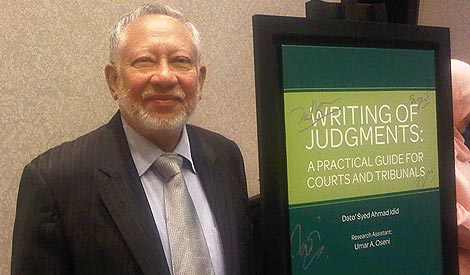
Syed Ahmad said every judge should make judgments rigorously.
“It is the duty of each judge to ascertain the facts. For justice to be carried out, facts are the first materials which must be put forth. During my tenure as a judge and when I handled drug and murder cases, I went thoroughly into the testimony.”
“When I was around 12 or 15, I had learned when I watched the film, Witness for the Prosecution, that witnesses can swerve in their testimonies and that the court must be vigilant to catch out lies or half-truths. Hence, I was quite comfortable with the decisions I made and then asked for Allah's forgiveness and blessings,” Syed Ahmad said.
However, letting off criminals and convicting the innocent are both the results of the miscarriage of justice.
In 2017, a Taiwan High Court overturned the conviction of Hsu Tzu-chiang, who was on death row for two decades.
Defence counsel Lin Yung-sung, at that time, told the crowd who came to show support outside the court: “I believe that the prestige of the judiciary is not based on making no mistakes, but on the fact that there is a legal remedy process to right the wrongs in the system.”
Read more: The shadow of death: Living with a family member on death row
Should the state be given power to kill?
Research by Penang Institute shows that, on average, 27.7 percent of High Court and 50 percent of Court of Appeal death penalty case judgments were overturned by the immediate higher courts. These figures indicate that the decisions made by the High Court have a more than one-in-four chance to be overturned.
These results were calculated from 289 reported cases from 2013 to June 2018, which were compiled from three major online legal publication databases - the Malaysian Legal Journal, Current Law Journal and Asean Legal Information Portal.
"The myth that having more appeal hearings would lead to more consistent and less error-prone judgments does not hold water. A case in point is the indication of high probability of wrongful executions,” according to the Penang Institute report.
As the taking of a human life is irreversible, the moratorium of capital punishment is the only opportunity to buy time for new evidence to emerge and to prevent the execution of a person who may be innocent.

But what if a murderer kills someone in the public and there is irrefutable evidence? Should the state be allowed take lives in such a situation?
Another lawyer specialising in crime, Abdul Rashid Ismail, is of the view that the government should not take any citizen’s life, even if the murder committed by that person is irrefutable.
“The state should respect the basic and most fundamental right, which is the right to life of every citizen of Malaysia. I take the view that the states or the government should not take the life of any citizen, no matter what,” Rashid said.
When people seek for retributive justice on the grounds that "life is precious”, they are actually indirectly supporting another killing by the state.
Compared to an individual, the state has more power to kill wrongly. It is also difficult to control, expose and correct the mistakes done by the state. If a murderer has to pay with his or her life, how does the government pay when it takes the life of an innocent?
The people have delegated part of their power to the government to form the state, and the state is responsible for managing social order and regulating various interests of society.
To what extent can power be given to the state? Should the state take a citizen’s life in the name of “justice”?
People who believe in retributive justice may worry that justice will not be done if the death penalty is abolished, and the interests of the victims’ family will be violated.
But is “a life for a life” really what the victims’ families need? With Malaysia now moving towards abolishing the death penalty, and society is mulling its pros and cons, perhaps attentions should be paid to creating a comprehensive support system to assist survivors and the families of the victims.
RELATED REPORTS
Part 1: Death penalty: Six things you need to know
Part 2: From the judicial frontlines: An inside look at the death penalty
Part 4: The shadow of death: Living with a family member on death row


