


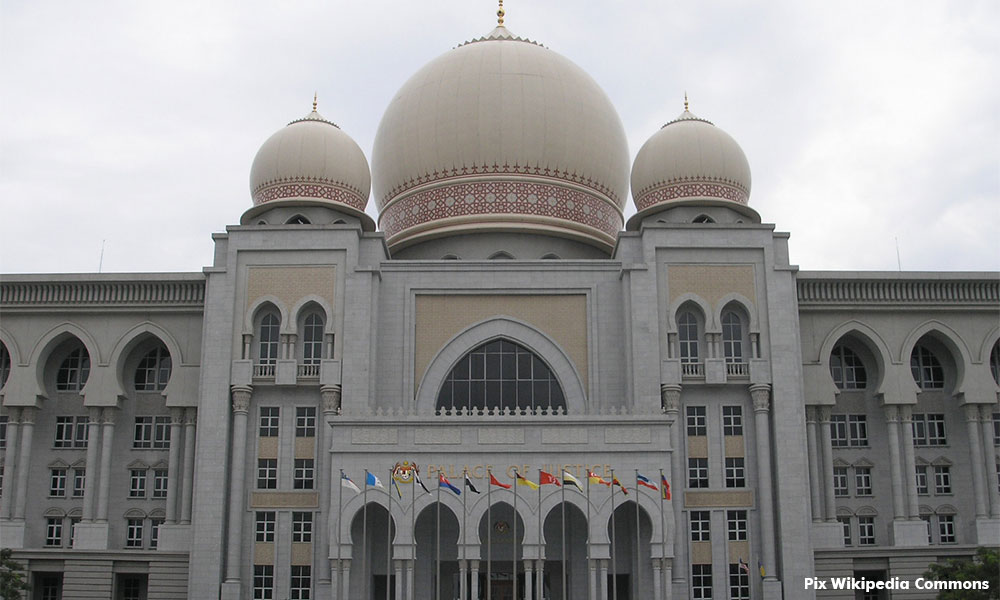

Two stateless children granted citizenship, other 3 to be considered
Two of the five Federal Court cases involving stateless children were resolved today, after the plantiffs were granted Malaysian citizenship this month.
The two cases involved an 18-year-old boy and a 13-year-old girl respectively...
Two of the five Federal Court cases involving stateless children were resolved today, after the plaintiffs were granted Malaysian citizenship this month.
The two cases involved an 18-year-old boy and a 13-year-old girl respectively.
However, the citizenship applications in the remaining three cases will be considered by the Home Ministry and the National Registration Department (NRD) after one of them submits more particulars, while the other two will file applications under Article 15A of the Federal Constitution.
Article 15A gives the federal government the discretion to grant citizenship to those below the age of 21, under special circumstances.
If the three applications are not successful, then their challenge will be heard on Nov 26 before the same nine-member bench.
The clients were represented by their lawyers in the proceedings today, while senior federal counsel Suzana Atan represented the NRD and the government.
The matter was heard before a nine-member bench led by Chief Justice Richard Malanjum.
The others were Court of Appeal president Justice Ahmad Maarop, Chief Judge of Malaya Justice Zaharah Ibrahim, Federal Court judges Justices Azahar Mohamed, Aziah Ali, Alizatul Khair Othman, Rohana Yusof, and Mohd Zawawi Mohd Salleh, and Court of Appeal judge Umi Kalthum Abdul Majid.
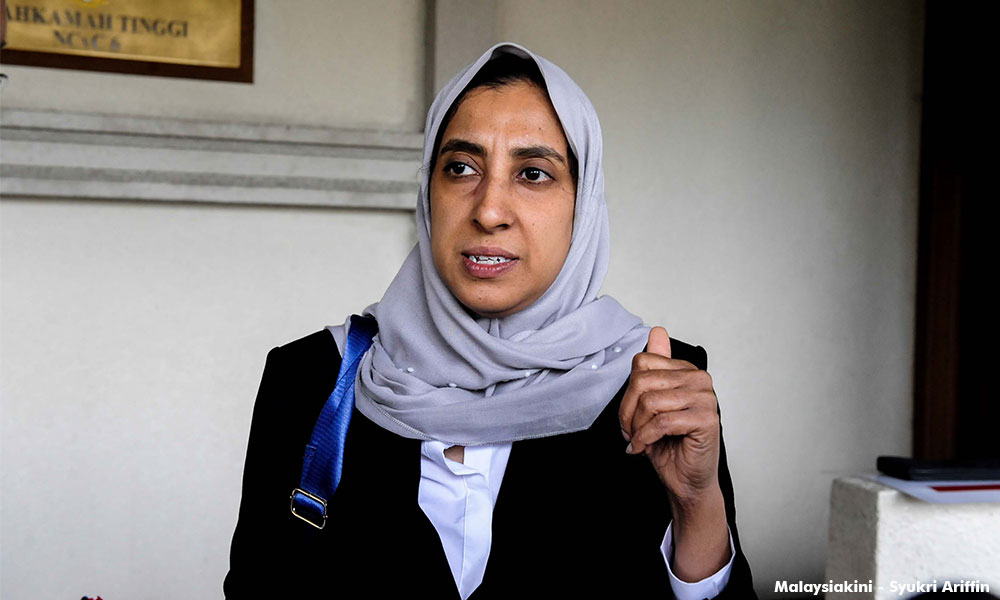
Lawyer Latheefa Koya (photo) appeared for the family of the 18-year-old who received his citizenship.
Latheefa also represents the eight-year-old boy, the child of a Thai mother, who abandoned him. In this case, the NRD is requiring the boy’s Malaysian father to provide more particulars on the mother’s departure from the country.
"We will provide the documents relating to the eight-year-old boy’s application and hope the (Home) minister can give his decision before Oct 26.
"Meanwhile, we withdraw the parents’ appeal for the 18-year-old boy who was granted citizenship," she said.
Lawyer Ranee Sreedhara appeared for the 13-year-old girl who was born of a Papua New Guinean mother and a Malaysian father. The girl was granted citizenship following a Court of Appeal decision last year.
Today, Suzana told the large bench that the government is withdrawing its appeal against Ranee's client.
With the appeals withdrawn, Justice Malanjum struck out the two appeals.
Two other stateless children
Senior lawyers Cyrus Das and Raymond Mah appeared for the other two children aged 17 and 18 respectively, who had not submitted their applications under Article 15A as Cyrus said they are concerned that with the (Home) minister's discretion, and the possibility of an ouster clause, their clients may not get citizenship and the decision of the minister cannot be challenged.
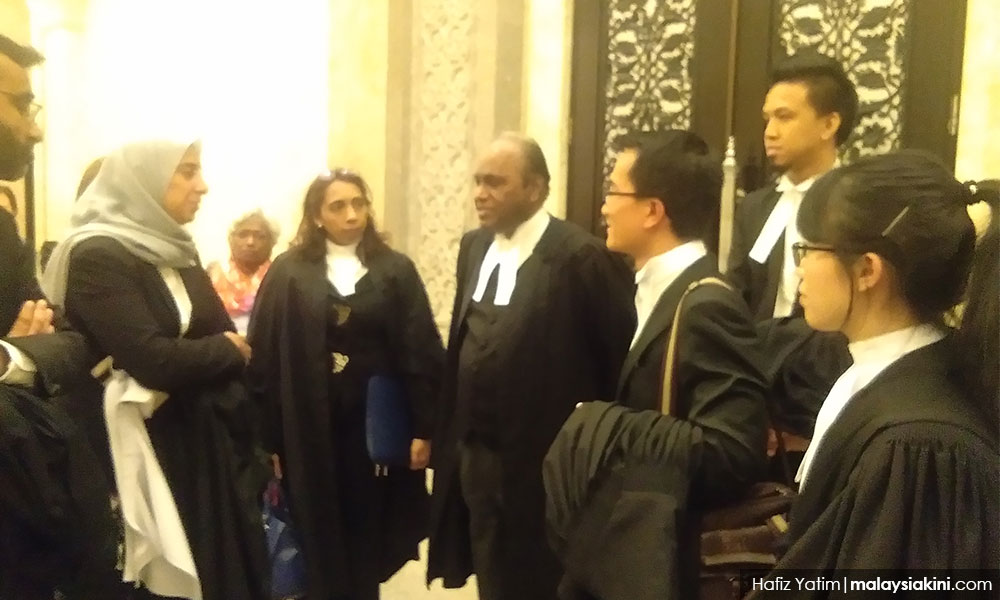
After a short break granted by the bench, Cyrus and Mah told the court their clients agreed and would make the necessary applications under Article 15A by Monday.
"My clients need an answer quickly as one of them is undergoing a twinning degree programme and needs a reply soon.
"We ask that the reply be made soon or otherwise on Oct 26 we will proceed with the referral," said Cyrus.
Initially, Suzana indicated they wanted at least three months to revert on the results of the two cases represented by Cyrus and Mah.
With this, Justice Malanjum and the other judges agreed to come back on Oct 26 to see the outcome or hear the matter.
The two questions of law posed before the bench in referral are:
Whether a child who was born in Malaysia and did not acquire citizenship of any other country, within one year from his birth date, is a citizen of Malaysia by the operation of law pursuant to Article 14(1)(b) and Section 1(a) and 1(e) and Section 2(3) of Part II of the Second Schedule.
Whether the words “not born a citizen of any country” in Part II Section 1(e) of the Second Schedule of the Federal Constitution requires a child to prove the identity of his or her biological parents and that they are not foreign citizens or whether, pursuant to Part II Section 2(3) of the Second Schedule, it is sufficient for the child to prove that he/she does not require citizenship.
The names of the children and parents have not been made public following a court order.
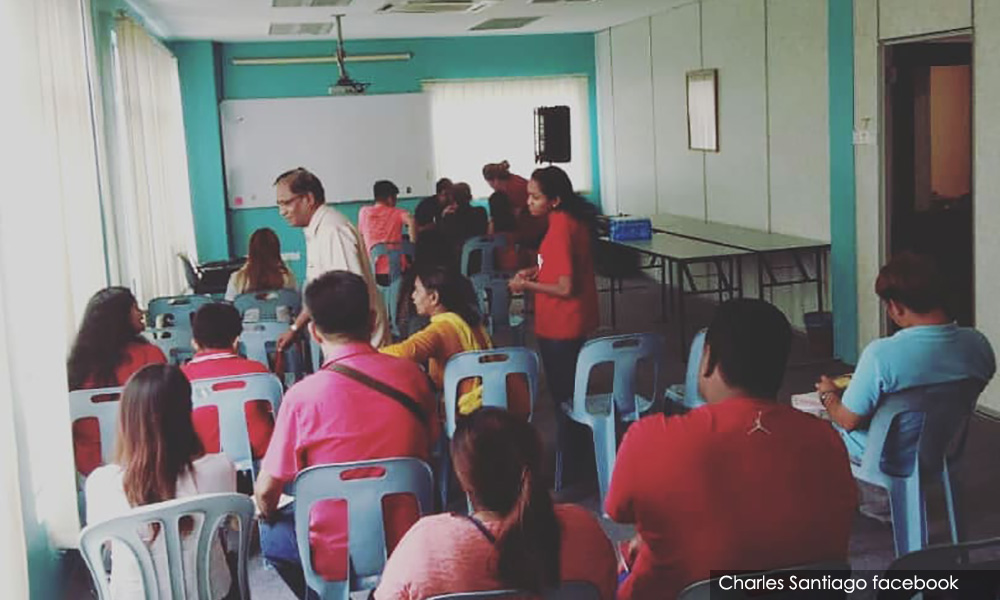
Besides these cases, there are said to be thousands of stateless children who are affected, and are awaiting the precedent that is to be set in these cases.
Some of the lawyers of the affected children were in court to hold watching brief.
Meanwhile non-governmental organisation Development of Human Resources for Rural Areas Malaysia (DHRRA) president Saravanan M Sinapan in a statement welcomed the developments and said no children should undergo such hurdles to obtain citizenship.
"DHRRA had decided to fund the legal expenses of the 13-year old girl who has just obtained citizenship following the government's withdrawal of its appeal.
"Not all parents can afford to bring their cases to court. What will happen to them? There is a requirement to reform the law, legitimate and adopted children should automatically be given citizenship under Article 14 1(b) of the Federal Constitution and re-registered as citizens of Malaysia.
"A broad definition of the word "parent" as used in the Constitution will go a long way to resolve many of the pending and unresolved cases," Saravanan said.
Article 14 is with regards to citizenship by operation of law whereby Subsection 1(b) stipulates that every person born on or after Malaysia Day (16 September 1963), and having any of the qualifications specified in Part II of the Second Schedule, is a citizen.


