



Let not history repeat itself in new Malaysia
COMMENT | It must be an exciting time to live in Malaysia despite pockets of cynicism, but let not history repeat itself.
The government has to explain why promises it made may not be fulfilled and apologise if it is to retain its credibility. It will appear irresponsible, even duplicitous, if it says the manifesto it publicised was merely for an election it might not have won. Such cock-and-bull story is the modus operandi of Umno not Pakatan Harapan.
On the positive side, it is time to harvest the ripe fruit of ‘reformasi’. Regime change is not only to restore integrity in governance but to change the mindset of a nation bedraggled by old ideas of race and religion. Any policy built on race and religion is unsuitable for Malaysia. The country has experimented with such flawed discriminatory policies that nearly ruined it.
Let not history repeat itself.
Help the Malays by ridding the nation of the toxic idea of privilege, entitlement and instant riches. Reject the doctrine of ‘Keturunan Melayu’ that results in the practice of separate development, Malaysia’s version of apartheid. It is time to place educated and capable Malays, not the politically-connected, in positions of influence; Malays who are progressive and can uplift the Malay communities.
It is time to eradicate the rent-seekers and coalesce nation-building around those in government and leaders in civil society for the common good. It is pointless to speak of ‘reformasi’ when the mother of all evils - the policy of race - that divides the nation into ‘they’ and ‘us’ sits smugly on top of Mahathir’s agenda.
Good has triumphed over evil since the historic trouncing of the 61-year-old Umno-led government by Harapan. Rome was not built in a day, as they say, and the repair of Malaysia requires time, effort, resources and the faith among Malaysians that it has never been a better time to love their country.
To love a country is to do more than paying your taxes and waving the national flag. Or singing ‘feel good’ songs. It requires those especially with the ability and circumstances to initiate activities that will improve the country’s living conditions. Real leaders lead without being invited. They see a need, they act.
Malaysia belongs to every Malaysian who has a say in what happens to their country. It does not become more or less your country because there is more or less of members of your race. That is why countries have an affirmative action policy to safeguard the welfare of the minority. But in Malaysia, the policy is turned on its head when the affirmative action is for the majority. And what a disaster.
No government has all the bright ideas or right leaders to manage a nation. But a smart and serving government will want to tap into every conceivable source of talent and resource to build the nation. Ultimately there has to be a common ethos, a strong sense of ‘fair go’ - borrowing an Australian phrase - to provide a national value of social justice. Where discriminatory policies persist, there is no social justice.
The silenced majority
The need for ‘thought’ leaders and ‘action’ leaders has never been as great as now. I recall the advent of online daily Malaysiakini almost two decades ago that changed the media landscape. Malaysiakini created a sanctuary for open expression to exist. It spawned copycat publications and replaced the once popular The Star as the truly ‘People’s Paper’.
This was possible because Dr Mahathir Mohamad, as the country leader then, had the foresight to protect the internet from censorship, even if his brainchild the Multimedia Super Corridor project flopped. Then there were those prepared to let their necks out and have their say.
Malaysiakini is successful because the people contributed their ideas. Often Malaysiakini got into hot soup only because the police had nothing better to do, like the time they raided Malaysiakini’s office six years ago because of an innocuous article of mine they published.
It is a challenging road to navigate when you face a government used to silencing the dissenting views. The silent majority risks becoming the silenced majority. Still, many Malaysians spoke out, and took the risk because they believed in the power of the written word...
COMMENT | It must be an exciting time to live in Malaysia despite pockets of cynicism, but let not history repeat itself.
The government has to explain why promises it made may not be fulfilled and apologise if it is to retain its credibility. It will appear irresponsible, even duplicitous, if it says the manifesto it publicised was merely for an election it might not have won. Such a cock-and-bull story is the modus operandi of Umno, not Pakatan Harapan.
On the positive side, it is time to harvest the ripe fruit of ‘reformasi’. Regime change is not only to restore integrity in governance but to change the mindset of a nation bedraggled by old ideas of race and religion. Any policy built on race and religion is unsuitable for Malaysia. The country has experimented with such flawed discriminatory policies that nearly ruined it.
Let not history repeat itself.
Help the Malays by ridding the nation of the toxic idea of privilege, entitlement and instant riches. Reject the doctrine of ‘Keturunan Melayu’ that results in the practice of separate development, Malaysia’s version of apartheid. It is time to place educated and capable Malays, not the politically-connected, in positions of influence; Malays who are progressive and can uplift the Malay communities.
It is time to eradicate the rent-seekers and coalesce nation-building around those in government and leaders in civil society for the common good. It is pointless to speak of ‘reformasi’ when the mother of all evils - the policy of race - that divides the nation into ‘they’ and ‘us’, sits smugly on top of Mahathir’s agenda.
Good has triumphed over evil since the historic trouncing of the 61-year-old Umno-led government by Harapan. Rome was not built in a day, as they say, and the repair of Malaysia requires time, effort, resources and the faith among Malaysians that it has never been a better time to love their country.
To love a country is to do more than paying your taxes and waving the national flag. Or singing ‘feel good’ songs. It requires those especially with the ability and circumstances to initiate activities that will improve the country’s living conditions. Real leaders lead without being invited. They see a need, they act.
Malaysia belongs to every Malaysian who has a say in what happens to their country. It does not become more or less your country because there is more or less of members of your race. That is why countries have an affirmative action policy to safeguard the welfare of the minority. But in Malaysia, the policy is turned on its head when the affirmative action is for the majority. And what a disaster.
No government has all the bright ideas or right leaders to manage a nation. But a smart and serving government will want to tap into every conceivable source of talent and resource to build the nation. Ultimately there has to be a common ethos, a strong sense of ‘fair go’ - borrowing an Australian phrase - to provide a national value of social justice. Where discriminatory policies persist, there is no social justice.
The silenced majority
The need for ‘thought’ leaders and ‘action’ leaders has never been as great as now. I recall the advent of online daily Malaysiakini almost two decades ago that changed the media landscape. Malaysiakini created a sanctuary for open expression to exist. It spawned copycat publications and replaced the once popular The Star as the truly ‘People’s Paper’.
This was possible because Dr Mahathir Mohamad, as the country leader then, had the foresight to protect the internet from censorship, even if his brainchild the Multimedia Super Corridor project flopped. Then there were those prepared to let their necks out and have their say.
Malaysiakini is successful because the people contributed their ideas. Often Malaysiakini got into hot soup only because the police had nothing better to do, like the time they raided Malaysiakini’s office six years ago because of an innocuous article of mine they published.
It is a challenging road to navigate when you face a government used to silencing the dissenting views. The silent majority risks becoming the silenced majority. Still, many Malaysians spoke out, and took the risk because they believed in the power of the written word and clever ideas for change.
Bright ideas change the world when people put them into action. Don’t leave it all to the government to initiate bright ideas because they have limitations. Malaysians must act on what the late American president John F Kennedy said, “Ask not what your country can do for you but ask what you can do for your country.”
More than ever Malaysia needs those who will sacrifice time and effort to help improve their country. Volunteerism is needed to get things done when a government is unable to act because of limited funding or a lack of volition. Many Malaysians are already volunteering. Religious groups are involved in alleviating the plight of the sick and poor through their works of charity. It is only the tip of the iceberg of possibilities. People who want change may need to initiate change.
Citizen groups can be formed, as already many exist for different purposes, to better the country. We have seen the remarkable achievements of Bersih. For example, someone may need to initiate a group and goad the government to start sustainable public campaigns to improve road safety in the country.
There is an urgent need to change the country’s road culture. The number of traffic accidents and road deaths is unacceptably high and it is time to reduce and stop the road carnage. In 2017, 6,740 people died on the roads. Some motorists on a Malaysian road will not be going home today. He or she will become another tragic statistic. Every day nearly 20 people die on the roads.

Even for many of us who live abroad, we are excited for Malaysia.
Once a Malaysian always a Malaysian, I think, and despite having acculturated and assimilated into our adopted countries, many of us do care for what happens to their former country. It is evident from the writers who live abroad but comment on Malaysia. Malaysia is a country with huge potential but was spoilt by politicians who became white-collar criminals while in office. Their corrupt ways destroyed the country - destroyed its integrity and the people’s morale. They must be held to account.
As they say, things get worse before they get better. For Malaysia, things got worse until what broke the camel’s back was the country clinching the ignoble title of having the worst case of kleptocracy the US Department of Justice had come upon. It goaded Mahathir who had jumped on the 'reformasi' bandwagon to be the juggernaut for regime change by openly calling for the sacking of Najib Abdul Razak.
Now Mahathir has recalibrated Malaysia on the world map for the right reason. I doubt his record of holding the country’s top job at 93 will be matched or broken. You must be crazy to want to be a country’s chief trouble-shooter at that age but then some thought Albert Einstein was crazy.
At the human level, no one should doubt it was Mahathir who made regime change possible and the peaceful transition that followed. For the believers, it was God who answered the prayers of those who had interceded for the nation for a long time and still do. For now, Mahathir is the right man for the job but he needs many to put their hands to the plough and help him lead the people into Malaysia’s temporal Promise Land.
Tussle for supremacy
As I see it, the tussle for political supremacy between Azmin Ali and Rafizi Ramli in PKR is a positive experience. The goal of every politician is to be in the desired position to have the power to change policies to serve the people. Whoever loses or wins, the country still needs leaders like them to lead. And I do hope more capable Malaysians will enter politics to also make the difference. Let’s hope the new government is development-centred and not inordinately politics-centred so they know how to deploy the best people in the gargantuan task of reshaping the nation.
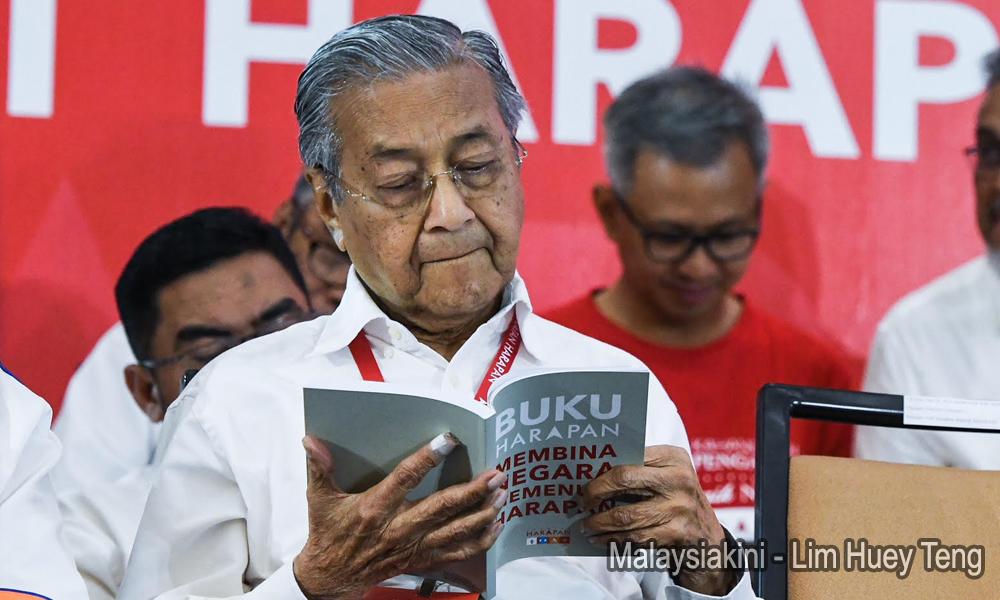
Politicians are among the most disliked people in the world because many of them are two-faced, self-promoting and dishonest. The changing times have seen the erosion of public morals in public office and let’s hope Malaysia is at the turning point now that Harapan is in power. There is a new breed of politicians in Parliament and time will tell if they perform to expectations. They can’t do worse. There is an expectation among the rakyat of seeing significant changes and the Harapan manifesto has been held to be the contract the public wants the government to deliver.
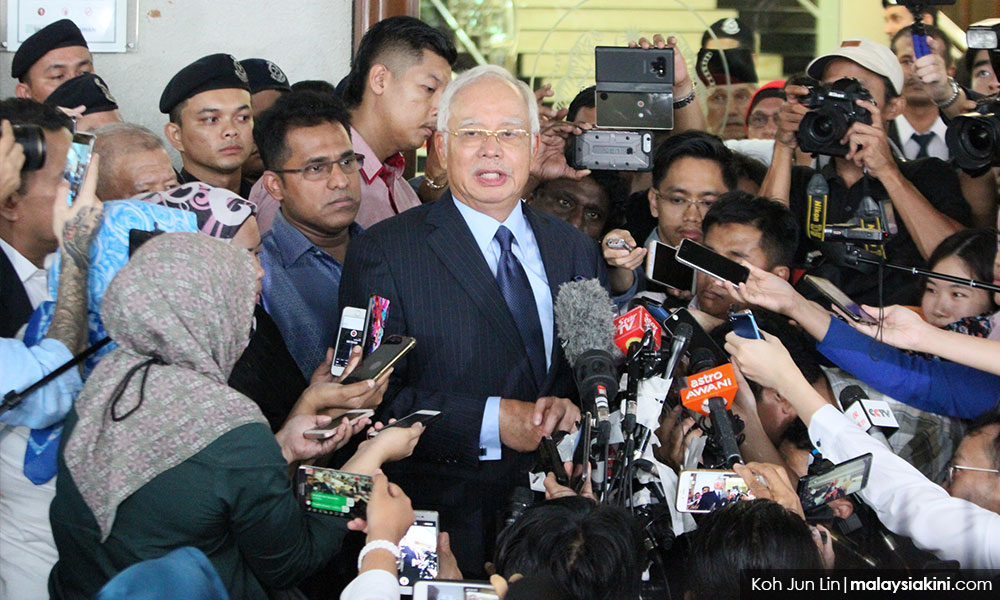
Whatever happens, the government, for the sake of its credibility, has to be honest. The last thing the public needs is the ‘doublespeak’ Malaysians are only wary and weary of. Let’s not forget the voters got rid of a dishonest Najib government that was leading the nation on the road to fiscal hell. Not only that, the administration was polluted by the ‘Najib syndrome’ - the sickness of self-denial and delusion. The Harapan government can afford to be straight with the people and tell them the truth, in plain English or Malay.
In Australia, whether it is the incumbent government or opposition, their promises to deliver some project or plan during election time have to be independently costed by the Treasury. The failure to do this will result in politicians of both sides making outrageous promises, even outright lies, to the voting public. This is the Malaysian predicament.
Inordinate politicking can ruin a nation. Every politician faces a conflict of interest. It is a tension caused by the strain of duty to public office and party loyalty. In Malaysia, the tension is worsened by considerations of race and religion. But a good politician, a good leader, knowing he has taken a public oath to serve the national interest, will not favour one sector of the nation over another. That is why any policy based on race is fundamentally flawed and the reformasi chant is dubious until race is neutralised in governance. It will be the new government’s dilemma also.
Let history not repeat itself.
As far back as 2002, in a speech before the Umno assembly as their supreme leader, Mahathir delivered a candid critique of the Malays that would have got anyone else into trouble for saying it. I should know because they sent three carloads of police officers to investigate me after I wrote an innocuous article in Malaysiakini.
But as only Mahathir can, he lamented the sorry state of the Malays. That Malaysiakini report by Eileen Ng is worth reading to realise only things got worse for the Malays under Najib’s kleptocracy. It was a case of out from the frying pan into the fire. Only Malays can help Malays is a myth.
The best thing any leader can do for Malaysia is to mix up the races to work and benefit equally in any government policy. Unshackle the monoculture of the civil service, the armed forces and the police. Stop giving lip-service to the other races and stop lamenting how the Malays are backward and disadvantaged. Right the wrong. Mere talk leads to poverty.
Dr M’s advice
Do not rely on Mahathir to do everything.
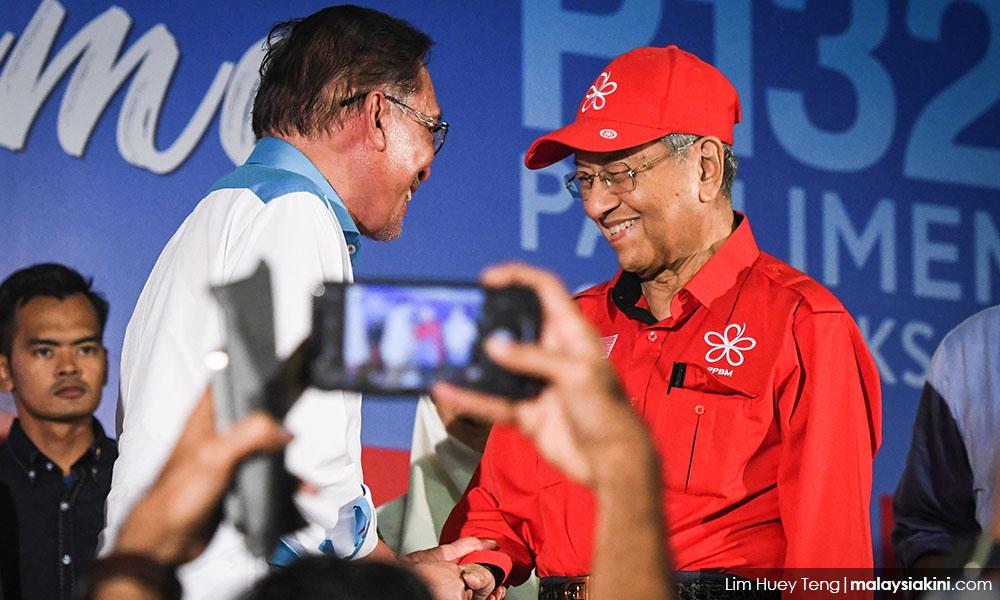
No one doubts he is a highly driven man, of unusual ability to work long hours, intelligent and up to the challenge at his age but he is mortal. As PM-designate, Anwar Ibrahim ought to be working closely together more often with his former and present boss. We all have our ideas and passion in working to realise our vision but there comes a time to help the nation achieve the people’s vision -together. Many think Anwar should not be country leader, but why? Who better to succeed Mahathir?
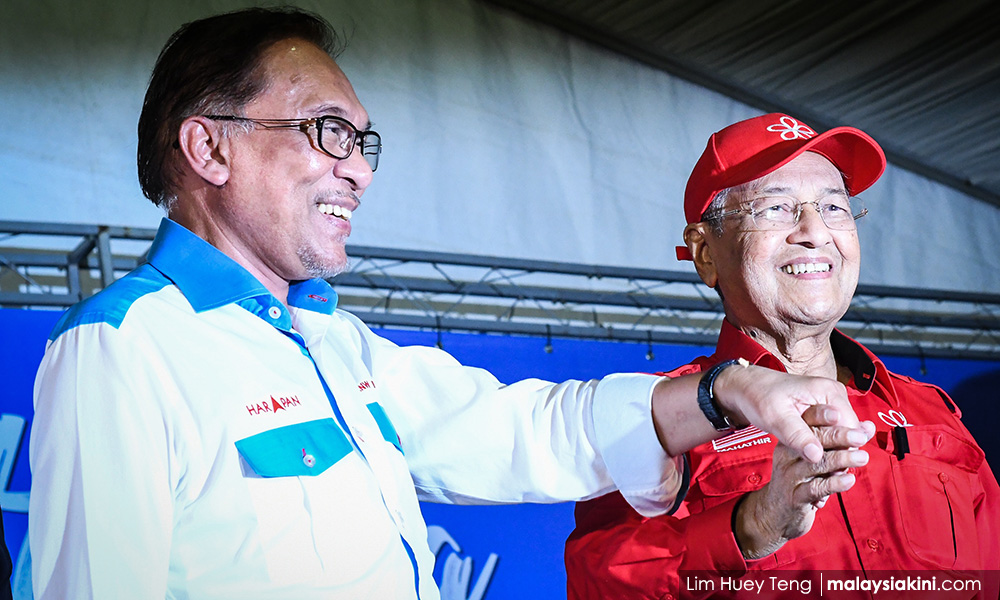
Ultimately it is the people’s vision that matters and what counts. A leader is not to use power like his personal credit card. He is there to look after the welfare of the people - all peoples. And any vision without concern for the welfare of all the races without fear or favour is a failed vision.
In his 2002 speech Mahathir said, "If we take out the Chinese and all that they have built and own, there will be no small or big towns in Malaysia, there will be no business and industry, there will be no funds for the subsidies, support and facilities for the Malays," he said. “Learn from the Chinese."
So let’s hope Mahathir will not forget his own advice and place more Chinese in positions of influence so they can help the Malays. How can the Malays learn anything from the Chinese unless they have the opportunities to interact with them? The government has to make the radical policy changes or the ‘poor Malays’ song will sound like an endless loop.
Mahathir’s legacy will be incomplete until he can pass on the baton of a vision of a true Malaysia where no race is treated above another to achieve a complete nationhood. It is the reality - more important than political correctness. For too long the policy of equalisation like the New Economic Policy (NEP) meant to redress the inequality of national wealth redistribution has failed. Mahathir admits it. Everyone knows. So why let history repeat itself?
Work for the common good, be honest, stop over-politicking, and nothing can stop the government working together with the people in making Malaysia a success story. Let’s see history in the making.
STEVE OH is the author of the novel "Tiger King of the Golden Jungle" and composer of the musical of the same title. He believes in good governance and morally upright leaders.
The views expressed here are those of the author/contributor and do not necessarily represent the views of Malaysiakini.


