



Medical marijuana: How does the evidence stack up?
KINIGUIDE | Do calls for the gov't to legalise the use of cannabis derivatives for medicine hold water?
KINIGUIDE | When a certain Muhammad Lukman was sentenced to death by the Shah Alam High Court for allegedly possessing and distributing cannabis and its derivatives, there were two reactions in the public discourse.
One was to question whether the death sentence was appropriate. By law, the amount of cannabis products in Muhammad’s possession meant that he was guilty of drug trafficking, and the penalty is the mandatory death sentence.
While his lawyers may plea that Muhammad was merely distributing the drug for free for medical purposes, a judge would have no choice but to hang him unless there is reasonable doubt in his case. This is because the Dangerous Drugs Act 1952 gives the judge no discretion on the sentence for trafficking cases.
Another response, however, was to call for the government to legalise the use of cannabis derivatives for medical purposes.
But Ministry of Health director-general Dr Noor Hisham Abdullah shot down the idea, saying that the use of cannabis oil should be restricted to research purposes only until there is more evidence to back its medical use.
In this instalment of KiniGuide, we have a quick look at what medical evidence there is for and against the use of cannabis to treat various ailments.
What is cannabis?
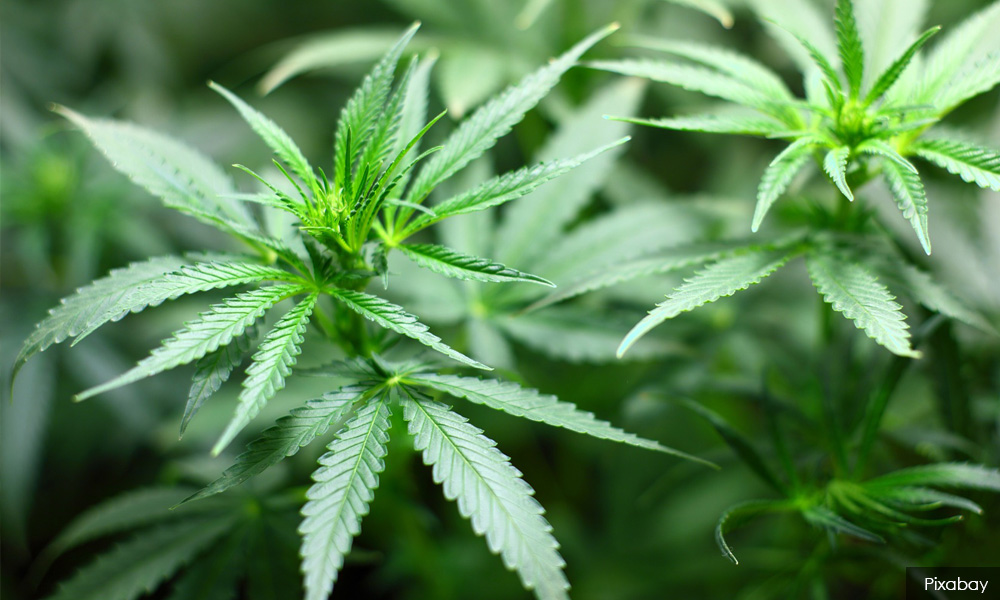
Cannabis is a herb with psychoactive properties. It is also known as marijuana, Cannabis sativa, or ganja. It contains hundreds of chemicals collectively known as cannabinoids that can have various effects on the brain and the central nervous system.
The best known of these cannabinoids is tetrahydrocannabinol (THC), which is the main psychoactive compound found in cannabis plants and causes the “high” sensation sought after by recreational cannabis users.
Another key constituent in cannabis plants is cannabinol (CBN) and cannabidiol (CBD), which are not psychoactive and are being investigated for potential medical use alongside THC and other cannabinoids.
In Malaysia, possession of more than 200 grammes of cannabis and/or cannabis resin is punishable by death.
What is a systematic review?
A systematic review is essentially a way to methodically sift through all available medical literature to extract some form of consensus, such as: Does a particular treatment help or hinder certain kinds of patients, and how certain can we be of those findings?
It involves tracking down all papers relevant to the topic according to a predefined criteria, and then assess its findings and the weight of its evidence. Researchers may also be asked by the reviewers to turn in any unpublished data.
For example, an individual study would be rated highly if it involves many test subjects and the study design includes protocols to mitigate various forms of error and bias. Individual case studies, on the other hand, count for very little, though it may inform the design of future studies.
For the purposes of this KiniGuide, we rely solely on systematic reviews conducted by the Cochrane Collaboration, which is an international group of researchers who are among the most prolific producers of high-quality, systematic reviews.
Although they are by no means the only producer of systematic reviews, they have the advantage of making their work freely accessible to non-medical professionals, including by producing lay-language summaries of their work.
So? How does it stack up?
Here is a quick run-down along with the year each review was published:
Anti-spasticity in patients with multiple sclerosis (2003) – Twenty-six placebo controlled trials were found including those that use cannabinoids, but not enough evidence to make comparisons between the different drugs.
Chronic neuropathic pain in adults (2018) – There was no high-quality evidence, but there is very low to low quality evidence suggesting that any potential benefits from the use of THC or THC together with CBD may be outweighed by their potential harms.
Dementia and its symptoms (2009) – No evidence that cannabinoids improve disturbed behaviour of dementia patients or other dementia symptoms; more studies needed to determine if cannabinoids can be used to treat dementia itself.
Epilepsy (2014) – Small daily doses of CBND were found to be safe for short periods of time, but its long term safety could not be assessed based on the available evidence. In addition, evidence for its efficacy is inconclusive.
Fibromyalgia (2016) – “No convincing, unbiased, high quality evidence suggesting that nabilone (a synthetic cannabinoid) is of value in treating people with fibromyalgia.” No studies on the effects of cannabis or cannabinoids on fibromyalgia have been found.
Prevention of nausea and vomiting in children and youths undergoing chemotherapy (2016) – “Probably effective but produces frequent side effects”.
Quality of life improvements for patients with HIV/AIDS (2013) – Evidence for safety and efficacy “lacking”, especially when it comes to long-term data and whether it interferes with patients’ HIV/AIDS medication.
Rheumatoid arthritis (2012) – Cannabis administered as a mouth spray worked better than a placebo in reducing pain, but had significant side effects that seem to outweigh any benefits.
Schizophrenia (2014) – Insufficient evidence to show an antipsychotic effect. Existing studies are limited and inconclusive due to the small number and size of randomised controlled trails available and the quality of the data reported.
Tourette syndrome (2009) – Not enough evidence to support cannabinoid use.
What does it all mean?
The studies above are all that the Cochrane Collaboration have on the question of medical marijuana. The researchers found that the quality of the studies is generally low; where there is tenuous promise of beneficial effects, there also lies a serious risk of side effects that make its use difficult to justify.
But potential medical uses (and downsides) of cannabis and its derivatives remain an active area of research, and one that is likely to become more active as more countries legalise marijuana for various purposes including medical ones.
So far this year alone, for example, at least 39 new studies involving cannabinoids have been launched, so far, according to records posted on the website clinicaltrials.gov.
Only 30 studies were launched last year, and 21 studies were launched the year before.
So, while it remains to be seen, if there would be solid evidence to show whether cannabis and its derivatives have a place in modern medicine, a lot of hard work is going to be needed towards finding that answer. It’s just not quite ready for prime time, yet.
Perhaps it is high time Malaysia conducts its own research as well.
This instalment of KiniGuide was compiled by Koh Jun Lin.


