



Making games Malaysians can be proud of
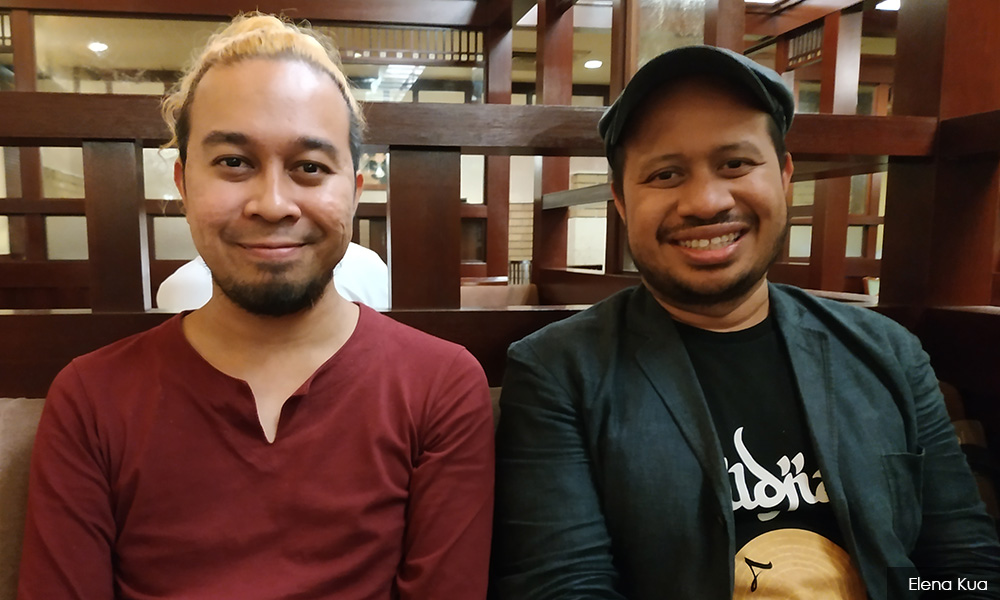
MALAYSIANSKINI | Wan Hazmer and Daim Dziauddin have come a long way from scribbling ideas on paper for cool games and character designs.
Once co-conspirators in childhood antics, the cousins are now co-founders of Metronomik, an independent game developer that focuses on making original Malaysian video games.
Today, Hazmer and Daim find themselves standing by a booth displaying the demo of their first video game, No Straight Roads, with Metronomik being the only Malaysian indie developer in the hall, among over 150 indie game developers from countries such as Spain, Taiwan, and Australia.
“I thought we would be standing there with no people coming to our booth,” Daim says.
“And that one of us would have to pretend to play the game,” Hazmer jokes.
After all, they were exhibiting alongside game industry giants such as Capcom, Square Enix, and Bandai Namco, who draw crowds of over 250,000 visitors annually to the Japanese convention known as Tokyo Game Show (TGS).

TGS is one of the biggest events in Asia’s gaming industry – an increasingly competitive market that has overtaken the global film and music in term revenue. It took place this year between Sept 20 and 23.
But Hazmer and Daim are no strangers to the industry. Both have already made a name for themselves, Daim most notably as a concept artist for Capcom’s Street Fighter V, and Hazmer as a lead game designer for Square Enix’s Final Fantasy XV.
Both cousins broke into the entertainment industry in Japan and spent several years working in major Japanese companies. Then, they left to start their own company and make music-related video games.
Hazmer, 37, is now chief executive officer and game director of Metronomik, overseeing staff in Kuala Lumpur, while Daim, 35, is chief creative officer and creative director. Working remotely from their Tokyo office, he oversees the company’s team of artists in Malaysia...
MALAYSIANSKINI | Wan Hazmer and Daim Dziauddin have come a long way from scribbling ideas on paper for cool games and character designs.
Once co-conspirators in childhood antics, the cousins are now co-founders of Metronomik, an independent game developer that focuses on making original Malaysian video games.
Today, Hazmer and Daim find themselves standing by a booth displaying the demo of their first video game, No Straight Roads, with Metronomik being the only Malaysian indie developer in the hall, among over 150 indie game developers from countries such as Spain, Taiwan, and Australia.
“I thought we would be standing there with no people coming to our booth,” Daim says.
“And that one of us would have to pretend to play the game,” Hazmer jokes.
After all, they were exhibiting alongside game industry giants such as Capcom, Square Enix, and Bandai Namco, who draw crowds of over 250,000 visitors annually to the Japanese convention known as Tokyo Game Show (TGS).
TGS is one of the biggest events in Asia’s gaming industry – an increasingly competitive market that has overtaken the global film and music in term revenue. It took place this year between Sept 20 and 23.
But Hazmer and Daim are no strangers to the industry. Both have already made a name for themselves, Daim most notably as a concept artist for Capcom’s Street Fighter V, and Hazmer as a lead game designer for Square Enix’s Final Fantasy XV.
Both cousins broke into the entertainment industry in Japan and spent several years working in major Japanese companies. Then, they left to start their own company and make music-related video games.
Hazmer, 37, is now chief executive officer and game director of Metronomik, overseeing staff in Kuala Lumpur, while Daim, 35, is chief creative officer and creative director. Working remotely from their Tokyo office, he oversees the company’s team of artists in Malaysia.
A love letter
Returning to Japan for TGS, says Hazmer, was “a love letter to the ex-colleagues and ex-bosses coming over to see our game. I wanted to show them that because of them, I have made it this far. I also wanted the unique perspective from Japanese users.”
The two were encouraged by artists who complimented their game’s art style and by game design students who showed interest in learning from them.
“I didn’t expect the turnout to be this good,” Hazmer adds. “But, wow, so many people tried our game! And it didn’t even enter our minds that we would be nominated for an award.”
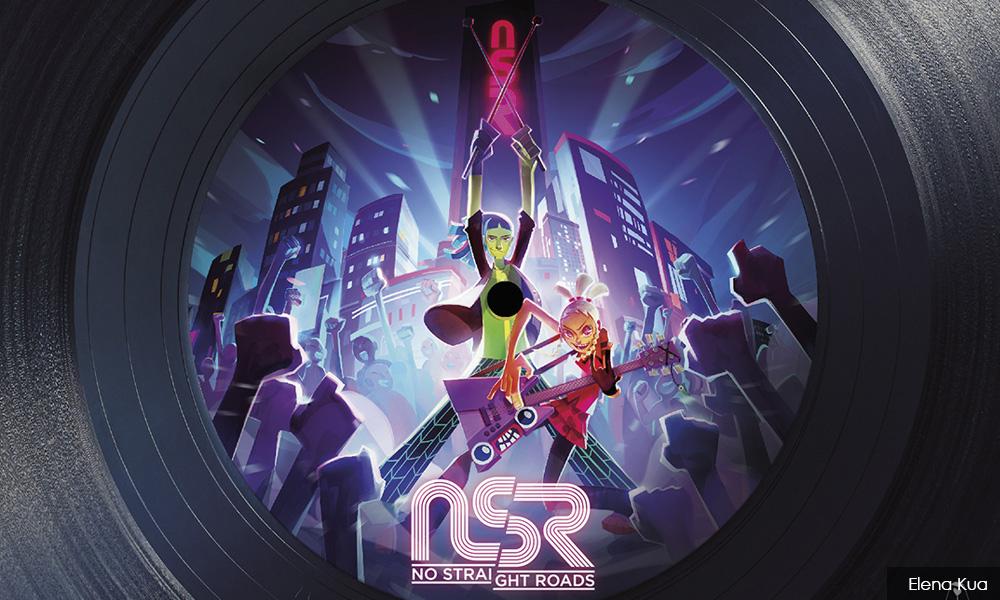
No Straight Roads has received indie award nominations from two major Japanese websites, PlayStation’s Dengeki and 4gamer.
The music-based action game has an additional distinction: It is fully voiced by local accents.
“We got so much positive feedback from foreigners about the Malaysian accents in our demo,” Daim says. "They’re intrigued by the accents; it’s refreshing for them. Some don’t like it, but that’s to be expected.
"For us, it’s about accepting that we have so many cool things in our Malaysian culture that nobody else knows about.”
The game, which is scheduled to be released in 2019 on PS4 and PC, will have “really cool Malaysian stuff,” he promises.
“I truly believe we will deliver something special that Malaysians can be proud of. TGS confirmed that for us.”
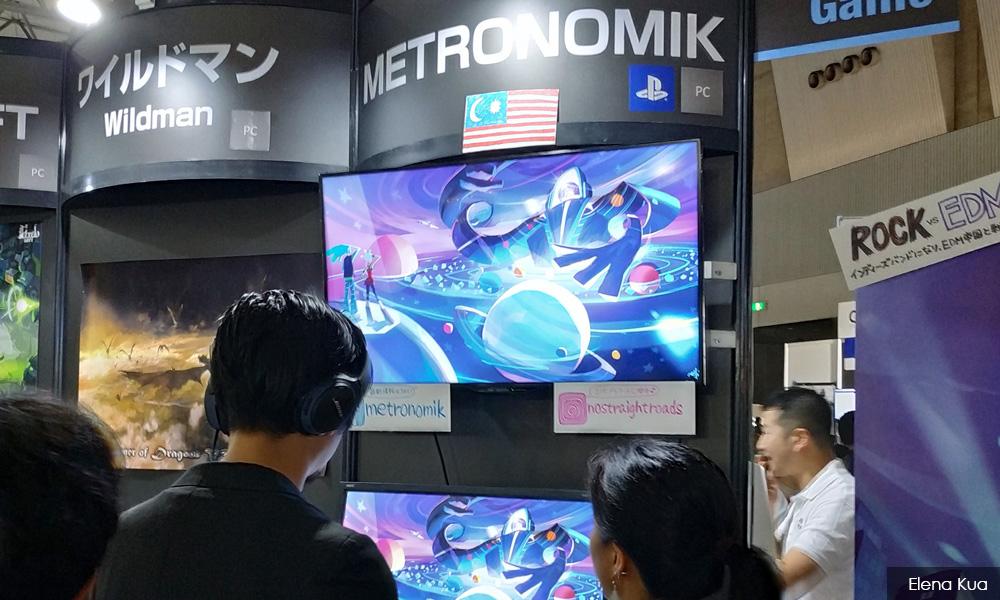
The cousins are out to encourage fellow Malaysians that local talent can rival international talent. They believe Malaysia can produce its own games.
Changing mindsets through games
“There are some very good Malaysian games out there,” Hazmer says. “Simulacra, Warpods, and Rhythm Doctor, for example. Not super well-known yet, but they deserve to be well-known.”
He was inspired by a trip to Bekraf Game Prime, an Indonesian game convention.
Expressing awe for Indonesian pride in their own products, he said: “It’s super crowded and you have Indonesian families bringing their daughters to come and play Indonesian video games and board games.
“You know they play this game called Tahu Bulat (Round Tofu)? Every Indonesian knows what tahu bulat is, including the jingle of the lorry. The game designer embraced Indonesian culture. That’s something we’re missing right now.”
While talking to visitors at their booth, they pass out business cards that read “Metronomik: Video Game Creator. Opportunity Provider. Educator”.
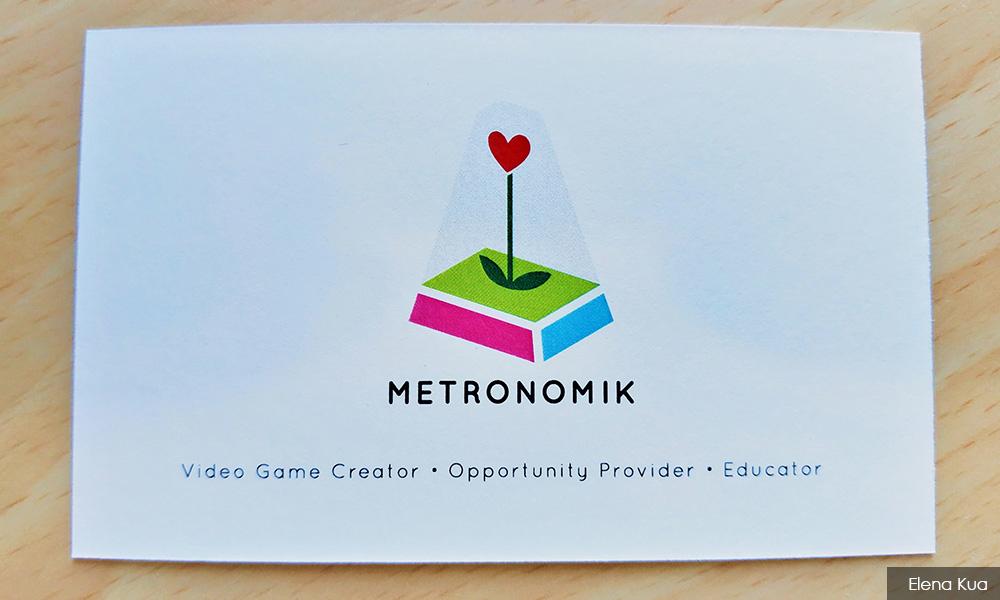
The company logo resembles a metronome, with a red heart at the tip. “The heart is about the philosophy we have, what we’re going to pass on to younger people,” Hazmer explains. “It also represents our working culture. We strongly discourage people from working late.”
Game development jobs are often misperceived by outsiders as “sitting around playing games.” The reality, rather, is the 'crunch' – long periods of overwork – a trend so common it is often seen as inevitable in the industry.
But Hazmer pushes back against that trend. He says that every day at 7pm, “I ring a bell and say, ‘Get out of the office, man.’”
Daim and Hazmer seek not only to change Malaysian self-perceptions but also to question norms in the game industry.
Humanity is the heartbeat of Metronomik, they say. They don’t want to just make great games. They want to pass on positive messages.
Over coffee in a west Tokyo café, Daim and Hazmer talk about this in their first interview as company co-founders.
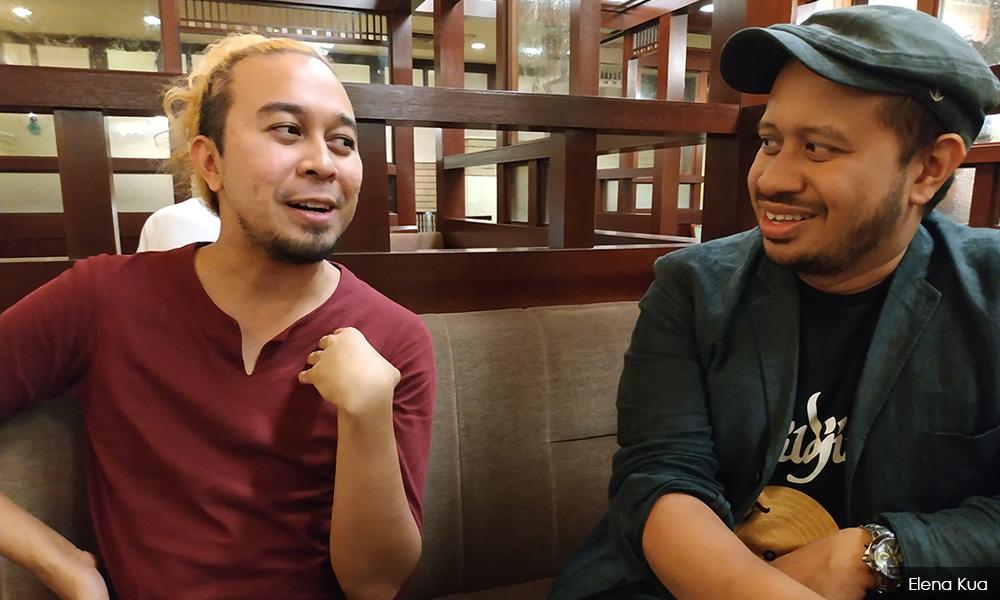
They discuss their personal journeys, creating Malaysian games, being an employer that provides opportunities and values humanity, and the quest to change Malaysian mindsets.
Hazmer: WE HAVE BEEN BOUNCING IDEAS OFF EACH OTHER since we were kids. Every time I had a vision of a game, I talked to Daim. He helped me a lot with college work too, when I used to study programming and my art sense was, like, zero. Daim would come up with awesome stuff.
Daim: THE FIRST THING WE WORKED ON TOGETHER was in primary school.
Hazmer wanted to make his own T-shirt for Hari Sukan. He had this idea of “Malaysia harmoni: Melayu, Cina, India” and wanted me to draw three kids. It went into production. He literally printed boxes of T-shirts.
He was always the guy with the vision; I was kinda, like, “Yay, follow you!” Now, the dynamic has changed.
Hazmer: BEFORE WE WENT TO JAPAN, we created a Flash game together called Ballistic Wars, for a casual game contest.
Ballistic Wars actually won third place, globally. It was around age 16 that I started to think I could create games.
But when I reached college age, there were no game design courses in Malaysia at the time. So I studied programming in the Asia Pacific Institute of Information Technology (APIIT).
Daim: JAPAN WAS NOT A PLAN I HAD, just a friend’s suggestion.
I had studied animation and multimedia design in Limkokwing University of Creative Technology and 3D animation in the University of Portsmouth. Then I went back to Malaysia and had this quarter-life crisis where I had no idea what to do.
My friend said there’s this Japanese company at an event in Singapore called CG Overdrive; his friend had applied and gotten into Japan. “I'll try it,” I said. That’s how I ended up in Japan.
Hazmer: YOU COULD SAY OUR PARENTS WERE PROUD OF US, that we made it that far. I mean, who would have thought that all those annoying things we did together as kids could turn out to be useful?
Around 2006, looking at the indie game trend, I started thinking that I shouldn’t be in advertising anymore.
In 2008, I went to Japan for language school. My late mum supported me a lot when I was trying to jump from advertising into game design. Mum helped me with the costs for language school.
Daim: OUR PARENTS HAVE ALWAYS BEEN SUPPORTIVE. I have been drawing forever, since I was 4. I liked drawing and animation, and my mum always tried to make that happen for me.
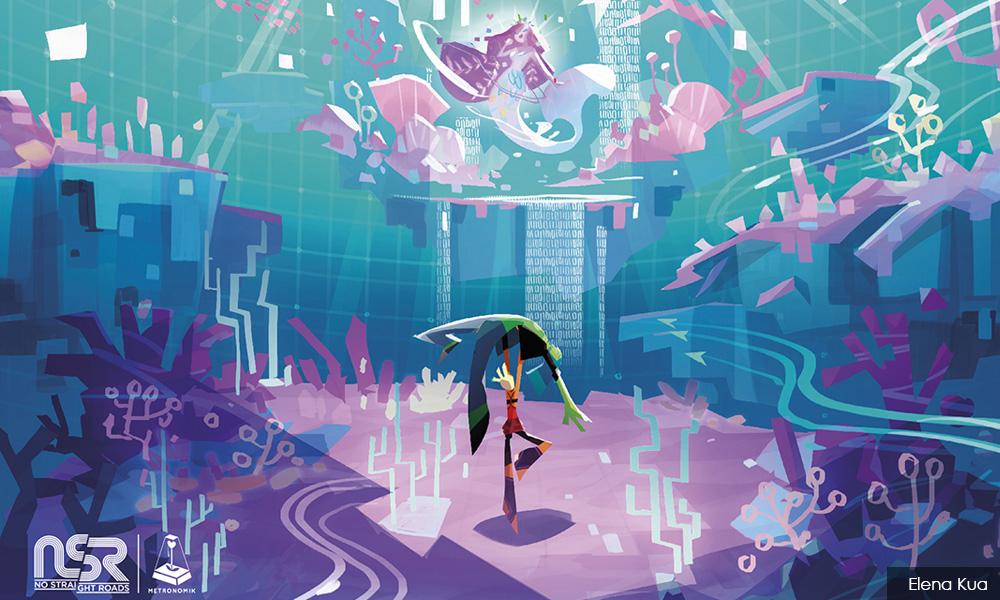
Daim: I WAS AWESTRUCK BY JAPANESE CULTURE. I came to Japan when I was 25, and my first job at a CG studio was working on a Winnie the Pooh series. I was so excited, like “Oh my God, I’m working on Winnie the Pooh!”
When I walked past colleagues, they were working on things like Street Fighter. I was constantly in the state of a fanboy.
Over the years, the feeling has definitely changed. It’s understandable that Malaysians love Japanese products, the anime, the games. But we can achieve the same.
Daim: WE’VE NEVER BRED A CULTURE OF BEING PROUD OF WHAT WE HAVE. We are still in awe of other people. I hope we can go in the direction of “We have our own cartoon, it’s so cool, I’m gonna recommend this to my foreigner friends!”
The Japanese started decades ago with Astro Boy. I want us to start creating our own thing and being happy with our own product.
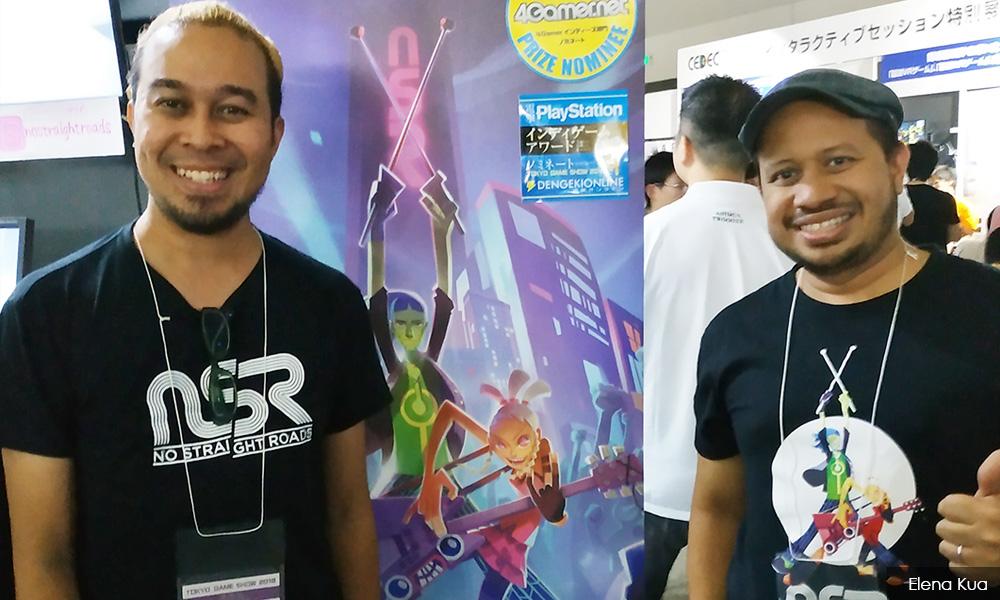
Hazmer: STARTING OUR OWN COMPANY was an idea we had for several years. It gives a freedom that I couldn’t obtain with Square Enix.
However, it came with a downside, which is that I have to wear many hats now. I used to just focus on things I like to do: game design and talking to fans about it. But now I have to deal with accounting, human resources, hiring people.
Daim: I can focus on the creative side because Hazmer is doing all that.
Hazmer: THE TWO OF US ARE VERY DIFFERENT. Daim is super creative. He has high standards and knows what he wants. I’m more of a generalist. I look at the whole thing and see whether it can sell.
Daim: ONE THING THAT SETS US APART is how we approach art. I’m more of an abstract thinker. Hazmer is more of a tangible or sensing person. We cover both sides, and that is very good for the company.
Hazmer: MALAYSIANS HAVE A LOT OF TALENT. We have good artists, great programmers. The problem is that we lack direction. There aren’t many producer roles in Malaysia, and I feel it’s such a waste because we have so much talent and culture we haven’t touched.
Daim: IN TERMS OF ANIMATION AND MODELING, our local talent rivals the world. But when I ask foreigners, “Have you played any good Malaysian games?” no one can think of examples.

Hazmer: MALAYSIANS ARE NOT PROUD OF THEMSELVES, like, “If I introduce this game to my foreigner friend, I don’t think they’ll buy it.” For games, it’s like that.
But for crafts, it’s different – Malaysians have achieved a certain relevance already. We feel foreigners can actually buy our crafts.
You know Bolo Santosi? She’s a character in the game Just Cause 2 who had a Singaporean accent.
A lot of Singaporeans and Malaysians complained. They have a mindset that voice-acting has to be American, Hollywood, Nickelodeon. We have to break that mindset.
Daim: WE HAD TO FIGHT FOR THE MALAYSIAN ACCENT to be used in our game. We had to fight with our own team members. Even the voice-acting applicants, in the beginning, they tried to sound very American Saturday-morning cartoon.
It’s a reflection of how we see ourselves in the world: Malaysians think their products are not as good as other countries. We need to see that we have amazing things in our culture. We don’t have to follow other people.
Hazmer: RIDING ON TRENDS IS JUST COPYING OTHER PEOPLE. Why make a game that looks like another game?
Yes, to a businessperson it’s safe. But we are too safe, to the point that no one knows what a Malaysian original IP is. No one knows what is in Malaysia.
We have to really embrace our culture. How else are we going to achieve an identity and unique selling points?
Daim: WHEN A MALAYSIAN MAKES A GAME, people say things like, “Why don’t you put silat in it?”
That’s not the point. You’re not trying to force your culture in. You’re just putting in what you think is beautiful. I find the Malay language amazing, so I want that in - not because it’s Malaysian but because it’s something I find beautiful.
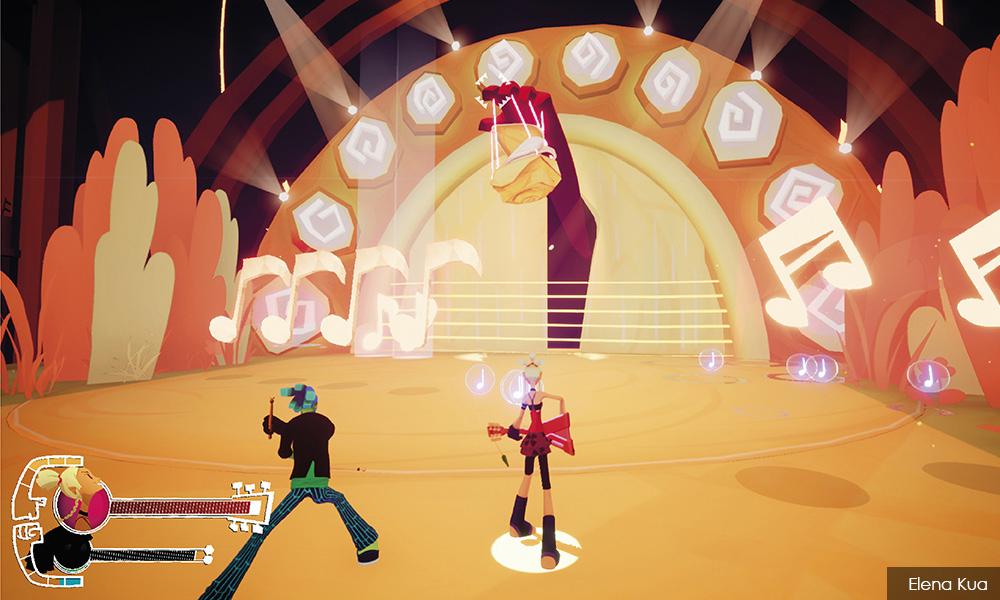
Hazmer: OUR COMPANY DOES NOT ONLY MAKE GAMES. We also want to create opportunities for people.
Daim: WE PROVIDE OPPORTUNITIES TO EXPLORE A FIELD people have never been given a chance to try.
Our scenario writer Aidi used to be a 3D modeller. He wanted to write, so we said, “Let's see what you can write.”
Our concept artist Ellie had never done concept art for games. She designed murals for shops in Malaysia. But she keeps surprising us. She’s 10 years younger than me but her skills are way higher than mine.
Daim: PERSONALITY IS MORE IMPORTANT THAN QUALITY OF WORK. I would rather work with someone where the quality of work is “not there yet”, but if there’s enthusiasm, the person is able to grow and also mingle well with other people.
Daim: THE FUTURE IS UNCERTAIN as to whether our product is successful or not. What matters is the experience we have gone through. The game might not do well, but I hope the process is something that everybody can take and pass on.
Hazmer: I DON’T WANT PEOPLE TO JUST LOOK AT THE MONEY, THE RESULTS. It’s about the human aspect of game development.
I didn’t schedule for my health properly for years. Now, I go to the gym. It’s not about losing weight, but the habit of exercising. The body needs to move.
I also noticed that I didn’t take my wife out enough on dates. Now, every Wednesday night, no kacau, we go to a nice restaurant or watch a movie.
Now that I can control my schedule, I try to do that. I totally encourage our employees to do the same.
Hazmer: ONCE WE HAVE PROVEN OUR WORTH, hopefully I can also change the education sector. Malaysian education teaches skills and theories but not to think creatively.
The game industry in Malaysia deserves more. That’s why we set up in Malaysia. It's the best place to provide opportunities and showcase what we can do.
Daim: YOU MIGHT THINK IT’S AMBITIOUS, but a lot of issues are important to us.
We’re not just here to make a game. We want it to be something that might start a little change in how Malaysians think. In the direction of “We can achieve more.”
MALAYSIANS KINI is a series on Malaysians you should know.
PREVIOUSLY FEATURED
'This is not poverty tourism': Helping KL's homeless find their strengths
The Malaysian giving cancer patients a lifeline
Human rights activist's journey through two eras of Dr M
Patriot’s Arshad defends country by speaking out against corruption
'I'm very clumsy, I fell into stand-up comedy'
Why Nasa scientist Amani chose M’sia over the stars
Working hard to revitalise country’s traditional arts
Living life in the face of muscular atrophy
Lighting the way for neglected girls
The rebel educator who seeks to enlighten people
Rendering aid to the Rohingya through education
Bringing a ray of hope for refugee children
M’sia's first woman BRT captain drives her way to top
The real Orked remembers sister Yasmin's life and career


