




M'sia warns EU on last-minute WTO tactics
Malaysia urged the European Union today not to leave any vital concessions to the last minute at next week's trade talks in Hong Kong, saying that otherwise frustrated delegates would "go shopping".
Malaysia urged the European Union today not to leave any vital concessions to the last minute at next week's trade talks in Hong Kong, saying that otherwise frustrated delegates would "go shopping".
Malaysian Trade Minister Rafidah Aziz said she was not optimistic about the prospects for the World Trade Organisation (WTO) meeting and that if it failed, 11th-hour negotiating tactics by the EU would likely to be to blame.
"I want to single out the European Union. They must have better offers by the time Hong Kong comes," she told reporters on the sidelines of Southeast Asian ministerial talks.
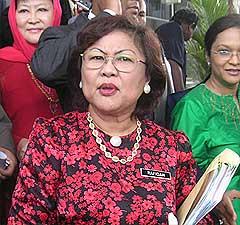 "If they are going to stay firm with the offers they have at present, I don't see anybody going to be happy in Hong Kong," said the outspoken minister.
"People are not interested in last-minute gambits or trump-card business... then people people will say - okay, why should I stay in the room? Then the whole thing in Hong Kong is a shopping trip."
The Association of Southeast Asian Nations (Asean) has pledged its support for the implementation of the Doha round of trade talks which ran into an impasse at the WTO's 2003 meeting in the Mexican resort of Cancun.
The talks were scuppered mainly by differences over farm trade and market access for services, and negotiators have been struggling ever since to get negotiations back on track in time for a broad agreement in Hong Kong.
Position paper
Rafidah said Southeast Asian economic ministers had agreed on a common plan to be discussed by the 10-nation bloc's leaders here next week before being put forward at the WTO talks.
"Asean economic ministers have prepared a position paper telling the leaders what we have decided and what our position should be," she said.
Amid the impasse over EU and US farm subsidies, Rafidah said the EU had been told that the subsidy cuts it currently had on the table did not go far enough.
"It's not just Malaysia, the whole world is saying. They (EU) say that's all they can offer," she said.
The gathering of WTO trade ministers in Hong Kong was initially aimed at forging agreement on key parts of a global trade deal, but the deep divisions which have dogged the Doha round appear to remain unbridged.
Rafidah said that a make-or-break attitude towards the talks would again lead to failure, and that the meeting should sidestep contentious topics like agriculture and move ahead on areas where there is likely to be agreement.


