




Repeal UUCA at nations peril, warns student leader
Giving students greater freedom could lead to disastrous consequences as exemplified by the situation in Indonesia. This would, in turn, create political instability and economic pitfalls because foreign investors would be afraid to invest in a tumultuous climate.
Giving students greater freedom could lead to disastrous consequences as exemplified by the situation in Indonesia. This would, in turn, create political instability and economic pitfalls because foreign investors would be afraid to invest in a tumultuous climate.
 These are the reasons why the controversial University and University Colleges Act 1971 (UUCA) must not be repealed, according to Universiti Malaya's (UM) pro-government students representative council president Mohd Effendi Omar.
The 34-year-old act, which critics claim serves as a tool for the government to cull dissent on campuses, can be reviewed and changes can be made to some of its outdated provisions. But it must not be repealed.
"Take Indonesian students as an example, they are not restricted by laws such as the UUCA. This leads them to hold street demonstrations that tarnish the nation's image and scare away foreign investors.
"Moreover, that country's leadership is always changing due to strong protests by the students. The leaders have no space or chance to correct themselves," Effendi told malaysiakini in a recent interview regarding the announcement by Higher Education Minister Dr Shafie Salleh that the UUCA will be reviewed.
Books first, politics later
He said if students raise their problems through legal and peaceful channels, this would give a positive image to the country thus attracting investors which could help solve the current unemployment problem encountered by graduates.
He stressed that students should concentrate on their studies and be only involve in campus activities that develop their personal qualities. Politics should come after graduation.
 In view of this, he said the act should allow greater freedom for students to hold more activities in their respective campuses.
On another matter, Effendi disagreed with the move by an independent students movement, Malaysian Students Solidarity's (SMM), to hold demonstrations to pressure university authorities into dropping disciplinary proceedings against students for offences pertaining to the recent campus polls nationwide.
"This is not fair," he said referring to SMM's campaign to call for the elections to be declared unlawful and its demand for a free and fair polls.
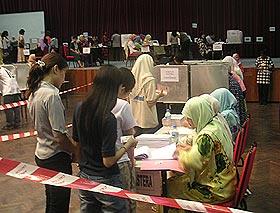
The elections, which is usually sees the so-called 'pro-government and pro-opposition' camps being pitted against each other, has been fraught with allegations of irregularities, harassment and intimidation.
Performance has improved
On UM's drop in position in the Times Higher Education Supplement world university ranking,
Effendi was adamant that the university's performance had improved.
 "We accept the result, but some of the ranking criteria are not in favour to UM [...] although our position had dropped, the marks obtained has increased.
"The students council will discuss with the university management on how to improve the performance on certain ranking criteria that we have failed," he added.
In September's controversial campus elections, all 17 public universities nationwide for the first time in history were won by 'pro-establishment' students camps (dubbed 'Aspirasi Kerajaan' camps) which were backed by campus authorities.
There were student boycotts at five major universities.


