




Baru Bian’s long haul from Long Luping
INTERVIEW | Stepping into the lobby of Baru Bian’s office, one will quickly notice The Long Awakening neatly stacked up in a spiral array on the coffee table.
The Long Awakening, authored by Baru and journalist Deborah Loh, chronicles the PKR leader's personal life journey in the rural highlands of Sarawak. It also tells the story of his boyhood, growing up away from family in boarding schools, and living out the expectations of being the son of a village pastor.
Poignant and rich with folksy anecdotes, the story also depicts Baru’s biting tryst with abject poverty.
Today, readying himself for multiple interviews in his office, he holds court as a lawyer and newly-minted MP for Selangau.
Long haul
The title of his memoir seems reminiscent of the author’s somewhat “slow coming of age in his political vocation” and in its “late fruition.”
But there never seemed to be a dull moment for this Lun Bawang native from Long Luping, who kept coming back every time he suffered blows at the hustings, whether for parliamentary or state seats.
The Melbourne-trained lawyer first stood as a candidate in 1991 on a Parti Bansa Dayak Sarawak ticket for the then Lawas seat (now Bukit Sari), a small frontier town in the northeast nook of the state. He lost.
In 2004, Baru stood as an independent candidate in the Ba’kelalan by-election. He lost again.
Two years later, he contested on a Sarawak National Party ticket, again in Ba’kelalan, the primeval Lun Bawang outpost in the highlands. Baru lost by a mere 475 votes.
Disillusioned and defeated, he declined to contest in the 2008 general election, and considered turning away from the politician's podium to the pastor's pulpit.

However, the winds of change unleashed a political tsunami across the South China Sea in the 2008 general election. The ruling BN government in the peninsular lost five states to the opposition and its two-thirds majority in Parliament.
This convinced Baru to make a U-turn and engage in yet another round of canvassing in another attempt to wear the politician’s hat.
“In a large sense, what had happened in the peninsular was significant. I was thinking of the ripple effect it could have on the East Malaysian mindset and the positive implications of the new political sentiments there.
“I could see something good brewing and so, I decided to stand in the 2011 state elections in Ba’kelalan under PKR.
“And this time I won."
In the 2013 parliamentary election Baru contested in Limbang against PBB's Hasbi Habibollah. He lost to Hasbi by a huge margin, and claimed rampant vote-buying put paid to his first attempt at stepping into Parliament...
INTERVIEW | Stepping into the lobby of Baru Bian’s office, one will quickly notice The Long Awakening neatly stacked up in a spiral array on the coffee table.
The Long Awakening, authored by Baru and journalist Deborah Loh, chronicles the PKR leader's personal life journey in the rural highlands of Sarawak. It also tells the story of his boyhood, growing up away from family in boarding schools, and living out the expectations of being the son of a village pastor.
Poignant and rich with folksy anecdotes, the story also depicts Baru’s biting tryst with abject poverty.
Today, readying himself for multiple interviews in his office, he holds court as a lawyer and newly-minted MP for Selangau.
Long haul
The title of his memoir seems reminiscent of the author’s somewhat “slow coming of age in his political vocation” and in its “late fruition.”
But there never seemed to be a dull moment for this Lun Bawang native from Long Luping, who kept coming back every time he suffered blows at the hustings, whether for parliamentary or state seats.
The Melbourne-trained lawyer first stood as a candidate in 1991 on a Parti Bansa Dayak Sarawak ticket for the then Lawas seat (now Bukit Sari), a small frontier town in the northeast nook of the state. He lost.
In 2004, Baru stood as an independent candidate in the Ba’kelalan by-election. He lost again.
Two years later, he contested on a Sarawak National Party ticket, again in Ba’kelalan, the primeval Lun Bawang outpost in the highlands. Baru lost by a mere 475 votes.
Disillusioned and defeated, he declined to contest in the 2008 general election, and considered turning away from the politician's podium to the pastor's pulpit.
However, the winds of change unleashed a political tsunami across the South China Sea in the 2008 general election. The ruling BN government in the peninsular lost five states to the opposition and its two-thirds majority in Parliament.
This convinced Baru to make a U-turn and engage in yet another round of canvassing in another attempt to wear the politician’s hat.
“In a large sense, what had happened in the peninsular was significant. I was thinking of the ripple effect it could have on the East Malaysian mindset and the positive implications of the new political sentiments there.
“I could see something good brewing and so, I decided to stand in the 2011 state elections in Ba’kelalan under PKR.
“And this time I won."
In the 2013 parliamentary election Baru contested in Limbang against PBB's Hasbi Habibollah. He lost to Hasbi by a huge margin, and claimed rampant vote-buying put paid to his first attempt at stepping into Parliament.
People’s lawyer
Long before Baru took to legislative statecraft, his prominence as a lawyer was well known, and is still keenly sought after – especially for cases involving native customary rights.
His long-standing involvement and expertise in NCR matters – both as a campaigner and a lawyer – also unwittingly propelled his political aspirations.
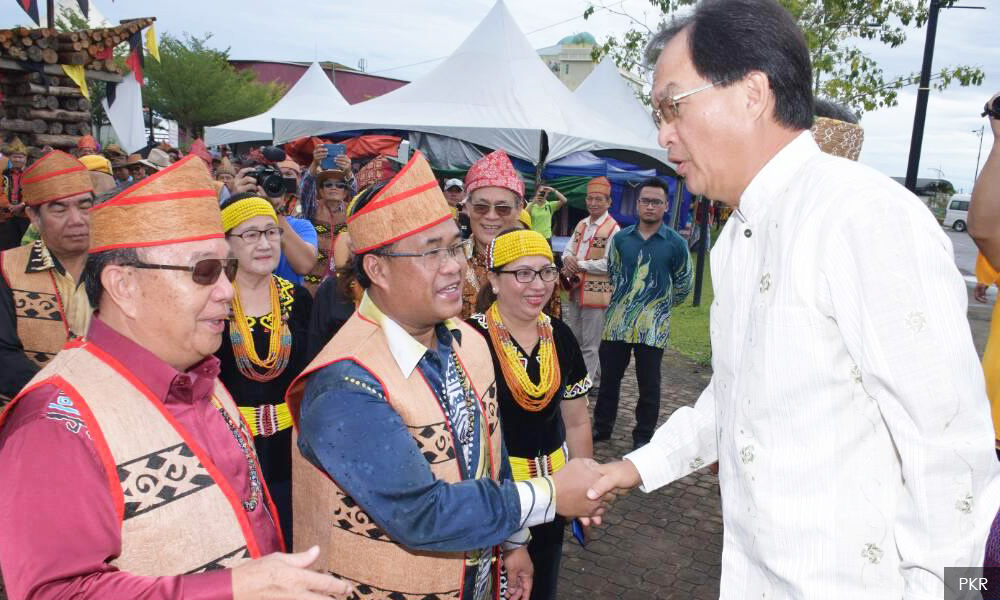
In 2010 he wrote in a local blog: “After practicing in Kuala Lumpur for about two years, I returned to Sarawak with the primary intention of getting involved with issues faced by the natives of Sarawak over their NCR lands.
“But little did I realise then that such legal battles would become a part of my life and the norm of my legal practice, including campaigning with NGOs for the preservation and protection of native lands and forests."
One of Baru’s most celebrated court victories was the Nor Nyawai court battle in 2001, where 900ha of land belonging to the Iban in Bintulu had been included into the provisional lease granted to a company for the purpose of planting acacia trees for paper production.
The judgement handed down by the Kuching High Court opposed the government’s “definition and understanding” of native customary land.
In its ruling, the court expanded the definition of NCR land to include not only farmland cultivated before January 1958, but also territorial domain – which consists of hunting and fishing grounds as well as preserved forest areas in the areas surrounding their villages.
“That was a landmark case. We achieved a breakthrough,” he said.
Selangau surprise
In the recent May 9 general election, the Selangau parliamentary constituency offered two surprises.
Selangau was a BN stronghold since 2004, with Joseph Entulu Belaun as its incumbent parliamentarian.
Baru’s last-minute election foray into this riverine town located by the Pan-Borneo Highway was a surprise move, let alone his eventual victory.
Baru took on BN’s Rita Insol in a straight fight, winning by a slim majority of 486 votes.
The consensus on the ground was that Baru would lose in Selangau, mostly because he is a non-Iban contesting in a largely clannish Iban-majority BN stronghold.
“My victory in Selangau proves not only that the other naysayers are wrong, but it highlights the truth that voting based on the ‘communal card’ is no longer trending.
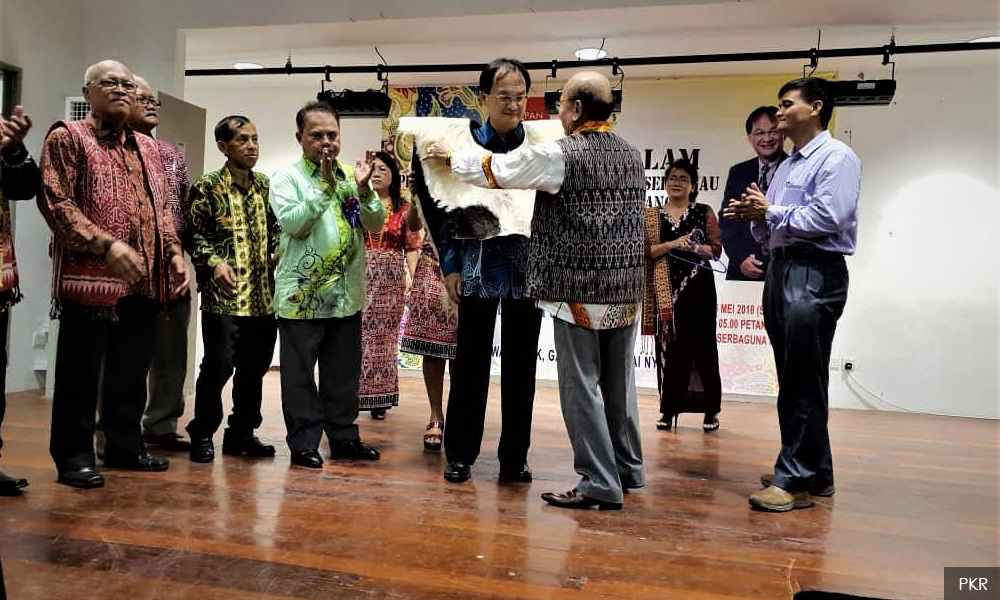
“That kind of mindset has changed. People are now prepared to ignore race and ethnic factors. They are willing to accept a candidate who has a good standing in society and someone they can trust," he said.
“I may not be an Iban or a person from Selangau. But neither am I a ‘face in the crowd’ where the Selangau voters are concerned. Many voters there recognised me as the lawyer who had fought many a land case in the courts for them.
“Some naysayers were actually saying, I will lose even with my involvement in their NCR land cases, as NCR is no longer a major issue for the voters there. They were wrong! It is still a serious issue and it will continue to be for a long time,” he added.
Baru has handled so many cases that he no longer remembers each case by name.
“But voters have come to me to shake hands during my campaigning and tell me that I had fought their cases and had won. So, the NCR issue really mattered in my victory at Selangau together with other combining factors."
According to Baru, the sudden sacking of the Selangau incumbent and PRS deputy president Joseph Entulu and former Lubuk Antu MP William Nyalau Badak, just days before nomination, also factored in his victory.
“The sacking of Entulu and replacing him with newcomer Rita, gave us a strong indication that we, as the opposition, had a big chance of winning in the constituency,” he says.
According to Baru, trouble was already brewing even before Entulu’s and Nyalau’s sackings. This is because many tuai rumah as well as four penghulu aligned to Entulu were also jettisoned almost a year ago, which angered the people on the ground.
Tectonic shift
Baru says the victory by the Harapan coalition in taking over Putrajaya after 60 years of BN indoctrination is a sign that the nation is in the midst of a “radical overhaul of its mindset.”
“This is something very difficult to realise when we are in the middle of it,” he says, adding, that the tectonic shift of government in Putrajaya and the equally stunning electoral successes in Sabah and Sarawak must be benchmarked as the year when the nation chose to “reset” for change.
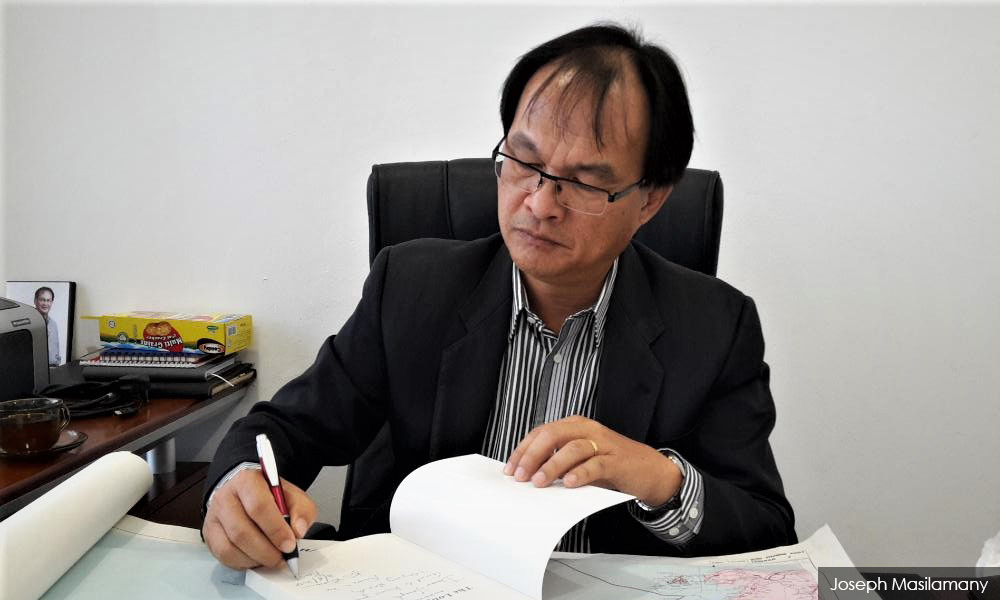
According to Baru, the new voter mindset also includes the largely younger, technologically-armed intelligentsia.
“Their presence and participation had contributed to accessibility and connectivity with the voter bank.
“Some young party workers had set up a Selangau WhatsApp chat group and even developed ‘cyber-street polls’ to feel and monitor the pulse of the voters with PKR emerging the victor in the impromptu survey."
Looking ahead
On Harapan's GE14 victory, Baru said the Harapan government must prove that it is moving in the right direction towards the reforms promised during campaigning.
“There is a new energy and new positive sentiment in the country now. This will take us far. In this new dawn of hope, we must all come together to realise Malaysia’s enormous potential, and fulfil the growing aspirations of the people.
“What will the country be like in 10 years’ time? Well, if you look at the people at the helm of the nation, these are the very people who fought to obliterate corruption. So, we can safely hope for a country that will be almost corruption-free and one that is a stickler to the rule of law.
“Moving forward, I see a vibrant Malaysian society where meritocracy will be the order of the day. No more divisions over race and religion for entry into universities and job opportunities in the civil service. All Malaysians will be treated fairly and equally,” Baru said confidently.
Baru also envisages better national integration between the federation and the states of Sabah and Sarawak.
On July 16, Baru will take his seat at Malaysia’s Parliament among a radically changed lineup of legislators.
He has indeed come a long way. A quiet mover and a shaker, he has pulled his load from Long Luping to the august house.


