


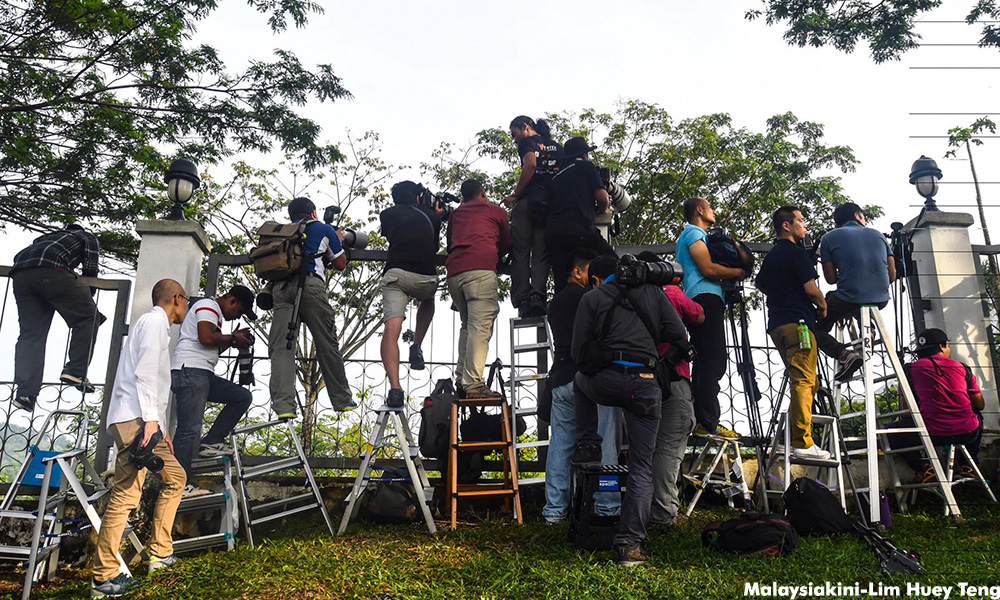

Pursuing press freedom through media reform
COMMENT | Disparate voices clamouring for press freedom are fast coming out of the woodwork following the sudden demise of the Najib Abdul Razak regime in the May 9 general election.
The newly-minted Pakatan Harapan administration has raised hopes to stratospheric levels that press freedom can be restored quickly. Under the new regime, everything seems doable in the first 100 days.
Truth is, miracles take a little longer. What is needed is media reform through a roundtable by media stakeholders, not reliance on a government-led cut-and-paste job.
In its election manifesto, the new ruling coalition promised to do away with draconian laws that largely affect freedom of expression, and by extension, press freedom.
Although this is not one of its 100-day promises, expectations are that such laws must be removed at the soonest possible juncture, as their continued existence is an affront to the new Malaysia that we woke up to the morning after May 9.
The first to go must surely be the obnoxious Anti-Fake News Act 2018, which was rushed through Parliament by the now-disgraced former prime minister in the dying days of his rule. Dr Mahathir Mohamad, who himself became a target under the law, vowed to repeal it completely if Harapan won in the polls.
But as soon as he became prime minister, Mahathir seemed to have changed his mind, saying in an interview that he would “redefine” the draconian law, and not remove it.
Another odd voice was heard after the polls, with Jelutong MP RSN Rayer calling for TV3's licence to be revoked because of its alleged bias against the DAP-run state government. He was quickly rebuked by both netizens and his own party.
To mollify the situation, the new Communications and Multimedia Minister Gobind Singh Deo announced he was rushing to come up with a recommendation, presumably within the next few days, to the cabinet for setting up a media or press council...
COMMENT | Disparate voices clamouring for press freedom are fast coming out of the woodwork following the sudden demise of the Najib Abdul Razak regime in the May 9 general election.
The newly-minted Pakatan Harapan administration has raised hopes to stratospheric levels that press freedom can be restored quickly. Under the new regime, everything seems doable in the first 100 days.
Truth is, miracles take a little longer. What is needed is media reform through a roundtable by media stakeholders, not reliance on a government-led cut-and-paste job.
In its election manifesto, the new ruling coalition promised to do away with draconian laws that largely affect freedom of expression, and by extension, press freedom.
Although this is not one of its 100-day promises, expectations are that such laws must be removed at the soonest possible juncture, as their continued existence is an affront to the new Malaysia that we woke up to the morning after May 9.
The first to go must surely be the obnoxious Anti-Fake News Act 2018, which was rushed through Parliament by the now-disgraced former prime minister in the dying days of his rule. Dr Mahathir Mohamad, who himself became a target under the law, vowed to repeal it completely if Harapan won in the polls.
But as soon as he became prime minister, Mahathir seemed to have changed his mind, saying in an interview that he would “redefine” the draconian law, and not remove it.
Another odd voice was heard after the polls, with Jelutong MP RSN Rayer calling for TV3's licence to be revoked because of its alleged bias against the DAP-run state government. He was quickly rebuked by both netizens and his own party.
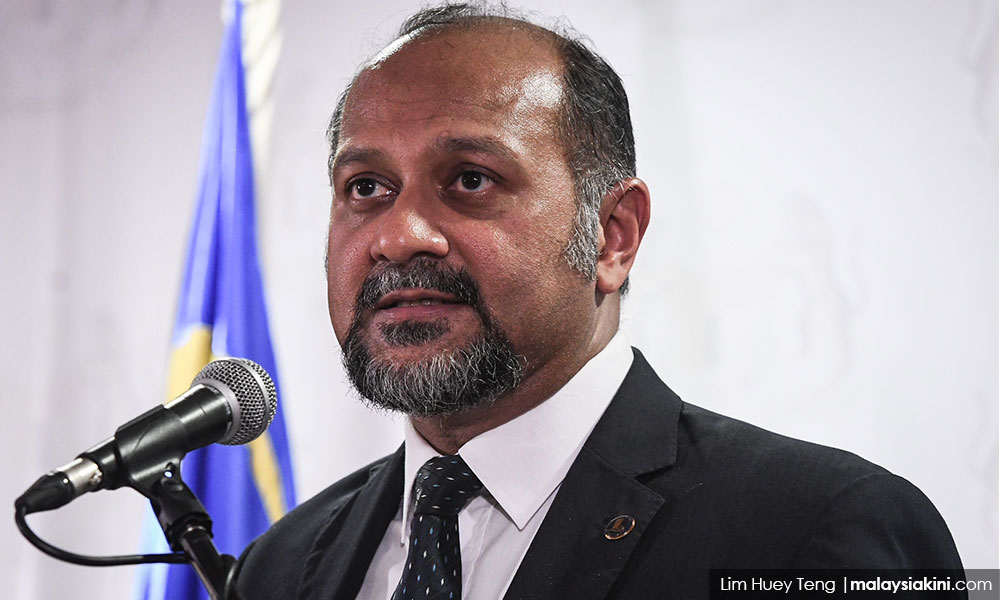
To mollify the situation, the new Communications and Multimedia Minister Gobind Singh Deo (photo) announced he was rushing to come up with a recommendation, presumably within the next few days, to the cabinet for setting up a media or press council.
Press councils have a long history. They work in some countries, but remain mere decorative showcases in others, despite the apparent nobility of the intentions.
Such attempts, for instance, failed to take off during the last days of the tenures of Ahmad Abdullah Badawi and Najib.
I myself was one of the senior editors who attended the preliminary discussions for the setting up of a media council. Of course, it didn’t work. The media boys of both Pak Lah and Najib were more interested in keeping their cushy jobs than a free press.
I have no reason to believe that the new regulators would come up with a truly free and functional media council this time. But I could be wrong.
Roundtable for media reform
Instead, we need media reform by the stakeholders, which includes the regulators as well. This can be done through a roundtable by stakeholders comprising consumers, regulators, owners of media outlets, and practitioners – ‘Crop’ for short.
I first mooted this proposition 10 years ago at a symposium on the trends and future of the Malaysian mass media that was jointly organised by the South-south Information Gateway and Universiti Malaya. Many just laughed at the time.
The idea for a roundtable is not to aim for self-regulation by stakeholders, but to try to establish an ethical framework that stakeholders can collectively subscribe to.
It is also to address issues like media monopoly, including that of internet providers, as well as inequity in media access – particularly those in the deep interiors of Sabah and Sarawak whose window to the world remains free Indonesian satellite TV and radio, despite inroads made by pay TV like Astro.
The basis for the roundtable is the need for a fundamental understanding of the basics of press freedom and journalism. In The Elements of Journalism, the standard Journalism 101 textbook, Bill Kovach and Tom Rosenstiel rightly point out that “journalism's first obligation is to the truth.” No more, no less.
Press freedom is undergirded by responsible journalism, which is anchored to a commitment to ethics and integrity to deliver news to readers or its audience in a timely, accurate, and fair manner. This would enable readers of news to make their own decisions and choices on an informed basis.
All stakeholders must be serious about responsible journalism, where obligation to the truth is non-negotiable.
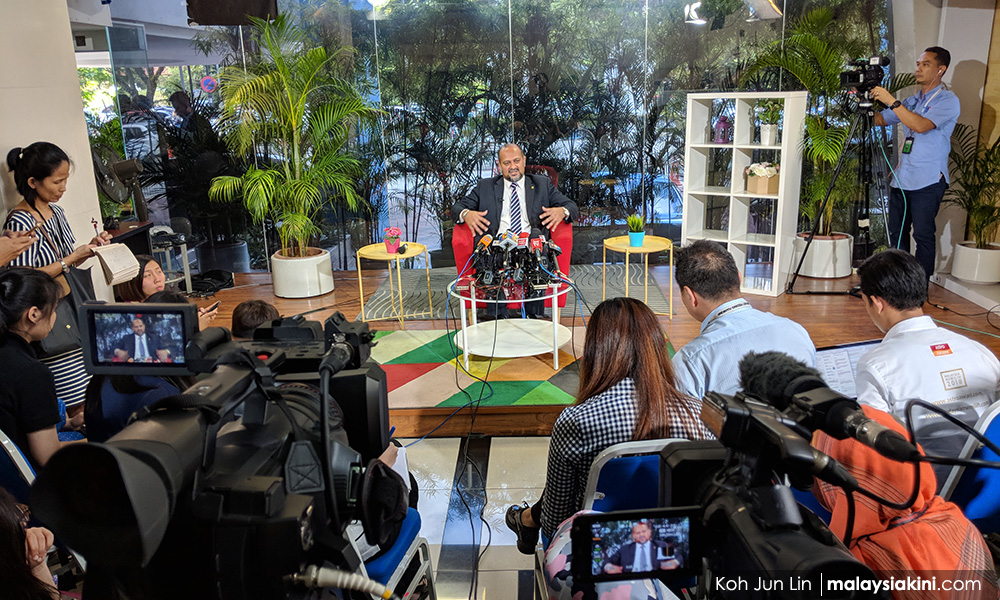
Media reform can also enlist existing structures, instead of waiting for new ones to be put in place. For instance, news consumers can file complaints against media abuses to the Public Complaints Bureau.
I once filed a complaint against Bernama, the national news agency, for what I considered plagiarism by one of its Australian stringers, after not receiving any response from its editor. The bureau brought this to the attention of the editor, and asked for an explanation within a week. The editor merely denied my allegation. Still, it was better than doing nothing with my complaint.
As for regulators, this could and should include agencies like the Human Rights Commission (Suhakam).
I was in theSun when all of us were sacked overnight on the excuse of the newspaper shutting down due to financial difficulties. But it reopened immediately after all of us were sacked.
Those in the union grades took their complaints to the Industrial Relations Department, while I took mine to the Labour Court. Many of us resorted to filing the unfair dismissal as a human rights violation with Suhakam, but we were unsuccessful.
Other bodies like the Bar Council could be useful to the roundtable as part of the regulatory umbrella.
Regulatory framework
As for the regulatory framework, it is urgent that all forms of press censorship, control and licensing must be removed. All ministerial decisions in these areas should be open to judicial review.
For media owners, they can come up with their own code of conduct and ethics for their journalists and set up their own in-house independent complaints bureau to dispose of complaints quickly. They also need to address ethical questions relating to advertisers, as this is where the bulk of their revenue comes from.
In relation to practitioners, this should also encompass the notion of protection of journalists through workplace reforms like unionisation. Some media owners refused to enter into collective bargaining with their journalists through their union.
Under current labour laws, journalists in Sabah and Sarawak are not allowed to be unionised, and neither are those in official media houses like RTM as they are considered to be part of the civil service.
Practitioners should also have access to ongoing professional development. This is where journalism schools should come into play. It is good journalism to have a partnership between theory and practice.
For the roundtable for media reform to be viable, there must exist a political paradigm driven by openness, fairness and equity – not by party politics and ad hoc-ism.
Media ethics cannot be legislated. It can only be etched on the heart, soul and spirit of true practitioners, who see their profession not as a job, but a vocation and even a calling.
Therefore, there must invariably be a vocational dimension to journalists, so that we do not need to pawn ourselves at the altar of predatory or crony journalism.
Yes, the reality is that there are rogues within the brotherhood who would throw professionalism and ethics to the wind to do the bidding of their political or corporate masters, thus reducing themselves to the sewers of gutter journalism. We have to learn to live with the elephant in the room or worse, an enemy in the camp.
Charity begins at home. Similarly, freedom of the press begins with journalists making the pursuit of truth as their first obligation. The rest will fall into place, sooner than later.
BOB TEOH is a media analyst and an old school journalist.
The views expressed here are those of the author/contributor and do not necessarily represent the views of Malaysiakini.


