


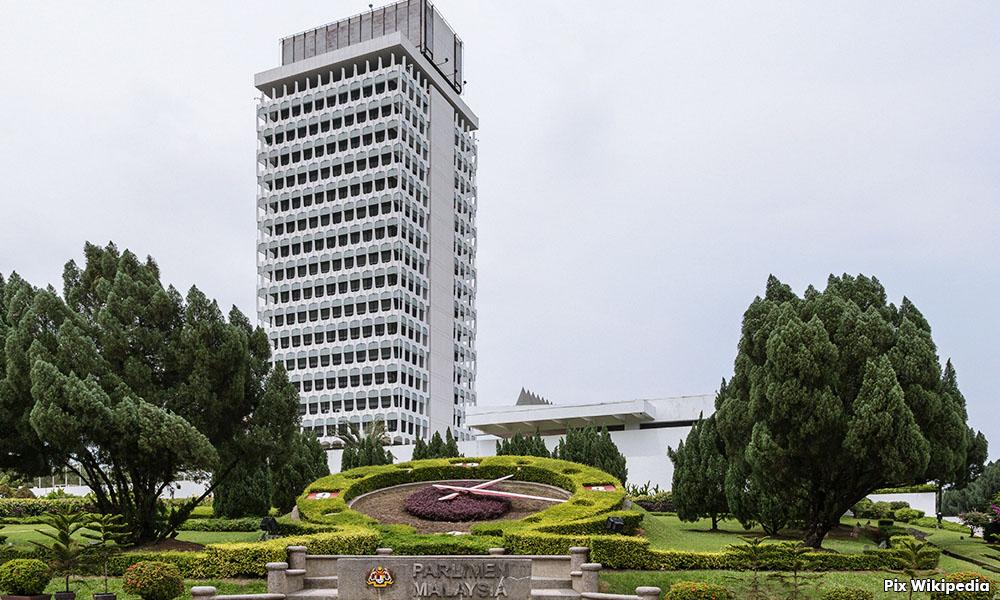

The day after May 9
COMMENT | The GE14 is too close a call for both contending parties. What is needed is for both to accept the people’s choice of government. There are only two scenarios – either party wins decisively or we get a hung Parliament.
Whatever happens, there should be no wild street celebrations or violent protests. There should be a smooth and peaceful transition of the administration according to the law. More so, there should be no attempt at emergency rule.
Under the Federal Constitution, it is the Yang di- Pertuan Agong who invites whom he considers as having the popular support to become the next prime minister, without any undue intervention from any quarter. We are, after all, a constitutional monarchy and a parliamentary democracy at the same time.
Both the police and army must be on standby to keep the peace and not take sides as they are pledged to be loyal to King and country only. Likewise, the judiciary is expected to uphold the Constitution as the supreme law of the land.
This is the stark reality. At the start of the campaign period a fortnight ago, political scientist Bridget Welsh made an astute observation: “Most analysts will tell you that BN will emphatically win the coming May 9 election. I am not most analysts (sic). While I agree with the dominant argument that BN goes into GE14 with significant structural advantages and the ruling coalition is a strong favourite to win, the campaign is fluid and riddled with uncertainties.”
We are at an unprecedented juncture of our electoral history. GE12 and GE13 pale in comparison as tipping points in a general election. GE14 offers all of us a choice. Despite all the allegations of electoral fraud and cheating, yes, GE14 is as good a choice as we can get...
COMMENT | The GE14 is too close a call for both contending parties. What is needed is for both to accept the people’s choice of government. There are only two scenarios – either party wins decisively or we get a hung Parliament.
Whatever happens, there should be no wild street celebrations or violent protests. There should be a smooth and peaceful transition of the administration according to the law. More so, there should be no attempt at emergency rule.
Under the Federal Constitution, it is the Yang di- Pertuan Agong who invites whom he considers as having the popular support to become the next prime minister, without any undue intervention from any quarter. We are, after all, a constitutional monarchy and a parliamentary democracy at the same time.
Both the police and army must be on standby to keep the peace and not take sides as they are pledged to be loyal to King and country only. Likewise, the judiciary is expected to uphold the Constitution as the supreme law of the land.
This is the stark reality. At the start of the campaign period a fortnight ago, political scientist Bridget Welsh made an astute observation: “Most analysts will tell you that BN will emphatically win the coming May 9 election. I am not most analysts (sic). While I agree with the dominant argument that BN goes into GE14 with significant structural advantages and the ruling coalition is a strong favourite to win, the campaign is fluid and riddled with uncertainties.”
We are at an unprecedented juncture of our electoral history. GE12 and GE13 pale in comparison as tipping points in a general election. GE14 offers all of us a choice. Despite all the allegations of electoral fraud and cheating, yes, GE14 is as good a choice as we can get.
Now, we have to accept the responsibility and consequences of making our collective choice decisively and peacefully, even if the outcome does not favour our choice. So far, all contending parties have exercised restraint despite robust and highly-charged campaigning. This only points to a growing maturity as a democracy, however flawed it may be.
If Najib wins outright…
If caretaker prime minister Najib Abdul Razak wins outright, even with a two-thirds parliamentary majority, so be it. But he must also immediately reconcile with Pakatan Rakyat, particularly with Dr Mahathir Mohamad and Anwar Ibrahim. He must also undertake a reform agenda, both for his party and for the nation, without any delay.
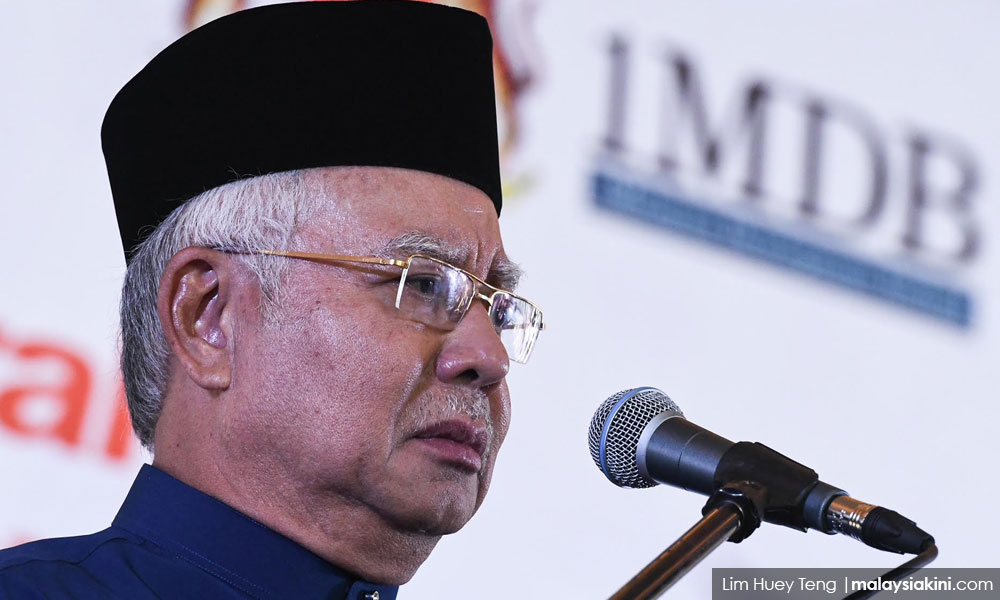
Najib must address the 1MDB controversy squarely and not out-source it to Arul Kanda Kandasamy anymore. Then, there are serious issues of corruption, cronyism, abuse of power, electoral fraud, biased judiciary, police, inflation, spiralling national debt and the whole works.
Likewise, if Pakatan wins, it must also reconcile with Umno and BN, particularly with Najib. It must give space to Umno/BN to reform itself. Reconciliation can only take place if truth prevails. Truth is that the law must be allowed to take its natural course in instances like the 1MDB.
We expect judgment to be upon the unrighteous but we can accommodate compassion at the same time, in the form of a royal pardon. This way, we can deal with the sin and forgive the sinner, both at the same time. Reconciliation follows truth and only this can heal our collective soul and spirit.
We owe this to our next generation. After all, 41 percent of the 15 million voters are below the age of 40. We must respect their choice and a hope for their future.
Pakatan must also initiate immediate reforms to what ails the nation. We cannot blame Najib for all shortcomings. After all, the rot began long ago and Mahathir was a major part of it. He has apologised. The Tun has been magnanimous. Don’t humiliate him further, for he has shown he can be part of the solution.
In the case of a hung Parliament, both sides must exercise extreme patience and not rush the Yang di-Pertuan Agong in making his decision.
In an interview with Malaysiakini, constitutional lawyer Tommy Thomas said, “We can expect the Yang di-Pertuan Agong and his palace advisers to be following the results of GE14, like the rest of Malaysia.”
The constitutional requirement under Article 43(2) (a) of the Federal Constitution is that the monarch has to invite the person who, in his judgment, commands the confidence of the majority of the Dewan Rakyat, for an audience on the morning after the election.
The transfer of power must be carried out seamlessly and smoothly by independent state agencies and civil servants.
In the case of a hung Parliament
What if there is a hung Parliament? Thomas points out that the Constitution says the Yang di-Pertuan Agong can appoint the prime minister who he thinks commands the confidence of the House.
As incumbent and caretaker prime minister, Najib could remain temporarily in office, but it would be in a caretaker capacity after elections in a “hung parliament” scenario.
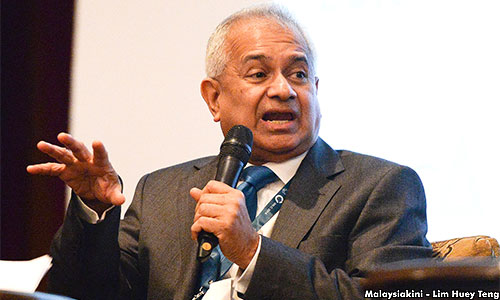
Over the next several days after the polls, Thomas *photo) says, both coalitions would try to strengthen their respective numbers in the Dewan Rakyat through crossovers and coalition building.
Throughout this period, he points out, the Agong should not participate, directly or indirectly, in this process. The monarch must let the politicians sort things out themselves so that His Majesty cannot be accused of taking sides. The palace must be seen to be above party politics.
At some point after all the political negotiations have concluded, either Najib or Mahathir, as leader of one of the coalitions may say, “I have the majority support of the House.” And then the Agong would say, “I need evidence to satisfy myself of the numbers.”
This evidence can be letters signed by the elected MPs, or the Agong can ask for these MPs to be presented to the palace for a face-to-face interview.
As a condition, the Agong can insist that the prime minister he appoints must convene Parliament to sit as soon as possible - within days - so that a confidence motion for the newly appointed prime minister can be voted on in the Dewan Rakyat.
If the vote fails, Thomas points out, the Agong must appoint somebody else, and the confidence motion must be tested again in the House. This process can be repeated for some time.
And as a last resort, if none of these attempts work, a prime minister can recommend to the Agong that Parliament should be dissolved and fresh elections held.
The monarch has the discretion to refuse the prime minister’s recommendation and to instruct the political parties to continue to try to reach a compromise. A second general election would be the last resort, so soon after GE14.
Can Najib declare an emergency rule? No, under Article 150 of the Constitution, the power to declare an emergency lies clearly with the Agong.
However, the National Security Council (NSC) Act was presented to Parliament in the last days of the 2015 parliamentary session and was bulldozed through into law by the BN Members of Parliament.
This new law, which allows the prime minister to declare a ‘state of emergency’ in a designated area (also known as security area) was gazetted on June 7, 2016. This seems to have usurped the powers of the Agong, as provided for under the Constitution. Article 4 (1) states that the Constitution is the supreme law of the Federation and Parliament cannot make laws which are inconsistent with the Constitution.
Najib would find himself entangled in a constitutional web if he chooses to resort to emergency rule. If the Agong decides on Mahathir as the next prime minister, Najib can prove himself to be a statesman by taking up his appointment as leader of His Majesty’s Loyal Opposition.
All said and done, we can’t turn back the clock. All that is left is for us to acknowledge that only God is sovereign over GE14 and let’s submit ourselves to Him alone in prayer. And what does the Lord require of us? To act justly and to love mercy and to walk humbly with your God. The best is yet to come.
BOB TEOH is a faith-based writer.
The views expressed here are those of the author/contributor and do not necessarily represent the views of Malaysiakini.


