


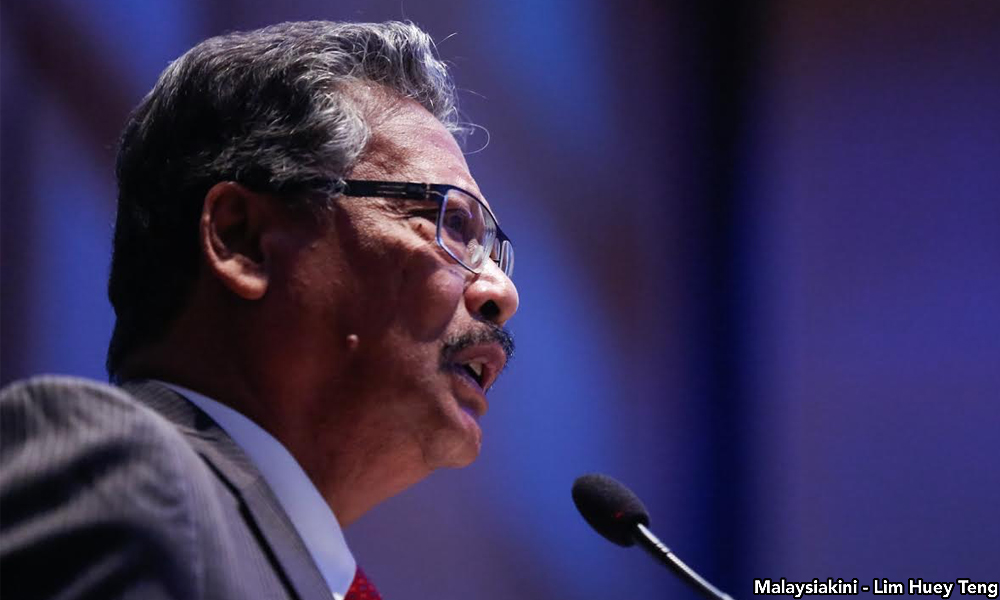

The most powerful man in the country
COMMENT | In my first year of law school, everyone around me said they studied law because they wanted to help the marginalised in society. They wanted to do public interest cases to forward the cause of human rights, fairness, and justice.
In my final year of law school, everyone was set to join private practice to make money. One friend did this with reluctance. She told that her dream was to become a deputy public prosecutor so that she could serve the public. But what held her back was the tainted reputation of the DPP.
Looking from the outside, everyone thought that if the attorney-general could be removed so easily and replaced with another who would subsequently state publicly that the 1MDB scandal showed “no evidence” of any wrongdoing – then there is little good faith reposed on this institution.
Tainted reputation
Many of my friends who wanted to be judges also changed their minds. Our judiciary had struggled to restore public confidence since the 1988 constitutional crisis. De facto opposition leader Anwar Ibrahim’s second sodomy trial in 2015 further pushed back efforts to regain confidence in public legal institutions.
What I fear most, however, is that without fierce defence of values of rule of law and our Federal Constitution by high-ranking legal officers, a bad culture will prevail. Law students will be more interested in making money than doing public good, and the public are left without fighters when they need it the most.
That is why we need to vote Pakatan Harapan in, because they are the only coalition interested in reforming our public institutions.
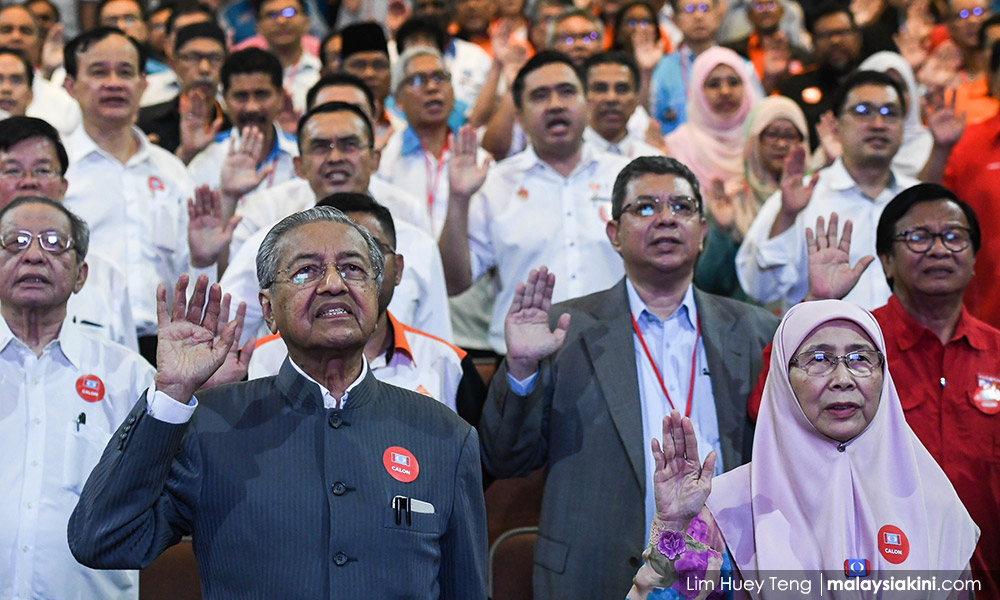
Harapan’s manifesto includes limiting the tenure of prime minister to two terms, reforming the MACC, restoring electoral integrity, restoring confidence in our judiciary and legal process, abolishing regressive laws, and separating the roles of AG and public prosecutor...
COMMENT | The attorney-general must be a lawyer first, politician second.
COMMENT | In my first year of law school, everyone around me said they studied law because they wanted to help the marginalised in society. They wanted to do public interest cases to forward the cause of human rights, fairness, and justice.
In my final year of law school, everyone was set to join private practice to make money. One friend did this with reluctance. She told that her dream was to become a deputy public prosecutor so that she could serve the public. But what held her back was the tainted reputation of the DPP.
Looking from the outside, everyone thought that if the attorney-general could be removed so easily and replaced with another who would subsequently state publicly that the 1MDB scandal showed “no evidence” of any wrongdoing – then there is little good faith reposed on this institution.
Tainted reputation
Many of my friends who wanted to be judges also changed their minds. Our judiciary had struggled to restore public confidence since the 1988 constitutional crisis. De facto opposition leader Anwar Ibrahim’s second sodomy trial in 2015 further pushed back efforts to regain confidence in public legal institutions.
What I fear most, however, is that without fierce defence of values of rule of law and our Federal Constitution by high-ranking legal officers, a bad culture will prevail. Law students will be more interested in making money than doing public good, and the public are left without fighters when they need it the most.
That is why we need to vote Pakatan Harapan in, because they are the only coalition interested in reforming our public institutions.
Harapan’s manifesto includes limiting the tenure of prime minister to two terms, reforming the MACC, restoring electoral integrity, restoring confidence in our judiciary and legal process, abolishing regressive laws, and separating the roles of AG and public prosecutor.
The governing principle of this set of reforms is that it intends to increase transparency and integrity so that public institutions fulfil their obligation of serving public interest without fear or favour.
The most powerful man of the country
I am interested in discussing the role of AG because he is arguably the most powerful man in the country. The AG’s powers are enormous:
- Sole legal advisor to the Yang di-Pertuan Agong and the government
- Drafting of parliamentary bills
- Head of the legal service
- Member of the Judicial and Legal Service Commission
- Member of the Pardons Board of each state
- Power to institute, conduct or discontinue any proceedings as attorney-general
- Primary legal counsel for the government
- Perform any such duties of legal character
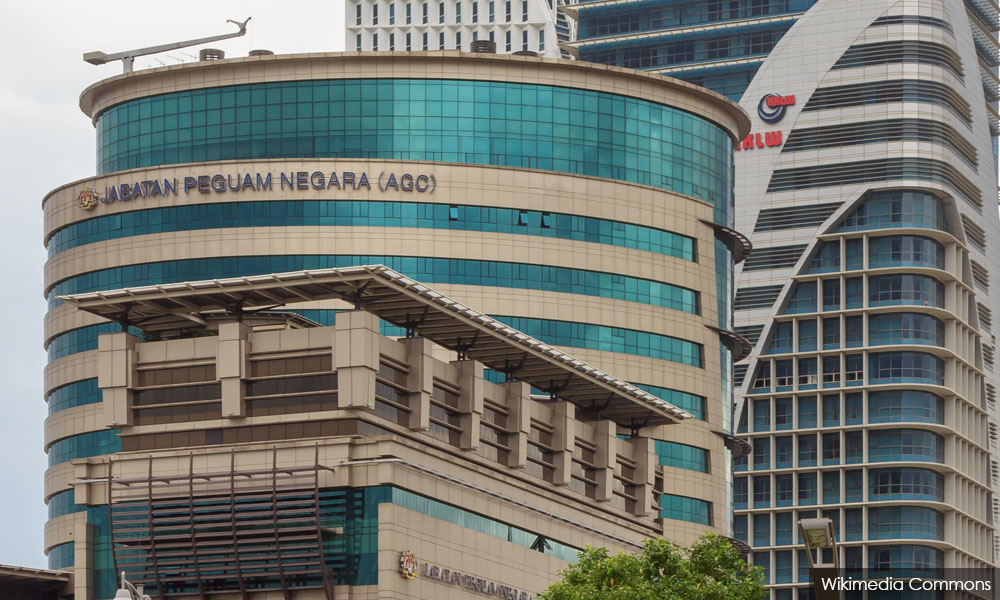
The single episode of Apandi Ali in choosing not the file a charge against the prime minister is sufficient to show how powerful the AG can be.
To carry out institutional reforms to the position of AG, would require a constitutional amendment after obtaining a two-thirds majority in Parliament.
But preceded to or short of that, we need to first reform the post by choosing someone who is “lawyer first, politician second,” someone who has fierce independence, and someone with courage of conscience.
In other words, an AG of high character.
Deputy US attorney general Rod Rosenstein of the US once said that the character of who is selected as the AG is more important than the institutional limits we set on paper. We could have the best laws and regulations in the world, but if the actors are not intent on following the spirit of the law, everything will tumble.
On the other hand, if we have someone of high character holding public office, even unsatisfactorily rigid laws will not stop them from administering righteously.
‘Lawyer first, politician second’
The AG must be lawyer first, politician second. Other countries who subscribe to this logic include India, Kenya, Singapore, Sri Lanka, Malta, and Cyprus.
The AG’s position is different from other ministers in government. An AG has responsibilities not just to the government of the day, but also a special one for the rule of law and integrity of the legal system. He is the people’s guardian of administration of justice.
An AG must make decisions not based on what is politically expedient for the government. Instead, an AG must be ready to advise the government when they are about to embark on a legislation or policy that is contrary to the sacred legal principles like freedom of speech, freedom of the press, equality, freedom of assembly and others.
Since the AG is also responsible for drafting parliamentary bills that become law of the land, an AG must be equipped with astute legal understanding and public sensibilities.
No law shall be drafted too widely or ambiguously that they provide a weapon of abuse for the government. Instead, all laws shall be drafted to ensure no rights of Malaysians are trampled upon unnecessarily.
Being independent
Second, the AG must have fierce independence. The AG must act with integrity and if the government makes this impossible for him, he must be prepared to resign from office. That would imply that the AG is a person who does not have his life dependent on the AG’s position – financially, professionally, or personally.
AG must ignore his or her own biases and only decide on maintaining the rule of law after fair and rational deliberations. Whoever is appointed as AG, therefore, must have proven to be able to withstand outside pressure and do what is right rather than what is popular.
Courage of conscience
Third, the AG must have the courage of conscience. We are fortunate to have a Federal Constitution that explicitly laid down a section on fundamental liberties that all citizens of the country shall enjoy.

An AG must fully embody the spirit of the highest law of the land and always be ready to make difficult decisions to defend the rule of law.
The infusion of conscience in the character of the AG will create a culture of law that truly assists the most vulnerable members of society. This could elevate the legal system back to its noble status.
All these qualities of character must be present in our AG. Other considerations of race, religion, gender, class, connections shall not precede the character in administering the duty of AG.
A legal system cannot sustain itself without the public believing in it. By selecting people of high character and moral probity, we can inspire a generation that appreciates the law for its rightful virtues.
The principles here should guide all our efforts in restoring confidence and competence in our public institution should Harapan wins. And it makes sense to start with the most powerful person in the country: the AG.
When that day comes, I hope my friends will consider joining public service again.
JAMES CHAI works at a law firm. His voyage in life is made less lonely with a family of deep love, friends of good humour and teachers of selfless giving. This affirms his conviction in the common goodness of people: the better angels of our nature. He tweets at @JamesJSChai.
The views expressed here are those of the author/contributor and do not necessarily represent the views of Malaysiakini.


