



See-To: CCCC granted relief to avoid gov't paying itself GST
The East Coast Rail Link (ECRL) main contractor - China government-owned China Communications Construction Company (CCCC) - was granted GST relief to avoid unnecessary processes and expenses, said BN strategic communications deputy director Eric See-To.
He explained that the purpose of GST was to tax the end user and not intermediaries in the supply chain...
The East Coast Rail Link (ECRL) main contractor - China government-owned China Communications Construction Company (CCCC) - was granted GST relief to avoid unnecessary processes and expenses, said BN strategic communications deputy director Eric See-To.
He explained that the purpose of GST was to tax the end user and not intermediaries in the supply chain.
"For the ECRL project, the final customer is the government. If GST is collected then the government has to pay GST to the government. How senseless is that?
"(It is, therefore) better to (grant an) exemption, which is provided for by the law so that unnecessary processes and expenses can be avoided," See-To said in a post on his Facebook page.
He explained that if GST was factored in, the RM55 billion project will cost RM3.3 billion more.
"This will mean having to borrow an additional RM3.3 billion, although the government will get it back in form of GST once the project is completed," he said.
Earlier today, the Customs Department had confirmed that the CCCC was granted a certificate for GST relief and that the ECRL was an infrastructure project of public importance.
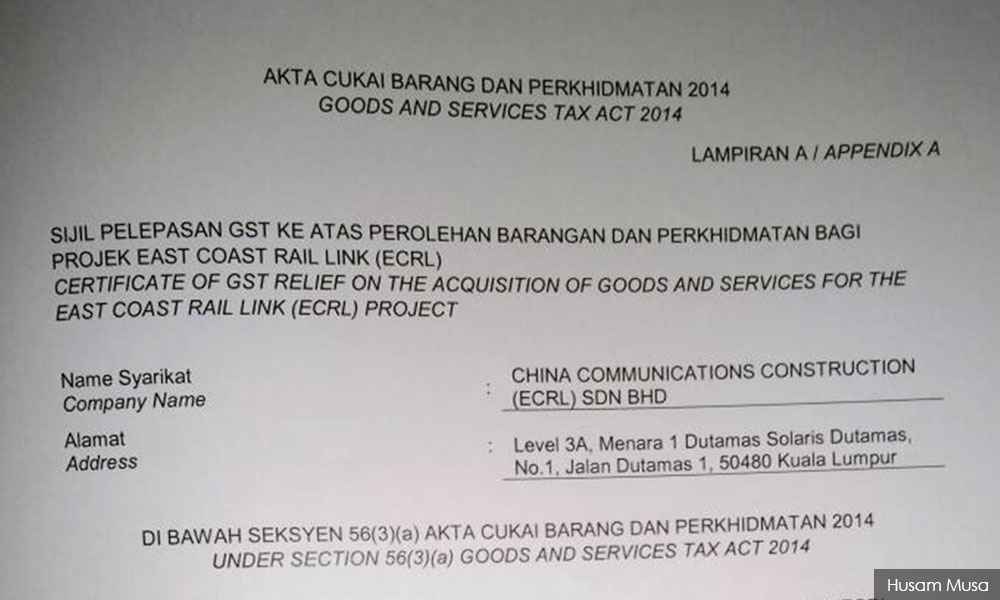
This was in reaction to Amanah vice-president Husam Musa's revelation yesterday that CCCC had already been using the certificate on its suppliers.
In response, See-To said Pakatan Harapan appeared bent on taking advantage of their supporters' ignorance over how GST worked to incite hatred.
"Unlike standard government projects, remember that the project is funded by soft loans (from China).
"Including GST (on the project) will raise the total amount of loans and hence the interest.
"So the government is correct to reduce cost and unnecessary expenses for the projects.
"How can it be that senior political leaders in Harapan do not even understand the basic principle of a GST system?" asked See-To.
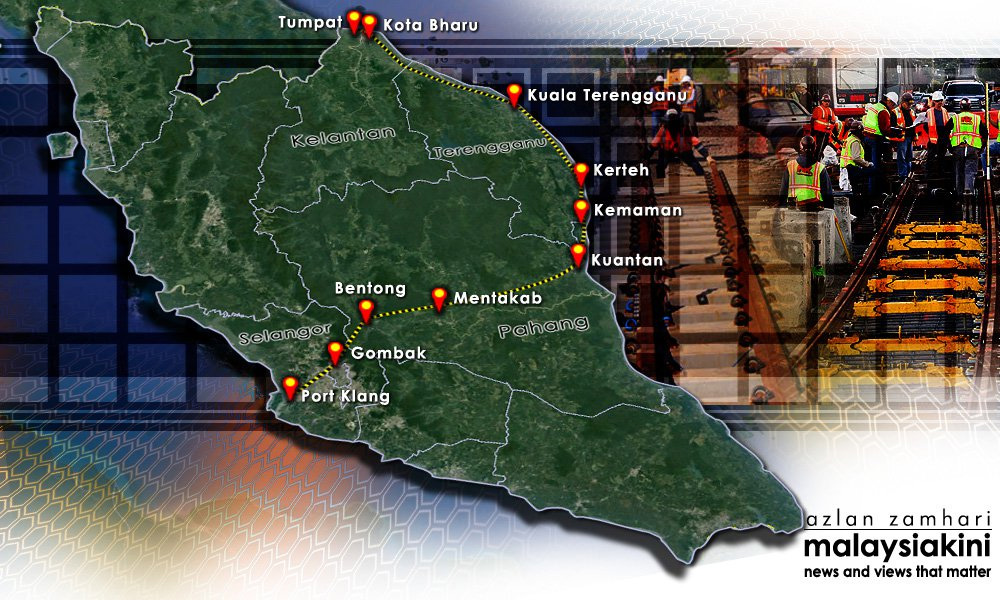
The ECRL is an ambitious RM55 billion project that will link Kelantan by rail to Port Klang.
Eighty-five percent of the bill would be financed by the Export-Import Bank of China.
Repayment period starts on the seventh year over a period of 13 years at an interest rate of 3.25 percent.
Experts such as economist KS Jomo said that the project could be unviable and future generations would have to bear the burden of subsidising it.


