



Should you have tweeted?
COMMENT | So much has changed in data driven politics especially in an election year. Information is increasingly being ‘weaponised’, to influence voter behaviour. For instance the exposure of data analytics firm, Cambridge Analytica, by London-based Channel 4 for harvesting Facebook user profiles to target voters with selective political advertisements.
Analytica’s now suspended CEO, Alexander Nix, admitted, “It sounds a dreadful thing to say, but these are things that don’t necessarily need to be true, as long as they’re believed.”
Indeed, believability trumps facts on social media, where everyone’s a publisher. The deluge of news - and disinformation - into your mobile device and computer should thus give you thought to resist the impulse to re-tweet or re-post what you think is ‘true’. If it’s too outrageous or too good to be true, it probably is. Your ‘truth’ feelers should prompt you to check it out.
I wrote in my last article that you ought to take control of what you read, do the legwork of fact-checking even as you know that over-relying on one news outlet results in a one-dimensional view.
A useful reference on fact-checking is the International Fact-Checking Network at Poynter Institute, which publishes guidelines, serial articles and updates on fact-checking initiatives. The University of South Australia library has also curated fact-checking sites and plug-ins for free public access. KiniGuide also provides tips and resources on how to sieve real news from the dross online.
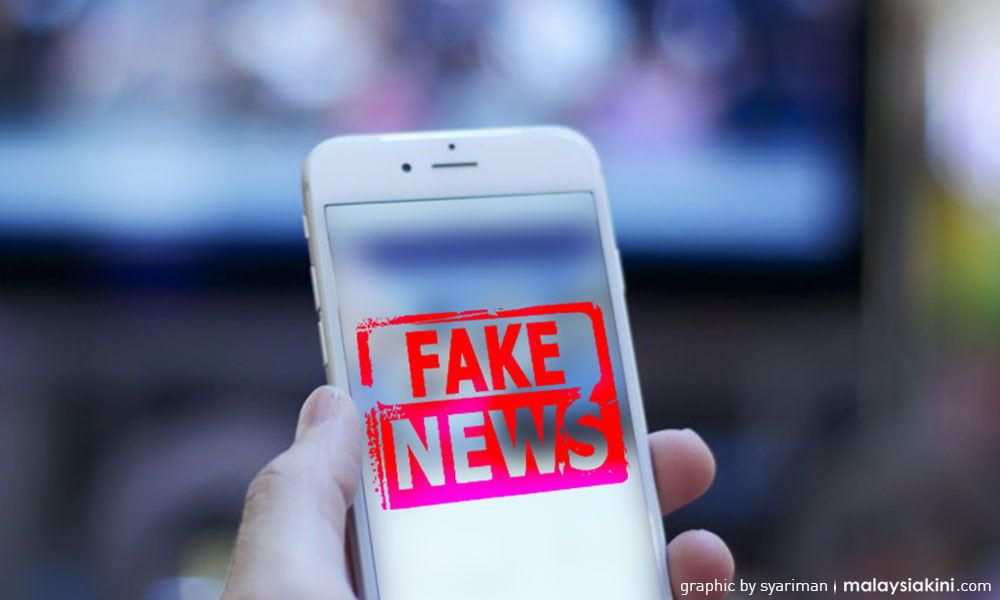
What has come to be called ‘fake news’ is easy to know when it’s published deliberately by satirical sites. It is trickier to detect when misinformation is packaged with visuals and headlines to look and feel like legitimate media sites.
A prominent feature of misinformation – particularly of polarising issues like same sex marriage, racism, religious extremism, gun controls - is the outright appeal to your emotions, and laced with polemics from unnamed ‘reliable’ sources.
‘Fake news’ is persuasive because it works on the principle that what someone did or said, you may forget; but how that someone made you feel, you will remember. That’s what political advertisements set out to do...
COMMENT | So much has changed in data driven politics especially in an election year. Information is increasingly being ‘weaponised’, to influence voter behaviour. For instance the exposure of data analytics firm, Cambridge Analytica, by London-based Channel 4 for harvesting Facebook user profiles to target voters with selective political advertisements.
Analytica’s now suspended CEO, Alexander Nix, admitted, “It sounds a dreadful thing to say, but these are things that don’t necessarily need to be true, as long as they’re believed.”
Indeed, believability trumps facts on social media, where everyone’s a publisher. The deluge of news - and disinformation - into your mobile device and computer should thus give you thought to resist the impulse to re-tweet or re-post what you think is ‘true’. If it’s too outrageous or too good to be true, it probably is. Your ‘truth’ feelers should prompt you to check it out.
I wrote in my last article that you ought to take control of what you read, do the legwork of fact-checking even as you know that over-relying on one news outlet results in a one-dimensional view.
A useful reference on fact-checking is the International Fact-Checking Network at Poynter Institute, which publishes guidelines, serial articles and updates on fact-checking initiatives. The University of South Australia library has also curated fact-checking sites and plug-ins for free public access. KiniGuide also provides tips and resources on how to sieve real news from the dross online.
What has come to be called ‘fake news’ is easy to know when it’s published deliberately by satirical sites. It is trickier to detect when misinformation is packaged with visuals and headlines to look and feel like legitimate media sites.
A prominent feature of misinformation – particularly of polarising issues like same sex marriage, racism, religious extremism, gun controls - is the outright appeal to your emotions, and laced with polemics from unnamed ‘reliable’ sources.
‘Fake news’ is persuasive because it works on the principle that what someone did or said, you may forget; but how that someone made you feel, you will remember. That’s what political advertisements set out to do.
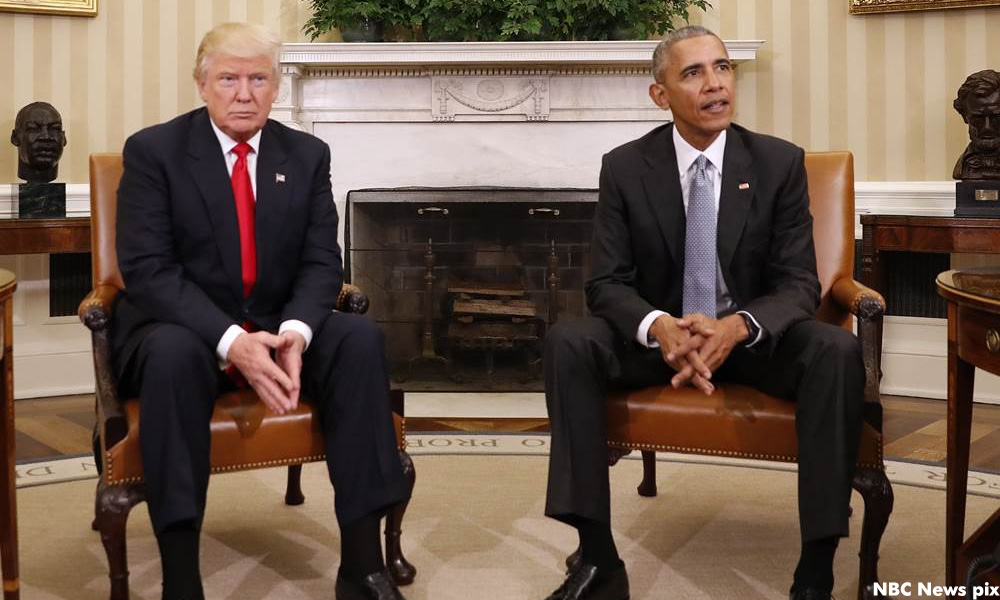
‘Fake news’ often dresses itself in journalese to make it sound legitimate on Twitter, gets amplified on Facebook and WhatsApp, which then goes viral on YouTube. Here, I’m reminded of the former US president Barack Obama’s indirect response to Donald Trump’s poorly spelt impulsive tweets: “Have a little bit of an edit function , think before you speak, think before you tweet.”
Indeed, the quickest way to circulate your impulses today is on Twitter – the go-to place for breaking ‘news’, where memes are born and trolls linger. But before you tweet off the 140 to 280 characters and hope to gain more followers, filter your tweet to avoid unintended consequences caused by ill-considered comments that lack context. Test the veracity of what you have read. And, suss out different views from diverse sources. To help you remember this process, here’s an acronym, FACTS, which stands for:
Filter: Differentiate between claims that are based on assertions and arguments based on facts. This means double-checking the veracity of what you have read. Examine the ‘facts’ behind the tweets and Facebook posts against what the established media have reported and reputable organisations have published, notwithstanding their ideological differences. Filter before you tweet to ensure that your comment is fair and accurate.
Avoidance: Avoid following groups or linking to sites that could affect your personal reputation and professional standing. You are who you are from what you post online. Pictures, words and links can send the wrong message to your employer and friends. Avoid channelling your angst and envy through vile tweets. Which leads to my next point.
Consequence and context: Your fleeting thoughts – vile or virtuous, political or personal, cocky or cautious - will remain in the Twitter archives, which may come back to haunt you long after you’ve gone offline. Consider the consequences of your tweeted contents. It’s said content without context is pretext. Retweeting information without checking and customising it for your followers may miss the point of the original Tweeter, or at worst, perpetuate misinformation.
Test: We’re somehow programmed to think that things happen for a reason. We make assumptions on why things happen the way they do. We form pet theories about the world. Often we’re wrong. Events, issues and circumstances are usually connected. It’s as crucial to find information that confirms our assumptions, as it is to know when we are misinformed. Test your theory. Show the evidence.
Source: This returns us to the earlier point: suss out conflicting views from diverse sources for the bigger picture before you tweet off those 140 to 280 characters. It’s too late if you have to ask later: ‘Should I have tweeted?’
ERIC LOO is Senior Fellow (Journalism) at the School of the Arts, English & Media, Faculty of Law, Humanities & Arts, University of Wollongong, Australia. He is founding editor of "Asia Pacific Media Educator". Email him at eloo@uow.edu.au.
The views expressed here are those of the author/contributor and do not necessarily represent the views of Malaysiakini.


