


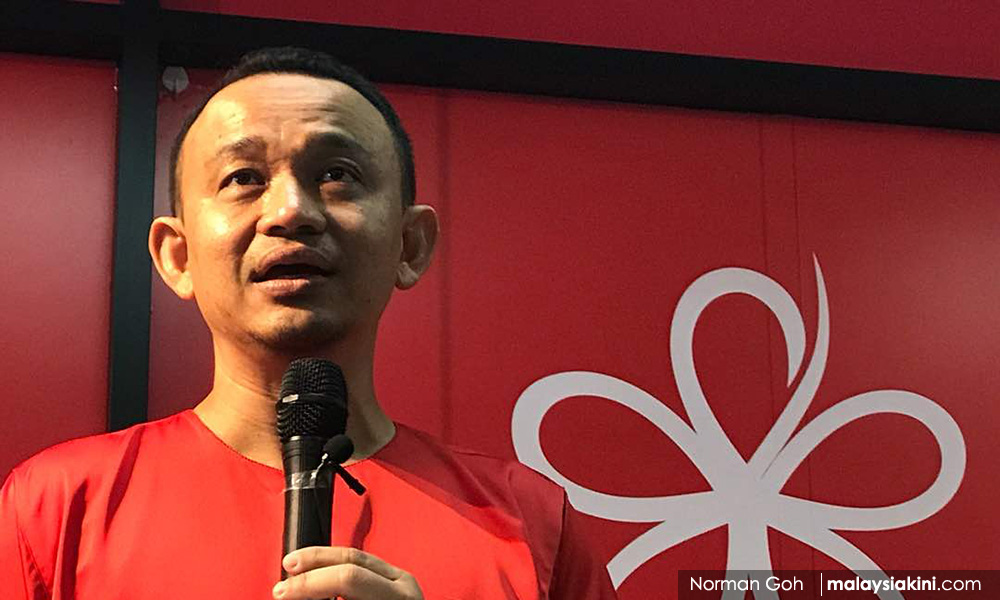

Maszlee: Bersatu will set ‘Malay tsunami’ in motion
INTERVIEW | A series of events have unfolded since the myriad 1MDB exposés by international publications, but the most significant could prove to be the expulsion of Prime Minister Najib Razak's former deputy, Muhyiddin Yassin.
Muhyiddin's departure was followed by former premier Dr Mahathir Mohamad quitting Umno to form Bersatu, which new recruit Maszlee Malik calls a “black swan” situation.
"Pakatan Harapan is blessed with what I would consider a 'black swan' situation.
“With Mahathir and Muhyiddin leaving Umno, we never thought that a new party would emerge in order to capture the Malay votes, hence erasing all their (voters') fears of uncertainty or insecurity.
"Bersatu has that role in enabling or ensuring the coming of the Malay tsunami," said Maszlee in an interview with Malaysiakini.
Read more: My sacrifice is nothing compared to others' - Maszlee
“Black swan” events refer to unexpected or rare occurrences that may have a major impact on a particular situation.
Maszlee, International Islamic University Malaysia (IIUM) associate professor and Ikram Malaysia strategist, noted that the time was right for him to take the huge leap of faith.
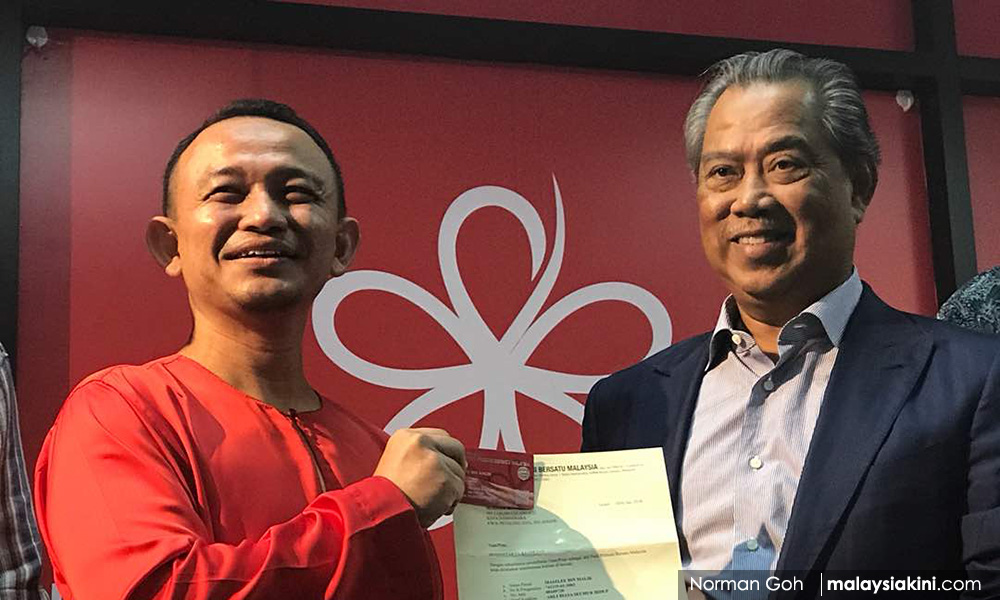
"Why Bersatu? I think it doesn’t matter which party I join, they all belong to Harapan. At the end of the day, we share the same goal, the same mission and we share the same manifesto.
"All parties are working to strengthen each other, but there is an enabler towards change. One thing is for sure, if you look at this coming election, can we predict the future...
INTERVIEW | A series of events have unfolded since the myriad 1MDB exposés by international publications, but the most significant could prove to be the expulsion of Prime Minister Najib Razak's former deputy, Muhyiddin Yassin.
Muhyiddin's departure was followed by former premier Dr Mahathir Mohamad quitting Umno to form Bersatu, which new recruit Maszlee Malik calls a “black swan” situation.
"Pakatan Harapan is blessed with what I would consider a 'black swan' situation.
“With Mahathir and Muhyiddin leaving Umno, we never thought that a new party would emerge in order to capture the majority Malay votes, hence erasing all their (Malay voters) fears of uncertainty or insecurity.
"Bersatu has that role in enabling or ensuring the coming of the Malay tsunami," said Maszlee in an interview with Malaysiakini.
Read more: My sacrifice is nothing compared to others' - Maszlee
“Black swan” events refer to unexpected or rare occurrences that may have a major impact on a particular situation.
Maszlee, International Islamic University Malaysia (IIUM) associate professor and Ikram Malaysia strategist, noted that the time was right for him to take the huge leap of faith.
"Why Bersatu? I think it doesn’t matter which party I join, they all belong to Harapan. At the end of the day, we share the same goal, the same mission and we share the same manifesto.
"All parties are working to strengthen each other, but there is an enabler towards change. One thing is for sure, if you look at this coming election, can we predict the future?
"The result of the election is our future. Can we predict the future? Yes we can, but we cannot guarantee the future. We can make a prediction by looking at the past because it shapes the present and the future," he said.
The Johor native explained that in the 2013 general elections, despite the wave of support for the opposition from the Chinese Malaysian community, as well as the middle and upper-middle classes in towns and cities, it was not enough to win the required number of seats to form the federal government.
"The opposition managed to win the popular votes, but based on our first-past-the-post Westminster parliamentary system, it won't allow the opposition to win Putrajaya.
"Why? Because the majority of the Malays, especially woman and especially those who are not from the urban areas, they are not ready for change yet."
The fear of uncertainty, he explained, particularly from Malays over their welfare and survival, stopped them from casting their votes against BN.
"We can debate this thing a lot, but the reality is we have a lot of Malays living ‘less superior’ lives in economic terms compared to other races, that creates that feeling of insecurity. That is the reality, you cannot deny that.
"That feeling that has been manipulated by the current regime with their fearmongering industry," he quipped.
Maszlee also provides further explanation on Bersatu's role as an enabler for Harapan:
Based on feedback from rural Malays, what would drive how they vote in the coming election?
In depends where they are. One thing about rural Malays, you cannot provide generalising presumptions about them. Rural voters in the northern and southern parts of Kedah will have different ways of looking at the situation or reality that we live in now, or looking at politics, in comparison with Kelantan or Terengganu.
I've involved in some of the studies of those rural voters in Kedah and Johor, and even then, it differs from one place from another, one Felda from another.
Some of them have become frustrated with the current regime and are thinking of change, especially all those places near Kubang Pasu, Jitra, Kodiang, Jerlun, Air Itam, but that might not be the case in Changlun or Bukit Kayu Hitam. That might not be the case too in Pendang.
Same goes with Johor. When you go to Johor, you will find people disgruntled with the government due to GST and cost of living. Some of them are aware of the corruption and 1MDB.
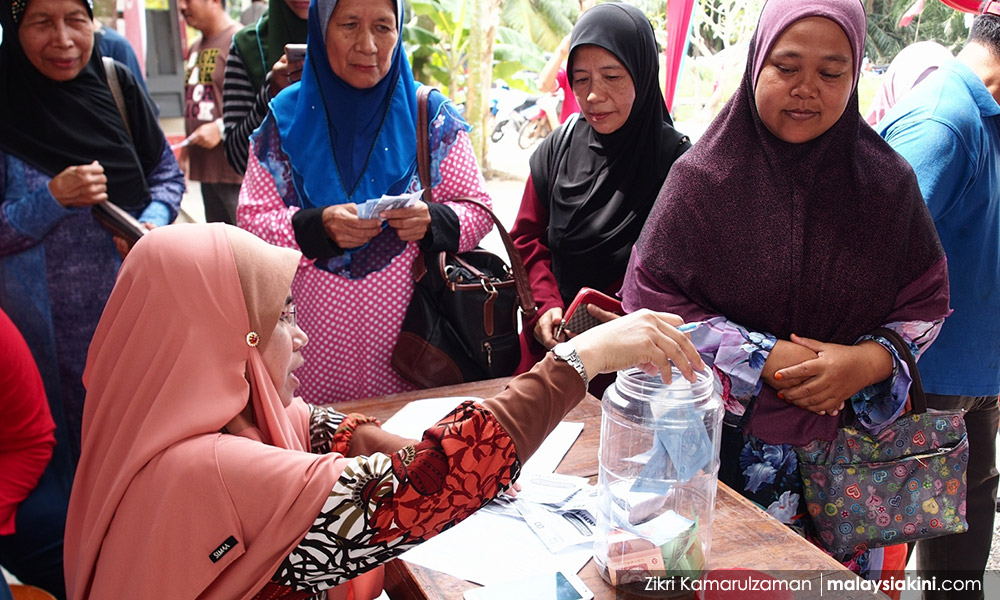
They are able to understand although they are living in Felda settlements, maybe because of their children who keep feeding them information.
But you will also find those who live not far away from Johor Bahru are not able to understand what is happening around them. For them, it's a feel-good situation, they are complacent and feel there is no need for change.
It is difficult. This is the most difficult election to anticipate. This is the most uncertain election to predict.
When I read certain reports saying that BN will surely win by this or that many votes, these guys must be geniuses to understand the dynamism of Malays, what more urban Malays. If you're talking about urban Malays, which urban are you talking about? Even from one PPR to another, or one housing area to another, it’s different.
I hate overgeneralisations. It depends on the state sometimes. For example, if you go to Langkawi, the sentiment will be totally different than in Malacca.
Do you think Malay voters are afraid to vote differently?
Actually, for Malays, it is not just about the Malay agenda. They worry about their survival and welfare. They think that if the opposition wins, their lives will be miserable.
They are just lacking imagination of what they could become when the situation changes, that they will have better opportunities, be better off, have a better lifestyle.
They just can’t imagine that because for them, there is the fear of the unknown. This is where Harapan needs to come in with the remedies.
I believe that the manifesto addresses all those things, but how is Harapan is going to convey the message to the people, and tell them that their fear of the unknown is actually baseless?
You go to any rural places with Malay voters who are hardcore Umno supporters, they won't tell you about the Malay rights or agenda. What concerns them the most, if the opposition wins, that it will be difficult for them to survive, azan (call for prayer) will be banned from mosques, etc. All these things which are actually beyond imagining, but this is what they have been bombarded with.
You just need to force them to imagine beyond that, they need to create a new imagination. The biggest task for Harapan now is to replace that fear with a better imagination, to instil in them that feeling of security – Malay survival won't be jeopardised if Harapan comes into power, Malay welfare won't be jeopardised.
The same goes for the other races. Because Harapan is for everybody and it is there to ensure that everybody is happy and enjoys their well-being. We have all the institutions to ensure that.
What is your position on certain quarters moving to expand the scope of Islamic jurisprudence?
If you notice, all these incidences only took place after 2008. Why 2008? It is all because of politics of identity. There are certain parties, who I would say feared losing their power, so they started stirring racial and religious sentiments.
Those parties who are trying to bring up all these religious issues, they know the limitations of that. They know what the law says about it, but they try to push the boundaries. There are certain parties who want them to do that.
If you notice, most of those who are involved in stirring the storm in the teacup, they are well-connected with the regime. It is either they belong to agencies, or they have received ‘dedak’ (animal feed) from the regime.
What are your thoughts about the context of Islamic politics and leadership in Malaysia?
How do I look at the Malaysian set up? One thing about the uniqueness about the Malaysian set up is that we are multiracial, multi-religious country.
And it is not multicultural, but also multilingual. You have three major languages although they are not official languages, what more all the many dialects, and you also have the de facto non-official language and business language. All these things make Malaysia very colourful and beautiful.
When I was dealing with Islamic politics or Islamic political thought, there is no monolithic definition of Islamic politics unlike what people presume. Some Islamists or Muslims or non-Muslims presume that there is one monolithic way in explaining Islamic politics. There isn’t.
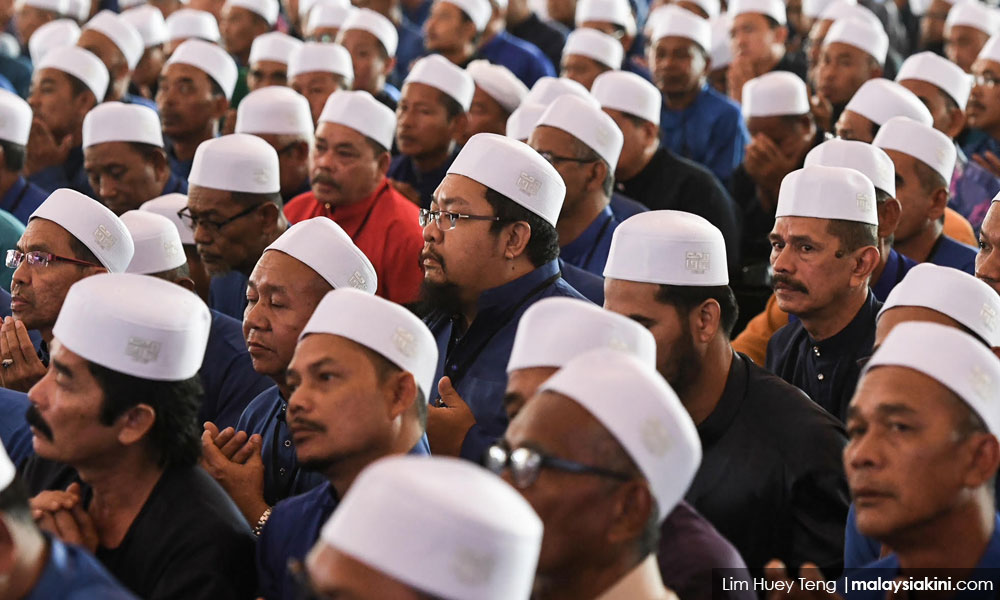
Throughout history, Muslims have had different kinds to approaches towards politics on their understanding of Quran and the Prophet’s tradition, in response to their realities.
Reality and context will shape their understanding of revelation, and part of this is politics. When we are looking at the Malaysian context, you're talking about Islamic politics and leadership, we should have our own way in dealing with it.
I believe that a lot of Islamic values could contribute this multicultural, multireligious community of Malaysia, especially those that carry with them universal meanings: humanity, justice, benevolence, accountability, transparency. Those values are very universal, shared not only Muslims, but by other faiths.
The only thing is how they are expressed and translated into reality. This is the challenge for Muslims who have that conviction, who believe that they have the mission to bring this to reality.
Is Malaysian society more polarised now? How it will affect the elections if so?
Racial and religious sentiments will be used heavily, either by the regime or by other parties outside the regime but working for their interests, that is their lifeline.
They will make full use of racial and religious sentiments to polarise, but again, one thing they should realise is the suffering of the people due to the high cost of living, as well as the shame at the gross corruption and the kleptocratic nature of the country.
All of these will overshadow such sentiments.


