


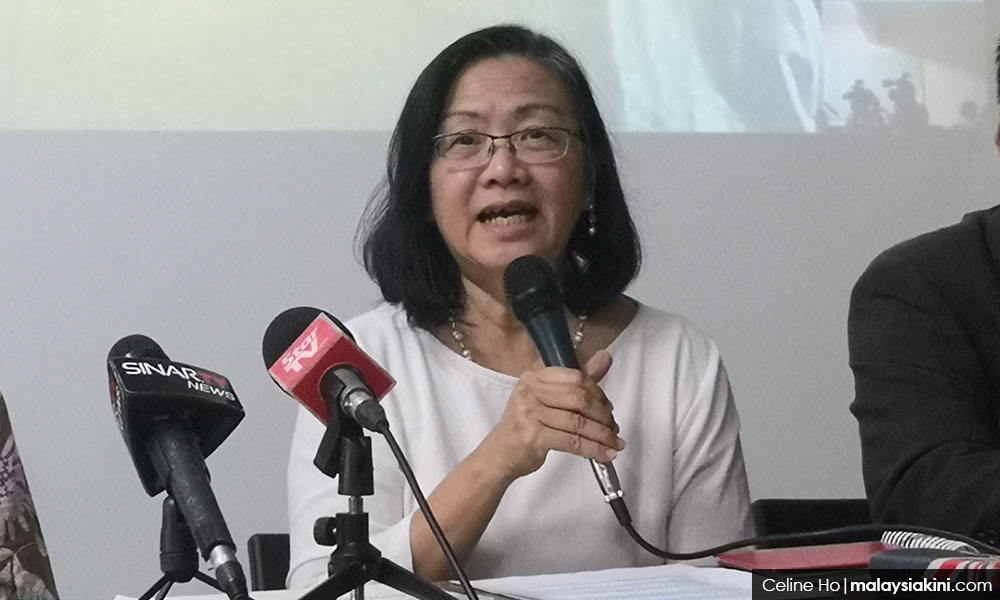

Maria explains why she is considering GE14 run
While she has yet to make a decision, Bersih chairperson Maria Chin Abdullah has underscored what led her to consider leaving civil society for partisan politics.
The seasoned activist explained that she saw politics as a “different strategy” to achieve the things she has been fighting for in the five years she has helmed electoral watchdog Bersih.
“Let’s look at it (joining politics) as a different strategy, we (at Bersih) have tried so many strategies - the courts, the streets, going to the Election Commission (EC) and knocking on the doors. These have worked at different levels.
“There are other strategies that we can also bring, so why don’t we combine these strategies?” she told the media after participating in a forum at Institut Darul Ehsan in Shah Alam today...
Politics a 'different strategy' to achieve what Bersih has been fighting for in the 5 years she has helmed it.
While she has yet to make a decision, Bersih chairperson Maria Chin Abdullah has underscored what led her to consider leaving civil society for partisan politics.
The seasoned activist explained that she saw politics as a “different strategy” to achieve the things she has been fighting for in the five years she has helmed electoral watchdog Bersih.
“Let’s look at it (joining politics) as a different strategy, we (at Bersih) have tried so many strategies - the courts, the streets, going to the Election Commission (EC) and knocking on the doors. These have worked at different levels.
“There are other strategies that we can also bring, so why don’t we combine these strategies?” she told the media after participating in a forum at Institut Darul Ehsan in Shah Alam today.
In its campaign for free and fair elections, Bersih has organised nationwide rallies and sent memoranda to the EC.
Maria, however, declined to offer a deadline for announcing her decision.
“There is no deadline (for my decision).
“I want to think about it, it’s not just about Bersih but (I need to consider) if I am ready and also my children.
“My whole life (I have been in) civil society organisations, to suddenly enter into politics... it’s quite a big commitment, give me time,” she said.
Earlier this week when Maria first confirmed she was considering running as an MP candidate in the 14th general election, she had explained how it was on the basis of being “a voice for civil society in Parliament”.
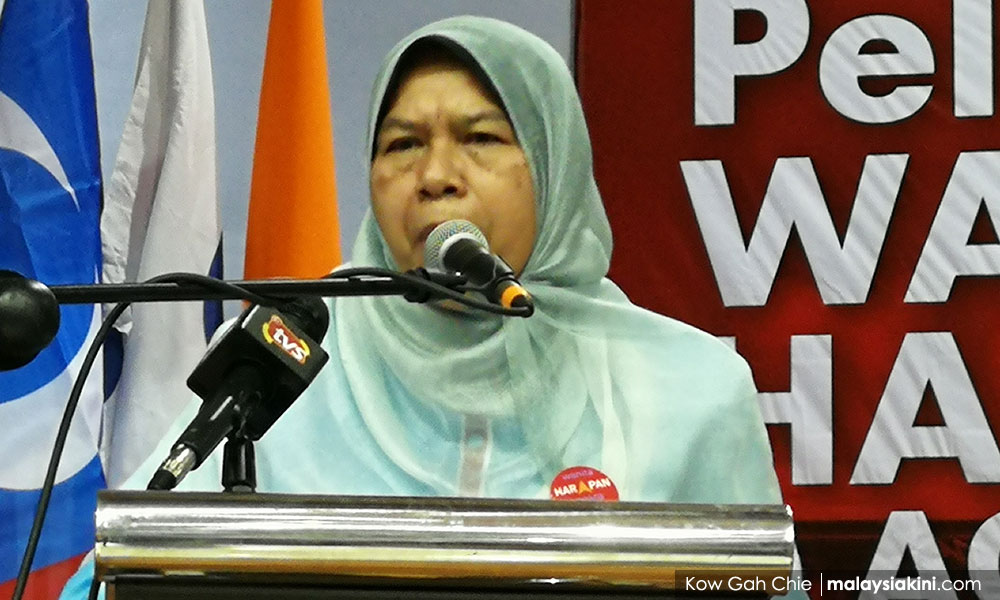
PKR Women’s chief Zuraida Kamaruddin (photo) has admitted to trying to recruit Maria, saying the latter would be able to “bring her struggle for free and fair elections” to Parliament.
‘My decision won’t affect Bersih’
Echoing the comments made by her fellow Bersih steering committee members, Maria did not foresee that her decision to wade into partisan politics, should she make it, would taint Bersih as being partisan.
She maintained that Bersih has always been independent in its views, offering criticism to both sides of the political divide.
“(My decision) won’t affect Bersih because I hope that the people will judge Bersih for what it does.
“We are very clear (about) our objectives and if you look at our press statement about the Sungai Besar and Kuala Kangsar by-elections, we have raised comments about both sides.
“The allegation that we are pro-opposition or pro-whatever… is not true,” Maria answered.
Bersih has long battled allegations of partisanship towards the federal opposition.
The first Bersih rally in 2007 was an opposition-led movement and key organising figures included DAP’s Teresa Kok, PKR’s Tian Chua, and then PAS leader Dr Dzulkefly Ahmad.
In 2008, the NGO coalition rebranded itself as Bersih 2.0 and has since tried painstakingly to present an independent stance to counter the “anti-government” label applied to it by critics.


