



Exploring the impenetrable kampung parit of Ayer Hitam
SPECIAL REPORT | The town of Yong Peng in Johor has only two rows of shops on the main road cutting through it, but it is one of the most popular stopovers for those travelling between Kuala Lumpur and Singapore.
Catering to these travellers is the lifeblood of this bustling town.
Politically, the town is part of the Yong Peng state constituency, which makes up one half of the Ayer Hitam parliamentary constituency, where an increasingly interesting clash between BN and Pakatan Harapan is shaping up.
Some 20km south of Yong Peng town lies Semarang, the other half of the Ayer Hitam constituency where life is a lot more laid back.
Unlike Yong Peng which is dotted by express buses, container trucks and plenty of cars with Singaporean registration plates, the Semarang constituency is surrounded by hundreds of palm oil and rubber plantations, as well as Malay villages, dubbed “ kampung parit” (trench villages) built along the canals.
It is estimated that at least 30 kampung parit are located in the state constituency. These villages were mostly named after their ancestors and have a long history...
SPECIAL REPORT | The town of Yong Peng in Johor has only two rows of shops on the main road cutting through it, but it is one of the most popular stopovers for those travelling between Kuala Lumpur and Singapore.
Catering to these travellers is the lifeblood of this bustling town.
Politically, the town is part of the Yong Peng state constituency, which makes up one half of the Ayer Hitam parliamentary constituency, where an increasingly interesting clash between BN and Pakatan Harapan is shaping up.
Some 20km south of Yong Peng town lies Semarang, the other half of the Ayer Hitam constituency where life is a lot more laid back.
Unlike Yong Peng which is dotted by express buses, container trucks and plenty of cars with Singaporean registration plates, the Semarang constituency is surrounded by hundreds of palm oil and rubber plantations, as well as Malay villages, dubbed “ kampung parit” (trench villages) built along the canals.
It is estimated that at least 30 kampung parit are located in the state constituency. These villages were mostly named after their ancestors and have a long history.


In the past, the villagers needed the canals for paddy irrigation before it was modified for plantations and flood mitigation purposes.
Semarang, an impervious moat
Ayer Hitam has been a BN stronghold since the seat was created for the 1974 general election until it was abolished in 1986 and revived in 2004 following the redelineation exercise.
During the last general elections, MCA deputy president Wee Ka Siong defeated PAS candidate Hu Pang Chaw with a respectable 7,310 majority, securing a third term as the Ayer Hitam MP.
Wee’s colleague Lim Kee Moi, however, was deposed after representing Yong Peng for two terms, losing to DAP greenhorn Chew Peck Choo with a slim majority.
Over in Semarang, Umno's Samsol Bari Jamali retained his seat with an even bigger majority, securing him a third term.
Simply put, Semarang, where 40 percent of Ayer Hitam voters are located, serves as the impenetrable moat for BN’s Ayer Hitam fortress.
According to the 2017 second-quarter supplementary electoral roll, Ayer Hitam is a mixed seat with 57.9 percent Malay, 38.1 percent Chinese and 3.9 percent Indian voters.
In contrast, Semarang is an 85 percent Malay-majority seat with 14 percent Chinese and one percent Indian voters, while Yong Peng consists of 60 percent Chinese, 34 percent Malay and six percent Indian voters.
Differing views in the kampung parit
For this upcoming election, Ayer Hitam is shaping up as a key battleground for DAP, which now wants to collect a prominent scalp by defeating an MCA deputy president on his home turf.
Its parliamentary leader Lim Kit Siang, in his second public appearance after spending a month recuperating from surgery, launched the party’s election headquarters at Bandar Baru Ayer Hitam on Jan 29.
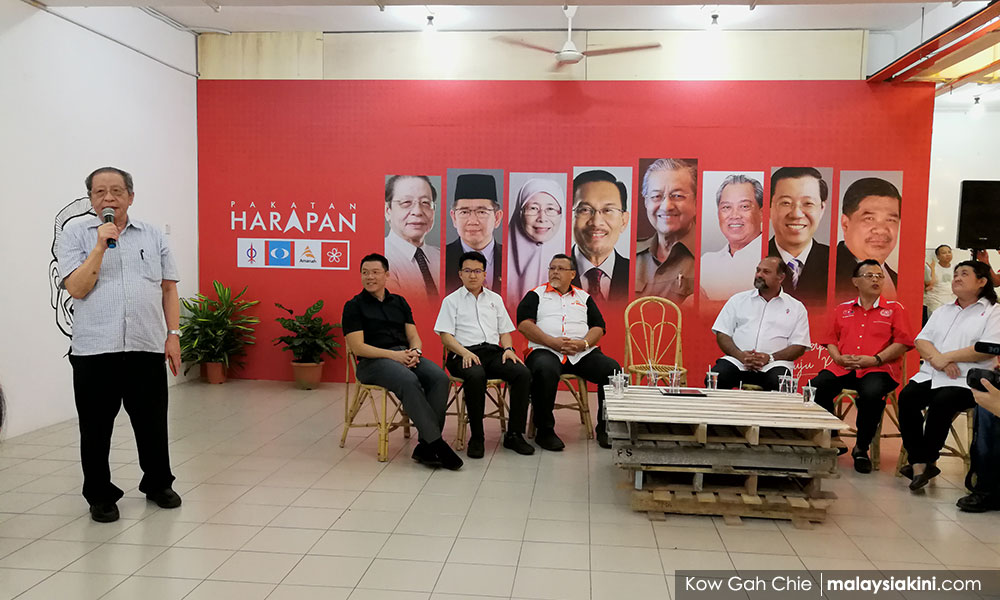
Some 150 supporters turned up for the event, with many expressing enthusiasm over the prospect of Harapan taking Ayer Hitam, but the same can’t be said of the Malay voters from Semarang’s ubiquitous kampung parit.
Hairuddin Selamat, a 54-year-old ex-soldier who resides at Kampung Parit Haji Siraj, was not even aware that Ayer Hitam, which then opposition coalition Pakatan Rakyat had allocated to PAS in GE13, was given to DAP this time.
Nor was he aware that DAP, after announcing that Amanah would contest the seat under DAP's ticket, was reportedly eyeing the seat for itself.
"I don't know about this," said the third-generation Malaysian of Javanese descent.
The kampung parit region spans 25 kilometres along Jalan Batu Pahat-Kluang and is sparsely populated.
GST not a concern
According to a research paper of the former Dewan Bahasa dan Pustaka director-general Awang Sariyan in 2005, the late Sultan Abu Bakar, who was known as the “Father of modern Johor”, had recruited the Javanese workers to build water channels and develop the agriculture industry.
Some voters who lived at the slow-paced Semarang, appeared to be happy with their lives.
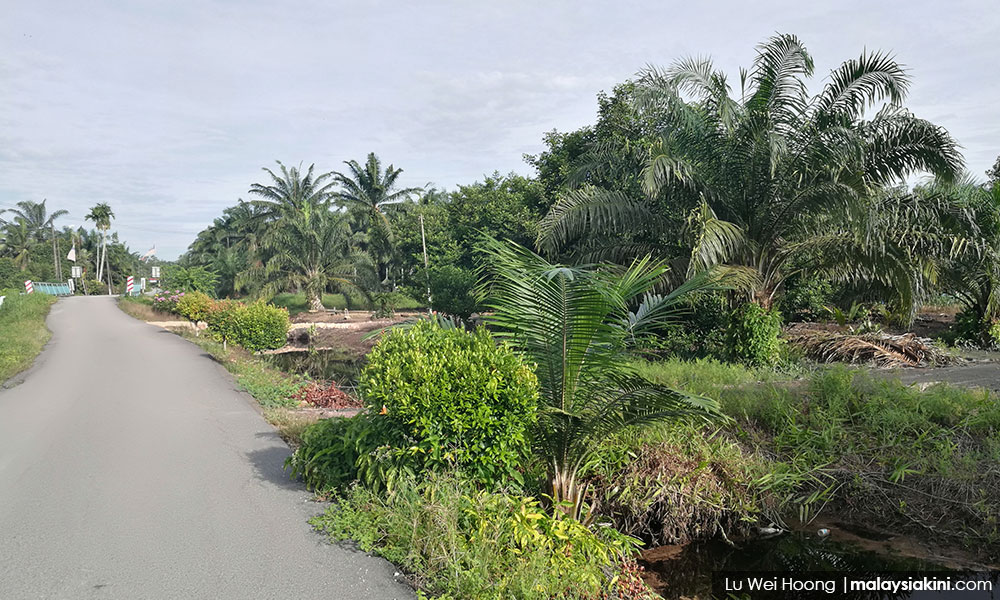
Ramli Abd Hamid, who resides at Kampung Sri Mendapat said the villagers have enough money to feed their families and they were not concerned about the goods and services tax (GST).
"Those who own a plantation or estate are doing well. They rented out their palm oil estates to contractors to manage (it) and (they) collect rent thrice a month.
"They are the bosses who lead comfortable lives. Rising cost of living will not impact them," he told Malaysiakini.
"They raise livestock, grow vegetables and even go fishing. They always have a meal on their tables.”
As such, he said, the villagers are unlikely to resonate with the opposition’s message concerning a change of government as necessary to keep inflation in check.
He noted that the kampung parit are just another vote bank for BN, like the Felda settlements. Any party that campaigns in Ayer Hitam, should not ignore the sentiment of the kampung parit if they want to win, said Ramli.
'Most villagers happy with Wee'
Most villagers told Malaysiakini that they accepted that Wee could not be with them permanently in Ayer Hitam as he has to fulfil his duties as a cabinet minister.
However, they are happy with the level of service provided by Wee’s office.
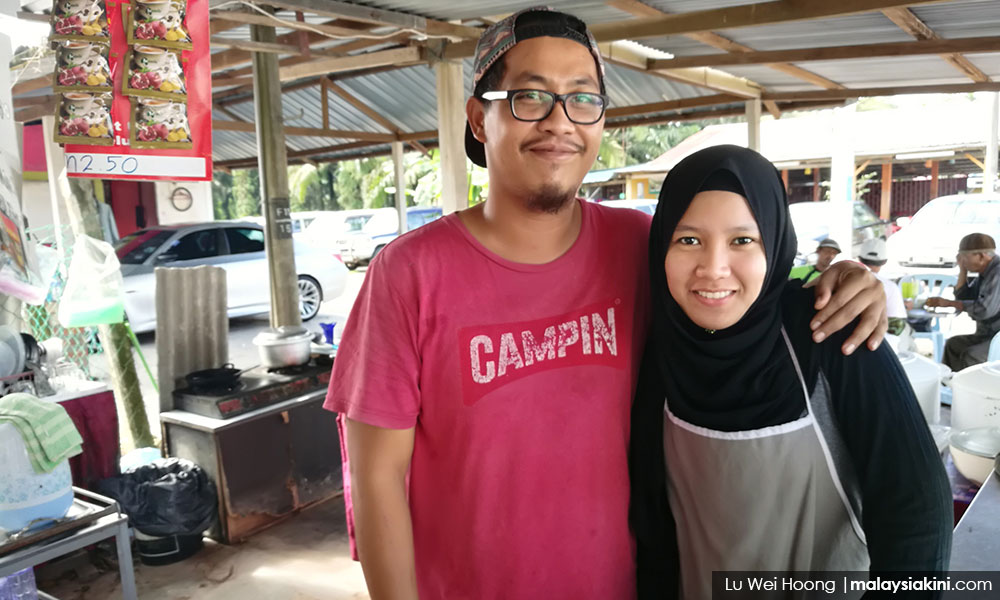
Fazly Abd Hadi, 36, who manages a food stall near Kampung Parit Haji Siraj, said Wee has a reputation of never turning down wedding invitations despite his tight schedule.
"The people like him as he was closed to us. You can see him at any wedding ceremony and Hari Raya celebration," he said.
Just two days before Malaysiakini spoke to Fazly, Wee rushed back from Kuala Lumpur to attend the Javanese wedding ceremony of the daughter of an Umno senator.
There were at least ten requests for selfies during the luncheon. Wee obliged all of them.
At one point, Wee was approached by a group of Umno grassroots who sought funds for local activities. Wee requested for a proposal and said the matter would be referred directly to the prime minister.
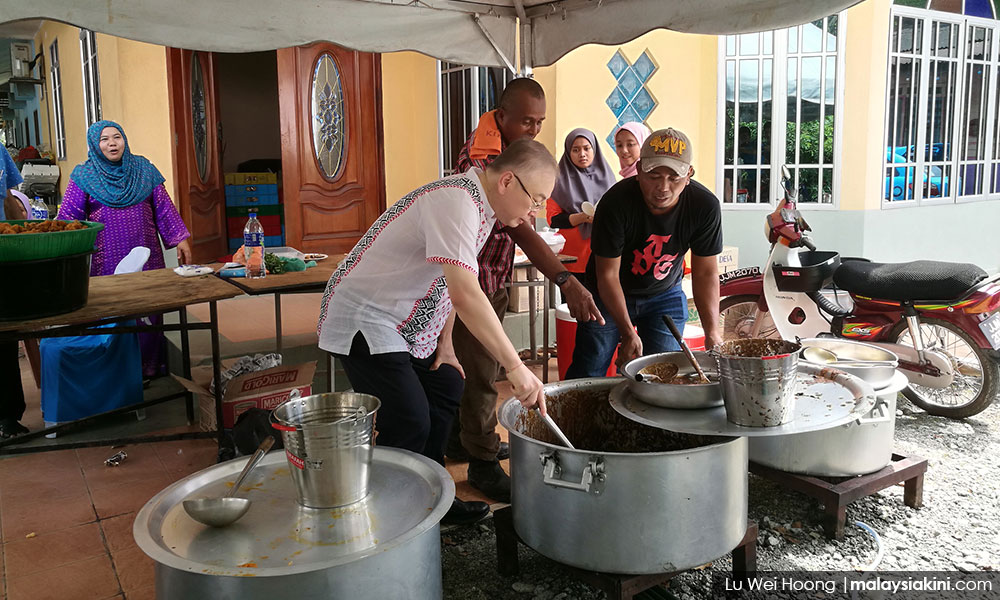
Then he popped into the kitchen, where the host invited him to place mutton curry into the steel barrel. This is a symbolic act by the Javanese community here to show that they treat Wee as kin.
Suwasa Abd Manap, a 59-year-old Umno member said a Javanese family will ask their friends and relatives to help with cooking duties whenever they plan a banquet.
This is the Javanese tradition called “rewang” or community-based collaboration for activities.
And according to her, Wee never turned down any request from the villagers for help.
"We normally ask for clothes and tents whenever we have 'rewang'. We need approximately 20 people to help out during the wedding and we asked others to provide some offerings. We are close to him and he has never let us down," she said.

Wee appears to also enjoy close working relations with the Ayer Hitam Umno division, who are key to securing support for BN in Semarang.
Samsol Bari Jamali, who is the Ayer Hitam Umno chief, said Umno-MCA ties had allowed BN to provide unparalleled service to the constituents, which enabled Wee to sail safely through the much touted “political tsunami” of 2013.
"We have worked closely in the past three (parliamentary) terms, we are colour blind in terms of serving the community. As such, Wee could win the polls with a comfortable majority."
"While there was declining support from Chinese voters, the Malays were with him. This led to his victory. They know who are serving them,” said Samsol (photo).

Not all sure of BN
Although BN, through Umno, has historically enjoyed undivided support from Malays in Semarang, a straw poll of villagers from the kampung parit found that only a minority were willing to pledge their support for BN this time around.
The rest declined to divulge their voting inclinations, with many finding it hard to predict who would be the victor in Ayer Hitam come GE14.
For instance, Sarbadin Isman, a 57-year-old self-employed man who lives in Kampung Parit Salleh Kairon, was undecided whether he should continue to vote for BN.
"I cannot tell for now. I voted for BN before, but I am not sure this time," he said.
This reluctance among some kampung parit folks is a surprising finding because rural voters, especially in Umno or PAS strongholds, tend to be extremely public and even proud of their political allegiance.
Sarbadin’s account of his economic situation possibly provides a clue as to why he and his cohorts have an uncertain political outlook for Ayer Hitam.
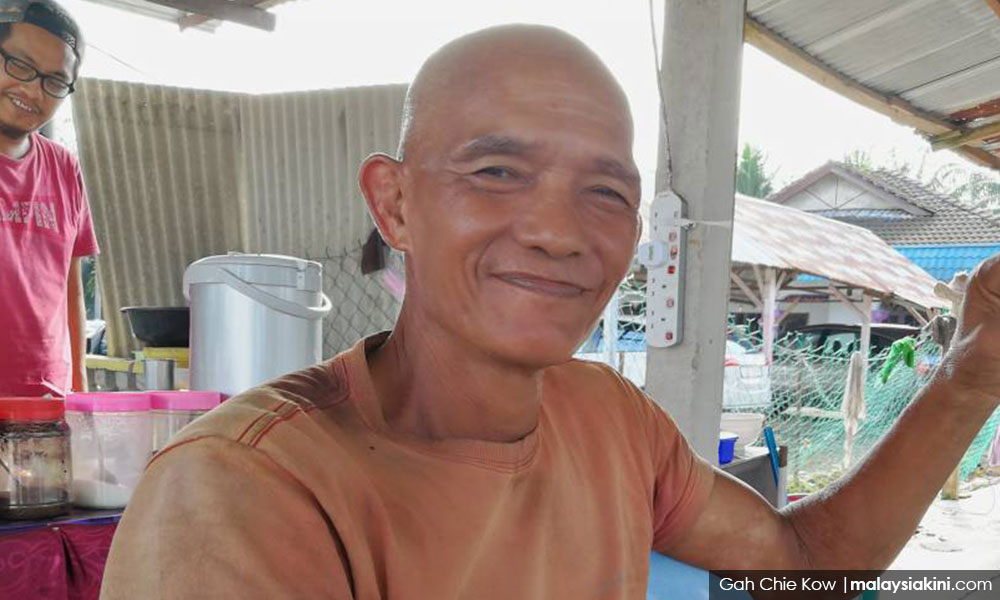
Unlike others who lead comfortable lives as plantation owners, Sarbadin (photo) rents a palm oil plantation spanning 20 acres nearby which earns him about RM900 a month.
He said he could not support his family of five with such little money.
His repeated applications to various funding and welfare programmes from the government have also been unsuccessful.
"It makes no difference as to which party rules the country. Whenever you ask, they will say 'yes', but after they have secured your vote, you get nothing," he said.
Some analysts, including Johor DAP chief Liew Chin Tong, believe that a sizeable Malay population are preparing to ditch BN this time around as part of a “Malay tsunami”, but are keeping quiet for now, similar to how the Chinese had suddenly jettisoned BN in 2008.
Meanwhile, Ayer Hitam Amanah election committee secretary Ramli Abd Hamid (photo), who concurred with Liew, said the voters who do not own any land and the out-of-town voters facing economic stress were likely to vote for Harapan.
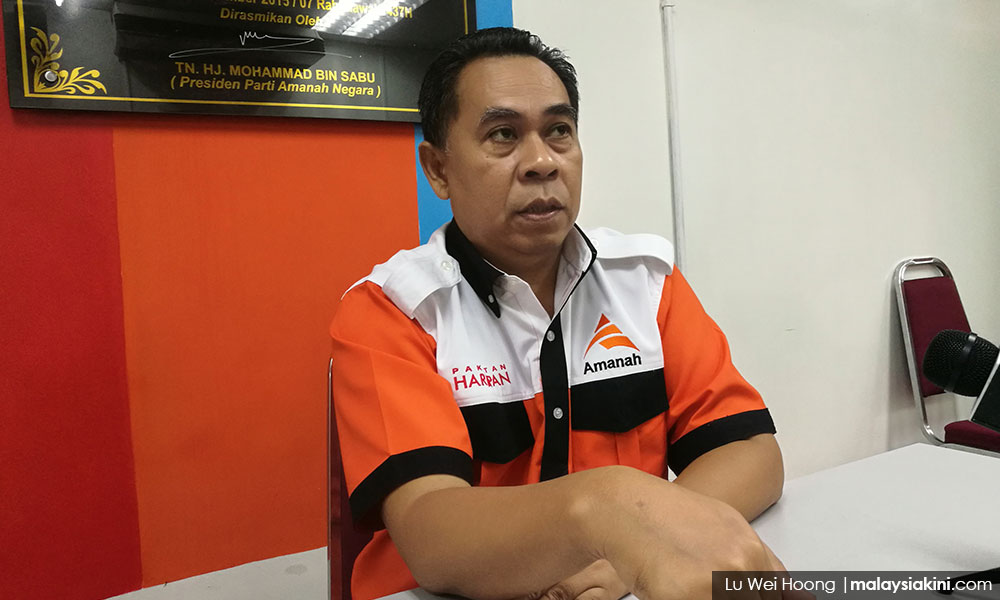
"The locals who work outstation would normally build their house after they returned. Life would not be easy if they do not have land here, they have to work outstation," he said.
"Amanah has already begun campaigning door-to-door and handing out aid to the needy. This would encourage Umno to work harder and we can promote our party as well.
"We visit the patients, hand out goods and rice, so the voters come to know us. For instance, soon after we paid a visit to a village, Umno will send a lorry of rice to the same place," he said.
Ramli hopes that such a strategy will be able to penetrate Umno's heartland.
DAP strategists have estimated that the opposition can unseat Wee if they obtain 30 percent support from Malay voters, 85 percent votes from Chinese and 50 percent from Indians.
But for BN, maintaining its grip on Malays from the kampung parit is the key to flooding the moat around their Ayer Hitam fortress against the Harapan invaders.
Wooing Chinese back to MCA in Ayer Hitam - one family at a time


