



Inquiry zooms in on Amri's alleged Syiah links
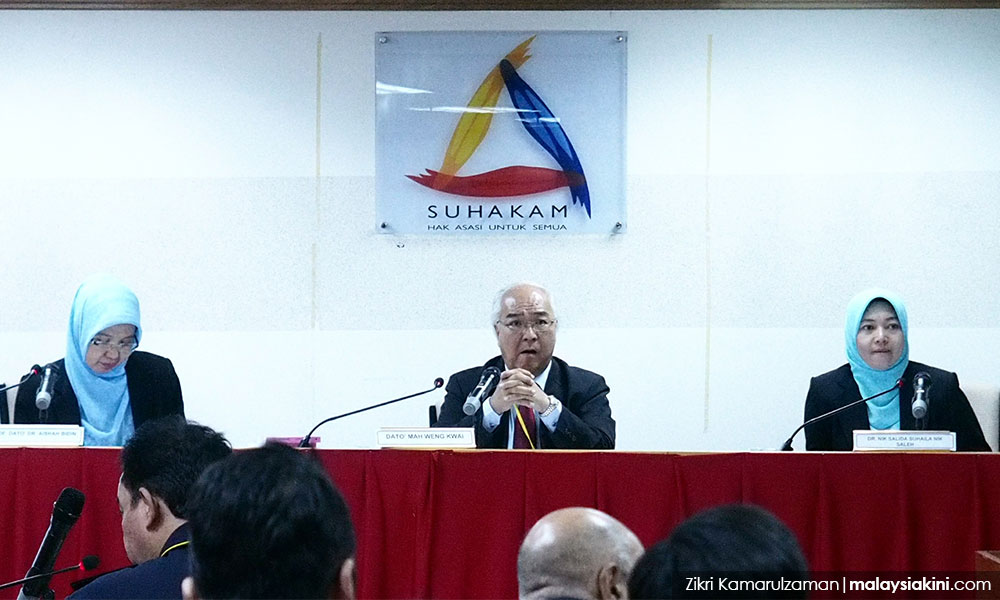
SUHAKAM INQUIRY | Activist Amri Che Mat's ties to Iran and alleged Syiah links came under scrutiny today, the second day of Suhakam's inquiry into his disappearance and three others.
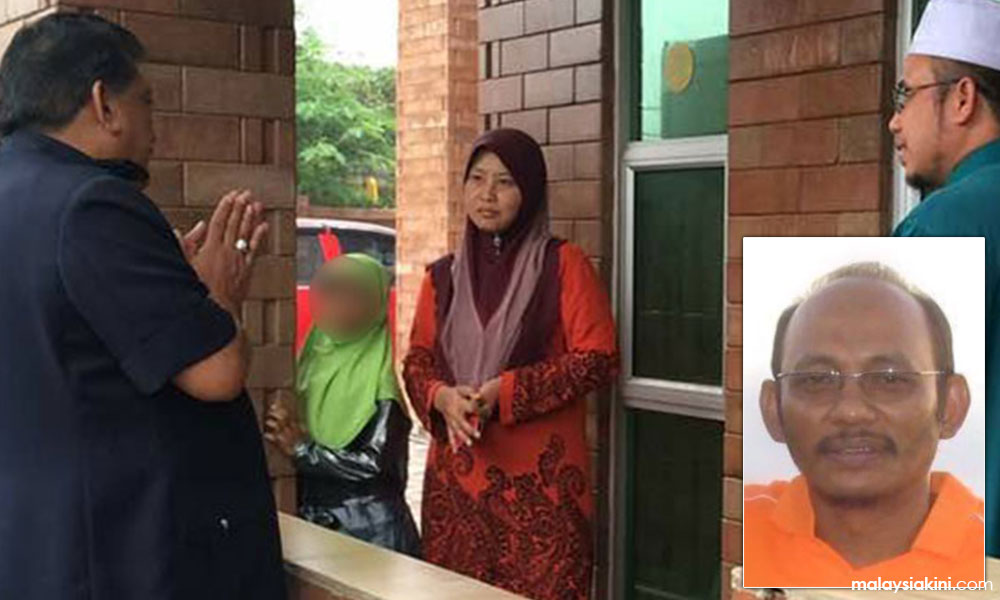
Amri's wife Norhayati Ariffin told the inquiry panel led by Suhakam commissioner Mah Weng Kwai that three of their eight children had furthered their studies in Iran.
Of her four own daughters, Norhayati said one of them is currently in Iran, one is in Perlis,while the younger two had accompanied her to attend the hearing today.
The eldest two of her four adopted children - aged between 16 to 20 - are also in Iran while the other two are enrolled at a private boarding school in Thailand...
SUHAKAM INQUIRY | Wife reveals that several children studying in Iran and Thailand.
SUHAKAM INQUIRY | Activist Amri Che Mat's ties to Iran and alleged Syiah links came under scrutiny today, the second day of Suhakam's inquiry into his disappearance and three others.
Amri's wife Norhayati Ariffin told the inquiry panel led by Suhakam commissioner Mah Weng Kwai that three of their eight children had furthered their studies in Iran.
Of her four own daughters, Norhayati said one of them is currently in Iran, one is in Perlis, while the younger two had accompanied her to attend the hearing today.
The eldest two of her four adopted children - aged between 16 to 20 - are also in Iran while the other two are enrolled at a private boarding school in Thailand.
"Why Iran? Because Iran gives out scholarships to study there and I don't think there is anything wrong about studying there," she said to repeated questions from the panel.
Norhayati repeatedly said she was "unsure" when probed for further details except for revealing that her daughter was enrolled in a Persian language degree course and that the university was not in Iran's capital of Tehran.
Asked on the detail of the private boarding school in Thailand, Norhayati also said she was unsure beyond the fact that it offered a dual-syllabus of mainstream and religious education.
"Our adopted children are from a poor family and had dropped out of school. So we don't know which school to send them to here," said Norhayati when pressed for reasons on their decision to send the children abroad.
"Normally my husband would send them there or they would take their own transport," she insisted when it was noted by the panel how strange it was that a mother did not know the details of her own children's school.
"You do not know or you do not want to let us know?" Mah commented.
The panel chairperson also asked Norhayati if Amri had recently been to Iran to which she responded that he had not been there in the last three to four years.
She said she could not recall how many times Amri had gone to Iran as it was "a long time ago".
Mah also asked the reason Amri went to Iran to which she replied "business".
“He usually goes for a week. He buys kurma and honey (to sell)," she said.
During the afternoon session, the inquiry's second witness Abdul Jamil Ahmad told the panel he first met Amri in 2003 in Iran.
"I was part of a tour group and Amri was travelling alone. I found out he was from Perlis and as I was from Kedah, we soon became good friends after returning to Malaysia," said the 56-year-old former Islamic Studies secondary school teacher.
Over the years, Jalil said he would regularly meet Amri over coffee in Jitra, Kedah - a mid-way point between their two homes.
Asked about Amri's fascination with Iran, Jalil said the former teacher admired Iran's strength as a political force.
Perlis mufti Mohd Asri Zainul Abidin has previously described Amri as a "Syiah activist" after the former was named in the inquiry by Amri's wife, Norhayati Ariffin.
Asri, in a Facebook posting yesterday, had shared several photographs taken from Amri's home which he claimed were evidence of his Syiah links.
Police observer to the inquiry, R Munusamy, asked Jalil to identify an Arabic phrase in one of the photographs.
In response, Jalil said he recognised the photo from Amri's living room and the phrase meant "Hussein dizalimi" with Hussein being the grandson of Prophet Muhammad.
He agreed with Munusamy's suggestion that Hussein was recognised as a Syiah imam.
Amri was reportedly abducted on Nov 24, 2016.
Syiah Islam is considered deviant by Malaysia where almost all Muslims adhere to Sunni Islam.

Suhakam is investigating whether the disappearances amount to "enforced or involuntary disappearance" as defined by the International Convention for the Protection of All Persons from Enforced Disappearance (ICPPED).
The two other disappearances being investigated are that of pastor Joshua Hilmy and his wife Ruth Sitepu.
The inquiry into the disappearance of another pastor, Raymond Koh (above), was suspended after police charged a suspect with his kidnapping last week.
The law bars Suhakam from probing matters which have been brought before the court.
RELATED REPORTS
Cop: No records found on Amri Che Mat's last travel to Thailand
Witnesses of Amri’s abduction 'afraid to come forward', inquiry told


