


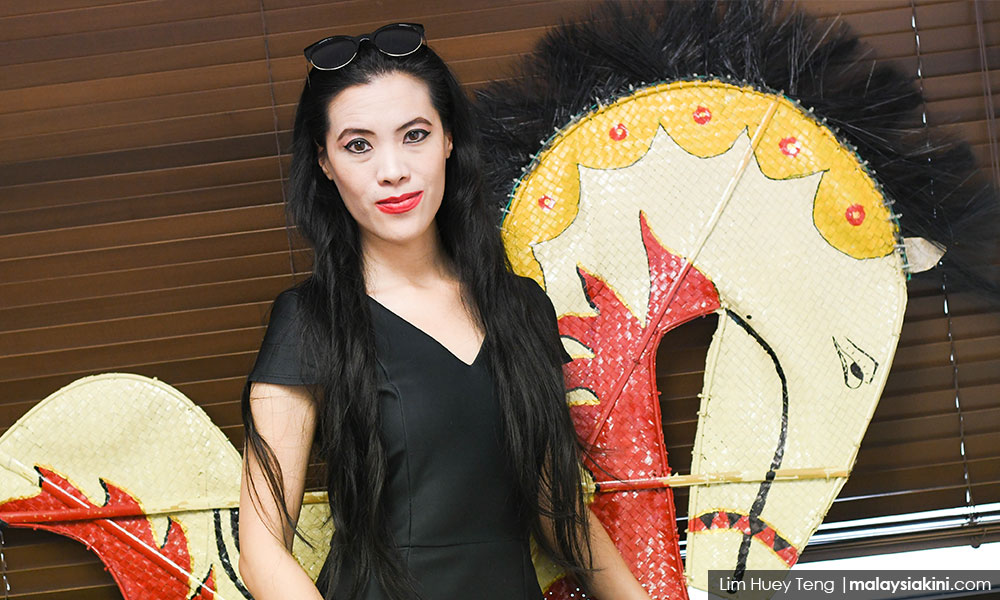

Working hard to revitalise country’s traditional arts
MALAYSIANS KINI | It was the early 2000s. She sat there enraptured by a live Mak Yong performance in a village in Kuala Besut, Terengganu.
Fresh out of college, having graduated from New York University with a degree in history, literature and philosophy, Pauline Fan never knew that Mak Yong could be an entire world of its own as she witnessed the performance.
The performance was one that was full of intense energy - raw and powerful.
“I never expected traditional Malay dance to be so deep and so complex with so many layers,” she told Malaysiakini in an interview.
And that was the moment of epiphany for Fan, who decided that she wanted to do something more in relation to the traditional arts.
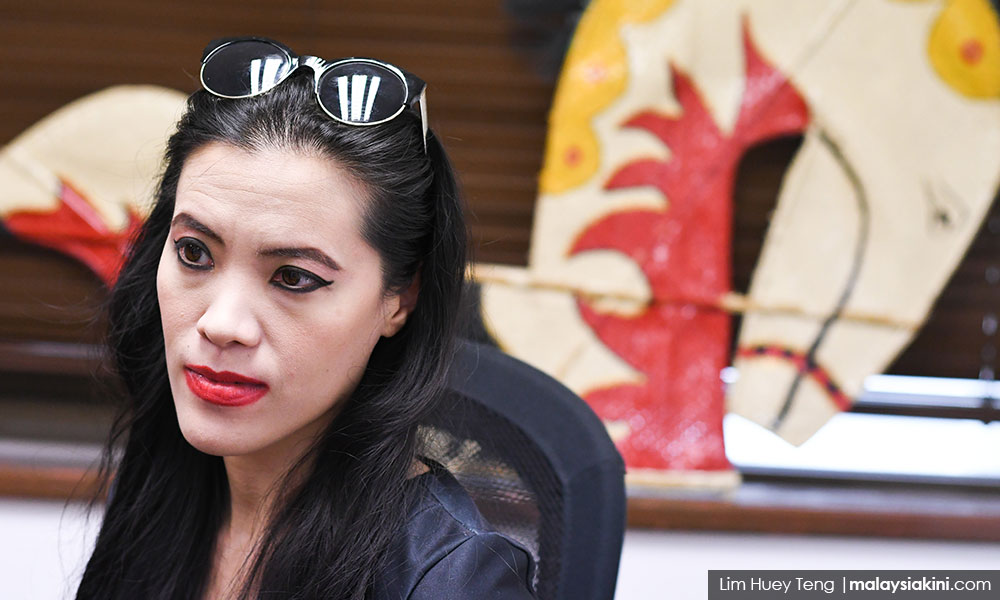
Fast forward 18 years later, Fan (photo), who is currently the creative director of Pusaka – a cultural heritage organisation which works with traditional performing arts throughout the country – said that the organisation is still working with the same Mak Yong community.
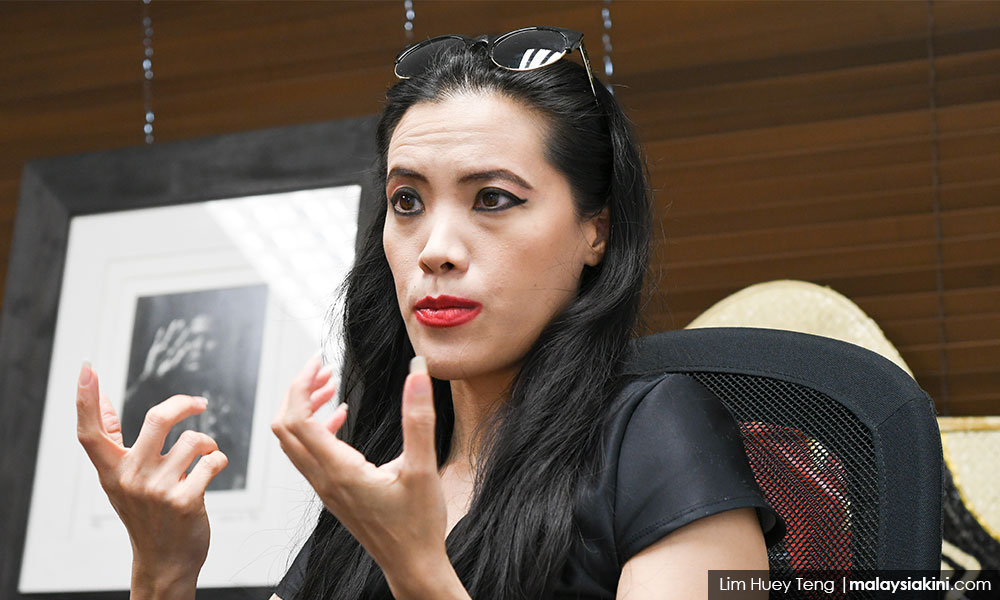
“Every Mak Yong performance and every traditional art that I see, it always has something completely new and vibrant and exciting to explore. For us, these traditions really are alive."
A traditional form of dance-drama, Mak Yong was officially banned by the PAS-led Kelantan state government in 1998 due to its “pre-Islamic” elements.
For 40-year-old Fan, her work does not stop at Pusaka. She is also a writer and a literary translator.
Fan’s father is the late former DAP acting secretary-general Fan Yew Teng who was swept into Parliament in the 1969 general election, and her mother is former United Nations under-secretary-general Noeleen Heyzer. However, "formal politics," as Fan calls it, is out of the equation for her.
“I think it's important to be political, I think everyone should have a political stand and political convictions and I certainly have my own convictions. A lot of work we do always has a certain element (of politics) to it.
"But I've never been attracted to actually get into formal politics. I know a lot (of people) who are in formal politics, and I respect that is what they do, but I really do think that my calling is elsewhere."
Role of ‘cultural politics’
While she may not harbour any ambitions to be in politics, Fan lamented how cultural politics tends to be left out of formal political discourse.
“When actually, at least for us, we think it's one of the major things because it affects people's psychology towards each other and themselves. So many of our problems are rooted in culture," said Fan.
Cultural politics was even Pusaka’s raison d’etre.
Pusaka was founded by writer Eddin Khoo in 2002. He had started working with traditional masters from Kelantan after the local government implemented the ban on some of the traditional arts in the state.
“This example of cultural politics has to do with trying to redefine particularly the Malay Muslim community and what that Malay identity is.
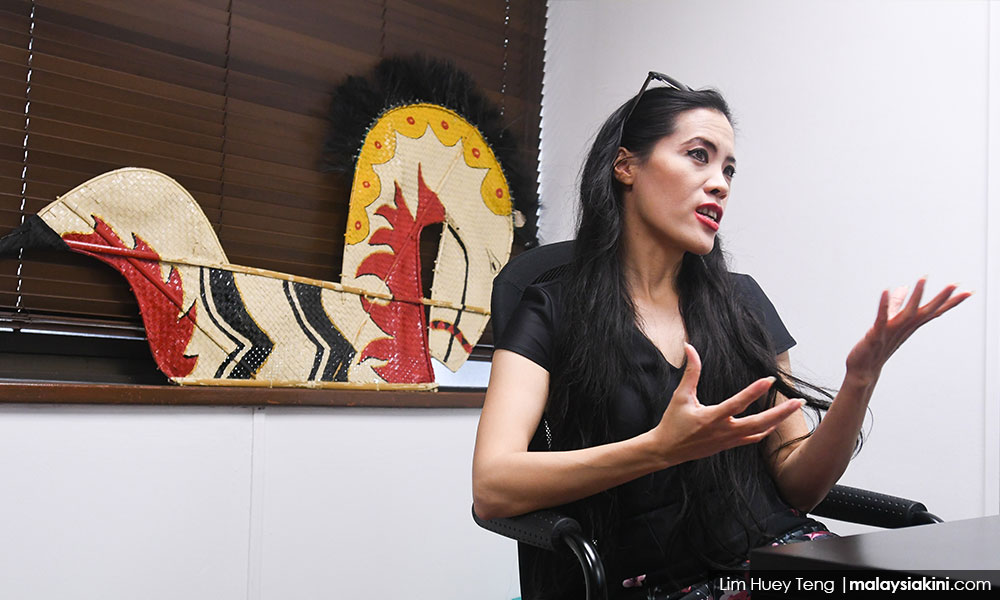
“Unfortunately that interpretation affected the traditional arts, because I think the traditional arts has always been seen as a space that is quite autonomous, and has a lot of influences from different cultural traditions that has been absorbed into Malay culture and has been made into Malay culture.”
While they have no choice but to deal with such politics, Fan says Pusaka’s approach is to address it in the most creative and constructive ways.
“We try not to be confrontational when it comes to cultural politics, but we always try to be constructive, and we support the communities in ways that will really support them rather than defeat them.
“Sometimes being confrontational with cultural politics doesn’t really get you very far, because it defeats the purpose and sometimes ends up endangering the communities."
Like many successful people, Fan’s work has obliged her to sacrifice her sleep.
“I don’t sleep,” chuckled Fan. “Writing usually happens after midnight."
Dad's love of literature
While both Fan’s parents are very influential in her work, Fan cites her father in particular who had been influential in her love for literature.
“He had a beautiful collection of literature, a lot of history and politics. He was a politician and he loved history but many of the books he read and loved, ended up being the books that I first started reading, like Franz Kafka and Thomas Mann.
“He encouraged me to do literature, and he never pressured me to get involved in politics, which I appreciate.”
Moving around during childhood, on the other hand, has definitely helped shape her into being open and able to adapt to different communities...
MALAYSIANSKINI | Indifference to heritage comes from misperception of what culture is, says Pauline Fan.
MALAYSIANS KINI | It was the early 2000s. She sat there enraptured by a live Mak Yong performance in a village in Kuala Besut, Terengganu.
Fresh out of college, having graduated from New York University with a degree in history, literature and philosophy, Pauline Fan never knew that Mak Yong could be an entire world of its own as she witnessed the performance.
The performance was one that was full of intense energy - raw and powerful.
“I never expected traditional Malay dance to be so deep and so complex with so many layers,” she told Malaysiakini in an interview.
And that was the moment of epiphany for Fan, who decided that she wanted to do something more in relation to the traditional arts.
Fast forward 18 years later, Fan (photo), who is currently the creative director of Pusaka – a cultural heritage organisation which works with traditional performing arts throughout the country – said that the organisation is still working with the same Mak Yong community.
“Every Mak Yong performance and every traditional art that I see, it always has something completely new and vibrant and exciting to explore. For us, these traditions really are alive."
A traditional form of dance-drama, Mak Yong was officially banned by the PAS-led Kelantan state government in 1998 due to its “pre-Islamic” elements.
For 40-year-old Fan, her work does not stop at Pusaka. She is also a writer and a literary translator.
Fan’s father is the late former DAP acting secretary-general Fan Yew Teng who was swept into Parliament in the 1969 general election, and her mother is former United Nations under-secretary-general Noeleen Heyzer. However, "formal politics," as Fan calls it, is out of the equation for her.
“I think it's important to be political, I think everyone should have a political stand and political convictions and I certainly have my own convictions. A lot of work we do always has a certain element (of politics) to it.
"But I've never been attracted to actually get into formal politics. I know a lot (of people) who are in formal politics, and I respect that is what they do, but I really do think that my calling is elsewhere."
Role of ‘cultural politics’
While she may not harbour any ambitions to be in politics, Fan lamented how cultural politics tends to be left out of formal political discourse.
“When actually, at least for us, we think it's one of the major things because it affects people's psychology towards each other and themselves. So many of our problems are rooted in culture," said Fan.
Cultural politics was even Pusaka’s raison d’etre.
Pusaka was founded by writer Eddin Khoo in 2002. He had started working with traditional masters from Kelantan after the local government implemented the ban on some of the traditional arts in the state.
“This example of cultural politics has to do with trying to redefine particularly the Malay Muslim community and what that Malay identity is.
“Unfortunately that interpretation affected the traditional arts, because I think the traditional arts has always been seen as a space that is quite autonomous, and has a lot of influences from different cultural traditions that has been absorbed into Malay culture and has been made into Malay culture.”
While they have no choice but to deal with such politics, Fan says Pusaka’s approach is to address it in the most creative and constructive ways.
“We try not to be confrontational when it comes to cultural politics, but we always try to be constructive, and we support the communities in ways that will really support them rather than defeat them.
“Sometimes being confrontational with cultural politics doesn’t really get you very far, because it defeats the purpose and sometimes ends up endangering the communities."
Like many successful people, Fan’s work has obliged her to sacrifice her sleep.
“I don’t sleep,” chuckled Fan. “Writing usually happens after midnight."
Dad's love of literature
While both Fan’s parents are very influential in her work, Fan cites her father in particular who had been influential in her love for literature.
“He had a beautiful collection of literature, a lot of history and politics. He was a politician and he loved history but many of the books he read and loved, ended up being the books that I first started reading, like Franz Kafka and Thomas Mann.
“He encouraged me to do literature, and he never pressured me to get involved in politics, which I appreciate.”
Moving around during childhood, on the other hand, has definitely helped shape her into being open and able to adapt to different communities.
“Perhaps being open to different ways of thinking helped shape my openness to looking at other cultures.”
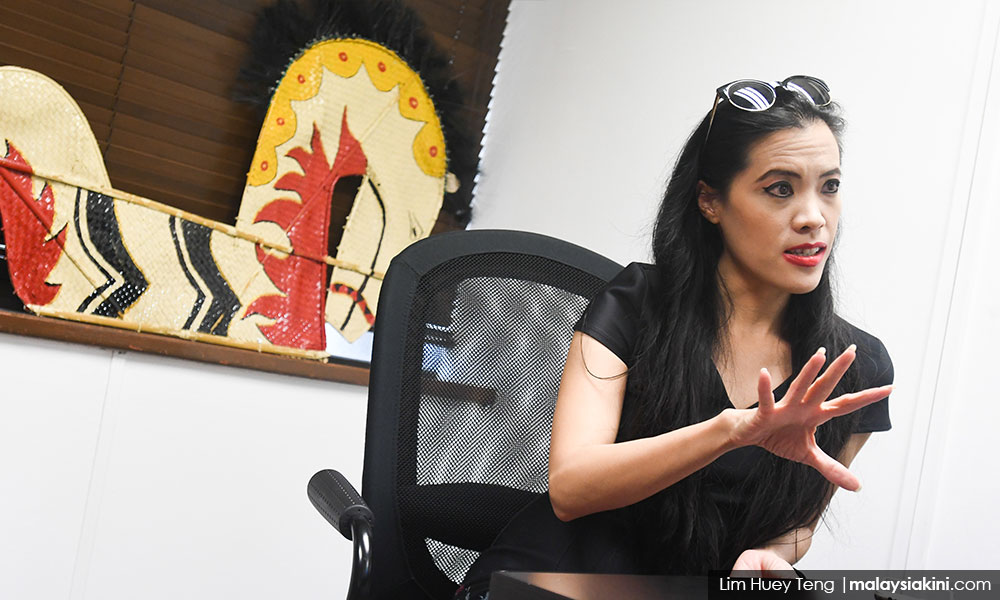
While she already wears many hats, Fan makes it a point to train and perform Burmese dance with her dance master, visiting Myanmar several times a year.
Just last year Fan and her dance master U Win Maung - whom Fan credited as having a big influence in her life - performed at the national theatre in Yangon.
Speaking further about her interest in the traditional arts, Fan said she had studied Burmese dance while pursuing her university degree.
"Spending time with my dance master helped me appreciate the nuances of the traditional arts.
“So when I came back here after my degree I was curious about what was happening here. At that time, Eddin was writing for the press and my father passed me a lot of his articles – he was writing about cultural politics in Kelantan during that time.”
Fan contacted Eddin and they began talking with each other.
“And then he said, ‘why don’t you come up with me to see a Mak Yong performance’ because he was organising one, and that was the moment of epiphany for me," she said.
As a child, Fan, together with her twin sister moved around a lot due to her mother's work obligations.
Born in England as her mother was completing her PhD at the University of Cambridge, she and her twin grew up in England for four years before they went to Bangkok, Thailand for two years.
“I moved to Kuala Lumpur when I was six, I was here until the last year of high school which I completed in New York because my mother got a job in the United Nations in New York."
Beauty of Bahasa Malaysia
While English is her first language and Bahasa Malaysia her second, Fan’s eyes lit up as she spoke about her love for the latter.
“I always did well in Malay but I think I really fell in love with the language when I was reading the late Shahnon Ahmad's 'Srengenge', that was one book that I really remember from literature class, and that really opened my mind to the beauty of the Malay language and the potential of Malay as a literary language.
“Just listening to old Malay songs, the lyrics are so poetic. Even when I was away, the kind of homesickness that I felt when I was in New York, I listened to a lot of old Malay songs and that really kind of deepened my love for the language.
“But I only really started immersing myself a lot more in the language when I started translating."
For Fan, it is sometimes even more pleasurable to write in Malay than in English.
“I like writing in Malay. It’s a beautiful language. English is such a global language, so overused, you need to really work hard at finding your own voice, tone and language in English.
“Sometimes English just sounds so banal, because it's used for everything. Certainly it's difficult to be poetic in English.
“For me, Malay is naturally beautiful as a language. There are some languages which are just naturally lyrical languages and Malay is definitely one of them.
Fan used to have a column in the Bahasa Malaysia section of Malaysiakini and also used write book reviews for the now-defunct magazine Siasah back in 2002.
Apart from her love of Bahasa Malaysia, Fan also speaks fondly of the German language.
She enrolled herself in German language classes at the Goethe-Institut in Kuala Lumpur after her university degree. She later graduated from the University of Oxford with a masters in German literature.
Here, Fan speaks further about her work with Pusaka.
IN KELANTAN, THE PERFORMING ARTS HAS AN IMPORTANT SOCIAL FUNCTION. For example, it has the function of healing.
For those whose spirit is a bit off, this is a type of sickness that cannot be healed by a doctor. Sakit berangin is a kind of longing, it’s metaphysical, a longing for something, a little bit melancholic and abstract but it has a lot to do with not being able to express oneself.
Sometimes they put on a Main Puteri performance to heal the patient and the patient is encouraged to express themselves. They will be encouraged to get up and dance and interact with the Tok Puteri and that is a process of healing, expressing oneself in a certain way that the social pressures of community life don’t usually allow for.
THESE TRADITIONAL ARTS ARE MORE THAN SONG AND DANCE. They encapsulate an entire worldview and very often encapsulate the wellbeing of the community.
It’s something that is not greatly appreciated by people who are just making policies on culture who don’t actually appreciate the complexity of what these traditions are.
ALL OF THE PERFORMERS WE WORK WITH ARE VERY DEVOUT MUSLIMS. None of them in any way would ever say they are doing something against their faith. They would never dream of doing something like that.
For them, the tradition is a tradition and it’s something that has been passed down to them by their teachers.
THE MAIN DAMAGING EFFECT OF THE BAN IN KELANTAN is the fact that the masters are not able to teach the young people. This is partly because they need some kind of financial viability, so we do try to do projects where we can get some financial support for them.
THE DEEPER ISSUE WITH THE BAN is the psychological insecurity about the Malay identity. The roots are in that, and it's unfortunate because the Malay identity cannot just be reduced to one thing, it's so complex.
Malay culture has been very open, historically, to other influences. It has the ability to syncretise, there's a lot of syncretism in the Malay worldview and that's natural. But the fact that people single that out to be problematic, it's an insecurity that is paired with puritanism - because you have a syncretic past, you are “not Muslim enough,” which is really quite a very short-sighted way of looking at things.
THE LACK OF INTEREST IN CULTURAL HERITAGE HAS TO DO WITH OUR MISPERCEPTION OF WHAT CULTURE IS. Even myself, before I got involved with Pusaka, before I really saw a Mak Yong performance, I was quite alienated from the entire world. I actually didn’t understand what those traditions were.
For most of us, especially us in the urban centres who don’t grow up among these things, what we see of cultural traditions is what we see probably on TV during Merdeka as a kind of procession or pageantry.
That tends to be our conception of what these traditions are, that it’s always sort of categorised, “This is Malay, Chinese, Indian,” these are the different dances we do. Very static and not very interesting, it’s not alive.
That’s why Pusaka thinks it is important to bring out the communities to engage with the Kuala Lumpur audience because every time we do that it gets an incredible response from young people who have never see these things before.
THE FIRST TIME PEOPLE SEE A MAK YONG PERFORMANCE, people are quite amazed. They can experience the power of transformation of these arts and that is what great art should be, it should have the power to transform.
I think all of those traditions have that but the way we tend to represent them doesn’t do justice to these traditions and it alienates most of us, including myself, until I really saw and engaged with the real thing.
ONE OF THE MOST IMPORTANT THINGS FOR US IS TO PASS DOWN THE KNOWLEDGE OF TRADITIONAL ARTS to the younger generation in the communities themselves. So we do a lot of training projects with young people in the community and we work closely with the masters of these performing traditions.
We also try to bring out these performers outside of their communities to places like Kuala Lumpur to engage with a different audience but also sometimes internationally, even as far as Europe and America to perform.
We try to engage with different sectors of society to actually realise some of these projects. We work closely with some people from the private sector, other NGOs as well as regional and international bodies towards a similar vision of revitalising and supporting the viability of traditional arts.
WE’VE MANAGED TO TRAIN AN ENTIRE YOUNGER GENERATION of wayang kulit performers. We are in the process of training a young generation of Mak Yong performers as well.
STORYTELLING TRADITIONS ARE HARD TO PASS DOWN because they are oral traditions. There’s usually one master storyteller and usually it’s a hard tradition to master, especially by the younger generation who have gone through a modern education system.
I think we are not as sensitive anymore to oral stories and our faculties function differently from the older generation, so that is a challenge.
ONCE A MASTER GOES, you lose an entire world of knowledge. So we try to document. That’s the other part of Pusaka’s work that we do quite intensively – doing a lot of interviews, documenting not just the performances but the methods of training.
FOR THE FIRST FEW YEARS IT WAS CHALLENGING to convince people that what we were doing was not dangerous.
I think some people were a little bit intimidated by the cultural politics. I think now a lot of people are willing to look and see that culture is beyond politics and it's not about politics.
It's really about continuing a certain way of life and these rich art forms that are distinct to us.
If we don't ensure they are passed down by the community themselves, it’s quite meaningless to just preserve them in national institutions. These traditions are mostly folk arts so they belong to the communities. If you can only see them in museums, what's the point?
I SEE A BRIGHT FUTURE FOR CULTURAL TRADITIONS IN THE COUNTRY because the communities who are practising them are actually very dedicated to it. Culture is stronger than politics, no matter what kind of cultural politics we have.
At this point, it’s very hard to kill the spirit of the communities who perform these traditions. As long as something is needed by a community, it will survive, whether it’s banned or not.
MALAYSIANS KINI is a series on Malaysians you should know.
PREVIOUSLY FEATURED
Living life in the face of muscular atrophy
Lighting the way for neglected girls
The rebel educator who seeks to enlighten people
Rendering aid to the Rohingya through education
Bringing a ray of hope for refugee children
M’sia's first woman BRT captain drives her way to top
The real Orked remembers sister Yasmin's life and career


