


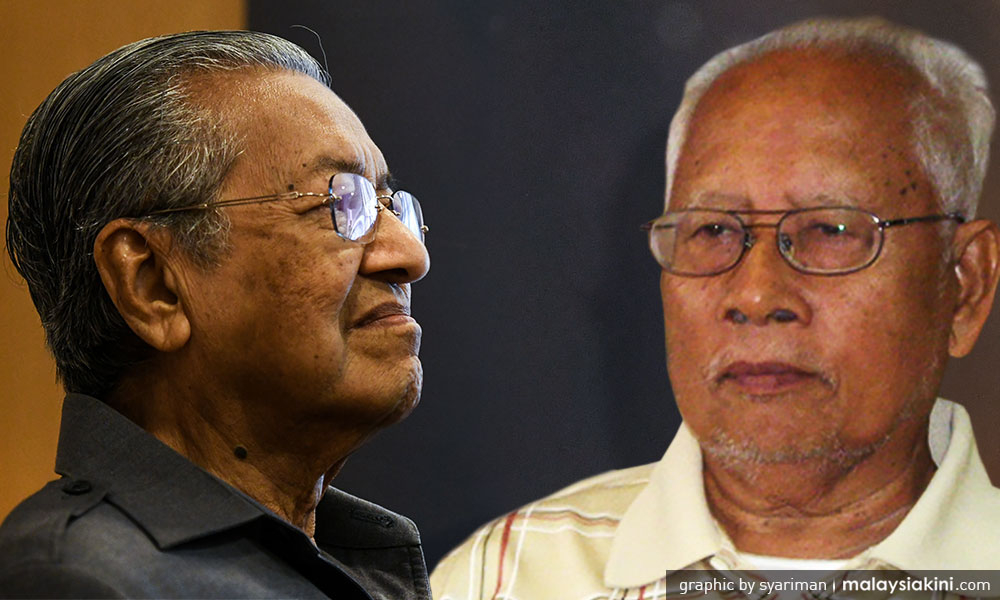

1988 judicial crisis - revisiting history of Salleh Abas' removal
KINIGUIDE | The matter resurfaces after Dr M apologised for his past misdeeds, albeit without specifics.
KINIGUIDE | In 1988, Malaysia’s highest court - the Supreme Court - was in turmoil. The head of the judiciary, Lord President Salleh Abas, was removed under troubling circumstances.
It has been described as the judiciary's darkest hour.
At the time, then prime minister Dr Mahathir Mohamad was widely accused of executing a series of legislative changes that limited the powers of the judiciary and eventually, Salleh’s removal as head of the judiciary.
This matter has resurfaced many times over the past three decades, most recently after Mahathir, now the head of the opposition, apologised for his past misdeeds, albeit without specifics.
This prompted questions on whether the apology encompassed the events that took place in 1988.
Mahathir has denied having a hand in Salleh’s removal many times before and repeated it on Jan 3, saying that he did not have the authority to sack Salleh, and that it was the then Yang di-Pertuan Agong Sultan Iskandar Sultan Ismail’s doing.
This instalment of KiniGuide will revisit, in brief, the events which took place preceding to Salleh’s removal and its impact on the judiciary today.
Refresh my memory. When did the judicial crisis start?
The year was 1988. However, events described as Mahathir’s attacks on the judiciary, which led up to Salleh’s sacking that year, can be traced back to 1986.
So what exactly happened before Salleh was sacked?
Among others, the Supreme Court (now renamed the Federal Court) had decided in the "Berthelsen case" in 1986 that the Immigration Department director-general was wrong to revoke the work permit of Asian Wall Street Journal correspondent John Bethelson because he was not given a chance to explain himself when the decision was made.
However, Mahathir expressed concerns that the judiciary might not be interpreting the law as to how Parliament and the executive intended it to.
How was the judiciary weakened?
Through amendments made to the Police Act and the Printing Presses and Publications Act, as well as reported statements by Mahathir against the judiciary.
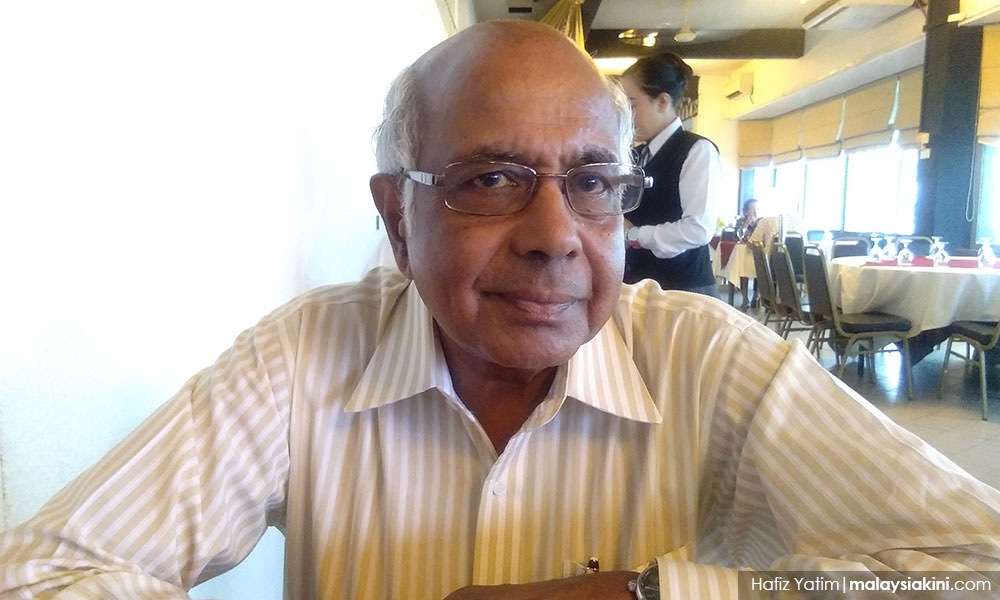
Lawyer Param Cumaraswamy (photo) in his final speech as Bar Council chairperson on March 19, 1988, had described one of Mahathir’s speeches in Parliament as being “full of venom, hate and spite...”.
The most contentious amendment to the law, however, was when Article 121(1) of the Federal Constitution - originally vesting judicial power in the courts - was replaced with "jurisdiction and powers as may be conferred by or under federal law".
This effectively removed the independence of the judiciary and subjected the courts to be subservient to federal law made by Parliament.
Any other major events?
In the 1987 Umno elections, Mahathir won by a very slim majority of 43 votes against Tengku Razaleigh Hamzah for the party presidency.
Eleven Umno members then challenged the validity of this election, which resulted in then High Court judge Harun Hashim declaring that Umno was an unlawful society.
When the case went for appeal to the Supreme Court, Salleh fixed the hearing for June 13, 1988, before a full bench of nine Supreme Court judges.
Why was this significant?
In short, the case was seen as a test of Umno’s political survival and Salleh had, in a letter to the then Yang di-Pertuan Agong and state rulers on March 26, 1988, expressed hope that "the baseless remarks (against the judiciary) will cease".
This was in light of Mahathir’s attacks against the judiciary, including through statements made in Parliament.
Two months later, Salleh was summoned to Mahathir’s office and was told that the then Agong had wished him to retire as lord president because of the said letter.
How exactly was Salleh sacked?
The decision was made by a six-member tribunal made up of high-ranking judicial officers appointed by the Agong on June 11, 1988, pursuant to the Federal Constitution.
Salleh was accused of having made critical statements against the government on several occasions, falsely claiming that the March 26 letter written to the Agong was on behalf of the judges, and giving untrue information to the media that discredited the government.
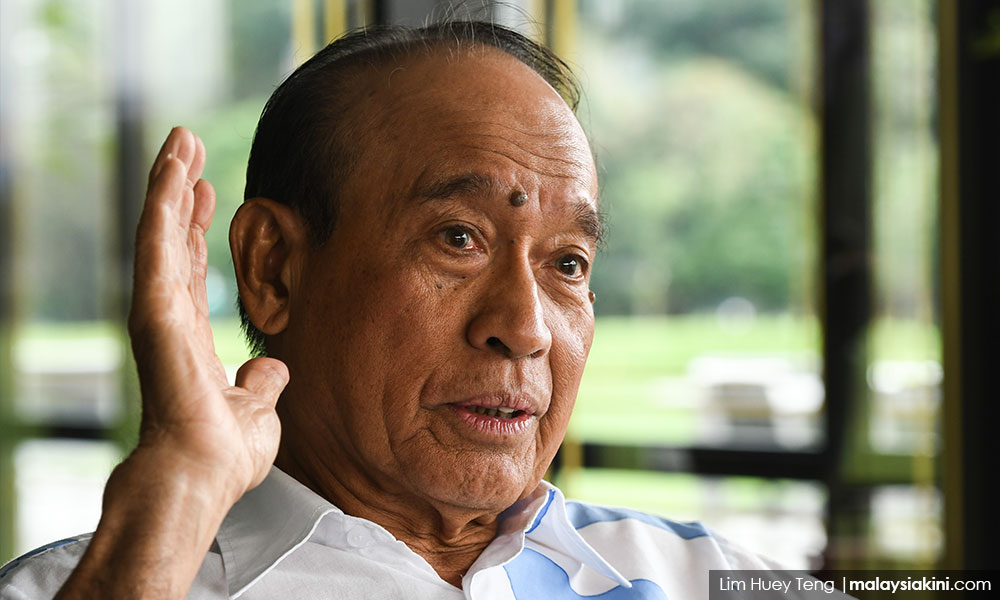
The tribunal was assisted by then attorney-general Abu Talib Othman (photo), who submitted that there was enough evidence to recommend Salleh's removal from office.
Salleh was eventually removed as lord president by the Agong on Aug 8, 1988, based on recommendations of the tribunal.
What happened next?
The Bar Council held an extraordinary general meeting and took a resolution to boycott Salleh’s appointed successor, Hamid Omar.
Meanwhile, a second tribunal chaired by judge Edgar Joseph Jr was set up to look into the conduct of the five other suspended Supreme Court judges.
Two out of the five judges - Wan Suleiman Pawanteh and George Seah - were found to be guilty of misconduct and the Agong, on Oct 4, 1988, ordered their dismissal.
The remaining three - Eusoffe Abdoolcader, Mohd Azmi Kamaruddin, Wan Hamzah Mohamed Salleh - remained suspended.
What has been the main dispute over the historical accounts?
A large part of the dispute centred around the "Umno 11" case with Mahathir's critics accusing him of attacking the judiciary out of fear that it would decide in favour of the plaintiffs who appealed to nullify outcome of the 1988 party elections.
Critics also accused Mahathir of having made recommendations for Salleh's eventual sacking, pointing out how his successor, Hamid, had dismissed the appeal by the "Umno 11".
Another contentious point was the role of the then Agong in the whole affair. Mahathir's critics said the former premier's insistence that he was carrying out the king's instructions goes against established practice under a constitutional monarchy.
The late Australian journalist Barry Wain in his 2009 book, "Malaysian Maverick: Mahathir Mohamad in Turbulent Times", also quoted Salleh as saying that the Johor sultan had openly apologised to him for the whole affair.
The sultan himself was also quoted, based on a 1995 article by NGO Aliran, that he had been "made use of" in the 1988 crisis.
According to senior lawyer Param Cumaraswamy, Mahathir had never disputed the contents of Wain's book, while at the same time insisting that he had no hand in making recommendations to crack down on the judiciary.
Are we done with the history lesson?
Not quite. Over the years, various calls have been made for the government to revisit the incident and right the alleged injustices committed against the judges.
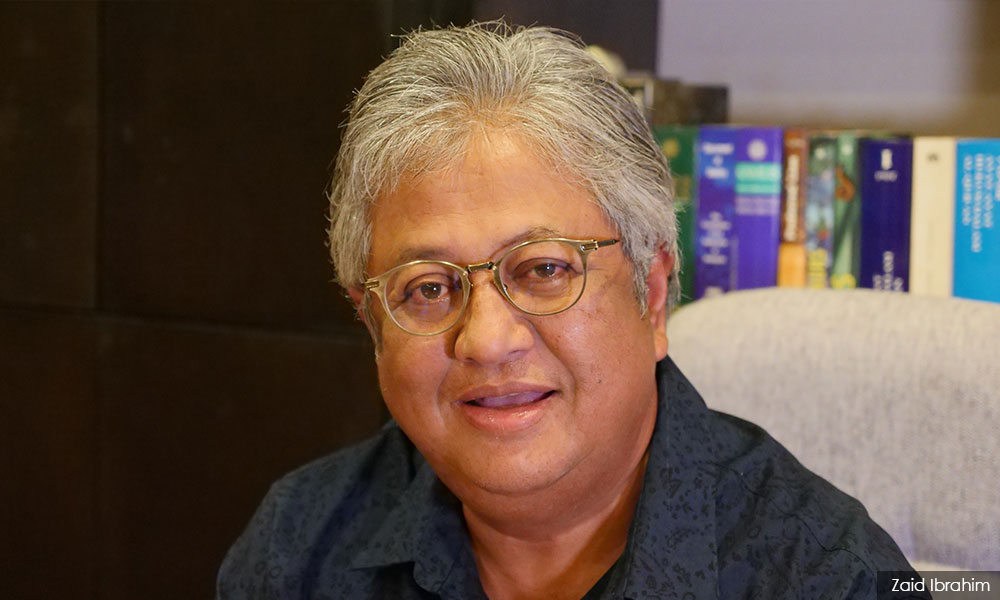
Among others, veteran politician Zaid Ibrahim (photo), who was the de facto law minister, had in 2006 suggested that the government apologises to the judges. In response, the judiciary backed Zaid’s proposal.
However, then prime minister Abdullah Ahmad Badawi said the government would not apologise to the judges.
Instead, Abdullah later announced that the government would make goodwill ex-gratia payments to all six judges implicated in the 1988 crisis.
Aside from Mahathir’s denials, were there any other accounts that backed him up?
On two occasions - in July last year and in another interview last week - former attorney-general Abu Talib Othman concurred with Mahathir’s view that he had merely acted on a complaint which came from the then Yang di-Pertuan Agong, the late Sultan Iskandar.
Sharing his own views, Abu Talib had last July said that the judicial crisis was caused by none other than the judges themselves.
In another interview last Thursday, Abu Talib once again insisted that he was not defending Mahathir, but the fact remained that the now Bersatu chairperson was not responsible for Salleh’s sacking.
What has since happened to Salleh and the rest of judges?
Of the six judges, five have passed away. Salleh, now 88, was quoted by The Malaysian Insight on Jan 6 as saying that he has moved on from the past and it is also time for everyone else to do so.
“The past is the past. I don’t want to talk about it. They are politicising the issue,” Salleh had said.
After his sacking, Salleh entered politics in 1995 and contested under Semangat 46 for the Lembah Pantai parliamentary seat, but lost against Umno.
Four years later, in the 1999 general election, Salleh stood under a PAS ticket in Terengganu and won the Jertih state seat. He was also appointed as a state executive councillor in the PAS-led government.
He did not run again in the 2004 general election, reportedly due to poor health.
According to records from the Malaysian Bar’s website, Eusoffe passed away in 1996, Wan Sulaiman in 2000, Mohd Azmi in 2009, George Seah in 2013 and Wan Hamzah in 2015.
This instalment of KiniGuide was compiled by ALYAA ALHADJRI.


