



MCKIP: 'Wall' limited to steel plant, factories won't pollute
The Malaysia-China Kuantan Industrial Park (MCKIP) has come under the spotlight following Malaysiakini's three-part special report, which among others, highlighted the reclusive Chinese operations, China's control of local infrastructure, as well as environmental concerns.
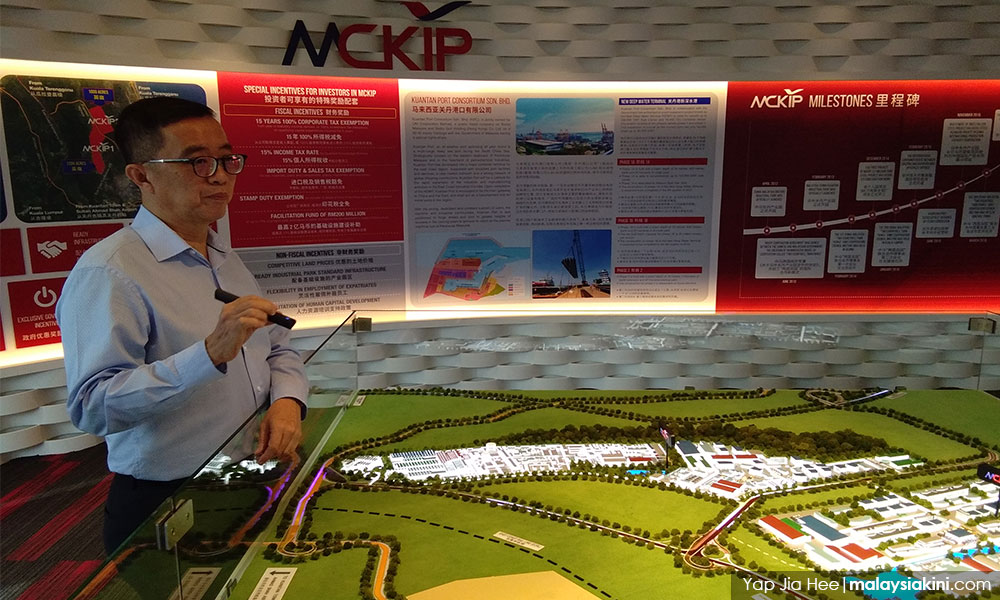
Following the reports, MCKIP invited the news portal to a briefing in which it addressed the various concerns raised, including the perimeter wall surrounding part of the MCKIP site in Gebeng which locals have come to refer to as Kuantan's "Great Wall of China".
Officially launched on Feb 5, 2013, MCKIP is 49 percent owned by Guangxi Beibu Gulf International Port Group Co Ltd, a China company owned by the Guangxi Autonomous Region government, and 51 percent owned by Kuantan Pahang Holding Sdn Bhd, comprising IJM Land Bhd, Sime Darby Property Bhd and the Pahang government.
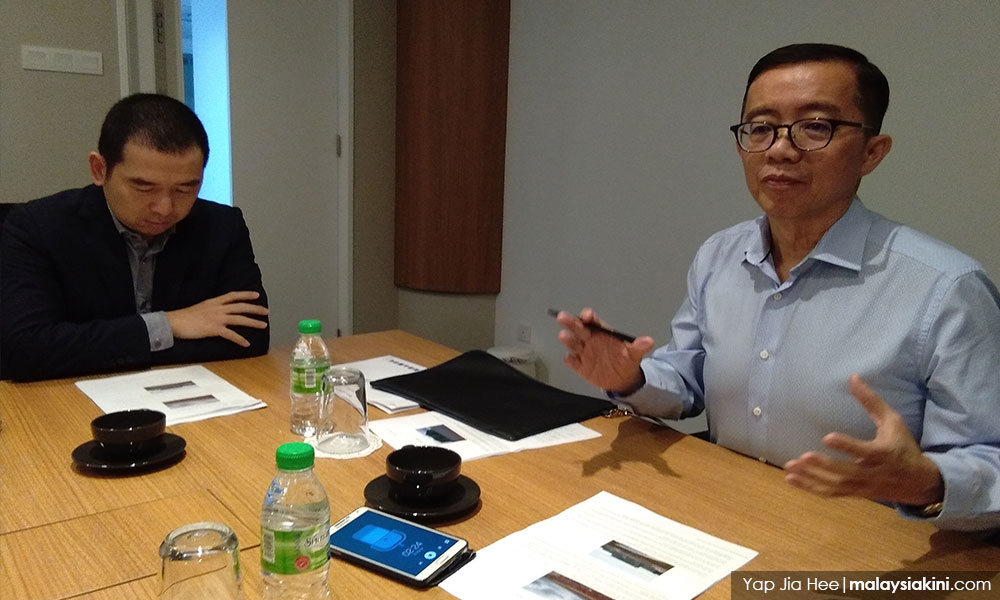
According to IJM Corporation Berhad chief executive officer and managing director Soam Heng Choon (photo, right), the perimeter wall does not cover the entire MCKIP site but is only limited to the Alliance Steel (M) Sdn Bhd complex.
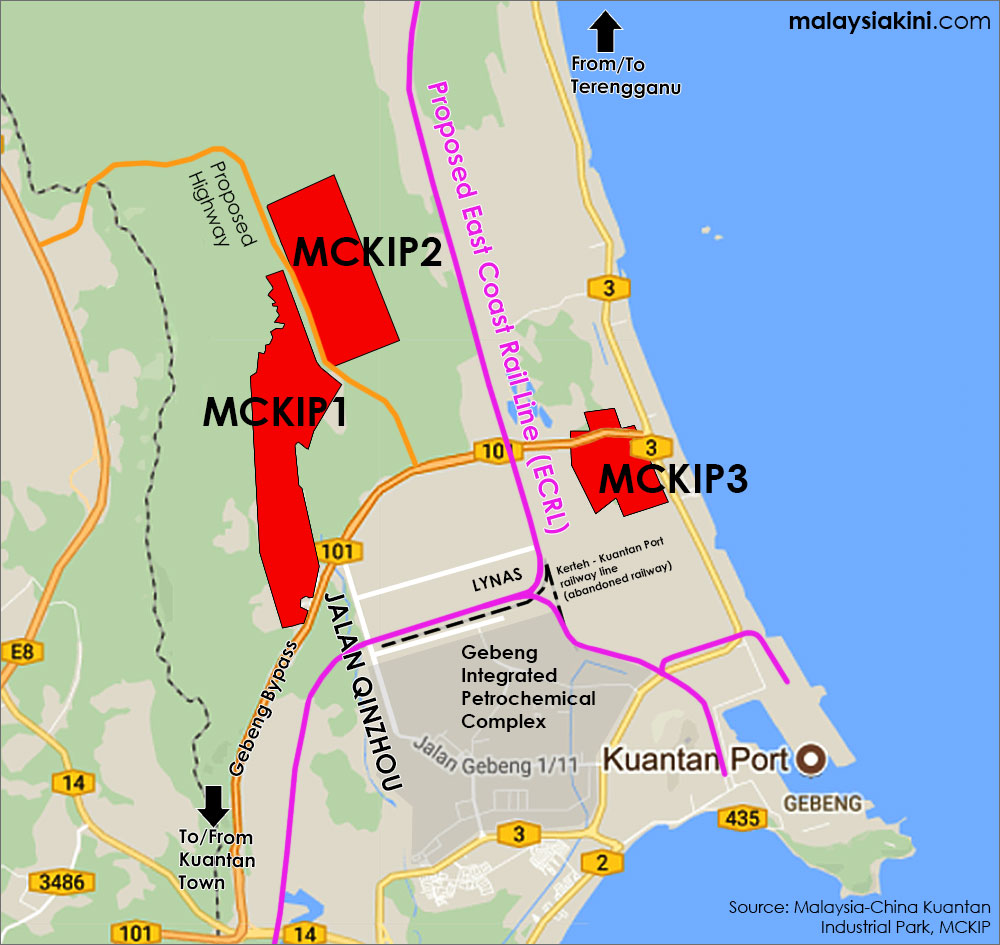
Alliance Steel, a joint-venture between two China entities - Guangxi Beibu Gulf Port International Group Co Ltd and Guangxi ShengLong Metallurgical Co Ltd - had purchased more than half the land (710 acres out of the 1,219) in the first phase of MCKIP to construct a high-tech steel factory complex.
Local elected representatives, who were denied entry into the area, had complained about the secrecy behind the extensive eight-feet tall perimeter wall, which according to satellite images, is around 9km long.
During Malaysiakini's survey to the site, it found that the entrance of the perimeter was guarded by both local and China guards, and staff working inside told the news portal that construction was predominantly done by labourers from China.
Addressing this, Soam said MCKIP did invite local elected representatives to MCKIP's showroom but given that the site behind the perimeter wall belonged to Alliance Steel, it would require the company's approval for access.
"MCKIP did not do the fencing up. Whatever that had been fenced up now is actually Alliance Steel, which is a different entity.
"Anybody wanting to go in must, of course, get the approval of the private entity. MCKIP does not have the power to give approval to enter Alliance Steel's site," he said.
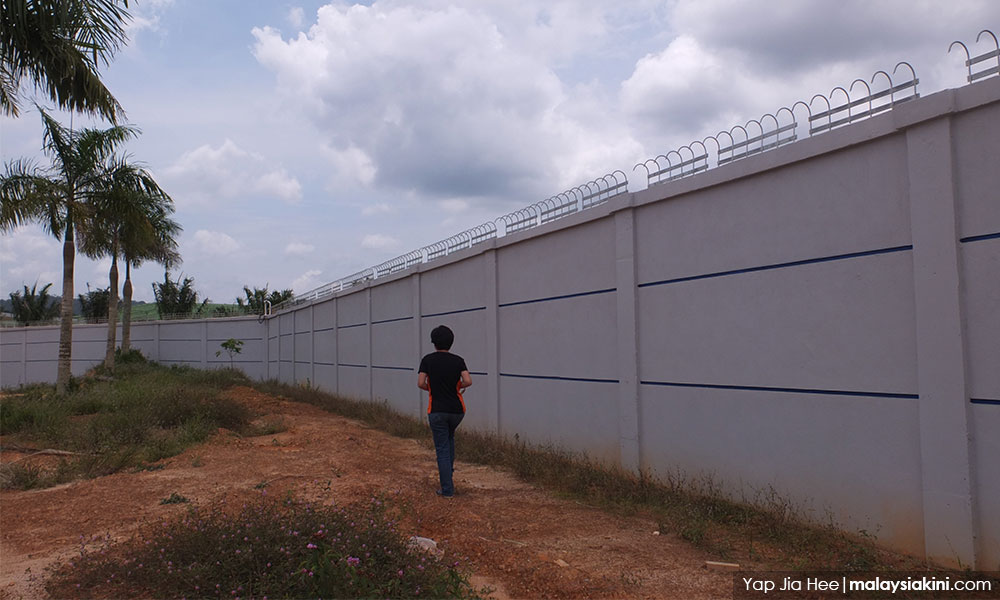
Teruntum state assemblyperson Sim Chon Siang had claimed that it was unusual for a perimeter wall to surround such a huge site as a regular industrial area would only see the perimeter limited to the individual factories.
Soam pointed out that this perception arose due to Alliance Steel solely occupying such a huge area, and it has the right to wall up its own private premises.
"A factory occupying such a massive piece of land - more than 700 acres - is very rare in Malaysia and because of this, he (Sim) may have thought that way," he said.
Soam, however, declined to comment on issues concerning the purportedly large number of China workers behind the wall or the source of the construction materials, stating that MCKIP was not in a position to make statements on behalf of Alliance Steel.
Soam added that MCKIP merely sold the land to Alliance Steel and does not interfere with its operations...
The Malaysia-China Kuantan Industrial Park (MCKIP) has come under the spotlight following Malaysiakini's three-part special report, which among others, highlighted the reclusive Chinese operations, China's control of local infrastructure, as well as environmental concerns.
Following the reports, MCKIP invited the news portal to a briefing in which it addressed the various concerns raised, including the perimeter wall surrounding part of the MCKIP site in Gebeng which locals have come to refer to as Kuantan's "Great Wall of China".
Officially launched on Feb 5, 2013, MCKIP is 49 percent owned by Guangxi Beibu Gulf International Port Group Co Ltd, a China company owned by the Guangxi Autonomous Region government, and 51 percent owned by Kuantan Pahang Holding Sdn Bhd, comprising IJM Land Bhd, Sime Darby Property Bhd and the Pahang government.
According to IJM Corporation Berhad chief executive officer and managing director Soam Heng Choon (photo, right), the perimeter wall does not cover the entire MCKIP site but is only limited to the Alliance Steel (M) Sdn Bhd complex.
Alliance Steel, a joint-venture between two China entities - Guangxi Beibu Gulf Port International Group Co Ltd and Guangxi ShengLong Metallurgical Co Ltd - had purchased more than half the land (710 acres out of the 1,219) in the first phase of MCKIP to construct a high-tech steel factory complex.
Local elected representatives, who were denied entry into the area, had complained about the secrecy behind the extensive eight-feet tall perimeter wall, which according to satellite images, is around 9km long.
During Malaysiakini's survey to the site, it found that the entrance of the perimeter guarded by both local and China guards, and staff working inside told the news portal that construction was predominantly done by labourers from China.
Addressing this, Soam said MCKIP did invite local elected representatives to MCKIP's showroom but given that the site behind the perimeter wall belonged to Alliance Steel, it would require the company's approval for access.
"MCKIP did not do the fencing up. Whatever that had been fenced up now is actually Alliance Steel, which is a different entity.
"Anybody wanting to go in must, of course, get the approval of the private entity. MCKIP does not have the power to give approval to enter Alliance Steel's site," he said.
Teruntum state assemblyperson Sim Chon Siang had claimed that it was unusual for a perimeter wall to surround such a huge site as a regular industrial area would only see the perimeter limited to the individual factories.
Soam pointed out that this perception arose due to Alliance Steel solely occupying such a huge area, and it has the right to wall up its own private premises.
"A factory occupying such a massive piece of land - more than 700 acres - is very rare in Malaysia and because of this, he (Sim) may have thought that way," he said.
Soam, however, declined to comment on issues concerning the purportedly large number of China workers behind the wall or the source of the construction materials, stating that MCKIP was not in a position to make statements on behalf of Alliance Steel.
Soam added that MCKIP merely sold the land to Alliance Steel and does not interfere with its operations.
According to the Pahang government's state assembly written reply, the construction materials comprised 50 percent from China and 50 percent local, while workers were hired at a ratio of three foreigners to two locals.
However, those working within the wall told Malaysiakini that the proportion of China workers is significantly higher.
Soam also addressed concerns that the factories that will be setting up shop within MCKIP, which will span three phases, will be from the high-polluting industry.
The Pahang government indicated that apart from Alliance Steel's high-tech steel facility, other companies that will be setting up shop include an aluminium factory and a car battery producer.
Semambu assemblyperson Lee Chean Chung had questioned whether China was exporting its high-polluting factories amid an aggressive drive by Beijing to clean up its environment, which has seen the country slashing coal consumption and ordering the shutdown of aluminium factories that do not comply with environmental protection standards.
'China won't be allowed to export its pollution'
Soam stressed that this was not the case, pledging that MCKIP will not accept any high-polluting factories that are forced to close down in China.
"Anything that is not acceptable in China, we also don't want them.
"Secondly, companies (setting up within MCKIP) will require an environmental impact assessment (EIA) and approval (by the Department of Environment). If they cannot get the approval, they will not be allowed to set up base here," he said.
He added that the Malaysian government had also made clear to potential investors that it does not want high-polluting industries within MCKIP.
Soam also addressed the specific factories that have or will soon set up shop within MCKIP, including Alliance Steel's factory.
The steel factory, he pointed out, is based on advanced technology that can mitigate pollution concerns.
For example, he said, a conveyer belt will be built from Kuantan Port to the steel plant, allowing imported iron ore to be directly transferred to the facility.
"It will be delivered to the steel plant through a conveyor belt instead of being transported using lorries, which will avoid pollution," he said.
He added that the iron ore will come from both local and overseas sources.
With regard to the future aluminium plant, Soam said it will focus on downstream extrusion which is not highly polluting like the smelting phase.
"It is not smelting, it will process downstream aluminium products. We will not welcome any industry that China does not want and also make sure they comply with all environmental requirements in Malaysia," he stressed.
Soam said the aluminium plant is operated by Guangxi Investment Group Co Ltd, also a state entity controlled by the Guangxi Autonomous Region in China, and it will inject RM600 million into the project.
The company will take up the remaining land in phase one of MCKIP which was not taken up by Alliance Steel.
The site will also be shared with several new investors, including Prinx Chengshan (Shandong) Tire Company Ltd with a tyre manufacturing facility, Guangxi Zhongli Enterprise Group Co Ltd with a clay porcelain manufacturing facility, and Sichuan Migao Chemical Fertilizer Industry Co Ltd with a Potash fertiliser manufacturing facility.
He added that one investor had already signed up for the second phase of MCKIP, namely Maxtrex Tyre Limited, which will construct a facility to produce passenger car radial tyres.
Locals run the show at Kuantan Port
Soam also touched on complaints about MCKIP's Chinese partner Guangxi Beibu controlling a 40 percent stake in Kuantan Port Consortium Sdn Bhd, which is the owner of Kuantan Port. IJM Corporation Berhad controls the remaining majority stake.
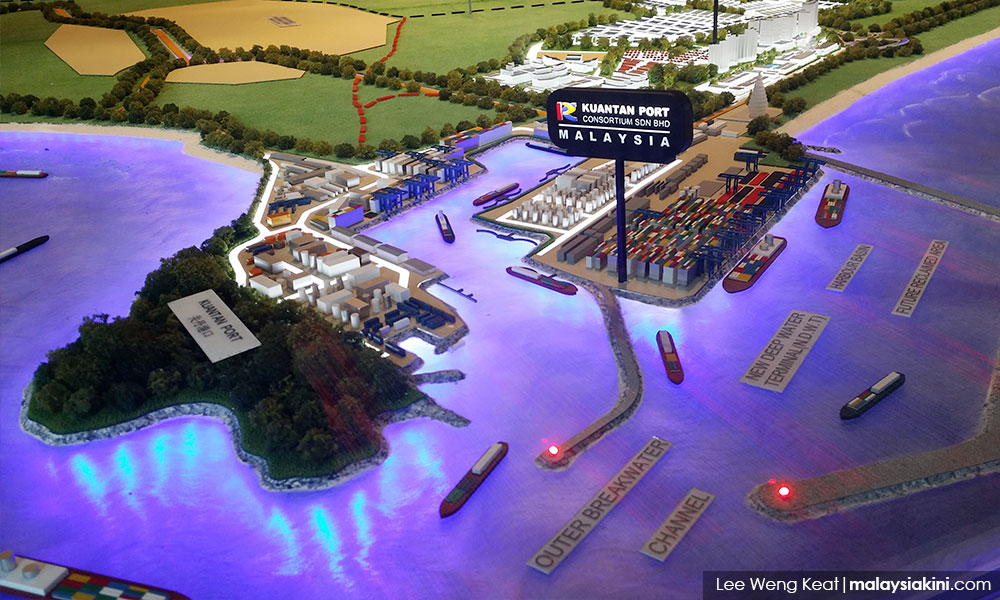
Kuantan MP Fuziah Salleh had described the foreign ownership of Kuantan Port, overseeing the South China Sea, a large swathe of which is being claimed by China, as a "threat to national security".
However, Soam explained that despite the Chinese company's stake in Kuantan Port, it is not involved in the regular operations of the facility.
"The people who are running the port are from IJM and the team from the Kuantan Port Consortium.
"As for Guangxi Beibu, we only rely on their expertise in certain areas," he said.
With regard to concerns that China may deploy its military assets to the port, Soam said if that ever happened, the public will know about it.
"Also, so far, there has been no request from the Chinese military for their warship to dock here," he said.
Guangxi Beibu and IJM Corp have invested a total of RM4 billion to construct a new deep-water terminal at the port to cater to growing industrial activities – including MCKIP, which is expected to be ready by next year.
Read the special report:
Part 1: The mystery behind Kuantan's 'Great Wall of China'
Part 2: M'sian contractors and China chefs juggle Kuantan's industrial dawn
Part 3: Kuantan rides China wave on land and sea, but at what cost?


