




Extremism begins in the mind, and ends in violence
COMMENT | Every time I look at a newborn baby, I wonder, "What could go wrong with this one?"
I'm hardly a pessimist when it comes to human nature. Quite the opposite actually.
However, recent events involving political persecutions and acts of terror around the world have had me frustrated with exhaustion, as I keep looking for answers from the world's smartest people - sociologists, philosophers, and intellectuals - who have theorised countless explanations.
One could argue that the reason we see violence so much in the news nowadays is because of our access to technology, while the rate of violence has remained the same (or even decreased) throughout centuries. But then it begs the question, why haven't we evolved in our thinking to put violence to an end?
Extremisms, plural, as talked about by sociologists, come in two main forms, violent and non-violent. But I would argue that any kind of extremism is violent in nature, so there is no such thing as a "non-violent" extremism.
But of course, that is why we have working definitions, so the working definition for non-violent extremism would differentiate those in the extremism spectrum from the "not yet violent" to the "extremely violent" forms of extremisms. You get the picture.
If extremism was a person, and this person was on a journey to discover the wonders of life, that life would begin just like any other person - with the people surrounding them.
Let's give this person a Malaysian identity. He would be a boy raised in an urban but rather racially homogenous city, in one of the more developed states of the country.
Extremism would grow in a household that believes in the racial supremacy of one race over other races. Even though his parents are highly educated, they make him believe that his race is under attack, politically and economically.
When he becomes a teenager, he would go to his place of worship every week, and occasionally the sermons would be about how his religion is under attack.
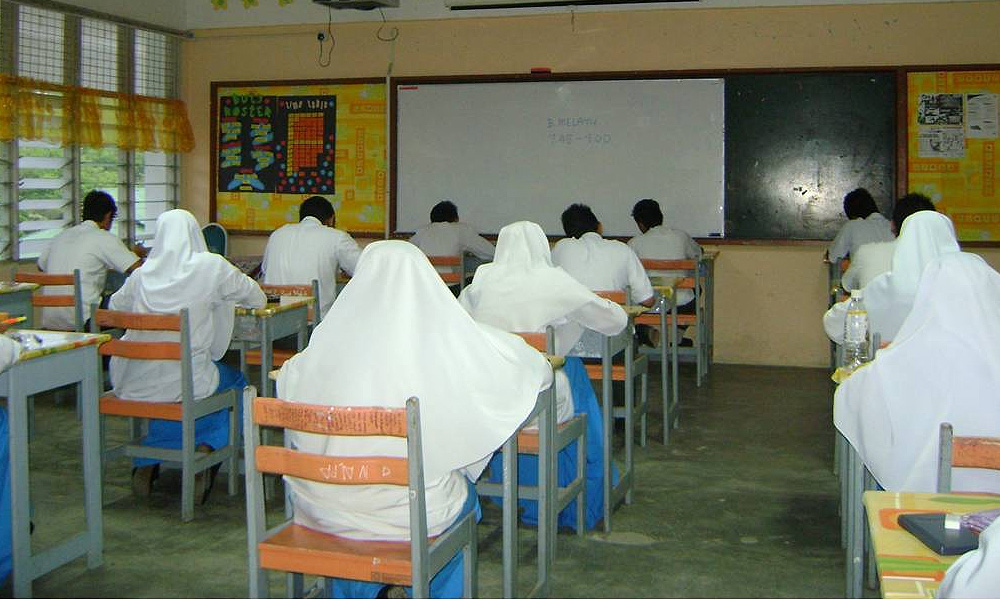
The education Extremism received in schools would teach him that girls are always subordinate to boys because the religion says so. Extremism would learn that when he grows up and marries a girl, he could beat his wife if she displeases him, and he could divorce his wife as easily as he could cut butter with a knife.
Extremism is now a man with wives and children. He would now perpetuate the same cycle of extremism in the next generation.
Until somebody wakes Extremism up from this line of thinking, and provides counter-narratives to Extremism, those with less power will always be under the tyranny of those with an abundance of it...
COMMENT | Every time I look at a newborn baby, I wonder, "What could go wrong with this one?"
I'm hardly a pessimist when it comes to human nature. Quite the opposite actually.
However, recent events involving political persecutions and acts of terror around the world have had me frustrated with exhaustion, as I keep looking for answers from the world's smartest people - sociologists, philosophers, and intellectuals - who have theorised countless explanations.
One could argue that the reason we see violence so much in the news nowadays is because of our access to technology, while the rate of violence has remained the same (or even decreased) throughout centuries. But then it begs the question, why haven't we evolved in our thinking to put violence to an end?
Extremisms, plural, as talked about by sociologists, come in two main forms, violent and non-violent. But I would argue that any kind of extremism is violent in nature, so there is no such thing as a "non-violent" extremism.
But of course, that is why we have working definitions, so the working definition for non-violent extremism would differentiate those in the extremism spectrum from the "not yet violent" to the "extremely violent" forms of extremisms. You get the picture.
If extremism was a person, and this person was on a journey to discover the wonders of life, that life would begin just like any other person - with the people surrounding them.
Let's give this person a Malaysian identity. He would be a boy raised in an urban but rather racially homogenous city, in one of the more developed states of the country.
Extremism would grow in a household that believes in the racial supremacy over other races. Even though his parents are highly educated, they make him believe that his race is under attack, politically and economically.
When he becomes a teenager, he would go to his place of worship every week, and occasionally the sermons would be about how his religion is under attack.
The education Extremism received in schools would teach him that girls are always subordinate to boys because the religion says so. Extremism would learn that when he grows up and marries a girl, he could beat his wife if she displeases him, and he could divorce his wife as easily as he could cut butter with a knife.
Extremism is now a man with wives and children. He would now perpetuate the same cycle of extremism in the next generation.
Until somebody wakes Extremism up from this line of thinking, and provides counter-narratives to Extremism, those with less power will always be under the tyranny of those with an abundance of it.
In reality, extremism doesn't exist in just one race or ethnic group, nor does it exist in just one religion. It happens across the board, and we must learn to identify it in order to dismantle it, even in the "safety" of our homes.
Extremism breeds racism, fascism and authoritarian tendencies. These are traits that tend to hurt the powerless and the marginalised, especially women and children.
Toxic masculinity
In the continuum of violence against women, the extreme end of that spectrum is rape, sexual assault and domestic violence. Most of the time, it is only when women suffer such extremes that society cares about violence against women.
What's rarely talked about is the diversity in the forms of violence against women, and how stalking, harassment, and catcalling are also forms of violence, and how they relate to patriarchy.
These despicable acts come from the idea that there are no boundaries in the control of men over women, that doing women these "sexual favours" is in the interest of women, without the man ever considering that he might be violating her personal space.
This is also the kind of thinking that makes men think women are nothing more than playthings. The sub-human status of women from men justifies their constant breach of our mental and physical boundaries.
The forms of violence against women that are on the "mild" side of the spectrum might not result in physical harm at first, but trust me, when that is not curbed, it would certainly get there.
And this is what feminists mean when they say toxic masculinity, a concept whose relation to violence is undeniable.
When patriarchy rewards the expression of anger in boys, kicking things around and knocking things over because "that's what boys do", it's toxic masculinity.
When patriarchy punishes the expression of vulnerability in boys because "boys don't cry" and it's "sissy" or "gay", it's toxic masculinity.
When patriarchy bans girls from assuming positions of leadership and power because "only boys could lead girls", it's toxic masculinity.
When patriarchy calls for the murder and annihilation of LGBT people or others deemed as "sexually deviant", it's toxic masculinity.
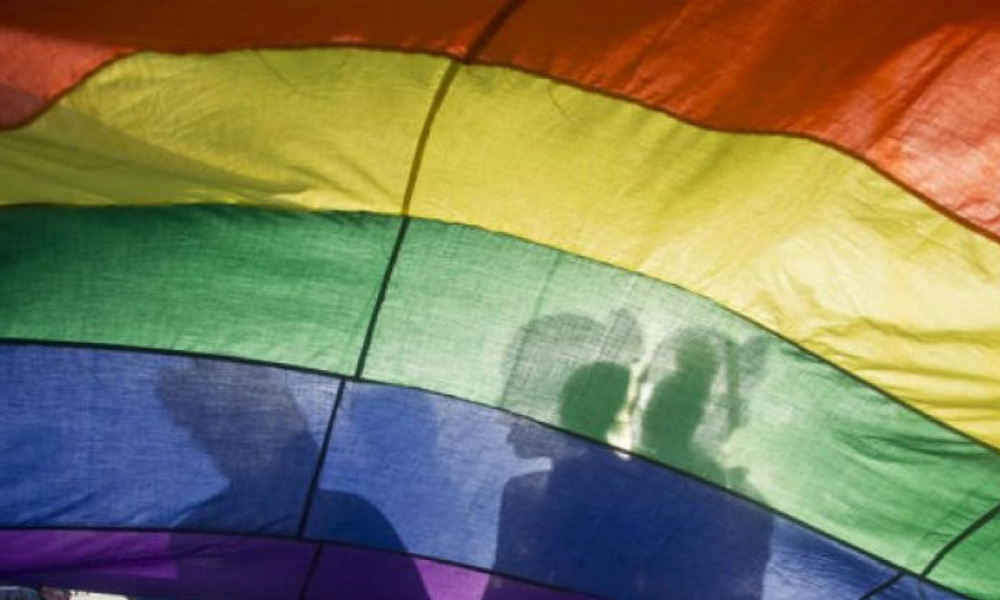
When patriarchy belittles catcalling and stalking as forms of harassment, it's toxic masculinity.
As long as patriarchy exists, toxic masculinity continues to derive its power from it, and every day is a life of terror for girls and women, along with other non-conforming gender groups everywhere.
Like it or not, this is the seed with which we plant violent tendencies into our boys, who would eventually grow to become our men. It eventually affects women in other spheres of socialisation such as the family, the school, the workplace and, ultimately, the state.
Agent of terror
Aside from family and school where extremism is socialised via soft power, there is also terror that is legitimised and institutionalised via state actors.
This is not an argument to be made against the role of the state; this is an argument against an authoritarian state.
The recent detention of Turkish journalist and author, Mustafa Akyol, by the religious authorities is an example of intellectual terrorism. So is the banning of books, with local novelist Faizal Musa (Faisal Tehrani) being one of the most recently victimised.
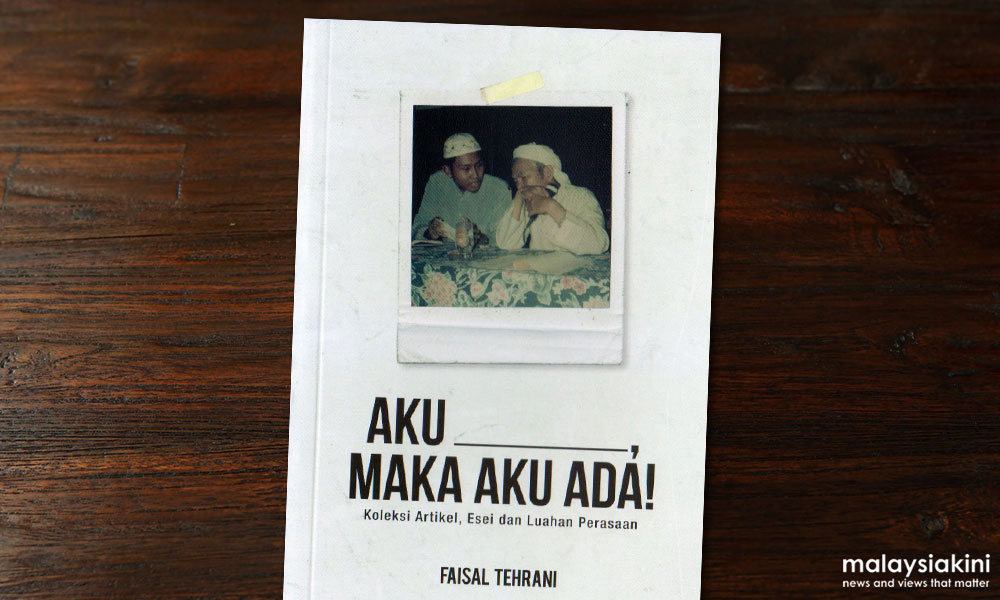
Faizal's "Aku ___, maka aku ada!" is his seventh book to be banned by the Home Ministry, a state agent that considers books a threat to national security.
Faizal is right in condemning this act of book banning and calling it an act of terror, especially when it seems like any book authored by Faizal is under state purview for, as the Home Ministry says, "disturbing the mind, posing a threat to public peace, going against moral teachings and being obscene".
This is repeated harassment of an individual by the state. One doesn't need to be a genius to see that this is an act of bullying.
Like all acts of violence and terror, bullying serves the purpose to intimidate and scare people.
When bullies ban reading, they want to scare people away from thinking. When bullies ban writing, they want to scare people away from speaking.
A nation with people who are scared of thinking and scared of speaking is a nation fit for authoritarian rule, where dictators secure power to control national resources and get away with thievery and corruption.
Unlearning extremism
When the primary site of struggle is in the mind, it makes sense to start winning the battle in the realm of thoughts.
Extremism must be interrupted, challenged, unpacked and dismantled from its very idea, before it manifests itself in all forms of violence.
Since the powers-that-be depend on the tiny doses of extremisms that divide society to stay in power, extremism is an institutionalised ideology that we have been socialised into.

Though we were never born with extremist thinking, we learned it via our social interactions and participation. For those who are lucky enough to be able to unlearn and decrease this thinking over time, we still have a long way to go.
Ending political extremism is just as important as ending extremisms based on gender, and unfortunately being politically progressive doesn't necessarily make one progressive in all aspects of life.
The role of intellectual activists such as Faizal Musa, and many others like him, is now more crucial than ever because they are fighting a tough battle with pens, papers, speakers and microphones, just so that we don't end up with a war with guns and bombs.
We owe it to ourselves and our next generation to help activists like him succeed in their struggles. Read their writings, spread their ideas, with the universal value of fundamental human rights as our guiding principles for justice.
Society cannot afford to let democratic spaces be dominated by extremists, whose only interests are power and control. We must stay and we must speak, one truth at a time.
MARYAM LEE is a writer with a chronic tendency of getting into trouble. What she lacks in spelling when writing in English is made up for with her many writings in Bahasa Malaysia. She believes in conversations as the most valuable yet underrated cause of social change. She wants people to recognise silences and give them a voice, as she tries to bring people together through words.
The views expressed here are those of the author/contributor and do not necessarily represent the views of Malaysiakini.


