


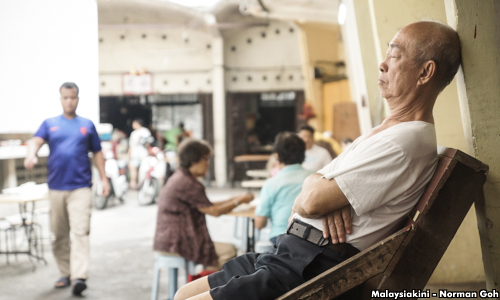

Retire early, live longer?
We retire at different ages, for different reasons. Those who are financially secure and happy to be on permanent vacation may choose to retire early.
Those whose occupations define who they are will just go on working till they expire. If you rest, you rust, so the saying goes.
Data on the relationship between effective retirement age and lifespan is not as definitive, although it’s widely held that forced retirement due to ill health is a strong mortality risk factor.
Nonetheless, going by the law of averages, if you’re about age 60 or so today, and in reasonably good health, you’re likely to live to at least 72.5 if you’re male (77.4 for female), according to government statistics on life expectancy.
If you were born after 1952, overall healthy and happy in your work, you could break the law of averages.
Based on the official retirement age, an average of 15 years to enjoy your retirement is relatively short to realise your plans and dream projects, some of which are listed in the HSBC’s ‘Future of Retirement: Life After Work’ report.
A colleague, aged 65, who recently took a voluntary separation payout, said he had to rethink his concept of retirement, his mortality and social identity. We may retire from the job, he said, but not necessarily disengaged from “self-actualising”.
He would draw on the knowledge, wisdom and skills acquired from the workplace to reinvent and refire. “What a man can be, he must be,” he said, citing psychologist Abraham Maslow’s concept of our hierarchy of needs, and to be refired by the “desire for self-fulfilment… to become everything that one is capable of becoming”.
Retirement provides that needed time and setting...
We retire at different ages, for different reasons. Those who are financially secure and happy to be on permanent vacation may choose to retire early.
Those whose occupations define who they are will just go on working till they expire. If you rest, you rust, so the saying goes.
Data on the relationship between effective retirement age and lifespan is not as definitive, although it’s widely held that forced retirement due to ill health is a strong mortality risk factor.
Nonetheless, going by the law of averages, if you’re about age 60 or so today, and in reasonably good health, you’re likely to live to at least 72.5 if you’re male (77.4 for female), according to government statistics on life expectancy.
If you were born after 1952, overall healthy and happy in your work, you could break the law of averages.
Based on the official retirement age, an average of 15 years to enjoy your retirement is relatively short to realise your plans and dream projects, some of which are listed in the HSBC’s ‘Future of Retirement: Life After Work’ report.
A colleague, aged 65, who recently took a voluntary separation payout, said he had to rethink his concept of retirement, his mortality and social identity. We may retire from the job, he said, but not necessarily disengaged from “self-actualising”.
He would draw on the knowledge, wisdom and skills acquired from the workplace to reinvent and refire. “What a man can be, he must be,” he said, citing psychologist Abraham Maslow’s concept of our hierarchy of needs, and to be refired by the “desire for self-fulfilment… to become everything that one is capable of becoming”.
Retirement provides that needed time and setting.
I, too, voluntarily retired last year. Younger colleagues understandably asked why, and when is the right time to retire? “When you’re at the peak of your game,” I said, “when you still love what you do, and when you’re still good in your overall health, effective and productive, that’s the time to retire.”
I left the security of academia with good experiences – in spite of the stress of daily deadlines and sitting through dreary faculty meetings. Even as I now work on achieving other non-occupation related goals and follow a daily routine for the remaining years of my life, my concept of self and the feel of time has changed.
With no pressing deadlines, weekdays and weekends now merge. Only the change in seasons reminds me that another year will soon end. Meaningful events – and the occasional intellectual engagement with a few friends – remind me that I am not yet part of history.
Some say their dreams of indulging in their passions and to be what they’ve aspired to be, post-retirement, have yet to transpire. Adjusting to a life without paid employment can be emotionally and cognitively challenging, initially. It was difficult to let go of a career which they had invested nearly half of their life. Their anticipation of being able to do what they pleased was short-lived.
The reality kicked in when they realised they felt somewhat redundant with their disconnection from the profession. The quick drift away from what were daily contacts with their professional peers reminds us that we all have our own use-by date.
Today, in the company of fellow retirees, health issues, family and financial planning dominate our casual chats, besides the musings over public affairs, and where we’re all heading over the next decade or so.
Who we were once - outward looking individuals - have gradually morphed into self-reflecting pensive characters pondering over real and imagined ailments, mulling over our slow shuffle to the grave, and the mortality of our siblings and peers.
No matter, with the leisure time that we now have in our hands, it boils down to a simple choice – we can either “get busy dying” (Shawshank Redemption, 1994) from a lack of purpose, boredom and struggles to fill the days with meaningful activities, or we can “get busy living” with a positive take on growing old.
Life does go on after retirement. We can still do what we did well in the workplace – only that what we do now are expressed in different forms and settings with different purposes and outcomes.
ERIC LOO was Senior Fellow (Journalism) at the School of the Arts, English & Media, Faculty of Law Humanities & Arts, University of Wollongong, Australia. He is founding editor of 'Asia Pacific Media Educator'. Email: eloo@uow.edu.au.
The views expressed here are those of the author/contributor and do not necessarily represent the views of Malaysiakini.


